Domina Conceptos Médicos

Estudia para la escuela de medicina y tus examenes con Lecturio.

Síndrome de DiGeorge

El síndrome de DiGeorge es una afección causada por una microdeleción en EN Erythema nodosum is an immune-mediated panniculitis (inflammation of the subcutaneous fat) caused by a type IV (delayed-type) hypersensitivity reaction. It commonly manifests in young women as tender, erythematous nodules on the shins. Erythema Nodosum la ubicación q11.2 del cromosoma 22 (también llamado síndrome de deleción 22q11.2). Hay un desarrollo defectuoso de la tercera y cuarta bolsas faríngeas, lo que conduce a hipoplasia tímica y paratiroidea (que causa inmunodeficiencia de células T e hipocalcemia, respectivamente). Las anomalías conotruncales que se presentan como defectos cardíacos congénitos también son características de la enfermedad. Otras manifestaciones consisten en EN Erythema nodosum is an immune-mediated panniculitis (inflammation of the subcutaneous fat) caused by a type IV (delayed-type) hypersensitivity reaction. It commonly manifests in young women as tender, erythematous nodules on the shins. Erythema Nodosum rasgos faciales característicos, infecciones frecuentes y trastornos neuropsiquiátricos. El diagnóstico se obtiene mediante una combinación de hallazgos clínicos, pruebas de laboratorio (células T reducidas y calcio bajo), ecocardiograma y análisis genético. El tratamiento puede incluir suplementos de calcio, antibióticos profilácticos, cirugía (para defectos cardíacos y anomalías del paladar) y trasplante de timo o células hematopoyéticas. El pronóstico depende de la gravedad de la anomalía cardíaca y la inmunodeficiencia.

Last updated: Dec 15, 2025
Editorial responsibility: Stanley Oiseth, Lindsay Jones, Evelin Maza

Epidemiología y Etiología

Epidemiología

  • Incidencia: 1 de cada 4000 7000 nacidos vivos
  • Síndrome de microdeleción cromosómica humana más común
  • Prevalencia creciente debido a los LOS Neisseria siguientes factores:
    • La corrección quirúrgica de defectos cardíacos mejora la tasa de supervivencia de los LOS Neisseria pacientes afectados, aumentando así su probabilidad de transmitir la enfermedad.
    • A los LOS Neisseria padres que previamente desconocían su condición genética se les diagnostica a medida que las pruebas genéticas se vuelven más disponibles.
    • Las técnicas genéticas anteriores no pudieron detectar todas las deleciones; las tecnologías más nuevas también cubren eliminaciones atípicas.

Etiología

  • Sinónimos:
    • Síndrome velocardiofacial
    • Síndrome de Shprintzen
    • Síndrome de anomalía conotruncal facial
    • Síndrome de Takao
  • Causado por una deleción heterocigótica de parte del brazo largo (q) del cromosoma 22, región 1, banda 1, subbanda 2 (22q11.2)
  • La deleción de 22q11.2 es 10 veces más común que el siguiente síndrome de deleción más frecuente, lo que sugiere que esta región es inherentemente inestable.
  • El 93% de los LOS Neisseria casos son mutaciones de novo durante el desarrollo fetal temprano.
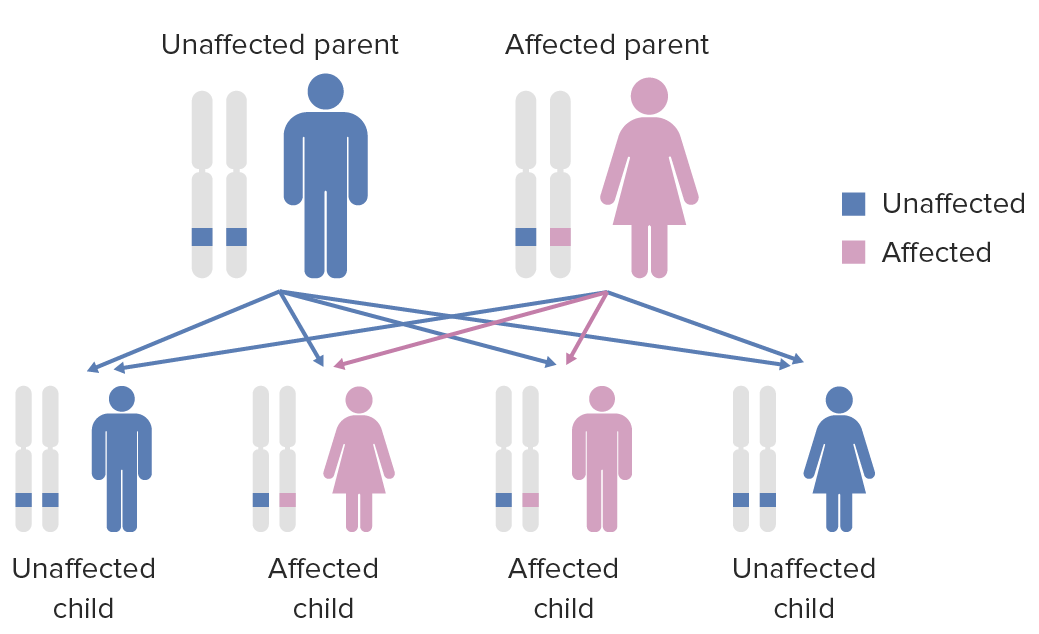
  • El 7% de los LOS Neisseria casos se hereda de los LOS Neisseria padres afectados mediante patrones autosómicos dominantes.
Dominante autosómico

Diagrama del patrón de herencia de las condiciones autosómicas dominantes

Imagen por Lecturio.

Related videos

Fisiopatología

  • Aproximadamente entre 3050 genes Genes A category of nucleic acid sequences that function as units of heredity and which code for the basic instructions for the development, reproduction, and maintenance of organisms. DNA Types and Structure se ven afectados por la deleción 22q11.2.
    • Interrumpe el desarrollo de la 3ra y 4ta bolsas faríngeas
    • Crea un defecto en EN Erythema nodosum is an immune-mediated panniculitis (inflammation of the subcutaneous fat) caused by a type IV (delayed-type) hypersensitivity reaction. It commonly manifests in young women as tender, erythematous nodules on the shins. Erythema Nodosum el desarrollo embrionario del cerebro, el cuello, el esqueleto y los LOS Neisseria riñones
  • TBX1 es el principal gen responsable del fenotipo DiGeorge. Desempeña un papel vital en EN Erythema nodosum is an immune-mediated panniculitis (inflammation of the subcutaneous fat) caused by a type IV (delayed-type) hypersensitivity reaction. It commonly manifests in young women as tender, erythematous nodules on the shins. Erythema Nodosum la formación y regulación de órganos, afectando la formación de:
    • Huesos del cráneo
    • Mesénquima de la cara y el paladar
    • Flujo de salida del corazón
    • Timo y estroma paratiroideo
  • Las deleciones 22q11.2 se asocian con un mayor riesgo de aparición temprana de la enfermedad de Parkinson.
Genética del síndrome de Digeorge

Síndrome de DiGeorge: deleción en 11.2 del brazo q

Imagen por Lecturio.
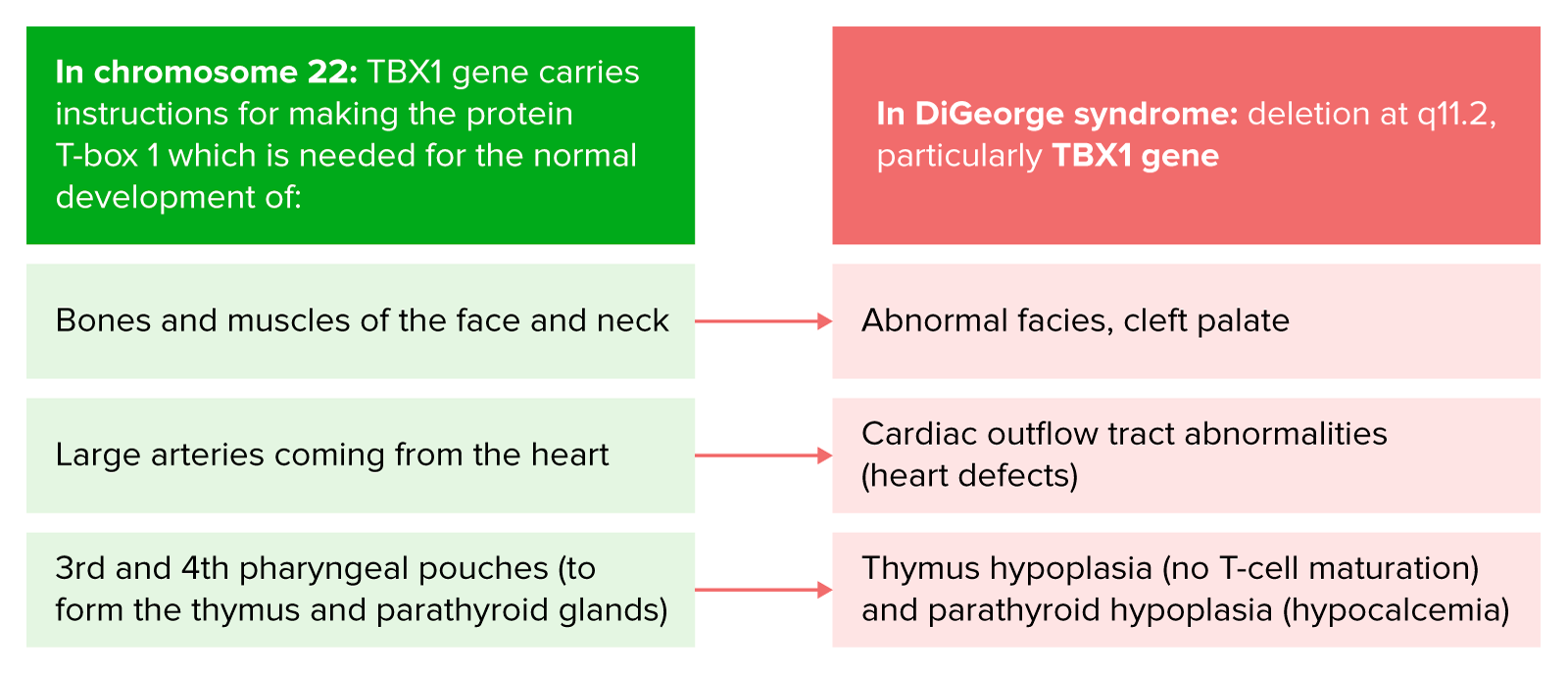
Genética y presentación del síndrome de Digeorge

Fisiopatología del síndrome de DiGeorge

Imagen por Lecturio.

Presentación Clínica

El síndrome de DiGeorge tiene una marcada variabilidad en EN Erythema nodosum is an immune-mediated panniculitis (inflammation of the subcutaneous fat) caused by a type IV (delayed-type) hypersensitivity reaction. It commonly manifests in young women as tender, erythematous nodules on the shins. Erythema Nodosum la expresión clínica entre diferentes individuos. Las manifestaciones pueden incluir las siguientes:
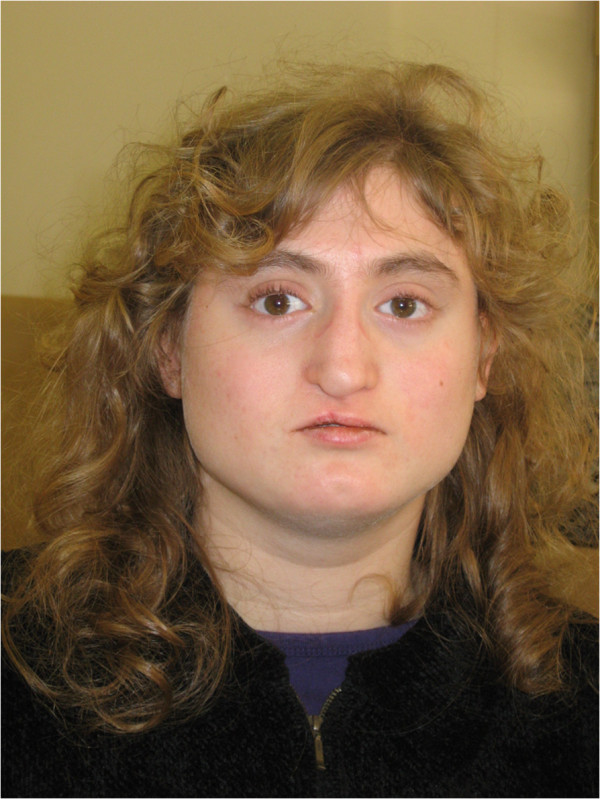
  • Enfermedad cardiovascular congénita:
    • Arco aórtico interrumpido
    • Ducto arterioso persistente
    • Tetralogía de Fallot
    • Defecto del tabique auricular o ventricular
    • Anillos vasculares (que provocan compresión traqueal o esofágica)
  • Características craneofaciales anormales:
    • Hipertelorismo
    • Nariz tubular
    • Ojos encapuchados
    • Paladar hendido
    • Orejas de implantación baja o rotadas posteriormente
  • Problemas endocrinos:
    • Hipoparatiroidismo (50% de los LOS Neisseria casos; causa hipocalcemia, que puede provocar convulsiones)
    • Deficiencia de la hormona del crecimiento
  • Aplasia Aplasia Cranial Nerve Palsies/hipoplasia tímica (conduce a inmunodeficiencia debido a la reducción de células T):
    • Síndrome de DiGeorge completo:
      • Solo el 1% de los LOS Neisseria casos
      • El timo está completamente ausente
      • Provoca inmunodeficiencia combinada grave; se manifiesta como infecciones recurrentes, diarrea crónica y retraso del crecimiento
      • Mortal a menos que se trate de inmediato
    • Síndrome de DiGeorge parcial:
      • Rango de números de células T normales a deficientes
      • Aproximadamente el 75% de los LOS Neisseria pacientes con defecto tímico
      • Grado variable Variable Variables represent information about something that can change. The design of the measurement scales, or of the methods for obtaining information, will determine the data gathered and the characteristics of that data. As a result, a variable can be qualitative or quantitative, and may be further classified into subgroups. Types of Variables de inmunodeficiencia, aunque se puede alcanzar un número normal de células T en EN Erythema nodosum is an immune-mediated panniculitis (inflammation of the subcutaneous fat) caused by a type IV (delayed-type) hypersensitivity reaction. It commonly manifests in young women as tender, erythematous nodules on the shins. Erythema Nodosum la edad adulta (proliferación de células T existentes)
      • Asociado con inmunodeficiencias humorales de deficiencia de inmunoglobulina A ( IgA IgA Represents 15-20% of the human serum immunoglobulins, mostly as the 4-chain polymer in humans or dimer in other mammals. Secretory iga is the main immunoglobulin in secretions. Immunoglobulins: Types and Functions)
  • Problemas neurológicos:
    • Problemas de aprendizaje (hasta el 90% de los LOS Neisseria casos), retraso del habla
    • Alto riesgo de aparición temprana de la enfermedad de Parkinson
    • Hipoacusia conductiva y neurosensorial
  • Desórdenes psiquiátricos:
  • Misceláneos:
    • Defectos laringotraqueoesofágicos
    • Problemas de motilidad digestiva
    • Anomalías esqueléticas
    • Anomalías del tracto genitourinario y respiratorio
    • Enfermedades autoinmunes (e.g., enfermedad de Graves y la artritis reumatoide)

Mnemotécnico

Los LOS Neisseria signos del síndrome de DiGeorge se pueden resumir utilizando el mnemónico CATCH-22 ( en EN Erythema nodosum is an immune-mediated panniculitis (inflammation of the subcutaneous fat) caused by a type IV (delayed-type) hypersensitivity reaction. It commonly manifests in young women as tender, erythematous nodules on the shins. Erythema Nodosum inglés):

  • C: Congenital heart disease (enfermedad cardíaca congenita)
  • A: Abnormal facies (facies anormal)
  • T: Thymic aplasia Aplasia Cranial Nerve Palsies ( aplasia Aplasia Cranial Nerve Palsies timica)
  • C: Cleft palate Palate The palate is the structure that forms the roof of the mouth and floor of the nasal cavity. This structure is divided into soft and hard palates. Palate: Anatomy (paladar hendido)
  • H : Hypocalcemia/hypoparathyroidism (hipocalcemia/hipoparatiroidismo)
  • 22: 22q11.2DS, que se encuentra en EN Erythema nodosum is an immune-mediated panniculitis (inflammation of the subcutaneous fat) caused by a type IV (delayed-type) hypersensitivity reaction. It commonly manifests in young women as tender, erythematous nodules on the shins. Erythema Nodosum el cromosoma 22

Diagnóstico y Tratamiento

Diagnóstico

Establecer un diagnóstico es difícil debido a la variabilidad de los LOS Neisseria fenotipos. El diagnóstico de DiGeorge se determina al AL Amyloidosis demostrar una disminución de las células T CD3 CD3 Complex of at least five membrane-bound polypeptides in mature T-lymphocytes that are non-covalently associated with one another and with the T-cell receptor. The CD3 complex includes the gamma, delta, epsilon, zeta, and eta chains (subunits). When antigen binds to the T-cell receptor, the CD3 complex transduces the activating signals to the cytoplasm of the T-cell. The CD3 gamma and delta chains (subunits) are separate from and not related to the gamma/delta chains of the T-cell receptor. T cells: Types and Functions+, además de los LOS Neisseria hallazgos clínicos característicos y los LOS Neisseria estudios genéticos que demuestran la deleción en EN Erythema nodosum is an immune-mediated panniculitis (inflammation of the subcutaneous fat) caused by a type IV (delayed-type) hypersensitivity reaction. It commonly manifests in young women as tender, erythematous nodules on the shins. Erythema Nodosum el área cromosómica 22q11.2.

  • Pruebas genéticas – análisis de microarrays cromosómicos:
    • Prueba inicial preferida (utilizando la hibridación genómica comparad o arrays SNP) para detectar deleciones o duplicaciones
    • Para parientes en EN Erythema nodosum is an immune-mediated panniculitis (inflammation of the subcutaneous fat) caused by a type IV (delayed-type) hypersensitivity reaction. It commonly manifests in young women as tender, erythematous nodules on the shins. Erythema Nodosum riesgo o para determinar con precisión el tamaño de la deleción, se utilizan análisis de deleción específicos (p. ej., hibridación fluorescente in situ, MLPA MLPA Duchenne Muscular Dystrophy o qPCR qPCR Methods used for detecting the amplified DNA products from the polymerase chain reaction as they accumulate instead of at the end of the reaction. Polymerase Chain Reaction (PCR))
  • Estudios de laboratorio e imagenología para identificar defectos asociados:
    • Cardiología:
      • Electrocardiograma ( ECG ECG An electrocardiogram (ECG) is a graphic representation of the electrical activity of the heart plotted against time. Adhesive electrodes are affixed to the skin surface allowing measurement of cardiac impulses from many angles. The ECG provides 3-dimensional information about the conduction system of the heart, the myocardium, and other cardiac structures. Electrocardiogram (ECG))
      • Ecocardiografía
    • Endocrino:
      • Niveles séricos de calcio y fósforo (↓ PTH (por sus siglas en EN Erythema nodosum is an immune-mediated panniculitis (inflammation of the subcutaneous fat) caused by a type IV (delayed-type) hypersensitivity reaction. It commonly manifests in young women as tender, erythematous nodules on the shins. Erythema Nodosum inglés), ↓ calcio, ↑ fósforo)
      • Prueba de perfil tiroideo
      • Radiografía de tórax (para comprobar la ausencia de timo)
    • Pruebas de función inmunológica:
      • Hemograma para evaluar linfopenia, niveles de inmunoglobulina, subconjuntos de células T y B
      • Ultrasonido renal (buscar anomalías estructurales del tracto genitourinario)

Tratamiento

El tratamiento tiene como objetivo tratar las características asociadas de la enfermedad. La intervención temprana y la evaluación del desarrollo son fundamentales.

  • Trasplante de timo o trasplante de células hematopoyéticas
  • Antibióticos (para tratar infecciones frecuentes), inmunoglobulinas intravenosas
  • Usar con precaución de transfusiones de sangre y vacunas vivas atenuadas
  • Cirugía cardíaca para corregir anomalías cardíacas congénitas
  • Corrección de defectos del paladar
  • Suplementación de por vida con vitamina D y calcio
  • Pruebas genéticas y consejería para padres que estén considerando tener otros hijos

Pronóstico

No existe cura para el síndrome de DiGeorge. La esperanza de vida depende en EN Erythema nodosum is an immune-mediated panniculitis (inflammation of the subcutaneous fat) caused by a type IV (delayed-type) hypersensitivity reaction. It commonly manifests in young women as tender, erythematous nodules on the shins. Erythema Nodosum gran medida del grado de defectos cardíacos (factor más importante) y la inmunodeficiencia.

  • Síndrome de DiGeorge completo:
    • Sin trasplante, la esperanza de vida de los LOS Neisseria lactantes es < 1 año.
    • En EN Erythema nodosum is an immune-mediated panniculitis (inflammation of the subcutaneous fat) caused by a type IV (delayed-type) hypersensitivity reaction. It commonly manifests in young women as tender, erythematous nodules on the shins. Erythema Nodosum pacientes a los LOS Neisseria que se les realiza trasplante, la mayoría de los LOS Neisseria fallecimientos ocurren en EN Erythema nodosum is an immune-mediated panniculitis (inflammation of the subcutaneous fat) caused by a type IV (delayed-type) hypersensitivity reaction. It commonly manifests in young women as tender, erythematous nodules on the shins. Erythema Nodosum el primero año posterior a la realización del trasplante.
    • La mayoría de los LOS Neisseria fallecimientos son atribuidos a complicaciones cardiacas
  • Síndrome de DiGeorge parcial: el pronóstico depende de la gravedad del defecto cardíaco, el desarrollo intelectual del paciente y la atención de seguimiento brindada para sus deficiencias asociadas

Diagnóstico Diferencial

  • Síndrome CHARGE: una condición genética rara con herencia autosómica dominante. La abreviatura CHARGE ( en EN Erythema nodosum is an immune-mediated panniculitis (inflammation of the subcutaneous fat) caused by a type IV (delayed-type) hypersensitivity reaction. It commonly manifests in young women as tender, erythematous nodules on the shins. Erythema Nodosum inglés) significa la constelación de características clínicas que se observan con esta afección: coloboma Coloboma Congenital anomaly in which some of the structures of the eye are absent due to incomplete fusion of the fetal intraocular fissure during gestation. Esophageal Atresia and Tracheoesophageal Fistula ( coloboma Coloboma Congenital anomaly in which some of the structures of the eye are absent due to incomplete fusion of the fetal intraocular fissure during gestation. Esophageal Atresia and Tracheoesophageal Fistula), heard defects (defectos cardíacos), choanal atresia Atresia Hypoplastic Left Heart Syndrome (HLHS) ( atresia Atresia Hypoplastic Left Heart Syndrome (HLHS) de coanas), growth retardation Growth Retardation Failure of a fetus to attain expected growth. Fetal Alcohol Spectrum Disorder (retraso del crecimiento), genetic abnormalities (anomalías genéticas) y ear abnormalities (anomalías del oído). Por ejemplo, síndrome de DiGeorge, defectos cardíacos, paladar hendido e hipoacusia están presentes, pero las otras características enumeradas no se ven en EN Erythema nodosum is an immune-mediated panniculitis (inflammation of the subcutaneous fat) caused by a type IV (delayed-type) hypersensitivity reaction. It commonly manifests in young women as tender, erythematous nodules on the shins. Erythema Nodosum el sindrome de DiGeorge. Las pruebas genéticas confirman el diagnóstico. No hay deleción 22q11 en EN Erythema nodosum is an immune-mediated panniculitis (inflammation of the subcutaneous fat) caused by a type IV (delayed-type) hypersensitivity reaction. It commonly manifests in young women as tender, erythematous nodules on the shins. Erythema Nodosum el síndrome CHARGE. El tratamiento es sintomático con el tratamiento de las vías respiratorias, los LOS Neisseria defectos cardíacos y la capacidad de alimentación como prioridades en EN Erythema nodosum is an immune-mediated panniculitis (inflammation of the subcutaneous fat) caused by a type IV (delayed-type) hypersensitivity reaction. It commonly manifests in young women as tender, erythematous nodules on the shins. Erythema Nodosum los LOS Neisseria primeros años de vida.
  • El síndrome de Zellweger, también llamado síndrome cerebrohepatorrenal, es un trastorno congénito poco común de la biosíntesis de peroxisomas y se considera un error Error Refers to any act of commission (doing something wrong) or omission (failing to do something right) that exposes patients to potentially hazardous situations. Disclosure of Information innato del metabolismo. Es la forma más grave de un espectro de afecciones llamadas trastornos del espectro de Zellweger. Se caracteriza por la reducción o ausencia de peroxisomas funcionales. Los LOS Neisseria síntomas están presentes desde el momento del nacimiento e incluyen hipotonía, mala alimentación, convulsiones. Como en EN Erythema nodosum is an immune-mediated panniculitis (inflammation of the subcutaneous fat) caused by a type IV (delayed-type) hypersensitivity reaction. It commonly manifests in young women as tender, erythematous nodules on the shins. Erythema Nodosum el síndrome de DiGeorge, hay dismorfismo craneofacial. Pero el síndrome de DiGeorge no suele presentar hepatomegalia con cirrosis. No existe cura para el síndrome de Zellweger.
  • Exposición a teratógenos: los LOS Neisseria teratógenos como la isotretinoína, el etanol o enfermedades maternas como la diabetes Diabetes Diabetes mellitus (DM) is a metabolic disease characterized by hyperglycemia and dysfunction of the regulation of glucose metabolism by insulin. Type 1 DM is diagnosed mostly in children and young adults as the result of autoimmune destruction of β cells in the pancreas and the resulting lack of insulin. Type 2 DM has a significant association with obesity and is characterized by insulin resistance. Diabetes Mellitus afectan al AL Amyloidosis feto en EN Erythema nodosum is an immune-mediated panniculitis (inflammation of the subcutaneous fat) caused by a type IV (delayed-type) hypersensitivity reaction. It commonly manifests in young women as tender, erythematous nodules on the shins. Erythema Nodosum el útero y producen un fenotipo similar al AL Amyloidosis síndrome de DiGeorge. La diferencia es que la anomalía genética está presente en EN Erythema nodosum is an immune-mediated panniculitis (inflammation of the subcutaneous fat) caused by a type IV (delayed-type) hypersensitivity reaction. It commonly manifests in young women as tender, erythematous nodules on the shins. Erythema Nodosum el síndrome de DiGeorge. Además, las anomalías dependen del período de desarrollo durante el cual hubo exposición.

Referencias

  1. Seroogy, C. (2025) DiGeorge (22q11.2 deletion) syndrome: Epidemiology and pathogenesis. UpToDate. Retrieved February 24, 2025, from https://www.uptodate.com/contents/digeorge-22q11-2-deletion-syndrome-epidemiology-and-pathogenesis
  2. Seroogy, C. (2025) DiGeorge (22q11.2 deletion) syndrome: Management and prognosis. UpToDate. Retrieved February 24, 2025, from https://www.uptodate.com/contents/digeorge-22q11-2-deletion-syndrome-management-and-prognosis
  3. Seroogy, C. (2025) DiGeorge (22q11.2 deletion) syndrome: Clinical features and diagnosis. UpToDate. Retrieved February 24, 2025, from https://www.uptodate.com/contents/digeorge-22q11-2-deletion-syndrome-clinical-features-and-diagnosis
  4. Bassett, A. S., McDonald-McGinn, D. M., Devriendt, K., Digilio, M. C., Goldenberg, P., Habel, A., … & Vorstman, J. (2011). Practical guidelines for managing patients with 22q11.2 deletion syndrome. The Journal of pediatrics, 159(2), 332-339.e1.
  5. Driscoll, D. A., & Sullivan, K. E. (2023). Advances in understanding the immunological aspects of 22q11.2 deletion syndrome. Nature Reviews Immunology, 23(5), 285-297.
  6. McDonald-McGinn, D. M., Sullivan, K. E., Marino, B., Philip, N., Swillen, A., Vorstman, J. A., … & Bassett, A. S. (2015). 22q11.2 deletion syndrome. Nature Reviews Disease Primers, 1(1), 1-19.
  7. Morrow, B. E., McDonald-McGinn, D. M., Emanuel, B. S., Vermeesch, J. R., & Scambler, P. J. (2018). Molecular genetics of 22q11.2 deletion syndrome. American Journal of Medical Genetics Part A, 176(10), 2070-2081.
  8. Rauch, A., Hoyer, J., Guth, S., Zweier, C., Kraus, C., Becker, C., … & Reis, A. (2006). Diagnostic yield of various genetic approaches in patients with unexplained developmental delay or mental retardation. American journal of medical genetics Part A, 140(19), 2063-2074.

¡Crea tu cuenta gratis o inicia una sesión para seguir leyendo!

Regístrate ahora y obtén acceso gratuito a Lecturio con páginas de concepto, videos médicos y cuestionarios para tu educación médica.

User Reviews

Que tengas una sesión de estudio alegre y navideña 🎁 Ahorra 50% en todos los planes >>

Details