Domina Conceptos Médicos

Estudia para la escuela de medicina y tus examenes con Lecturio.

Púrpura de Henoch-Schönlein

La púrpura de Henoch-Schönlein, también conocida como vasculitis Vasculitis Inflammation of any one of the blood vessels, including the arteries; veins; and rest of the vasculature system in the body. Systemic Lupus Erythematosus por inmunoglobulina A ( IgA IgA Represents 15-20% of the human serum immunoglobulins, mostly as the 4-chain polymer in humans or dimer in other mammals. Secretory iga is the main immunoglobulin in secretions. Immunoglobulins: Types and Functions), es una vasculitis Vasculitis Inflammation of any one of the blood vessels, including the arteries; veins; and rest of the vasculature system in the body. Systemic Lupus Erythematosus autoinmune de pequeños vasos que suele presentarse como una tétrada de dolor Dolor Inflammation abdominal, artralgia, hematuria Hematuria Presence of blood in the urine. Renal Cell Carcinoma y erupción purpúrica. La fisiopatología implica el depósito de complejos inmunes de IgA IgA Represents 15-20% of the human serum immunoglobulins, mostly as the 4-chain polymer in humans or dimer in other mammals. Secretory iga is the main immunoglobulin in secretions. Immunoglobulins: Types and Functions en EN Erythema nodosum is an immune-mediated panniculitis (inflammation of the subcutaneous fat) caused by a type IV (delayed-type) hypersensitivity reaction. It commonly manifests in young women as tender, erythematous nodules on the shins. Erythema Nodosum múltiples vasos tras un desencadenante (infección/ambiental), y los LOS Neisseria síntomas dependen de los LOS Neisseria tejidos implicados. El diagnóstico se establece clínicamente, pero puede apoyarse de estudios de laboratorio y biopsia de piel o riñón. El tratamiento es principalmente de soporte, pero puede incluir esteroides e inmunosupresores en EN Erythema nodosum is an immune-mediated panniculitis (inflammation of the subcutaneous fat) caused by a type IV (delayed-type) hypersensitivity reaction. It commonly manifests in young women as tender, erythematous nodules on the shins. Erythema Nodosum los LOS Neisseria casos más graves. El pronóstico suele ser excelente, pero algunos pacientes pueden desarrollar una insuficiencia renal terminal.

Last updated: Dec 15, 2025

Editorial responsibility: Stanley Oiseth, Lindsay Jones, Evelin Maza

Descripción General

Definición

La púrpura de Henoch-Schönlein es una vasculitis Vasculitis Inflammation of any one of the blood vessels, including the arteries; veins; and rest of the vasculature system in the body. Systemic Lupus Erythematosus de pequeños vasos mediada por la inmunoglobulina A.
Epidemiología

  • Vasculitis Vasculitis Inflammation of any one of the blood vessels, including the arteries; veins; and rest of the vasculature system in the body. Systemic Lupus Erythematosus más común en EN Erythema nodosum is an immune-mediated panniculitis (inflammation of the subcutaneous fat) caused by a type IV (delayed-type) hypersensitivity reaction. It commonly manifests in young women as tender, erythematous nodules on the shins. Erythema Nodosum los LOS Neisseria niños
  • El 90% de los LOS Neisseria casos se dan en EN Erythema nodosum is an immune-mediated panniculitis (inflammation of the subcutaneous fat) caused by a type IV (delayed-type) hypersensitivity reaction. It commonly manifests in young women as tender, erythematous nodules on the shins. Erythema Nodosum niños de 3–15 años.
  • 20/100 000 en EN Erythema nodosum is an immune-mediated panniculitis (inflammation of the subcutaneous fat) caused by a type IV (delayed-type) hypersensitivity reaction. It commonly manifests in young women as tender, erythematous nodules on the shins. Erythema Nodosum niños versus 5/100 000 en EN Erythema nodosum is an immune-mediated panniculitis (inflammation of the subcutaneous fat) caused by a type IV (delayed-type) hypersensitivity reaction. It commonly manifests in young women as tender, erythematous nodules on the shins. Erythema Nodosum adultos
  • Más prevalente en EN Erythema nodosum is an immune-mediated panniculitis (inflammation of the subcutaneous fat) caused by a type IV (delayed-type) hypersensitivity reaction. It commonly manifests in young women as tender, erythematous nodules on the shins. Erythema Nodosum raza blanca
  • Hombres > mujeres (1,2–1,8:1)
  • Raro en EN Erythema nodosum is an immune-mediated panniculitis (inflammation of the subcutaneous fat) caused by a type IV (delayed-type) hypersensitivity reaction. It commonly manifests in young women as tender, erythematous nodules on the shins. Erythema Nodosum los LOS Neisseria meses de verano

Etiología

  • Multifactorial: susceptibilidad genética y desencadenantes ambientales
  • Autoinmune/antigénica secundaria a una infección precedente (respiratoria o gastrointestinal) en EN Erythema nodosum is an immune-mediated panniculitis (inflammation of the subcutaneous fat) caused by a type IV (delayed-type) hypersensitivity reaction. It commonly manifests in young women as tender, erythematous nodules on the shins. Erythema Nodosum el 75% de los LOS Neisseria casos:
    • Infección precedente identificable más común: estreptococo del grupo A
    • Otras infecciones: mononucleosis Mononucleosis Infectious mononucleosis (IM), also known as “the kissing disease,” is a highly contagious viral infection caused by the Epstein-Barr virus. Its common name is derived from its main method of transmission: the spread of infected saliva via kissing. Clinical manifestations of IM include fever, tonsillar pharyngitis, and lymphadenopathy. Mononucleosis, hepatitis, infecciones por Mycoplasma Mycoplasma Mycoplasma is a species of pleomorphic bacteria that lack a cell wall, which makes them difficult to target with conventional antibiotics and causes them to not gram stain well. Mycoplasma bacteria commonly target the respiratory and urogenital epithelium. Mycoplasma pneumoniae (M. pneumoniae), the causative agent of atypical or “walking” pneumonia. Mycoplasma y Campylobacter Campylobacter Campylobacter (“curved bacteria”) is a genus of thermophilic, S-shaped, gram-negative bacilli. There are many species of Campylobacter, with C. jejuni and C. coli most commonly implicated in human disease. Campylobacter, infecciones virales de las vías respiratorias superiores
    • Posible asociación con vacunación SPR (sarampión-paperas-rubeóla) precedente
  • Puede ser precedida por picaduras de insectos
  • Posiblemente asociada a la nefropatía IgA IgA Represents 15-20% of the human serum immunoglobulins, mostly as the 4-chain polymer in humans or dimer in other mammals. Secretory iga is the main immunoglobulin in secretions. Immunoglobulins: Types and Functions (enfermedad de Berger)
  • Asociada a la fiebre mediterránea familiar
  • Inducida por medicamentos:
    • Ampicilina/penicilina
    • Eritromicina
    • Quinidina/quinina
    • Losartán

Fisiopatología

  • Una enfermedad de depósito de inmunocomplejos
  • La deposición de IgA IgA Represents 15-20% of the human serum immunoglobulins, mostly as the 4-chain polymer in humans or dimer in other mammals. Secretory iga is the main immunoglobulin in secretions. Immunoglobulins: Types and Functions, C3 y fibrina en EN Erythema nodosum is an immune-mediated panniculitis (inflammation of the subcutaneous fat) caused by a type IV (delayed-type) hypersensitivity reaction. It commonly manifests in young women as tender, erythematous nodules on the shins. Erythema Nodosum los LOS Neisseria pequeños vasos da lugar a la vasculitis Vasculitis Inflammation of any one of the blood vessels, including the arteries; veins; and rest of the vasculature system in the body. Systemic Lupus Erythematosus.
  • Los LOS Neisseria neutrófilos y los LOS Neisseria monocitos predominan en EN Erythema nodosum is an immune-mediated panniculitis (inflammation of the subcutaneous fat) caused by a type IV (delayed-type) hypersensitivity reaction. It commonly manifests in young women as tender, erythematous nodules on the shins. Erythema Nodosum el infiltrado inflamatorio.
  • Se han propuesto múltiples dianas antigénicas, pero se han identificado de forma inconsistente.
  • Afecta a los LOS Neisseria tejidos irrigados por pequeños vasos:
    • Piel
    • Riñones
    • Tracto gastrointestinal
    • Articulaciones
    • Sistema nervioso central (SNC)
  • La biopsia de piel revela una vasculitis Vasculitis Inflammation of any one of the blood vessels, including the arteries; veins; and rest of the vasculature system in the body. Systemic Lupus Erythematosus leucocitoclástica en EN Erythema nodosum is an immune-mediated panniculitis (inflammation of the subcutaneous fat) caused by a type IV (delayed-type) hypersensitivity reaction. It commonly manifests in young women as tender, erythematous nodules on the shins. Erythema Nodosum las vénulas postcapilares.
  • La biopsia renal revela el depósito de complejos inmunes en EN Erythema nodosum is an immune-mediated panniculitis (inflammation of the subcutaneous fat) caused by a type IV (delayed-type) hypersensitivity reaction. It commonly manifests in young women as tender, erythematous nodules on the shins. Erythema Nodosum el mesangio.

Presentación Clínica

  • Tétrada clásica:
  • Piel (95%–100%):
    • 1er signo de presentación en EN Erythema nodosum is an immune-mediated panniculitis (inflammation of the subcutaneous fat) caused by a type IV (delayed-type) hypersensitivity reaction. It commonly manifests in young women as tender, erythematous nodules on the shins. Erythema Nodosum aproximadamente 3/4 de los LOS Neisseria pacientes
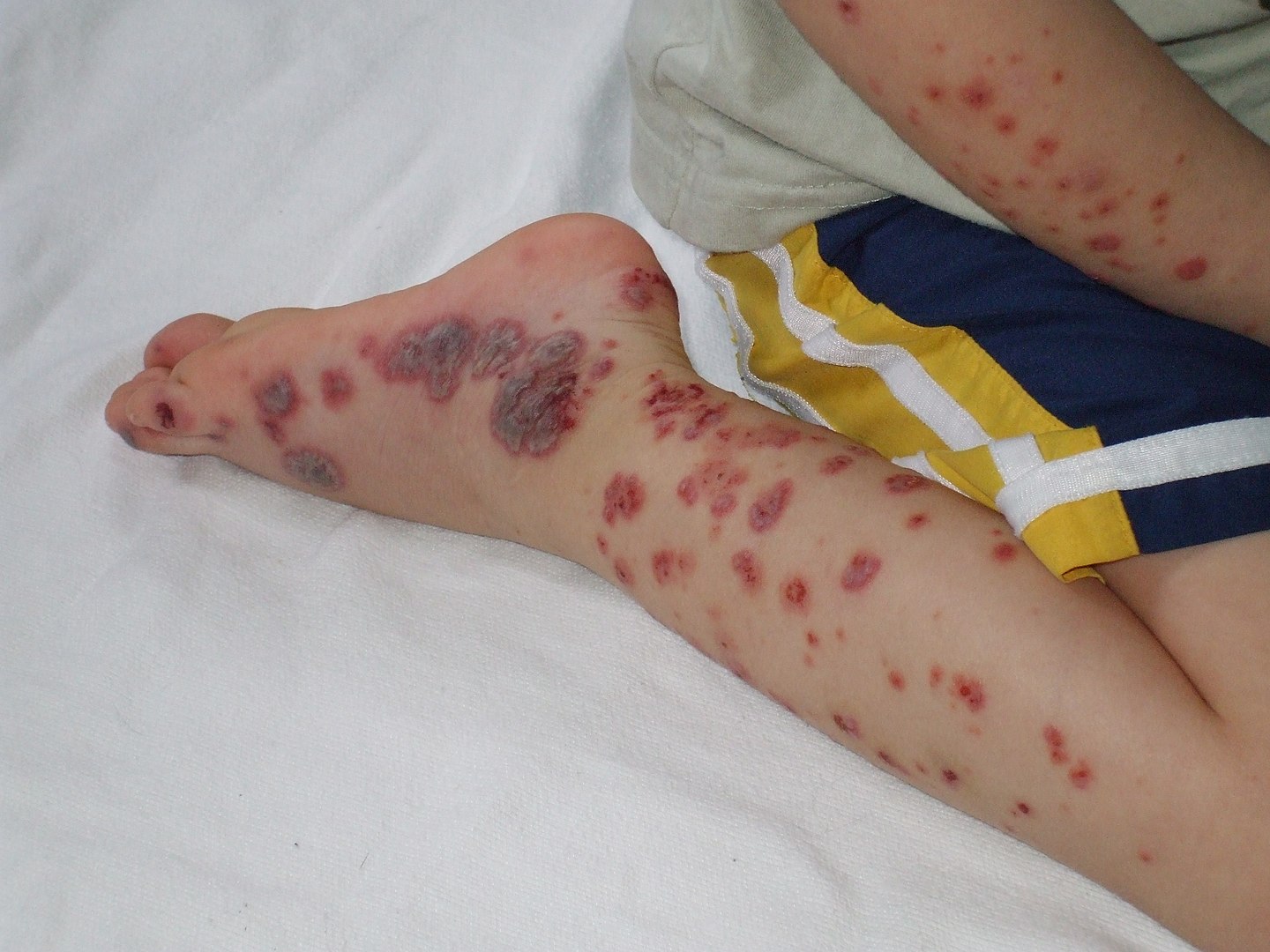
    • Suele comenzar con una erupción macular eritematosa
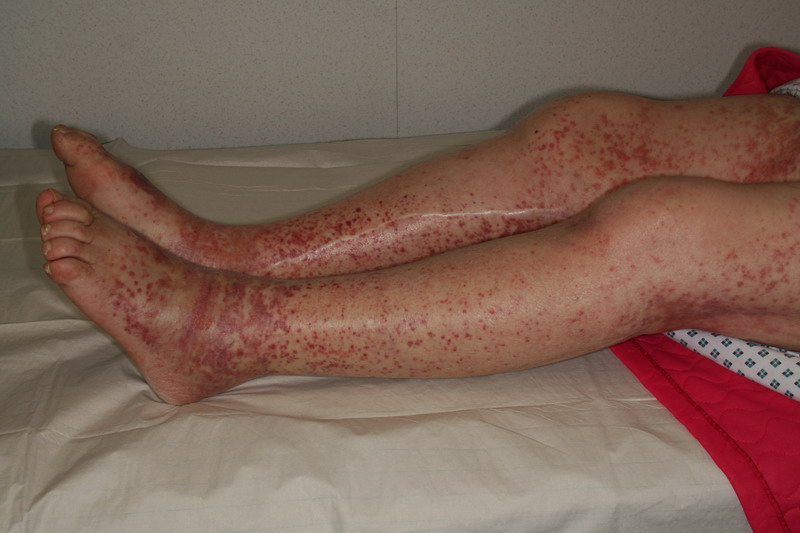
    • Progresa a púrpura palpable no dolorosa (signo clínico distintivo)
    • Distribución simétrica en EN Erythema nodosum is an immune-mediated panniculitis (inflammation of the subcutaneous fat) caused by a type IV (delayed-type) hypersensitivity reaction. It commonly manifests in young women as tender, erythematous nodules on the shins. Erythema Nodosum zonas dependientes de la gravedad (piernas, glúteos)
    • La erupción puede resolverse y luego reaparecer.
  • Gastrointestinal (35%–85%):
    • Náusea, vómitos
    • Dolor Dolor Inflammation abdominal tipo cólico
    • Diarrea sanguinolenta o no-sanguinolenta
    • Complicaciones: intususcepción (ileo-ileal > ileocecal)
    • Complicación gastrointestinal más común en EN Erythema nodosum is an immune-mediated panniculitis (inflammation of the subcutaneous fat) caused by a type IV (delayed-type) hypersensitivity reaction. It commonly manifests in young women as tender, erythematous nodules on the shins. Erythema Nodosum niños, rara en EN Erythema nodosum is an immune-mediated panniculitis (inflammation of the subcutaneous fat) caused by a type IV (delayed-type) hypersensitivity reaction. It commonly manifests in young women as tender, erythematous nodules on the shins. Erythema Nodosum adultos
  • Artralgia/artritis (60%–85%):
    • Transitoria
    • Migratoria
    • Articulaciones inflamadas y sensibles
    • Puede afectar a 1–2 articulaciones, principalmente la rodilla y el tobillo
    • No crónica, no deformante
  • Renal (20%–54%):
    • La hematuria Hematuria Presence of blood in the urine. Renal Cell Carcinoma (varía de microscópica a macroscópica) es el hallazgo más común.
    • Proteinuria Proteinuria The presence of proteins in the urine, an indicator of kidney diseases. Nephrotic Syndrome in Children (varía de leve a rango nefrótico):
      • La proteinuria Proteinuria The presence of proteins in the urine, an indicator of kidney diseases. Nephrotic Syndrome in Children severa es poco frecuente.
      • Significa el desarrollo de una enfermedad progresiva
    • Hipertensión
    • Posible progresión a enfermedad renal crónica, especialmente en EN Erythema nodosum is an immune-mediated panniculitis (inflammation of the subcutaneous fat) caused by a type IV (delayed-type) hypersensitivity reaction. It commonly manifests in young women as tender, erythematous nodules on the shins. Erythema Nodosum adultos
  • Otros:
    • Dolor Dolor Inflammation/ edema Edema Edema is a condition in which excess serous fluid accumulates in the body cavity or interstitial space of connective tissues. Edema is a symptom observed in several medical conditions. It can be categorized into 2 types, namely, peripheral (in the extremities) and internal (in an organ or body cavity). Edema escrotal (2%–38%)
    • Edema Edema Edema is a condition in which excess serous fluid accumulates in the body cavity or interstitial space of connective tissues. Edema is a symptom observed in several medical conditions. It can be categorized into 2 types, namely, peripheral (in the extremities) and internal (in an organ or body cavity). Edema subcutáneo
    • Encefalopatía
    • Queratitis/uveítis

Diagnóstico

Antecedentes y examen físico

  • Suele ser suficiente para establecer el diagnóstico
  • Infección de vías respiratorias altas/estreptococo A, pródromo seguido de la tétrada:

Análisis de laboratorio

Los LOS Neisseria análisis de laboratorio se utilizan para descartar diagnósticos diferenciales y evaluar complicaciones.
  • Hemograma:
    • Recuento normal de eritrocitos o anemia Anemia Anemia is a condition in which individuals have low Hb levels, which can arise from various causes. Anemia is accompanied by a reduced number of RBCs and may manifest with fatigue, shortness of breath, pallor, and weakness. Subtypes are classified by the size of RBCs, chronicity, and etiology. Anemia: Overview and Types normocítica (debido a hemorragia gastrointestinal)
    • Recuento normal de plaquetas o trombocitosis
  • Química:
    • BUN y creatinina elevados
    • Alteraciones electrolíticas
  • Tiempo de protrombina/tromboplastina parcial:
    • Deberían ser normales en EN Erythema nodosum is an immune-mediated panniculitis (inflammation of the subcutaneous fat) caused by a type IV (delayed-type) hypersensitivity reaction. It commonly manifests in young women as tender, erythematous nodules on the shins. Erythema Nodosum la púrpura de Henoch-Schönlein
    • Las anomalías deben hacer sospechar de diagnósticos alternativos
  • Reactantes de fase aguda:
    • PCR PCR Polymerase chain reaction (PCR) is a technique that amplifies DNA fragments exponentially for analysis. The process is highly specific, allowing for the targeting of specific genomic sequences, even with minuscule sample amounts. The PCR cycles multiple times through 3 phases: denaturation of the template DNA, annealing of a specific primer to the individual DNA strands, and synthesis/elongation of new DNA molecules. Polymerase Chain Reaction (PCR) elevada
    • Velocidad de eritrosedimentación (VES) elevada
  • IgA IgA Represents 15-20% of the human serum immunoglobulins, mostly as the 4-chain polymer in humans or dimer in other mammals. Secretory iga is the main immunoglobulin in secretions. Immunoglobulins: Types and Functions: aumentada (50%)
  • C3/C4: reducido
  • Factor XIII: reducido (50%)
  • Análisis de orina:

Biopsia

  • Reservado para presentaciones inusuales/graves
  • Más comúnmente necesaria en EN Erythema nodosum is an immune-mediated panniculitis (inflammation of the subcutaneous fat) caused by a type IV (delayed-type) hypersensitivity reaction. It commonly manifests in young women as tender, erythematous nodules on the shins. Erythema Nodosum pacientes adultos
  • Piel: vasculitis Vasculitis Inflammation of any one of the blood vessels, including the arteries; veins; and rest of the vasculature system in the body. Systemic Lupus Erythematosus leucocitoclástica en EN Erythema nodosum is an immune-mediated panniculitis (inflammation of the subcutaneous fat) caused by a type IV (delayed-type) hypersensitivity reaction. It commonly manifests in young women as tender, erythematous nodules on the shins. Erythema Nodosum vénulas postcapilares
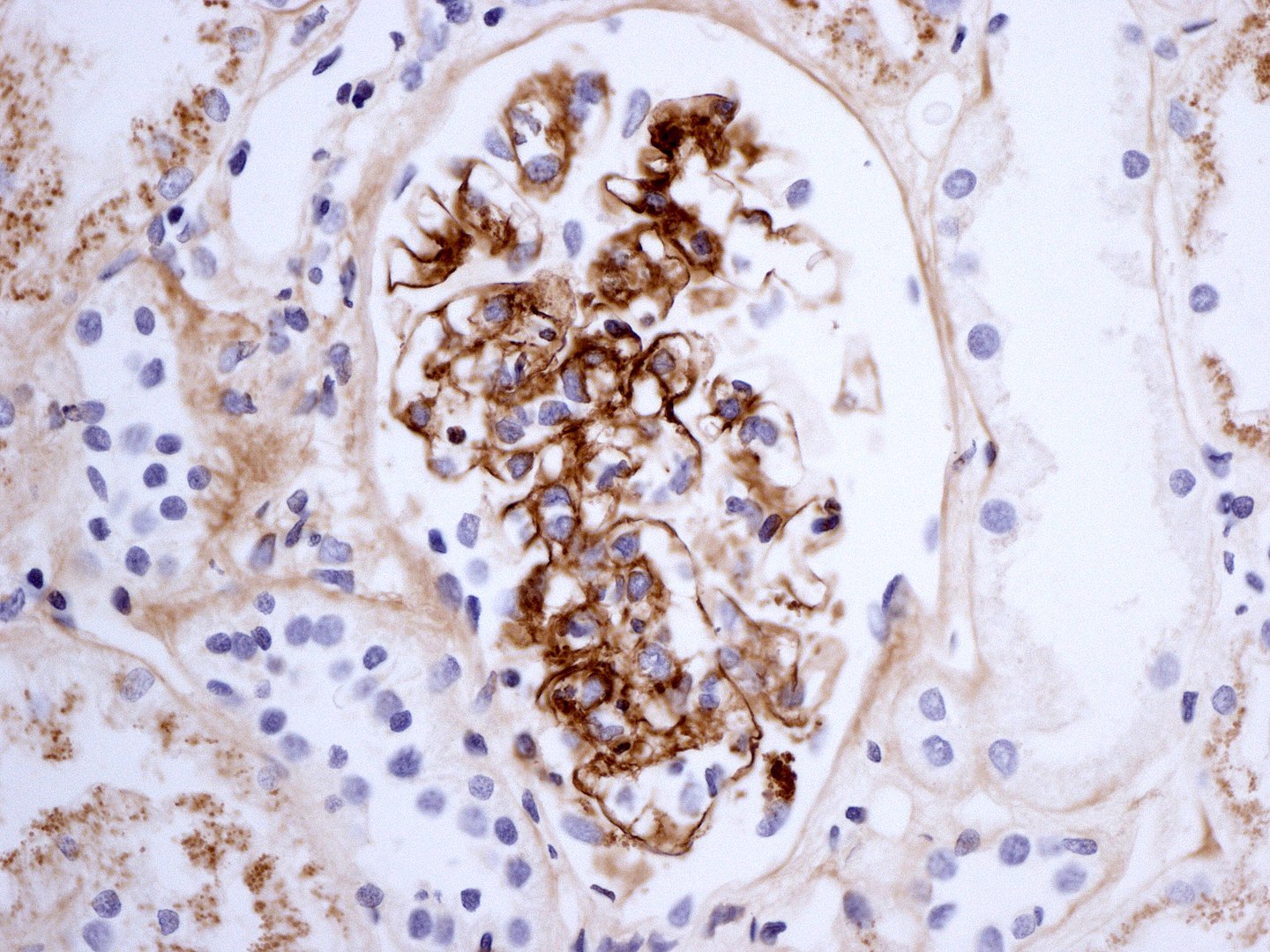
  • La biopsia renal revela el depósito de complejos inmunes en EN Erythema nodosum is an immune-mediated panniculitis (inflammation of the subcutaneous fat) caused by a type IV (delayed-type) hypersensitivity reaction. It commonly manifests in young women as tender, erythematous nodules on the shins. Erythema Nodosum el mesangio
Biopsia renal PHS que muestra inmunotinción para IgA

Biopsia renal en la púrpura de Schönlein-Henoch que muestra inmunotinción para IgA

Imagen: “Henoch-Schönlein nephritis IgA immunostaining” por Lazarus Karamadoukis, Linmarie Ludeman, and Anthony J Williams. Licencia: CC BY 2.0

Imagenología

La imagenología se utiliza para las presentaciones complicadas.
  • Ultrasonido:
    • Para evaluar edema Edema Edema is a condition in which excess serous fluid accumulates in the body cavity or interstitial space of connective tissues. Edema is a symptom observed in several medical conditions. It can be categorized into 2 types, namely, peripheral (in the extremities) and internal (in an organ or body cavity). Edema escrotal
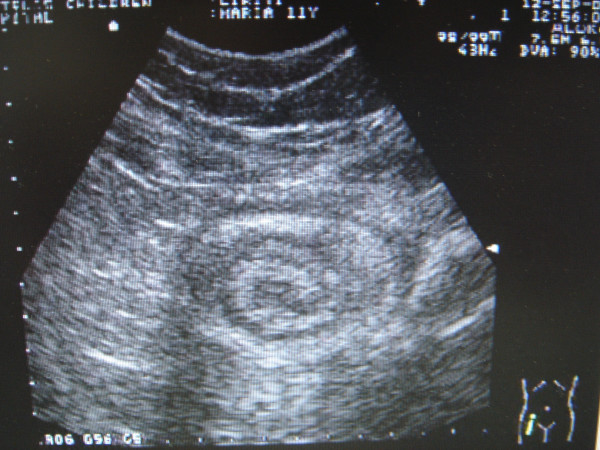
    • Para evaluar por intususcepción (puede mostrar el “signo de la diana”)
  • Radiografía de abdomen: para evaluar si hay obstrucción intestinal
  • RM/TC de la cabeza: para síntomas neurológicos (pequeños vasos)
Signo de diana típico de la intususcepción en la ecografía abdominal

Signo de la diana típico de la intususcepción en el ultrasonido abdominal

Imagen: “Pelvic plastron secondary to acute appendicitis in a child presented as appendiceal intussusception. A case report” por Christianakis E, Sakelaropoulos A, Papantzimas C, Pitiakoudis M, Filippou G, Filippou D, Rizos S, Paschalidis N. License: CC BY 2.0

Tratamiento

Tratamiento

  • Tratamiento de soporte (la única medida necesaria en EN Erythema nodosum is an immune-mediated panniculitis (inflammation of the subcutaneous fat) caused by a type IV (delayed-type) hypersensitivity reaction. It commonly manifests in young women as tender, erythematous nodules on the shins. Erythema Nodosum los LOS Neisseria casos leves):
    • Reposo: reposo en EN Erythema nodosum is an immune-mediated panniculitis (inflammation of the subcutaneous fat) caused by a type IV (delayed-type) hypersensitivity reaction. It commonly manifests in young women as tender, erythematous nodules on the shins. Erythema Nodosum cama con elevación de las extremidades
    • Hidratación
    • Analgésicos:
      • Paracetamol paracetamol Acetaminophen is an over-the-counter nonopioid analgesic and antipyretic medication and the most commonly used analgesic worldwide. Despite the widespread use of acetaminophen, its mechanism of action is not entirely understood. Acetaminophen
      • Antiinflamatorios no esteroideos (AINE)
  • Afectación renal:
    • Observación con análisis de orina, y medición de la presión arterial semanal durante 6 semanas y mensual durante 6 meses:
    • Antihipertensivos, si son necesarios
    • Corticosteroides, si el síndrome nefrítico es persistente
    • Inmunosupresores
    • Plasmaféresis (retrasa la progresión)
    • Enfermedad renal terminal: trasplante renal
  • Abdominal:
    • Corticosteroides para el dolor Dolor Inflammation abdominal severo
    • Cirugía en EN Erythema nodosum is an immune-mediated panniculitis (inflammation of the subcutaneous fat) caused by a type IV (delayed-type) hypersensitivity reaction. It commonly manifests in young women as tender, erythematous nodules on the shins. Erythema Nodosum caso de intususcepción/isquemia intestinal
  • SNC: inmunosupresores/corticosteroides
  • Artralgia: corticosteroides para el dolor Dolor Inflammation articular severo

Pronóstico

  • Excelente pronóstico si:
    • Síntomas renales leves
    • No hay afectación del SNC
    • < 3 años de edad
    • Duración < 6 semanas
  • La morbilidad y la mortalidad aumentan en EN Erythema nodosum is an immune-mediated panniculitis (inflammation of the subcutaneous fat) caused by a type IV (delayed-type) hypersensitivity reaction. It commonly manifests in young women as tender, erythematous nodules on the shins. Erythema Nodosum los LOS Neisseria siguientes casos:
    • Erupción recurrente en EN Erythema nodosum is an immune-mediated panniculitis (inflammation of the subcutaneous fat) caused by a type IV (delayed-type) hypersensitivity reaction. It commonly manifests in young women as tender, erythematous nodules on the shins. Erythema Nodosum 6 meses
    • Síntomas renales graves
    • Adultos
  • 2/3 de los LOS Neisseria casos no experimentan ninguna recidiva.

Diagnóstico Diferencial

  • Glomerulonefritis aguda: es una inflamación inmunomediada de los LOS Neisseria glomérulos. Las causas implican una inflamación primaria y secundaria y a menudo siguen a una infección estreptocócica. La glomerulonefritis aguda se presenta con edema Edema Edema is a condition in which excess serous fluid accumulates in the body cavity or interstitial space of connective tissues. Edema is a symptom observed in several medical conditions. It can be categorized into 2 types, namely, peripheral (in the extremities) and internal (in an organ or body cavity). Edema generalizado, hipertensión y orina oscura. El diagnóstico se basa en EN Erythema nodosum is an immune-mediated panniculitis (inflammation of the subcutaneous fat) caused by a type IV (delayed-type) hypersensitivity reaction. It commonly manifests in young women as tender, erythematous nodules on the shins. Erythema Nodosum el análisis de orina, los LOS Neisseria análisis de sangre y los LOS Neisseria cultivos/títulos positivos de estreptococos. El tratamiento es generalmente de soporte.
  • Enfermedad de Berger (nefropatía por IgA IgA Represents 15-20% of the human serum immunoglobulins, mostly as the 4-chain polymer in humans or dimer in other mammals. Secretory iga is the main immunoglobulin in secretions. Immunoglobulins: Types and Functions): es la causa más común de glomerulonefritis primaria en EN Erythema nodosum is an immune-mediated panniculitis (inflammation of the subcutaneous fat) caused by a type IV (delayed-type) hypersensitivity reaction. It commonly manifests in young women as tender, erythematous nodules on the shins. Erythema Nodosum todo el mundo, que se presenta con un depósito de IgA IgA Represents 15-20% of the human serum immunoglobulins, mostly as the 4-chain polymer in humans or dimer in other mammals. Secretory iga is the main immunoglobulin in secretions. Immunoglobulins: Types and Functions en EN Erythema nodosum is an immune-mediated panniculitis (inflammation of the subcutaneous fat) caused by a type IV (delayed-type) hypersensitivity reaction. It commonly manifests in young women as tender, erythematous nodules on the shins. Erythema Nodosum los LOS Neisseria tejidos mesangiales. Un factor diferenciador de la púrpura de Henoch-Schönlein es la ausencia de manifestaciones extrarrenales. El diagnóstico definitivo se basa en EN Erythema nodosum is an immune-mediated panniculitis (inflammation of the subcutaneous fat) caused by a type IV (delayed-type) hypersensitivity reaction. It commonly manifests in young women as tender, erythematous nodules on the shins. Erythema Nodosum la biopsia renal. El tratamiento incluye esteroides e inmunosupresores.
  • Púrpura trombocitopénica idiopática: destrucción inmunomediada de las plaquetas, que también se presenta con una erupción purpúrica. El factor diferenciador es que la púrpura de Henoch-Schönlein suele provocar trombocitosis. El diagnóstico se basa en EN Erythema nodosum is an immune-mediated panniculitis (inflammation of the subcutaneous fat) caused by a type IV (delayed-type) hypersensitivity reaction. It commonly manifests in young women as tender, erythematous nodules on the shins. Erythema Nodosum la presentación clínica y el bajo recuento de plaquetas. El tratamiento incluye esteroides y esplenectomía en EN Erythema nodosum is an immune-mediated panniculitis (inflammation of the subcutaneous fat) caused by a type IV (delayed-type) hypersensitivity reaction. It commonly manifests in young women as tender, erythematous nodules on the shins. Erythema Nodosum ciertos casos.
  • Meningitis Meningitis Meningitis is inflammation of the meninges, the protective membranes of the brain, and spinal cord. The causes of meningitis are varied, with the most common being bacterial or viral infection. The classic presentation of meningitis is a triad of fever, altered mental status, and nuchal rigidity. Meningitis en EN Erythema nodosum is an immune-mediated panniculitis (inflammation of the subcutaneous fat) caused by a type IV (delayed-type) hypersensitivity reaction. It commonly manifests in young women as tender, erythematous nodules on the shins. Erythema Nodosum niños: las infecciones por Neisseria Neisseria Neisseria is a genus of bacteria commonly present on mucosal surfaces. Several species exist, but only 2 are pathogenic to humans: N. gonorrhoeae and N. meningitidis. Neisseria species are non-motile, gram-negative diplococci most commonly isolated on modified Thayer-Martin (MTM) agar. Neisseria meningiditis se presentan con una erupción similar que no se desvanece y se asocia con fiebre alta. El diagnóstico se establece con la tinción de Gram del LCR y el cultivo, y el tratamiento es con antibióticos.
  • Endocarditis Endocarditis Endocarditis is an inflammatory disease involving the inner lining (endometrium) of the heart, most commonly affecting the cardiac valves. Both infectious and noninfectious etiologies lead to vegetations on the valve leaflets. Patients may present with nonspecific symptoms such as fever and fatigue. Endocarditis infecciosa: inflamación del endocardio secundaria a infección. La endocarditis Endocarditis Endocarditis is an inflammatory disease involving the inner lining (endometrium) of the heart, most commonly affecting the cardiac valves. Both infectious and noninfectious etiologies lead to vegetations on the valve leaflets. Patients may present with nonspecific symptoms such as fever and fatigue. Endocarditis infecciosa se asocia a una erupción cutánea similar a la observada en EN Erythema nodosum is an immune-mediated panniculitis (inflammation of the subcutaneous fat) caused by a type IV (delayed-type) hypersensitivity reaction. It commonly manifests in young women as tender, erythematous nodules on the shins. Erythema Nodosum la púrpura de Henoch-Schönlein. El diagnóstico se establece con hemocultivos y ecocardiograma. Los LOS Neisseria antibióticos son la base del tratamiento.

Referencias

  1. Dedeoglu, F., Kim, S. (2025). IgA vasculitis (Henoch-Schönlein purpura): Clinical manifestations and diagnosis. Retrieved June 19, 2025, from https://www.uptodate.com/contents/iga-vasculitis-henoch-schonlein-purpura-clinical-manifestations-and-diagnosis
  2. Dedeoglu, F., Kim, S. (2025). IgA vasculitis (Henoch-Schönlein purpura): Management. Retrieved June 19, 2025, from https://www.uptodate.com/contents/iga-vasculitis-henoch-schonlein-purpura-management
  3. Bhimma, R. (2023). Henoch-Schönlein purpura (IgA vasculitis). Retrieved June 19, 2025, from https://emedicine.medscape.com/article/984105-overview
  4. Leung, A.K.C., Barankin, B., Leong, K.F. (2020). Henoch-Schönlein purpura in children: An updated review. Curr Pediatr Rev: 16(4),265–276. https://pubmed.ncbi.nlm.nih.gov/32384035/

¡Crea tu cuenta gratis o inicia una sesión para seguir leyendo!

Regístrate ahora y obtén acceso gratuito a Lecturio con páginas de concepto, videos médicos y cuestionarios para tu educación médica.

User Reviews

Que tengas una sesión de estudio alegre y navideña 🎁 Ahorra 50% en todos los planes >>

Details