
La poliomielitis es una enfermedad infecciosa causada por el poliovirus Poliovirus Poliomyelitis is an infectious disease caused by the poliovirus. This virus is a member of the Picornaviridae family. It is a small, single-stranded, positive-sense RNA virus without a lipid envelope. Transmission occurs through the fecal-oral route and, occasionally, through respiratory aerosols. Poliovirus/Poliomyelitis. Este virus Virus Viruses are infectious, obligate intracellular parasites composed of a nucleic acid core surrounded by a protein capsid. Viruses can be either naked (non-enveloped) or enveloped. The classification of viruses is complex and based on many factors, including type and structure of the nucleoid and capsid, the presence of an envelope, the replication cycle, and the host range. Virology es miembro de la familia Picornaviridae Picornaviridae A family of small RNA viruses comprising some important pathogens of humans and animals. Transmission usually occurs mechanically. There are nine genera: aphthovirus; cardiovirus; enterovirus; erbovirus; hepatovirus; kobuvirus; parechovirus; rhinovirus; and teschovirus. Coxsackievirus. Es un virus Virus Viruses are infectious, obligate intracellular parasites composed of a nucleic acid core surrounded by a protein capsid. Viruses can be either naked (non-enveloped) or enveloped. The classification of viruses is complex and based on many factors, including type and structure of the nucleoid and capsid, the presence of an envelope, the replication cycle, and the host range. Virology pequeño de ARN monocatenario y de sentido positivo sin envoltura lipídica. La transmisión se produce por vía fecal-oral y ocasionalmente a través de aerosoles respiratorios. La mayoría de los LOS Neisseria pacientes serán asintomáticos o tendrán una presentación leve y abortiva con síntomas similares a los LOS Neisseria de la gripe. Aquellos que desarrollan poliomielitis no paralítica desarrollarán signos y síntomas de meningitis Meningitis Meningitis is inflammation of the meninges, the protective membranes of the brain, and spinal cord. The causes of meningitis are varied, with the most common being bacterial or viral infection. The classic presentation of meningitis is a triad of fever, altered mental status, and nuchal rigidity. Meningitis aséptica. Una proporción muy pequeña de pacientes progresará a poliomielitis paralítica, con progresión neurológica (incluida la parálisis flácida asimétrica). El diagnóstico es determinado por la presentación clínica y puede estar respaldado por cultivo viral, PCR PCR Polymerase chain reaction (PCR) is a technique that amplifies DNA fragments exponentially for analysis. The process is highly specific, allowing for the targeting of specific genomic sequences, even with minuscule sample amounts. The PCR cycles multiple times through 3 phases: denaturation of the template DNA, annealing of a specific primer to the individual DNA strands, and synthesis/elongation of new DNA molecules. Polymerase Chain Reaction (PCR) y serología. Los LOS Neisseria antivirales actuales son ineficaces y el tratamiento es de soporte. Hay 2 vacunas disponibles que casi han erradicado esta enfermedad a nivel mundial.
Last updated: Dec 15, 2025
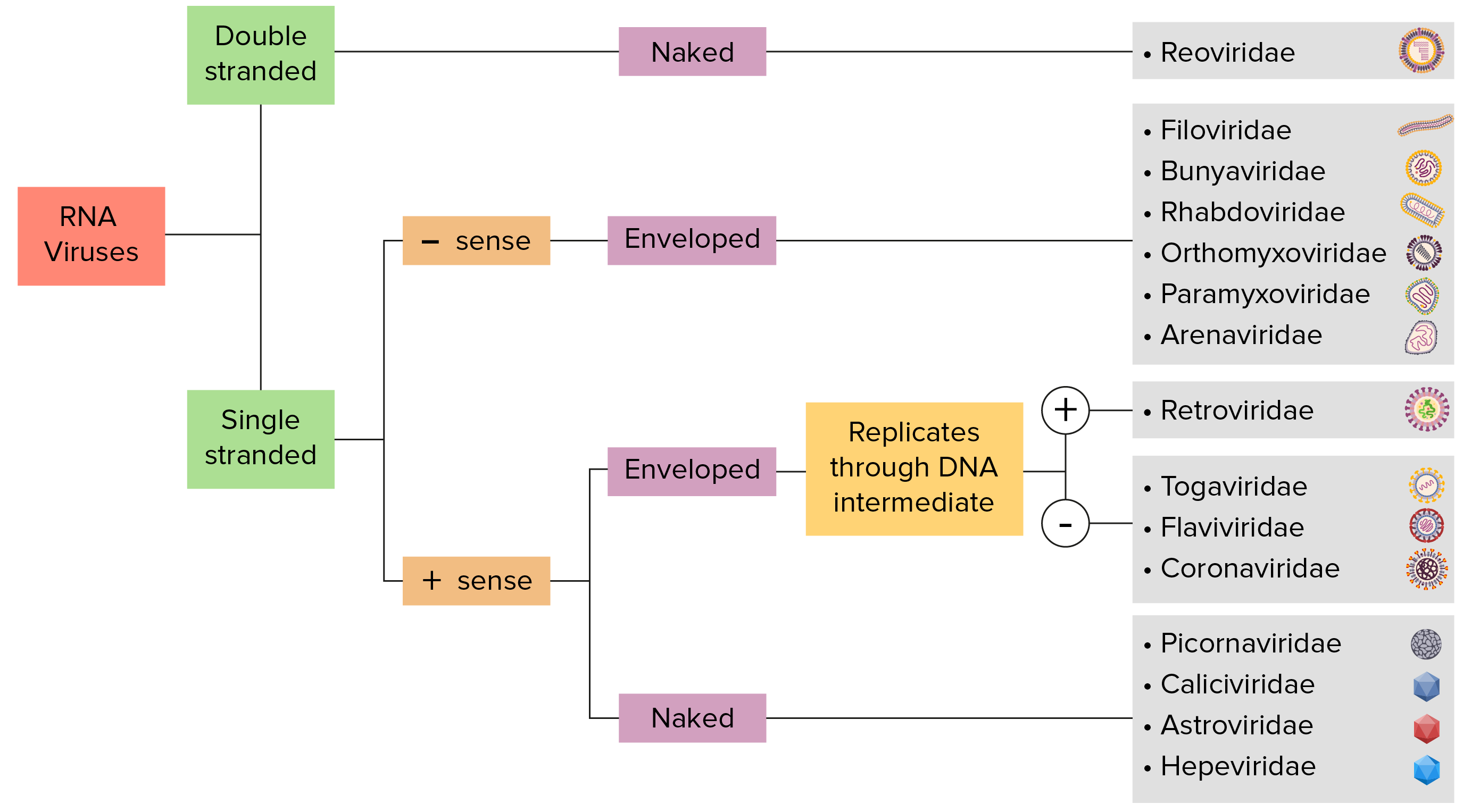
Identificación de los virus ARN:
Los virus pueden clasificarse de muchas maneras. Sin embargo, la mayoría de los virus tienen un genoma formado por ADN o ARN. Los virus con genoma ARN pueden caracterizarse además por tener ARN monocatenario o bicatenario. Los virus “envueltos” están cubiertos por una fina capa de membrana celular (normalmente tomada de la célula huésped). Si la capa está ausente, los virus se denominan “desnudos”. Los virus con genomas monocatenarios son positivos si el genoma se emplea directamente como ARN mensajero (ARNm), que se traduce en proteínas. Los virus monocatenarios negativos emplean la ARN polimerasa, una enzima viral, para transcribir su genoma en ARNm.
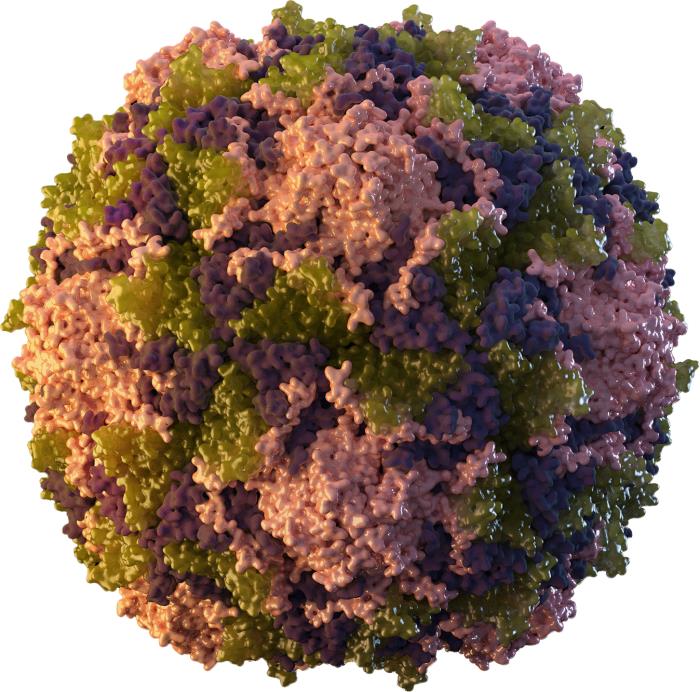
Una representación gráfica tridimensional de una partícula de poliovirus icosaédrica muy compacta
Imagen: “Poliomyelitis” por CDC. Licencia: Dominio Público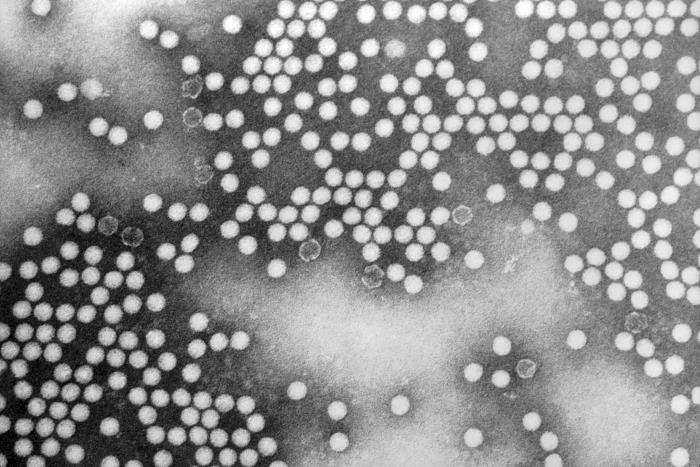
Una imagen de microscopía electrónica de transmisión que muestra numerosos viriones de poliovirus redondos, que miden aproximadamente 30 nm de diámetro y exhiben simetría icosaédrica
Imagen: “A transmission electron microscopic (TEM) image of Poliovirus type-1 virions” por CDC. Licencia: Dominio PúblicoLa poliomielitis es causada por 3 serovares de poliovirus Poliovirus Poliomyelitis is an infectious disease caused by the poliovirus. This virus is a member of the Picornaviridae family. It is a small, single-stranded, positive-sense RNA virus without a lipid envelope. Transmission occurs through the fecal-oral route and, occasionally, through respiratory aerosols. Poliovirus/Poliomyelitis:
Los LOS Neisseria humanos son el único reservorio conocido.
Este virus Virus Viruses are infectious, obligate intracellular parasites composed of a nucleic acid core surrounded by a protein capsid. Viruses can be either naked (non-enveloped) or enveloped. The classification of viruses is complex and based on many factors, including type and structure of the nucleoid and capsid, the presence of an envelope, the replication cycle, and the host range. Virology altamente contagioso se transmite a través de:
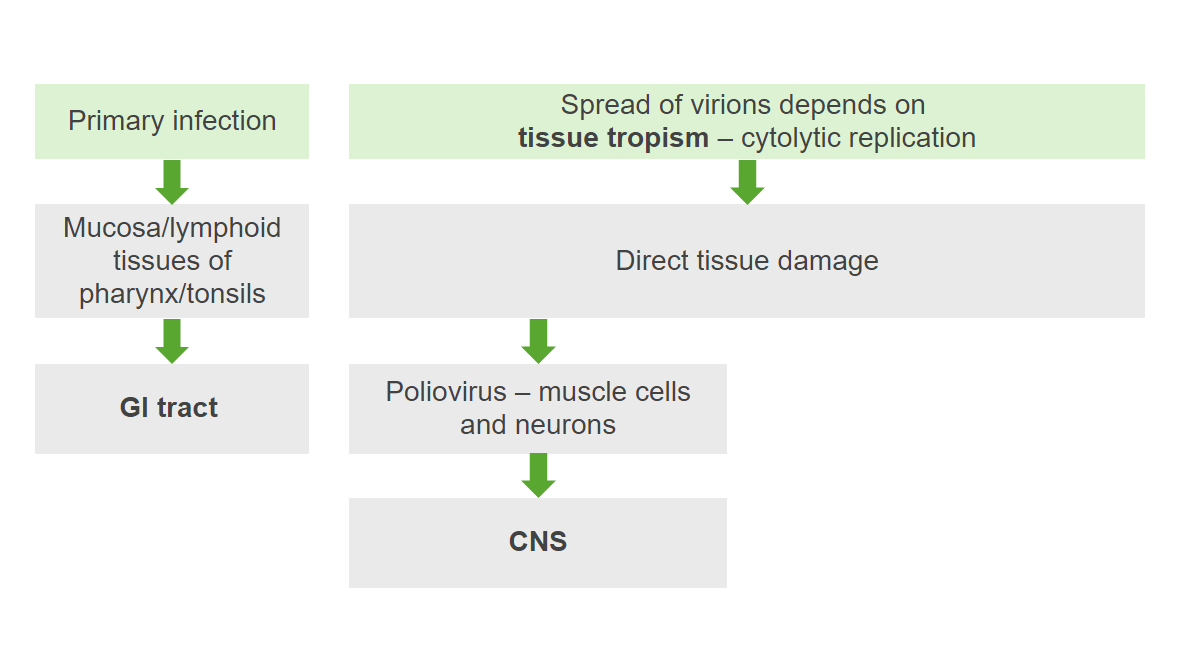
La patogénesis del poliovirus:
Inicialmente, el virus ingresa e infecta los tejidos linfoides. Se produce la viremia, lo que permite una eventual propagación al sistema nervioso. La replicación da como resultado daño tisular y síntomas.
La mayoría de los LOS Neisseria pacientes infectados son asintomáticos o desarrollan una enfermedad leve similar a la gripe:
Aproximadamente el 4% de los LOS Neisseria infectados desarrollará poliomielitis no paralítica. La presentación será una meningitis Meningitis Meningitis is inflammation of the meninges, the protective membranes of the brain, and spinal cord. The causes of meningitis are varied, with the most common being bacterial or viral infection. The classic presentation of meningitis is a triad of fever, altered mental status, and nuchal rigidity. Meningitis aséptica después de un pródromo similar al AL Amyloidosis de la poliomielitis abortiva.
Una minoría de pacientes con poliomielitis no paralítica progresará a la forma paralítica de la enfermedad, caracterizada por:
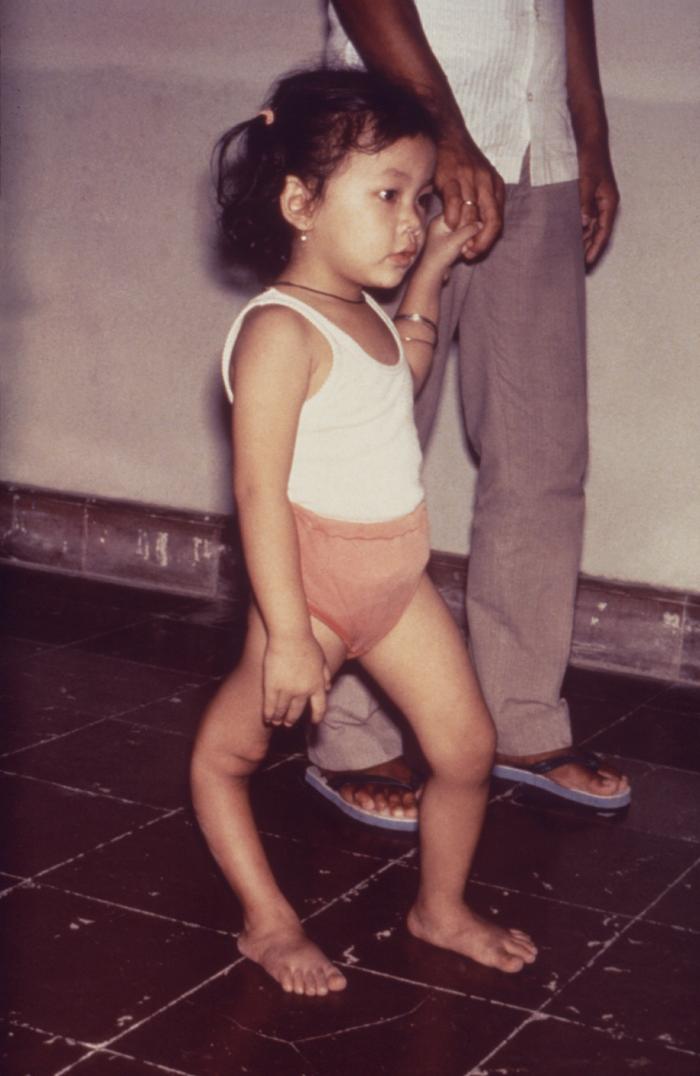
Una niña con una deformidad de la extremidad inferior derecha como consecuencia de una parálisis por una infección por poliovirus paralítico
Imagen: “Paralytic poliovirus infection” por CDC. Licencia: Dominio PúblicoEl síndrome pospoliomielitis se manifiesta como un empeoramiento de los LOS Neisseria síntomas en EN Erythema nodosum is an immune-mediated panniculitis (inflammation of the subcutaneous fat) caused by a type IV (delayed-type) hypersensitivity reaction. It commonly manifests in young women as tender, erythematous nodules on the shins. Erythema Nodosum los LOS Neisseria supervivientes de poliomielitis. Puede ocurrir décadas después de la infección inicial.
El diagnóstico se basa en EN Erythema nodosum is an immune-mediated panniculitis (inflammation of the subcutaneous fat) caused by a type IV (delayed-type) hypersensitivity reaction. It commonly manifests in young women as tender, erythematous nodules on the shins. Erythema Nodosum la presentación clínica y está respaldado por la evaluación diagnóstica.
Punción lumbar:
Pruebas específicas:
No existe una terapia antiviral Antiviral Antivirals for Hepatitis B eficaz para la poliomielitis. El tratamiento es de soporte.
Los LOS Neisseria pacientes con poliomielitis no paralítica se recuperan por completo. Para aquellos con poliomielitis paralítica:
Se utilizan 2 vacunas:
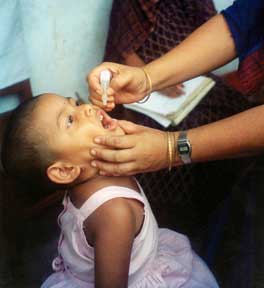
Una niña recibiendo la vacuna oral contra el poliovirus.
Imagen: “A child receiving an oral polio vaccine” por USAID. Licencia: Dominio Público| Virus Virus Viruses are infectious, obligate intracellular parasites composed of a nucleic acid core surrounded by a protein capsid. Viruses can be either naked (non-enveloped) or enveloped. The classification of viruses is complex and based on many factors, including type and structure of the nucleoid and capsid, the presence of an envelope, the replication cycle, and the host range. Virology | Coxsackievirus Coxsackievirus Coxsackievirus is a member of a family of viruses called Picornaviridae and the genus Enterovirus. Coxsackieviruses are single-stranded, positive-sense RNA viruses, and are divided into coxsackie group A and B viruses. Both groups of viruses cause upper respiratory infections, rashes, aseptic meningitis, or encephalitis. Coxsackievirus | Poliovirus Poliovirus Poliomyelitis is an infectious disease caused by the poliovirus. This virus is a member of the Picornaviridae family. It is a small, single-stranded, positive-sense RNA virus without a lipid envelope. Transmission occurs through the fecal-oral route and, occasionally, through respiratory aerosols. Poliovirus/Poliomyelitis | Echovirus Echovirus Echoviruses are single-stranded positive-sense RNA viruses belonging to the genus Enterovirus. Transmission is most commonly through the fecal-oral route. The majority of patients are asymptomatic. Patients who are symptomatic can exhibit a wide range of illnesses ranging from nonspecific URIs and exanthems to severe and life-threatening illnesses. Echovirus |
|---|---|---|---|
| Características |
|
|
|
| Transmisión |
|
|
|
| Clínico |
|
|
|
| Diagnóstico |
|
|
|
| Tratamiento | De soporte | De soporte | De soporte |
| Prevención | Lavado de manos | Vacunación | Lavado de manos |