Domina Conceptos Médicos

Estudia para la escuela de medicina y tus examenes con Lecturio.

Polimiositis

La polimiositis es una miopatía inflamatoria autoinmune causada por una lesión muscular mediada por linfocitos T. La etiología de la polimiositis no está clara, pero existen varias asociaciones genéticas y ambientales. La polimiositis es más común en EN Erythema nodosum is an immune-mediated panniculitis (inflammation of the subcutaneous fat) caused by a type IV (delayed-type) hypersensitivity reaction. It commonly manifests in young women as tender, erythematous nodules on the shins. Erythema Nodosum mujeres de mediana edad y rara vez afecta a los LOS Neisseria niños. Los LOS Neisseria pacientes presentan debilidad muscular proximal progresiva y simétrica y síntomas constitucionales. Las complicaciones pueden surgir de la afectación respiratoria, cardíaca o gastrointestinal. El diagnóstico se basa en EN Erythema nodosum is an immune-mediated panniculitis (inflammation of the subcutaneous fat) caused by a type IV (delayed-type) hypersensitivity reaction. It commonly manifests in young women as tender, erythematous nodules on the shins. Erythema Nodosum la presentación clínica y estudios de laboratorio y se confirma mediante una biopsia muscular. El tratamiento es con corticosteroides sistémicos, inmunosupresores y fisioterapia. Todos los LOS Neisseria pacientes deben someterse a exámenes de tamizaje de cáncer porque existe una fuerte asociación con la malignidad.

Last updated: Dec 15, 2025

Editorial responsibility: Stanley Oiseth, Lindsay Jones, Evelin Maza

Descripción General

Definición

La polimiositis es una miopatía inflamatoria autoinmune que se presenta como debilidad muscular proximal simétrica. El síndrome antisintetasa es un subtipo que muestra la presencia de anticuerpos antisintetasa y ciertas manifestaciones extramusculares.

Etiología

Se desconoce la etiología exacta.

Posible predisposición genética:

  • HLA-A1
  • HLA-B8 HLA-B8 A specific hla-b surface antigen subtype. Members of this subtype contain alpha chains that are encoded by the hla-b*08 allele family. Primary Sclerosing Cholangitis
  • HLA-DR3

Factores ambientales:

  • Infecciosos:
    • VIH
    • Virus Virus Viruses are infectious, obligate intracellular parasites composed of a nucleic acid core surrounded by a protein capsid. Viruses can be either naked (non-enveloped) or enveloped. The classification of viruses is complex and based on many factors, including type and structure of the nucleoid and capsid, the presence of an envelope, the replication cycle, and the host range. Virology linfotrópico humano de los LOS Neisseria linfocitos T tipo 1 (HTLV-1, por sus siglas en EN Erythema nodosum is an immune-mediated panniculitis (inflammation of the subcutaneous fat) caused by a type IV (delayed-type) hypersensitivity reaction. It commonly manifests in young women as tender, erythematous nodules on the shins. Erythema Nodosum inglés)
    • Hepatitis B Hepatitis B Hepatitis B virus (HBV) is a partially double-stranded DNA virus, which belongs to the Orthohepadnavirus genus and the Hepadnaviridae family. Most individuals with acute HBV infection are asymptomatic or have mild, self-limiting symptoms. Chronic infection can be asymptomatic or create hepatic inflammation, leading to liver cirrhosis and hepatocellular carcinoma (HCC). Hepatitis B Virus y C
    • Influenza Influenza Influenza viruses are members of the Orthomyxoviridae family and the causative organisms of influenza, a highly contagious febrile respiratory disease. There are 3 primary influenza viruses (A, B, and C) and various subtypes, which are classified based on their virulent surface antigens, hemagglutinin (HA) and neuraminidase (NA). Influenza typically presents with a fever, myalgia, headache, and symptoms of an upper respiratory infection. Influenza Viruses/Influenza
    • Virus Virus Viruses are infectious, obligate intracellular parasites composed of a nucleic acid core surrounded by a protein capsid. Viruses can be either naked (non-enveloped) or enveloped. The classification of viruses is complex and based on many factors, including type and structure of the nucleoid and capsid, the presence of an envelope, the replication cycle, and the host range. Virology Coxsackie B
  • Inducido por medicamentos:
    • Inhibidores de la enzima convertidora de la angiotensina
    • D-penicilamina
    • Hidralazina
    • Procainamida
    • Fenitoína

Afecciones médicas asociadas:

  • Malignidad
  • Trastornos del tejido conectivo

Fisiopatología

  • Evento desencadenante poco claro → activación de linfocitos T CD8 y macrófagos
  • Las células inflamatorias se infiltran en EN Erythema nodosum is an immune-mediated panniculitis (inflammation of the subcutaneous fat) caused by a type IV (delayed-type) hypersensitivity reaction. It commonly manifests in young women as tender, erythematous nodules on the shins. Erythema Nodosum las fibras musculares sanas.
  • Respuesta citotóxica a antígenos musculares no especificados → daño celular directo al AL Amyloidosis endomisio de músculos esqueléticos → necrosis Necrosis The death of cells in an organ or tissue due to disease, injury or failure of the blood supply. Ischemic Cell Damage de fibras musculares

Presentación Clínica

Síntomas

  • Debilidad muscular:
    • Simétrica
    • Se desarrolla gradualmente durante semanas o meses
    • Particularmente evidente al AL Amyloidosis:
      • Subir escaleras
      • Cepillarse el cabello
      • Ponerse de pie desde una posición sentada
      • Alcanzar objetos elevados
      • Mantener la cabeza erguida
    • Las mialgias asociadas ocurren en EN Erythema nodosum is an immune-mediated panniculitis (inflammation of the subcutaneous fat) caused by a type IV (delayed-type) hypersensitivity reaction. It commonly manifests in young women as tender, erythematous nodules on the shins. Erythema Nodosum algunos pacientes.
  • Artralgias o artritis:
    • Simétricas
    • Articulaciones involucradas:
      • Rodillas
      • Muñecas
      • Manos
    • Generalmente asociadas con el síndrome antisintetasa
  • Síntomas constitucionales:
    • Anorexia Anorexia The lack or loss of appetite accompanied by an aversion to food and the inability to eat. It is the defining characteristic of the disorder anorexia nervosa. Anorexia Nervosa
    • Pérdida de peso
    • Fatiga
    • Fiebre leve

Examen físico

  • Fuerza muscular reducida:
    • Afecta a los LOS Neisseria grupos musculares proximales:
      • Deltoides
      • Flexores y extensores de cadera
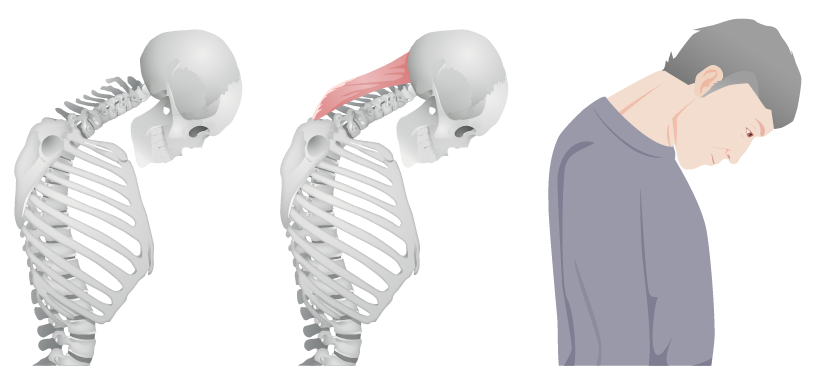
      • Extensores del cuello → cabeza caída
    • Hallazgos tardíos:
      • Atrofia muscular
      • Pérdida de reflejos tendinosos profundos (debido a músculos severamente debilitados o atrofiados)
  • El examen sensorial es normal.
  • El fenómeno de Raynaud puede estar presente.
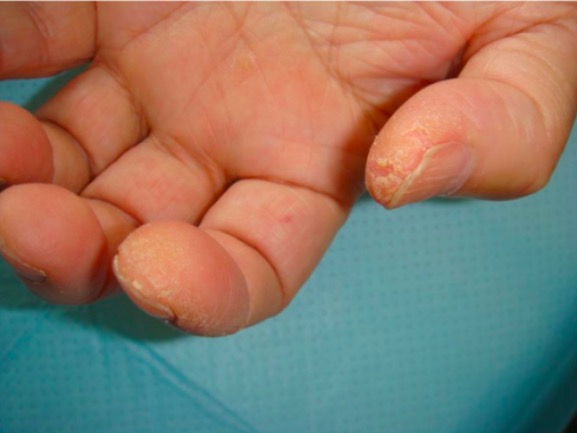
  • Generalmente, no hay afectación cutánea. Excepción: “manos de mecánico”:
    • Erupciones hiperqueratósicas sobre las yemas de los LOS Neisseria dedos y las caras laterales de los LOS Neisseria dedos
    • Asociadas con el síndrome antisintestasa

Manifestaciones sistémicas

  • Respiratorias:
    • Enfermedad pulmonar intersticial (5%–30% de los LOS Neisseria casos)
      • Tos TOS Thoracic outlet syndrome (TOS) is a broad term used for a spectrum of syndromes related to the general region of the thoracic outlet, which involves the compression or irritation of elements of the brachial plexus, subclavian artery, or subclavian vein. Thoracic Outlet Syndrome seca
      • Disnea
      • Crepitantes bilaterales
      • Presente con el síndrome antisintetasa
    • Debilidad de los LOS Neisseria músculos del diafragma y de la pared torácica
      • Insuficiencia respiratoria
  • Gastrointestinales: compromiso faríngeo y esofágico (aproximadamente 30% de los LOS Neisseria pacientes)
    • Disfagia
    • Disfonía
    • Reflujo gastroesofágico
  • Cardiovasculares (raras):
    • Anomalías en EN Erythema nodosum is an immune-mediated panniculitis (inflammation of the subcutaneous fat) caused by a type IV (delayed-type) hypersensitivity reaction. It commonly manifests in young women as tender, erythematous nodules on the shins. Erythema Nodosum la conducción auriculoventricular
    • Miocarditis
    • Miocardiopatía dilatada

Diagnóstico

Estudios diagnósticos

  • Pruebas de laboratorio iniciales:
    • Hemograma
      • Leucocitosis
      • Trombocitosis
    • Marcadores inflamatorios
      • ↑ Velocidad de eritrosedimentación (VES)
      • PCR PCR Polymerase chain reaction (PCR) is a technique that amplifies DNA fragments exponentially for analysis. The process is highly specific, allowing for the targeting of specific genomic sequences, even with minuscule sample amounts. The PCR cycles multiple times through 3 phases: denaturation of the template DNA, annealing of a specific primer to the individual DNA strands, and synthesis/elongation of new DNA molecules. Polymerase Chain Reaction (PCR)
    • Enzimas musculares
      • ↑↑ Creatina quinasa
      • ↑ Aldolasa
      • ↑ Aspartato aminotransferasa ( AST AST Enzymes of the transferase class that catalyze the conversion of l-aspartate and 2-ketoglutarate to oxaloacetate and l-glutamate. Liver Function Tests) y alanina aminotransferasa ( ALT ALT An enzyme that catalyzes the conversion of l-alanine and 2-oxoglutarate to pyruvate and l-glutamate. Liver Function Tests)
      • ↑ Lactato deshidrogenasa ( LDH LDH Osteosarcoma)
    • Anticuerpos antinucleares (ANA, por sus siglas en EN Erythema nodosum is an immune-mediated panniculitis (inflammation of the subcutaneous fat) caused by a type IV (delayed-type) hypersensitivity reaction. It commonly manifests in young women as tender, erythematous nodules on the shins. Erythema Nodosum inglés) positivos
      • Inespecíficos y no diagnósticos
      • Presente en EN Erythema nodosum is an immune-mediated panniculitis (inflammation of the subcutaneous fat) caused by a type IV (delayed-type) hypersensitivity reaction. It commonly manifests in young women as tender, erythematous nodules on the shins. Erythema Nodosum ⅓ de los LOS Neisseria pacientes
  • Seguimiento basado en EN Erythema nodosum is an immune-mediated panniculitis (inflammation of the subcutaneous fat) caused by a type IV (delayed-type) hypersensitivity reaction. It commonly manifests in young women as tender, erythematous nodules on the shins. Erythema Nodosum pruebas de anticuerpos específicos de miositis:
    • Anticuerpos contra la partícula de reconocimiento de señal
      • Específicos para miopatías inflamatorias
      • Asociados con miositis severa
    • Anticuerpos anti-Jo-1
      • Anticuerpo anti-histidil-ARNt sintetasa
      • Presente en EN Erythema nodosum is an immune-mediated panniculitis (inflammation of the subcutaneous fat) caused by a type IV (delayed-type) hypersensitivity reaction. It commonly manifests in young women as tender, erythematous nodules on the shins. Erythema Nodosum el síndrome antisintetasa
      • Ocurre en EN Erythema nodosum is an immune-mediated panniculitis (inflammation of the subcutaneous fat) caused by a type IV (delayed-type) hypersensitivity reaction. It commonly manifests in young women as tender, erythematous nodules on the shins. Erythema Nodosum 20%–30% de los LOS Neisseria pacientes
  • Estudios adicionales si el diagnóstico no está claro debido a hallazgos inespecíficos o atípicos:
    • Electromiografía:
      • Consiste en EN Erythema nodosum is an immune-mediated panniculitis (inflammation of the subcutaneous fat) caused by a type IV (delayed-type) hypersensitivity reaction. It commonly manifests in young women as tender, erythematous nodules on the shins. Erythema Nodosum estudios de conducción nerviosa, incluida la estimulación nerviosa repetitiva y el examen de los LOS Neisseria músculos con aguja
      • Alterado en EN Erythema nodosum is an immune-mediated panniculitis (inflammation of the subcutaneous fat) caused by a type IV (delayed-type) hypersensitivity reaction. It commonly manifests in young women as tender, erythematous nodules on the shins. Erythema Nodosum el 90% de los LOS Neisseria casos
      • Hallazgos comunes: ↑ actividad de inserción, fibrilación espontánea, potencial de unidad motora de corta duración y descargas repetitivas complejas
      • Puede apoyar el diagnóstico, pero no es confirmatoria
    • RM de los LOS Neisseria músculos esqueléticos:
      • Indica inflamación muscular, edema Edema Edema is a condition in which excess serous fluid accumulates in the body cavity or interstitial space of connective tissues. Edema is a symptom observed in several medical conditions. It can be categorized into 2 types, namely, peripheral (in the extremities) and internal (in an organ or body cavity). Edema, fibrosis Fibrosis Any pathological condition where fibrous connective tissue invades any organ, usually as a consequence of inflammation or other injury. Bronchiolitis Obliterans y calcificación
      • Inespecífico y no puede distinguir entre rabdomiólisis, distrofia muscular o miopatías metabólicas
    • Biopsia muscular:
      • Prueba más precisa para confirmar el diagnóstico
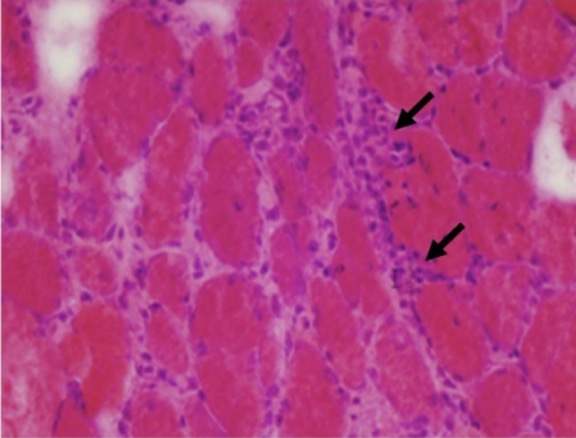
      • Hallazgos: invasión del endomisio por linfocitos, áreas de necrosis Necrosis The death of cells in an organ or tissue due to disease, injury or failure of the blood supply. Ischemic Cell Damage con un poco de regeneración, fibrosis Fibrosis Any pathological condition where fibrous connective tissue invades any organ, usually as a consequence of inflammation or other injury. Bronchiolitis Obliterans
Hallazgos histológicos en polimiositis

Hallazgos histológicos en la polimiositis:
Biopsia muscular de un paciente con polimiositis que muestra células inflamatorias del endomisio (flechas) y variaciones en el tamaño de las fibras

Imagen: “Muscle biopsy” por Neurology, Saint Louis University, Saint Louis, MO, USA.  Licencia: CC BY 4.0
Electromiografía de polimiositis

Hallazgos electromiográficos en la polimiositis: gráfico comparativo que muestra las diferencias en la actividad electromiográfica para diferentes patologías

Imagen por Lecturio.

Evaluación de manifestaciones sistémicas

  • Enfermedad pulmonar intersticial:
    • Radiografía de tórax
    • Pruebas de función pulmonar
  • Disfagia:
    • Trago de bario
    • Manometría esofágica
  • Alteraciones de la conducción: ECG ECG An electrocardiogram (ECG) is a graphic representation of the electrical activity of the heart plotted against time. Adhesive electrodes are affixed to the skin surface allowing measurement of cardiac impulses from many angles. The ECG provides 3-dimensional information about the conduction system of the heart, the myocardium, and other cardiac structures. Electrocardiogram (ECG)
  • Miocarditis o miocardiopatía: ultrasonido cardíaco

Tamizaje de malignidad

  • Los LOS Neisseria pacientes diagnosticados con polimiositis deben ser evaluados por posible malignidad subyacente.
  • Los LOS Neisseria estudios se basan en EN Erythema nodosum is an immune-mediated panniculitis (inflammation of the subcutaneous fat) caused by a type IV (delayed-type) hypersensitivity reaction. It commonly manifests in young women as tender, erythematous nodules on the shins. Erythema Nodosum la edad y el sexo del paciente.
  • Estudios iniciales:
    • Mamografía
    • Frotis de Papanicolaou
    • Colonoscopia
    • TC de tórax, abdomen y pelvis Pelvis The pelvis consists of the bony pelvic girdle, the muscular and ligamentous pelvic floor, and the pelvic cavity, which contains viscera, vessels, and multiple nerves and muscles. The pelvic girdle, composed of 2 “hip” bones and the sacrum, is a ring-like bony structure of the axial skeleton that links the vertebral column with the lower extremities. Pelvis: Anatomy
  • Estudios adicionales solicitados en EN Erythema nodosum is an immune-mediated panniculitis (inflammation of the subcutaneous fat) caused by a type IV (delayed-type) hypersensitivity reaction. It commonly manifests in young women as tender, erythematous nodules on the shins. Erythema Nodosum función de los LOS Neisseria factores de riesgo, los LOS Neisseria síntomas o el estudio inicial anormal:
    • Antígeno del cáncer 125 ( CA CA Condylomata acuminata are a clinical manifestation of genital HPV infection. Condylomata acuminata are described as raised, pearly, flesh-colored, papular, cauliflower-like lesions seen in the anogenital region that may cause itching, pain, or bleeding. Condylomata Acuminata (Genital Warts) 125)
    • Ultrasonido transvaginal (para mujeres con alto riesgo de cáncer de ovario)
    • Endoscopia superior (para el cáncer de esófago)
    • RM
    • Tomografía por emisión de positrones ( PET PET An imaging technique that combines a positron-emission tomography (PET) scanner and a ct X ray scanner. This establishes a precise anatomic localization in the same session. Nuclear Imaging, por sus siglas en EN Erythema nodosum is an immune-mediated panniculitis (inflammation of the subcutaneous fat) caused by a type IV (delayed-type) hypersensitivity reaction. It commonly manifests in young women as tender, erythematous nodules on the shins. Erythema Nodosum inglés)

Tratamiento

Se utiliza un abordaje multidisciplinario que incluye terapias farmacológicas y no farmacológicas en EN Erythema nodosum is an immune-mediated panniculitis (inflammation of the subcutaneous fat) caused by a type IV (delayed-type) hypersensitivity reaction. It commonly manifests in young women as tender, erythematous nodules on the shins. Erythema Nodosum el tratamiento de la polimiositis.

  • Consulta de reumatología
  • Tratamiento médico:
    • Glucocorticoides sistémicos (1ra línea)
      • El 50% de los LOS Neisseria pacientes con polimiositis no responderán a los LOS Neisseria esteroides solos.
      • Generalmente, se necesita terapia durante 9–12 meses.
      • Se disminuyen lentamente
      • Los LOS Neisseria niveles de enzimas musculares son monitorizados para determinar la respuesta a la terapia.
    • Terapia inmunosupresora:
      • Metotrexato, azatioprina
      • Se utiliza junto con la terapia con glucocorticoides
    • Inmunoglobulina intravenosa:
      • Se utiliza en EN Erythema nodosum is an immune-mediated panniculitis (inflammation of the subcutaneous fat) caused by a type IV (delayed-type) hypersensitivity reaction. It commonly manifests in young women as tender, erythematous nodules on the shins. Erythema Nodosum pacientes con debilidad grave potencialmente mortal (e.g., disfagia grave, insuficiencia respiratoria)
      • Proporciona un inicio de acción más rápido que los LOS Neisseria esteroides
    • Para enfermedad recurrente o refractaria:
      • Rituximab Rituximab A murine-derived monoclonal antibody and antineoplastic agent that binds specifically to the cd20 antigen and is used in the treatment of leukemia; lymphoma and rheumatoid arthritis. Immunosuppressants
      • Micofenolato mofetilo
      • Tacrolimus Tacrolimus A macrolide isolated from the culture broth of a strain of streptomyces tsukubaensis that has strong immunosuppressive activity in vivo and prevents the activation of T-lymphocytes in response to antigenic or mitogenic stimulation in vitro. Immunosuppressants
  • Fisioterapia para mantener y mejorar la función muscular
  • Tratamiento de la disfagia:
    • Terapia de lenguaje
    • Elevar la cabecera de la cama.
    • Modificaciones de la dieta
    • Alimentación enteral para pacientes con disfagia severa
  • Profilaxis (mientras toma corticosteroides a largo plazo):
    • Osteoporosis Osteoporosis Osteoporosis refers to a decrease in bone mass and density leading to an increased number of fractures. There are 2 forms of osteoporosis: primary, which is commonly postmenopausal or senile; and secondary, which is a manifestation of immobilization, underlying medical disorders, or long-term use of certain medications. Osteoporosis:
      • Suplementos de calcio y vitamina D
      • Bisfosfonatos para pacientes de alto riesgo y personas con osteoporosis Osteoporosis Osteoporosis refers to a decrease in bone mass and density leading to an increased number of fractures. There are 2 forms of osteoporosis: primary, which is commonly postmenopausal or senile; and secondary, which is a manifestation of immobilization, underlying medical disorders, or long-term use of certain medications. Osteoporosis
    • Pneumocystis jirovecii: trimetoprim-sulfametoxazol
    • Inmunización apropiada

Complicaciones y Pronóstico

Complicaciones

  • Malignidad:
    • Generalmente, se detecta dentro del 1er año del diagnóstico
    • Incidencia menor que en EN Erythema nodosum is an immune-mediated panniculitis (inflammation of the subcutaneous fat) caused by a type IV (delayed-type) hypersensitivity reaction. It commonly manifests in young women as tender, erythematous nodules on the shins. Erythema Nodosum la dermatomiositis
    • Observada en EN Erythema nodosum is an immune-mediated panniculitis (inflammation of the subcutaneous fat) caused by a type IV (delayed-type) hypersensitivity reaction. It commonly manifests in young women as tender, erythematous nodules on the shins. Erythema Nodosum hombres > 60 años de edad con compromiso sistémico severo
    • Más comunes: linfoma no Hodgkin y cáncer de vejiga, pulmón, mama, ovario, estómago, páncreas, próstata y colorrectal
  • Complicaciones respiratorias:
    • Enfermedad pulmonar intersticial → hipertensión pulmonar y cor pulmonale Cor Pulmonale Cor pulmonale is right ventricular (RV) dysfunction caused by lung disease that results in pulmonary artery hypertension. The most common cause of cor pulmonale is chronic obstructive pulmonary disease. Dyspnea is the usual presenting symptom. Cor Pulmonale
    • Neumonía por aspiración secundaria a disfagia
  • Compromiso cardiovascular (raro):
    • Alteraciones de la conducción → arritmia
    • Miocarditis o miocardiopatía dilatada → insuficiencia cardíaca
    • ↑ Riesgo de infarto de miocardio y tromboembolismo
  • Efectos secundarios de la terapia médica:
    • Terapia con corticosteroides:
      • Osteoporosis Osteoporosis Osteoporosis refers to a decrease in bone mass and density leading to an increased number of fractures. There are 2 forms of osteoporosis: primary, which is commonly postmenopausal or senile; and secondary, which is a manifestation of immobilization, underlying medical disorders, or long-term use of certain medications. Osteoporosis y fracturas por compresión
      • Resistencia a la insulina → diabetes Diabetes Diabetes mellitus (DM) is a metabolic disease characterized by hyperglycemia and dysfunction of the regulation of glucose metabolism by insulin. Type 1 DM is diagnosed mostly in children and young adults as the result of autoimmune destruction of β cells in the pancreas and the resulting lack of insulin. Type 2 DM has a significant association with obesity and is characterized by insulin resistance. Diabetes Mellitus mellitus
      • Hipertensión arterial
      • Dislipidemia
      • Ganancia de peso
      • Retraso en EN Erythema nodosum is an immune-mediated panniculitis (inflammation of the subcutaneous fat) caused by a type IV (delayed-type) hypersensitivity reaction. It commonly manifests in young women as tender, erythematous nodules on the shins. Erythema Nodosum el crecimiento de los LOS Neisseria niños
      • Miopatía inducida por esteroides
    • Terapia de inmunosupresión:
      • Infecciones oportunistas
      • Infecciones del tracto respiratorio superior y neumonía
      • Infecciones de piel
      • Bacteriemia y sepsis Sepsis Systemic inflammatory response syndrome with a proven or suspected infectious etiology. When sepsis is associated with organ dysfunction distant from the site of infection, it is called severe sepsis. When sepsis is accompanied by hypotension despite adequate fluid infusion, it is called septic shock. Sepsis and Septic Shock

Pronóstico

  • Polimiositis es una enfermedad crónica.
  • La mayoría de los LOS Neisseria pacientes responden muy bien a la terapia médica.
  • El 30% de los LOS Neisseria pacientes pueden tener debilidad residual.
  • Mortalidad:
    • Tasa de supervivencia a los LOS Neisseria 5 años > 80%
    • A menudo relacionada con:
      • Malignidad
      • Complicaciones pulmonares
      • Compromiso cardíaco
      • Aspiración

Diagnóstico Diferencial

  • Dermatomiositis: una miopatía inflamatoria autoinmune que resulta del depósito de inmunocomplejos en EN Erythema nodosum is an immune-mediated panniculitis (inflammation of the subcutaneous fat) caused by a type IV (delayed-type) hypersensitivity reaction. It commonly manifests in young women as tender, erythematous nodules on the shins. Erythema Nodosum los LOS Neisseria capilares musculares. Los LOS Neisseria pacientes se presentan con síntomas similares a los LOS Neisseria observados en EN Erythema nodosum is an immune-mediated panniculitis (inflammation of the subcutaneous fat) caused by a type IV (delayed-type) hypersensitivity reaction. It commonly manifests in young women as tender, erythematous nodules on the shins. Erythema Nodosum la polimiositis y también presentan manifestaciones cutáneas características (e.g., erupción en EN Erythema nodosum is an immune-mediated panniculitis (inflammation of the subcutaneous fat) caused by a type IV (delayed-type) hypersensitivity reaction. It commonly manifests in young women as tender, erythematous nodules on the shins. Erythema Nodosum heliotropo, signo de Gottron). El diagnóstico se basa en EN Erythema nodosum is an immune-mediated panniculitis (inflammation of the subcutaneous fat) caused by a type IV (delayed-type) hypersensitivity reaction. It commonly manifests in young women as tender, erythematous nodules on the shins. Erythema Nodosum la presentación clínica y la evaluación de anticuerpos, y puede confirmarse con una biopsia. El tratamiento incluye corticosteroides sistémicos, inmunosupresores y tamizaje de malignidad.
  • Miositis por cuerpos de inclusión: una miopatía inflamatoria caracterizada por debilidad muscular que progresa lentamente. Sin embargo, la debilidad es asimétrica e involucra los LOS Neisseria músculos distales, especialmente los LOS Neisseria de las manos. El examen físico revela atrofia muscular significativa. El diagnóstico se confirma con base en EN Erythema nodosum is an immune-mediated panniculitis (inflammation of the subcutaneous fat) caused by a type IV (delayed-type) hypersensitivity reaction. It commonly manifests in young women as tender, erythematous nodules on the shins. Erythema Nodosum la biopsia, que muestra cuerpos de inclusión dentro del tejido muscular. La miositis por cuerpos de inclusión es refractaria a los LOS Neisseria esteroides y debe descartarse en EN Erythema nodosum is an immune-mediated panniculitis (inflammation of the subcutaneous fat) caused by a type IV (delayed-type) hypersensitivity reaction. It commonly manifests in young women as tender, erythematous nodules on the shins. Erythema Nodosum casos refractarios de polimiositis.
  • Polimialgia reumática: una afección inflamatoria que afecta a los LOS Neisseria adultos > 55 años de edad. Los LOS Neisseria pacientes presentan dolor Dolor Inflammation y rigidez de los LOS Neisseria músculos proximales. No hay debilidad ni atrofia muscular. El diagnóstico es clínico y revela hallazgos de marcadores inflamatorios elevados. El tratamiento es con corticosteroides. Los LOS Neisseria pacientes deben ser evaluados por arteritis temporal.
  • Miopatía inducida por medicamentos: ciertos medicamentos (e.g., estatinas) pueden causar miopatía y miotoxicidad, lo que puede provocar debilidad muscular y mialgias. Los LOS Neisseria niveles de creatina quinasa también están elevados. Los LOS Neisseria antecedentes del paciente y una revisión de los LOS Neisseria medicamentos pueden conducir al AL Amyloidosis diagnóstico. El tratamiento incluye la retirada del medicamento causante. Puede ser necesario un tratamiento con esteroides.
  • Hipotiroidismo: una deficiencia de hormona tiroidea causada por trastornos de la tiroides, el hipotálamo o la hipófisis. La debilidad de los LOS Neisseria músculos proximales es una queja común de presentación. Los LOS Neisseria pacientes generalmente exhiben muchas otras manifestaciones sistémicas, que incluyen intolerancia al AL Amyloidosis frío, cambios neuropsiquiátricos, piel seca, estreñimiento y bradicardia. Las pruebas de función tiroidea pueden ayudar en EN Erythema nodosum is an immune-mediated panniculitis (inflammation of the subcutaneous fat) caused by a type IV (delayed-type) hypersensitivity reaction. It commonly manifests in young women as tender, erythematous nodules on the shins. Erythema Nodosum el diagnóstico. El tratamiento es con reemplazo de hormona tiroidea.
  • Síndrome de Cushing: un trastorno endocrino caracterizado por la exposición crónica a corticosteroides exógenos o endógenos. Los LOS Neisseria pacientes con síndrome de Cushing pueden mostrar debilidad muscular proximal debido a la atrofia de los LOS Neisseria músculos de los LOS Neisseria glúteos y de la parte superior de la pierna. La obesidad troncal característica, la cara de luna llena y la propensión a equimosis también pueden estar presentes. El diagnóstico se basa en EN Erythema nodosum is an immune-mediated panniculitis (inflammation of the subcutaneous fat) caused by a type IV (delayed-type) hypersensitivity reaction. It commonly manifests in young women as tender, erythematous nodules on the shins. Erythema Nodosum los LOS Neisseria antecedentes clínicos y estudios de cortisol Cortisol Glucocorticoids. El tratamiento depende de la causa subyacente.

Referencias

  1. Sarwar, A., Dydyk A.M., Jatwani S. Polymyositis. (2023). StatPearls Publishing. Retrieved July 21, 2025, from https://www.ncbi.nlm.nih.gov/books/NBK563129/
  2. Greenberg, S.A. (2020). Inflammatory myopathies. In L. Goldman MD & A.I. Schafer MD (Eds.), Goldman-Cecil Medicine (pp. 1745–1750.e2). Retrieved July 21, 2025, from https://www.clinicalkey.es/#!/content/3-s2.0-B9780323532662002538
  3. Yancey, K.B., Lawley, T.J. (2018). Immunologically mediated skin diseases. In J.L. Jameson, A.S. Fauci, D.L. Kasper, S.L. Hauser, D.L. Longo & J. Loscalzo (Eds.), Harrison’s Principles of Internal Medicine, 20e. New York, NY: McGraw-Hill Education. Retrieved from accessmedicine.mhmedical.com/content.aspx?aid=1156513509
  4. Gelber, A.C., Levine, S.M., & Darrah, E. (2019). In Hammer G.D., McPhee S.J. (Eds.), Inflammatory Rheumatic Diseases. New York, NY: McGraw-Hill Education. accessmedicine.mhmedical.com/content.aspx?aid=1156660913
  5. Ernste, F.C., Reed, A.M. (2013). Idiopathic inflammatory myopathies: Current trends in pathogenesis, clinical features, and up-to-date treatment recommendations. Mayo Clinic Proceedings, 88(1), 83–105. doi: http://dx.doi.org/10.1016/j.mayocp.2012.10.017
  6. Seetharaman, M. (2024). Polymyositis. In Diamond, H.S. (Ed.), Medscape. Retrieved July 21, 2025, from https://emedicine.medscape.com/article/335925-overview
  7. Nevares, A.M. (2024). Autoimmune myositis. [Online] MSD Manual Professional Version. Retrieved July 21, 2025, from https://www.merckmanuals.com/professional/musculoskeletal-and-connective-tissue-disorders/autoimmune-rheumatic-disorders/autoimmune-myositis 
  8. Miller, M.L, and Amato, A.A. (2025). Overview of the approach to the idiopathic inflammatory myopathies. In Ramirez Curtis, M. (Ed.), UpToDate. Retrieved July 21, 2025, from https://www.uptodate.com/contents/overview-of-and-approach-to-the-idiopathic-inflammatory-myopathies
  9. Miller, M.L. (2025). Initial treatment of dermatomyositis and polymyositis in adults. In Ramirez Curtis, M. (Ed.), UpToDate. Retrieved July 21, 2025, from https://www.uptodate.com/contents/initial-treatment-of-dermatomyositis-and-polymyositis-in-adults
  10. Miller, M.L., Vleugels, R.A., and Amato, A.A. (2024). Clinical manifestations of dermatomyositis and polymyositis in adults. In Ramirez Curtis, M., and Ofori, A.O. (Eds.), UpToDate. Retrieved July 21, 2025, from https://www.uptodate.com/contents/clinical-manifestations-of-dermatomyositis-and-polymyositis-in-adults 
  11. Miller, M.L. (2025). Diagnosis and differential diagnosis of dermatomyositis and polymyositis in adults. In Ramirez Curtis, M. (Ed.), UpToDate. Retrieved July 21, 2025, from https://www.uptodate.com/contents/diagnosis-and-differential-diagnosis-of-dermatomyositis-and-polymyositis-in-adults

¡Crea tu cuenta gratis o inicia una sesión para seguir leyendo!

Regístrate ahora y obtén acceso gratuito a Lecturio con páginas de concepto, videos médicos y cuestionarios para tu educación médica.

User Reviews

Que tengas una sesión de estudio alegre y navideña 🎁 Ahorra 50% en todos los planes >>

Details