
Domina Conceptos Médicos

Estudia para la escuela de medicina y tus examenes con Lecturio.

Miastenia Gravis

La miastenia gravis es un trastorno neuromuscular autoinmune caracterizado por debilidad y fatigabilidad de los LOS Neisseria músculos esqueléticos, causada por la disfunción/destrucción de los LOS Neisseria receptores de acetilcolina en EN Erythema nodosum is an immune-mediated panniculitis (inflammation of the subcutaneous fat) caused by a type IV (delayed-type) hypersensitivity reaction. It commonly manifests in young women as tender, erythematous nodules on the shins. Erythema Nodosum la unión neuromuscular. La miastenia gravis se presenta con fatiga, ptosis Ptosis Cranial Nerve Palsies, diplopía, disfagia, dificultades respiratorias y debilidad progresiva en EN Erythema nodosum is an immune-mediated panniculitis (inflammation of the subcutaneous fat) caused by a type IV (delayed-type) hypersensitivity reaction. It commonly manifests in young women as tender, erythematous nodules on the shins. Erythema Nodosum las extremidades, lo que provoca dificultad en EN Erythema nodosum is an immune-mediated panniculitis (inflammation of the subcutaneous fat) caused by a type IV (delayed-type) hypersensitivity reaction. It commonly manifests in young women as tender, erythematous nodules on the shins. Erythema Nodosum el movimiento. El diagnóstico se establece con base en EN Erythema nodosum is an immune-mediated panniculitis (inflammation of the subcutaneous fat) caused by a type IV (delayed-type) hypersensitivity reaction. It commonly manifests in young women as tender, erythematous nodules on the shins. Erythema Nodosum la presentación clínica, detección de anticuerpos y estudios electrofisiológicos. El tratamiento tiene como objetivo aumentar la actividad de la acetilcolina en EN Erythema nodosum is an immune-mediated panniculitis (inflammation of the subcutaneous fat) caused by a type IV (delayed-type) hypersensitivity reaction. It commonly manifests in young women as tender, erythematous nodules on the shins. Erythema Nodosum la unión neuromuscular y la supresión de anticuerpos. Esta enfermedad puede asociarse con timomas e hiperplasia tímica, y en EN Erythema nodosum is an immune-mediated panniculitis (inflammation of the subcutaneous fat) caused by a type IV (delayed-type) hypersensitivity reaction. It commonly manifests in young women as tender, erythematous nodules on the shins. Erythema Nodosum ocasiones está indicada la timectomía. La miastenia gravis puede progresar a una crisis miasténica potencialmente mortal con insuficiencia respiratoria, pero esto se puede prevenir con el tratamiento adecuado. El pronóstico generalmente es bueno con tratamiento, y algunos pacientes pueden lograr una remisión a largo plazo.

Last updated: Sep 30, 2025

Editorial responsibility: Stanley Oiseth, Lindsay Jones, Evelin Maza

Descripción General

Definición

Miastenia gravis es un trastorno autoinmune crónico en EN Erythema nodosum is an immune-mediated panniculitis (inflammation of the subcutaneous fat) caused by a type IV (delayed-type) hypersensitivity reaction. It commonly manifests in young women as tender, erythematous nodules on the shins. Erythema Nodosum el que anticuerpos atacan el complejo de receptor Receptor Receptors are proteins located either on the surface of or within a cell that can bind to signaling molecules known as ligands (e.g., hormones) and cause some type of response within the cell. Receptors de acetilcolina en EN Erythema nodosum is an immune-mediated panniculitis (inflammation of the subcutaneous fat) caused by a type IV (delayed-type) hypersensitivity reaction. It commonly manifests in young women as tender, erythematous nodules on the shins. Erythema Nodosum la unión neuromuscular.

Epidemiología

  • Incidencia anual: 7–23 casos por millón
  • Proporción mujer-hombre: 3:2
  • Puede ocurrir en EN Erythema nodosum is an immune-mediated panniculitis (inflammation of the subcutaneous fat) caused by a type IV (delayed-type) hypersensitivity reaction. It commonly manifests in young women as tender, erythematous nodules on the shins. Erythema Nodosum cualquier grupo de edad, pero la incidencia máxima se observa en EN Erythema nodosum is an immune-mediated panniculitis (inflammation of the subcutaneous fat) caused by a type IV (delayed-type) hypersensitivity reaction. It commonly manifests in young women as tender, erythematous nodules on the shins. Erythema Nodosum mujeres en EN Erythema nodosum is an immune-mediated panniculitis (inflammation of the subcutaneous fat) caused by a type IV (delayed-type) hypersensitivity reaction. It commonly manifests in young women as tender, erythematous nodules on the shins. Erythema Nodosum sus 20 y 30 años y hombres en EN Erythema nodosum is an immune-mediated panniculitis (inflammation of the subcutaneous fat) caused by a type IV (delayed-type) hypersensitivity reaction. It commonly manifests in young women as tender, erythematous nodules on the shins. Erythema Nodosum sus 50 y 60 años.
  • Afecta comúnmente a mujeres en EN Erythema nodosum is an immune-mediated panniculitis (inflammation of the subcutaneous fat) caused by a type IV (delayed-type) hypersensitivity reaction. It commonly manifests in young women as tender, erythematous nodules on the shins. Erythema Nodosum el período de posparto.
  • El 50% de los LOS Neisseria pacientes inicialmente presentan síntomas oculares y en EN Erythema nodosum is an immune-mediated panniculitis (inflammation of the subcutaneous fat) caused by a type IV (delayed-type) hypersensitivity reaction. It commonly manifests in young women as tender, erythematous nodules on the shins. Erythema Nodosum menos de un año desarrollan síntomas generalizados como debilidad o fatiga.
  • Ha HA Hemolytic anemia (HA) is the term given to a large group of anemias that are caused by the premature destruction/hemolysis of circulating red blood cells (RBCs). Hemolysis can occur within (intravascular hemolysis) or outside the blood vessels (extravascular hemolysis). Hemolytic Anemia habido una disminución drástica en EN Erythema nodosum is an immune-mediated panniculitis (inflammation of the subcutaneous fat) caused by a type IV (delayed-type) hypersensitivity reaction. It commonly manifests in young women as tender, erythematous nodules on the shins. Erythema Nodosum la mortalidad, del 75% al AL Amyloidosis 4,5% debido a los LOS Neisseria cambios en EN Erythema nodosum is an immune-mediated panniculitis (inflammation of the subcutaneous fat) caused by a type IV (delayed-type) hypersensitivity reaction. It commonly manifests in young women as tender, erythematous nodules on the shins. Erythema Nodosum el tratamiento.

Etiología

  • Anticuerpos contra el receptor Receptor Receptors are proteins located either on the surface of or within a cell that can bind to signaling molecules known as ligands (e.g., hormones) and cause some type of response within the cell. Receptors de acetilcolina:
    • Autoanticuerpos actúan en EN Erythema nodosum is an immune-mediated panniculitis (inflammation of the subcutaneous fat) caused by a type IV (delayed-type) hypersensitivity reaction. It commonly manifests in young women as tender, erythematous nodules on the shins. Erythema Nodosum la unión neuromuscular y bloquean la unión de acetilcolina o destruyen los LOS Neisseria sitios de unión.
    • Los LOS Neisseria autoanticuerpos también pueden bloquear la acción de la tirosina quinasa específica del músculo, que es un componente transmembrana de la unión neuromuscular.
  • Glándula timo:
    • Las investigaciones sugieren que la glándula timo está involucrada en EN Erythema nodosum is an immune-mediated panniculitis (inflammation of the subcutaneous fat) caused by a type IV (delayed-type) hypersensitivity reaction. It commonly manifests in young women as tender, erythematous nodules on the shins. Erythema Nodosum el mantenimiento de anticuerpos contra los LOS Neisseria receptores de acetilcolina.
    • Algunos pacientes diagnosticados con miastenia gravis tienen timomas asociados (10%), y la miastenia gravis puede presentarse como un síndrome paraneoplásico secundario a timomas.
    • 60%–80% tienen hiperplasia tímica.
  • Anticuerpos contra la proteína 4 relacionada con lipoproteínas:
    • Algunos pacientes con miastenia gravis no tienen anticuerpos contra los LOS Neisseria receptores de acetilcolina o la tirosina quinasa específica del músculo; en EN Erythema nodosum is an immune-mediated panniculitis (inflammation of the subcutaneous fat) caused by a type IV (delayed-type) hypersensitivity reaction. It commonly manifests in young women as tender, erythematous nodules on the shins. Erythema Nodosum cambio, desarrollan anticuerpos contra la proteína 4 relacionada con lipoproteínas.
    • Este tipo de miastenia gravis se llama miastenia gravis seronegativa.
    • La proteína 4 relacionada con lipoproteínas está presente en EN Erythema nodosum is an immune-mediated panniculitis (inflammation of the subcutaneous fat) caused by a type IV (delayed-type) hypersensitivity reaction. It commonly manifests in young women as tender, erythematous nodules on the shins. Erythema Nodosum la membrana postsináptica e induce la agrupación del receptor Receptor Receptors are proteins located either on the surface of or within a cell that can bind to signaling molecules known as ligands (e.g., hormones) and cause some type of response within the cell. Receptors de acetilcolina.

Clasificación y Fisiopatología

Clasificación

Existen 2 formas clínicas principales de miastenia gravis:

  • Miastenia ocular: la debilidad se limita a los LOS Neisseria párpados y los LOS Neisseria músculos extraoculares y se caracteriza por ptosis Ptosis Cranial Nerve Palsies y paresia oculomotora.
  • Miastenia generalizada:
    • La debilidad no solo se produce en EN Erythema nodosum is an immune-mediated panniculitis (inflammation of the subcutaneous fat) caused by a type IV (delayed-type) hypersensitivity reaction. It commonly manifests in young women as tender, erythematous nodules on the shins. Erythema Nodosum los LOS Neisseria músculos oculares, sino que también afecta a los LOS Neisseria músculos bulbares, de las extremidades y respiratorios.
    • La debilidad puede ser proximal, distal, simétrica o asimétrica.

Además, existen formas más raras de miastenia gravis que afectan principalmente a la población pediátrica:

  • Miastenia gravis neonatal:
    • Una condición rara que ocurre cuando las madres con miastenia gravis tienen hijos que nacen con el trastorno.
    • Paso transplacentario de anticuerpos maternos que atacan la unión neuromuscular
    • El tratamiento inmediato puede resolver la condición dentro de los LOS Neisseria 2 meses posteriores al AL Amyloidosis nacimiento.
  • Síndrome miasténico congénito:
    • Una forma rara y hereditaria de miastenia que está presente desde el nacimiento.
    • Este síndrome puede ser el resultado de raras mutaciones que afectan la transmisión neuromuscular.

La miastenia gravis también puede ser clasificada según el perfil serológico de los LOS Neisseria anticuerpos presentes:
  • La presencia de anticuerpos contra el receptor Receptor Receptors are proteins located either on the surface of or within a cell that can bind to signaling molecules known as ligands (e.g., hormones) and cause some type of response within the cell. Receptors de acetilcolina o la tirosina quinasa específica del músculo se denomina miastenia gravis seropositiva:
    • Miastenia gravis positiva para receptor Receptor Receptors are proteins located either on the surface of or within a cell that can bind to signaling molecules known as ligands (e.g., hormones) and cause some type of response within the cell. Receptors de acetilcolina:
      • Se presenta principalmente con debilidad muscular de las extremidades proximales
      • También puede haber debilidad facial, bulbar y respiratoria.
      • Presente en EN Erythema nodosum is an immune-mediated panniculitis (inflammation of the subcutaneous fat) caused by a type IV (delayed-type) hypersensitivity reaction. It commonly manifests in young women as tender, erythematous nodules on the shins. Erythema Nodosum alrededor del 80% de los LOS Neisseria casos de miastenia gravis
      • Presente en EN Erythema nodosum is an immune-mediated panniculitis (inflammation of the subcutaneous fat) caused by a type IV (delayed-type) hypersensitivity reaction. It commonly manifests in young women as tender, erythematous nodules on the shins. Erythema Nodosum 30%–40% de miastenia gravis ocular
      • 20% de probabilidad de remisión
    • Miastenia gravis positiva para tirosina quinasa específica del músculo:
      • Se presenta principalmente con debilidad facial, bulbar y respiratoria.
      • Debilidad de las extremidades nula o relativamente leve
      • Frecuente en EN Erythema nodosum is an immune-mediated panniculitis (inflammation of the subcutaneous fat) caused by a type IV (delayed-type) hypersensitivity reaction. It commonly manifests in young women as tender, erythematous nodules on the shins. Erythema Nodosum mujeres más jóvenes
      • Presente en EN Erythema nodosum is an immune-mediated panniculitis (inflammation of the subcutaneous fat) caused by a type IV (delayed-type) hypersensitivity reaction. It commonly manifests in young women as tender, erythematous nodules on the shins. Erythema Nodosum 30%–40% de los LOS Neisseria casos de miastenia gravis en EN Erythema nodosum is an immune-mediated panniculitis (inflammation of the subcutaneous fat) caused by a type IV (delayed-type) hypersensitivity reaction. It commonly manifests in young women as tender, erythematous nodules on the shins. Erythema Nodosum los LOS Neisseria que el anticuerpo contra el receptor Receptor Receptors are proteins located either on the surface of or within a cell that can bind to signaling molecules known as ligands (e.g., hormones) and cause some type of response within the cell. Receptors de acetilcolina está ausente
      • Menos posibilidades de remisión
  • La ausencia de anticuerpos contra el receptor Receptor Receptors are proteins located either on the surface of or within a cell that can bind to signaling molecules known as ligands (e.g., hormones) and cause some type of response within the cell. Receptors de acetilcolina o la tirosina quinasa específica del músculo, en EN Erythema nodosum is an immune-mediated panniculitis (inflammation of the subcutaneous fat) caused by a type IV (delayed-type) hypersensitivity reaction. It commonly manifests in young women as tender, erythematous nodules on the shins. Erythema Nodosum presencia de signos/síntomas clínicos, se denomina miastenia gravis seronegativa (15% de los LOS Neisseria casos).

Patogénesis

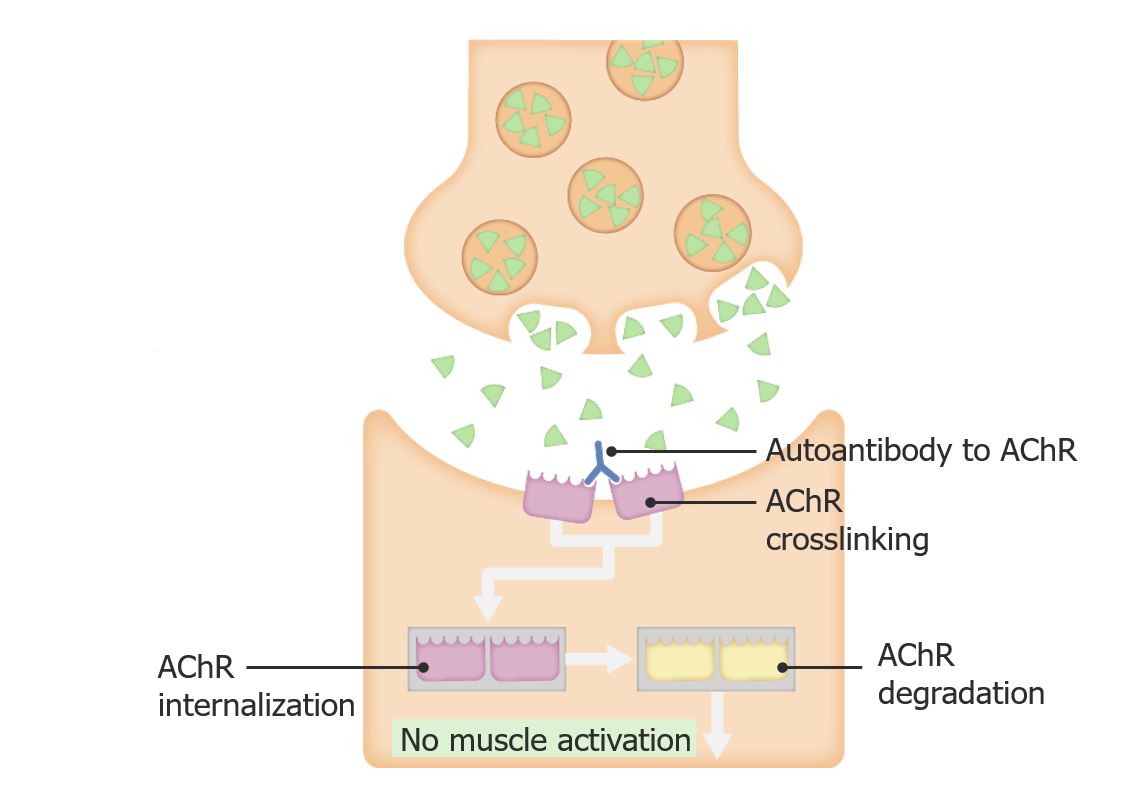
  • Anticuerpos contra el receptor Receptor Receptors are proteins located either on the surface of or within a cell that can bind to signaling molecules known as ligands (e.g., hormones) and cause some type of response within the cell. Receptors de acetilcolina (producidos en EN Erythema nodosum is an immune-mediated panniculitis (inflammation of the subcutaneous fat) caused by a type IV (delayed-type) hypersensitivity reaction. It commonly manifests in young women as tender, erythematous nodules on the shins. Erythema Nodosum el timo):
    • Son subtipos IgG1 e IgG3 y divalentes
    • Los LOS Neisseria anticuerpos se dirigen a los LOS Neisseria receptores de acetilcolina en EN Erythema nodosum is an immune-mediated panniculitis (inflammation of the subcutaneous fat) caused by a type IV (delayed-type) hypersensitivity reaction. It commonly manifests in young women as tender, erythematous nodules on the shins. Erythema Nodosum la membrana postsináptica.
    • Los LOS Neisseria anticuerpos activan la vía clásica del complemento, que a su vez activa el complejo de ataque a la membrana.
    • La reacción se clasifica como reacción de hipersensibilidad tipo 2 (i.e., causa lesión citotóxica).
    • El complejo de ataque a la membrana provoca una entrada de calcio que daña la membrana postsináptica, que a su vez daña los LOS Neisseria receptores de acetilcolina.
  • Anticuerpos contra la tirosina quinasa específica del músculo:
    • Principalmente subtipo IgG4
    • La patogénesis no se conoce con exactitud.
  • Efectos sobre la unión neuromuscular:
    • El daño a los LOS Neisseria receptores de acetilcolina conduce a una disminución de la unión de acetilcolina, lo que a su vez altera la transducción de señales en EN Erythema nodosum is an immune-mediated panniculitis (inflammation of the subcutaneous fat) caused by a type IV (delayed-type) hypersensitivity reaction. It commonly manifests in young women as tender, erythematous nodules on the shins. Erythema Nodosum la unión neuromuscular.
    • La respuesta disminuida provoca fallas en EN Erythema nodosum is an immune-mediated panniculitis (inflammation of the subcutaneous fat) caused by a type IV (delayed-type) hypersensitivity reaction. It commonly manifests in young women as tender, erythematous nodules on the shins. Erythema Nodosum la contracción muscular, lo que provoca debilidad y fatiga del músculo esquelético.
Fisiopatología de la miastenia grave

Fisiopatología de miastenia gravis

Imagen por Lecturio.
Presentación Clínica

Características generales

  • La miastenia gravis se presenta inicialmente como una debilidad muscular específica que progresa a lo largo del día y empeora con el esfuerzo.
  • Alrededor del 50% de los LOS Neisseria pacientes presentan inicialmente síntomas oculares.
  • La fatigabilidad es una característica distintiva, por ejemplo:
    • Aparición de diplopía o empeoramiento después de leer por un tiempo
    • Energía/fuerza adecuada al AL Amyloidosis comienzo de una tarea que disminuye con el tiempo
  • Ausencia de síntomas/hallazgos sensitivos
  • Reflejos tendinosos profundos normales
  • Función autonómica normal

Síntomas oculares

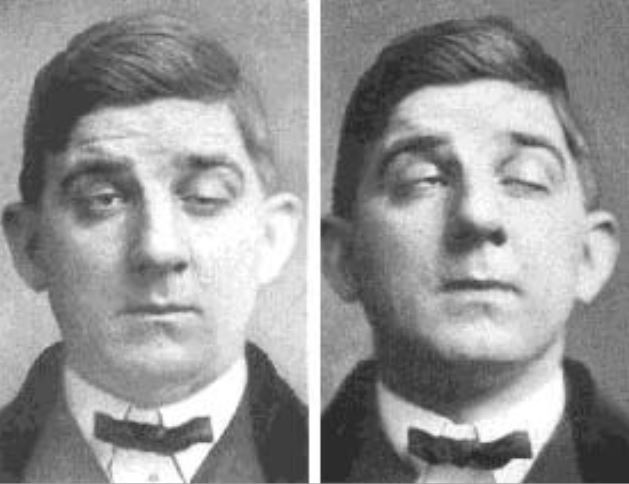
  • Ptosis Ptosis Cranial Nerve Palsies
  • Diplopía
  • Oftalmoplejía
  • Lagoftalmos
  • Signo de la cortina: cuando se levanta manualmente el párpado del ojo con más ptosis Ptosis Cranial Nerve Palsies, se produce un aumento de la ptosis Ptosis Cranial Nerve Palsies en EN Erythema nodosum is an immune-mediated panniculitis (inflammation of the subcutaneous fat) caused by a type IV (delayed-type) hypersensitivity reaction. It commonly manifests in young women as tender, erythematous nodules on the shins. Erythema Nodosum el ojo contralateral debido a la doble inervación de ambos músculos elevadores del párpado superior.
  • Es importante señalar que no hay hallazgos pupilares.
Ptosis en la miastenia gravis

Ptosis en un paciente con miastenia gravis

Imagen: “Myasthenia Gravis” por Posey & Spiller. Licencia: Dominio Público

Síntomas bulbares

  • Disartria
  • Disfagia
  • Voz nasal/hipofónica
  • Masticación débil
  • Regurgitación/aspiración nasal

Síntomas faciales

  • Parálisis facial
  • Mueca miasténica/expresión gruñona: caída de la comisura de la boca

Síntomas en EN Erythema nodosum is an immune-mediated panniculitis (inflammation of the subcutaneous fat) caused by a type IV (delayed-type) hypersensitivity reaction. It commonly manifests in young women as tender, erythematous nodules on the shins. Erythema Nodosum el cuello y las extremidades

  • Síndrome de la cabeza caída: El debilitamiento de los LOS Neisseria músculos extensores conduce a la caída de la cabeza, lo que a su vez causa dolor Dolor Inflammation en EN Erythema nodosum is an immune-mediated panniculitis (inflammation of the subcutaneous fat) caused by a type IV (delayed-type) hypersensitivity reaction. It commonly manifests in young women as tender, erythematous nodules on the shins. Erythema Nodosum los LOS Neisseria músculos posteriores del cuello debido al AL Amyloidosis esfuerzo por mantener la cabeza recta.
  • Los LOS Neisseria músculos proximales están más afectados que los LOS Neisseria músculos distales.
  • Los LOS Neisseria músculos de los LOS Neisseria brazos están más afectados que los LOS Neisseria músculos de las piernas.

Síntomas respiratorios

  • Disnea
  • Respiración débil
  • Insuficiencia respiratoria: causa rara, pero grave de morbilidad y mortalidad (< 1%)

Crisis miasténica

  • Exacerbación aguda potencialmente mortal de los LOS Neisseria síntomas de la miastenia gravis
  • La crisis miasténica se presenta como:
    • Acumulación de saliva Saliva The clear, viscous fluid secreted by the salivary glands and mucous glands of the mouth. It contains mucins, water, organic salts, and ptyalin. Salivary Glands: Anatomy que provoca babeo
    • Debilidad de la mandíbula o la lengua
    • Disartria
    • Disnea/respiración dificultosa/respiración superficial
    • Insuficiencia respiratoria por debilidad de los LOS Neisseria músculos diafragmático e intercostal
  • Visto en EN Erythema nodosum is an immune-mediated panniculitis (inflammation of the subcutaneous fat) caused by a type IV (delayed-type) hypersensitivity reaction. It commonly manifests in young women as tender, erythematous nodules on the shins. Erythema Nodosum alrededor de 15%–20% de los LOS Neisseria pacientes con miastenia gravis
  • A menudo se requiere ventilación mecánica.

Factores agravantes para la exacerbación de la enfermedad

  • Fatiga
  • Estrés o esfuerzo
  • Infección
  • Irregularidad en EN Erythema nodosum is an immune-mediated panniculitis (inflammation of the subcutaneous fat) caused by a type IV (delayed-type) hypersensitivity reaction. It commonly manifests in young women as tender, erythematous nodules on the shins. Erythema Nodosum la toma del medicamento para miastenia gravis
  • Disminución repentina o inapropiada de inmunosupresores
  • Medicamentos:
    • Betabloqueadores
    • Bloqueadores de los LOS Neisseria canales de calcio
    • Fenitoína
    • Quinidina
    • Litio
    • Aminoglucósidos
    • Ketamina
    • Lidocaína
  • Embarazo y puerperio
  • Menstruación, síndrome premenstrual
  • Progresión de condiciones crónicas (enfermedades cardíacas/renales/autoinmunes)

Diagnóstico

Pruebas serológicas

  • Detección en EN Erythema nodosum is an immune-mediated panniculitis (inflammation of the subcutaneous fat) caused by a type IV (delayed-type) hypersensitivity reaction. It commonly manifests in young women as tender, erythematous nodules on the shins. Erythema Nodosum suero de anticuerpos contra receptores de acetilcolina:
    • Realizado con debilidad objetiva prominente
    • Altamente sensible: alrededor del 80% en EN Erythema nodosum is an immune-mediated panniculitis (inflammation of the subcutaneous fat) caused by a type IV (delayed-type) hypersensitivity reaction. It commonly manifests in young women as tender, erythematous nodules on the shins. Erythema Nodosum miastenia gravis generalizada y 30%–40% en EN Erythema nodosum is an immune-mediated panniculitis (inflammation of the subcutaneous fat) caused by a type IV (delayed-type) hypersensitivity reaction. It commonly manifests in young women as tender, erythematous nodules on the shins. Erythema Nodosum miastenia ocular
  • 3 variaciones de anticuerpos contra receptores de acetilcolina:
    • Anticuerpos de unión:
      • Activan el complemento → pérdida de receptores de acetilcolina
      • La sensibilidad es alta.
      • Los LOS Neisseria falsos positivos son raros.
    • Anticuerpos moduladores:
      • Provocan modulación antigénica → endocitosis del receptor Receptor Receptors are proteins located either on the surface of or within a cell that can bind to signaling molecules known as ligands (e.g., hormones) and cause some type of response within the cell. Receptors
      • 2%–4% de los LOS Neisseria pacientes con anticuerpos de unión negativos tendrán anticuerpos moduladores.
      • El 73% de los LOS Neisseria pacientes con timoma y miastenia gravis tendrán anticuerpos moduladores.
    • Anticuerpos bloqueadores:
      • Actúan como antagonista competitivo del receptor Receptor Receptors are proteins located either on the surface of or within a cell that can bind to signaling molecules known as ligands (e.g., hormones) and cause some type of response within the cell. Receptors de acetilcolina
      • Presentes en EN Erythema nodosum is an immune-mediated panniculitis (inflammation of the subcutaneous fat) caused by a type IV (delayed-type) hypersensitivity reaction. It commonly manifests in young women as tender, erythematous nodules on the shins. Erythema Nodosum el 50% de los LOS Neisseria pacientes con miastenia gravis generalizada y en EN Erythema nodosum is an immune-mediated panniculitis (inflammation of the subcutaneous fat) caused by a type IV (delayed-type) hypersensitivity reaction. It commonly manifests in young women as tender, erythematous nodules on the shins. Erythema Nodosum el 30% de los LOS Neisseria pacientes con miastenia gravis ocular
      • El < 1% de los LOS Neisseria pacientes solo tienen anticuerpos bloqueadores (sin anticuerpos moduladores o de unión detectables).
  • Otros anticuerpos estudiados son:
    • Anticuerpo anti-tirosina quinasa específica del músculo
    • Anticuerpo anti–músculo estriado (presente en EN Erythema nodosum is an immune-mediated panniculitis (inflammation of the subcutaneous fat) caused by a type IV (delayed-type) hypersensitivity reaction. It commonly manifests in young women as tender, erythematous nodules on the shins. Erythema Nodosum el 80% de las miastenias gravis timomatosas)
    • Anticuerpo anti–lipoproteína relacionada con proteína 4
    • Anticuerpo anti-agrina
  • Se estudian anticuerpos antinucleares y factor reumatoide para descartar lupus eritematoso sistémico.

Pruebas clínicas

  • Prueba de bolsa de hielo:
    • Principio: Las temperaturas más bajas mejoran la transmisión neuromuscular.
    • Procedimiento: Se coloca una bolsa llena de hielo sobre el párpado cerrado durante 2 minutos, después de lo cual se retira la bolsa para evaluar la extensión de la ptosis Ptosis Cranial Nerve Palsies.
    • Inferencia: La mejoría en EN Erythema nodosum is an immune-mediated panniculitis (inflammation of the subcutaneous fat) caused by a type IV (delayed-type) hypersensitivity reaction. It commonly manifests in young women as tender, erythematous nodules on the shins. Erythema Nodosum la ptosis Ptosis Cranial Nerve Palsies es un resultado positivo.
    • La sensibilidad ronda el 80%.
  • Prueba del edrofonio/tensilon:
    • Esta prueba se utiliza únicamente en EN Erythema nodosum is an immune-mediated panniculitis (inflammation of the subcutaneous fat) caused by a type IV (delayed-type) hypersensitivity reaction. It commonly manifests in young women as tender, erythematous nodules on the shins. Erythema Nodosum áreas donde se dispone de edrofonio. Esta prueba no se usa actualmente en EN Erythema nodosum is an immune-mediated panniculitis (inflammation of the subcutaneous fat) caused by a type IV (delayed-type) hypersensitivity reaction. It commonly manifests in young women as tender, erythematous nodules on the shins. Erythema Nodosum los LOS Neisseria Estados Unidos, ya que el medicamento no está disponible.
    • Solo se utiliza en EN Erythema nodosum is an immune-mediated panniculitis (inflammation of the subcutaneous fat) caused by a type IV (delayed-type) hypersensitivity reaction. It commonly manifests in young women as tender, erythematous nodules on the shins. Erythema Nodosum pacientes con ptosis Ptosis Cranial Nerve Palsies u oftalmoparesia evidentes
    • Principio: El cloruro de edrofonio es un inhibidor de la acetilcolinesterasa con un inicio de acción rápido y de corta duración.
    • Procedimiento:
      • Se administra una dosis de prueba inicial de 2 mg, seguida de otra dosis de 2 mg cada 60 segundos hasta que se obtenga una respuesta.
      • La dosis máxima administrada es de 10 mg.
    • Inferencia: La mejoría en EN Erythema nodosum is an immune-mediated panniculitis (inflammation of the subcutaneous fat) caused by a type IV (delayed-type) hypersensitivity reaction. It commonly manifests in young women as tender, erythematous nodules on the shins. Erythema Nodosum la ptosis Ptosis Cranial Nerve Palsies es un resultado positivo.

Pruebas de electrodiagnóstico

  • Velocidad de conducción nerviosa:
    • Mide la velocidad de transmisión de los LOS Neisseria nervios sensitivos o motores.
    • Respuesta decreciente con estimulación nerviosa repetitiva: presente en EN Erythema nodosum is an immune-mediated panniculitis (inflammation of the subcutaneous fat) caused by a type IV (delayed-type) hypersensitivity reaction. It commonly manifests in young women as tender, erythematous nodules on the shins. Erythema Nodosum > 90% de los LOS Neisseria casos de miastenia gravis
  • Electromiografía de fibra única:
    • Esta prueba mide la actividad eléctrica de los LOS Neisseria impulsos entre el cerebro y el músculo.
    • Se insertan pequeñas agujas alrededor de los LOS Neisseria ojos, la frente y los LOS Neisseria brazos.
    • Interrupción de la transducción de señales (también conocida como “fluctuación”): presente en EN Erythema nodosum is an immune-mediated panniculitis (inflammation of the subcutaneous fat) caused by a type IV (delayed-type) hypersensitivity reaction. It commonly manifests in young women as tender, erythematous nodules on the shins. Erythema Nodosum > 90% casos de miastenia gravis

Imagenología

Se realiza una RM o TC de tórax para descartar la posibilidad de un timoma.
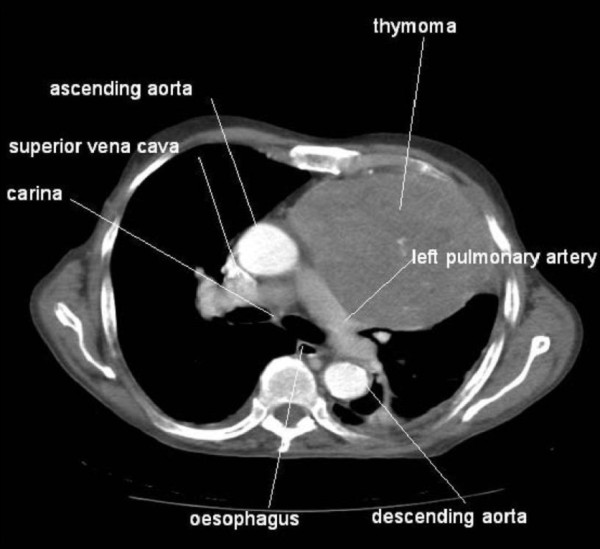
timoma por TC

TC que muestra un gran timoma

Imagen: “Association between thymoma and persistent hypothermia: a case report” por Johns RH, Reinhardt AK. Licencia: CC BY 2.0

Tratamiento

Farmacoterapia

Inhibidores de la acetilcolinesterasa:

  • Útil para formas leves y moderadas de miastenia gravis
  • Aumentan la cantidad de acetilcolina disponible evitando su degradación
  • El medicamento más utilizado es piridostigmina, un inhibidor oral de la acetilcolinesterasa.
  • Generalmente combinado con los LOS Neisseria agentes inmunosupresores:
    • En EN Erythema nodosum is an immune-mediated panniculitis (inflammation of the subcutaneous fat) caused by a type IV (delayed-type) hypersensitivity reaction. It commonly manifests in young women as tender, erythematous nodules on the shins. Erythema Nodosum miastenia gravis generalizada
    • En EN Erythema nodosum is an immune-mediated panniculitis (inflammation of the subcutaneous fat) caused by a type IV (delayed-type) hypersensitivity reaction. It commonly manifests in young women as tender, erythematous nodules on the shins. Erythema Nodosum pacientes sintomáticos incluso después de estar en EN Erythema nodosum is an immune-mediated panniculitis (inflammation of the subcutaneous fat) caused by a type IV (delayed-type) hypersensitivity reaction. It commonly manifests in young women as tender, erythematous nodules on the shins. Erythema Nodosum tratamiento con piridostigmina
  • Efectos secundarios (muscarínicos):
    • Cólicos abdominales
    • Diarrea
    • Bradicardia
    • Aumento de la salivación
    • Aumento de las secreciones bronquiales

Medicamentos inmunosupresores crónicos:

  • Glucocorticoides:
    • El glucocorticoide más utilizado es la prednisona.
    • El empeoramiento transitorio de los LOS Neisseria síntomas es un efecto adverso frecuente de las dosis altas de glucocorticoides; por lo tanto, se considera un régimen inicial de dosis escalada.
    • Una vez que se alcanza la dosis requerida, la dosis se mantiene constante durante un tiempo y se considera la disminución gradual del medicamento para evitar una recaída.
    • Efectos secundarios:
      • Ganancia de peso
      • Hematomas fáciles
      • Hipertensión
      • Diabetes Diabetes Diabetes mellitus (DM) is a metabolic disease characterized by hyperglycemia and dysfunction of the regulation of glucose metabolism by insulin. Type 1 DM is diagnosed mostly in children and young adults as the result of autoimmune destruction of β cells in the pancreas and the resulting lack of insulin. Type 2 DM has a significant association with obesity and is characterized by insulin resistance. Diabetes Mellitus
      • Osteoporosis Osteoporosis Osteoporosis refers to a decrease in bone mass and density leading to an increased number of fractures. There are 2 forms of osteoporosis: primary, which is commonly postmenopausal or senile; and secondary, which is a manifestation of immobilization, underlying medical disorders, or long-term use of certain medications. Osteoporosis
    • Monitoreo:
      • Dieta adecuada, calcio y suplementos vitamínicos.
      • Medición periódica de la densidad ósea
      • Monitoreo de rutina de la presión arterial y la glucosa sérica
      • Prueba anual de cataratas y glaucoma Glaucoma Glaucoma is an optic neuropathy characterized by typical visual field defects and optic nerve atrophy seen as optic disc cupping on examination. The acute form of glaucoma is a medical emergency. Glaucoma is often, but not always, caused by increased intraocular pressure (IOP). Glaucoma
      • Profilaxis de la neumonía por Pneumocystis en EN Erythema nodosum is an immune-mediated panniculitis (inflammation of the subcutaneous fat) caused by a type IV (delayed-type) hypersensitivity reaction. It commonly manifests in young women as tender, erythematous nodules on the shins. Erythema Nodosum pacientes con dosis más altas de prednisona
  • Medicamentos inmunosupresores no esteroideos:
    • Azatioprina:
      • Análogo de purina que inhibe la síntesis de ácidos nucleicos
      • Interfiere con la proliferación de células T y B
      • Reduce los LOS Neisseria anticuerpos contra la acetilcolinesterasa
    • Micofenolato de mofetilo: inhibe la proliferación de linfocitos al AL Amyloidosis bloquear la síntesis de purinas
    • Tacrolimus Tacrolimus A macrolide isolated from the culture broth of a strain of streptomyces tsukubaensis that has strong immunosuppressive activity in vivo and prevents the activation of T-lymphocytes in response to antigenic or mitogenic stimulation in vitro. Immunosuppressants:
      • Inhibe la calcineurina y la producción de IL-2
      • Inhibe la respuesta inmunitaria dependiente de linfocitos T
      • Efectos secundarios:
        • Hiperglicemia
        • Hipomagnesemia
        • Temblores
        • Parestesia
    • Ciclosporina:
      • La acción es similar a la del tacrolimus Tacrolimus A macrolide isolated from the culture broth of a strain of streptomyces tsukubaensis that has strong immunosuppressive activity in vivo and prevents the activation of T-lymphocytes in response to antigenic or mitogenic stimulation in vitro. Immunosuppressants
      • Efectos secundarios: nefrotoxicidad e hipertensión

Inmunoterapia intravenosa

  • Plasmaféresis:
    • Elimina los LOS Neisseria anticuerpos contra el receptor Receptor Receptors are proteins located either on the surface of or within a cell that can bind to signaling molecules known as ligands (e.g., hormones) and cause some type of response within the cell. Receptors de acetilcolina o la tirosina quinasa específica del músculo de la circulación
    • La plasmaféresis se considera solo en EN Erythema nodosum is an immune-mediated panniculitis (inflammation of the subcutaneous fat) caused by a type IV (delayed-type) hypersensitivity reaction. It commonly manifests in young women as tender, erythematous nodules on the shins. Erythema Nodosum una emergencia como disfagia o insuficiencia respiratoria, ya que se asocia con efectos secundarios y es costosa.
    • Los LOS Neisseria efectos secundarios observados son:
      • Hipotensión
      • Infección
      • Trombosis
    • Contraindicado en EN Erythema nodosum is an immune-mediated panniculitis (inflammation of the subcutaneous fat) caused by a type IV (delayed-type) hypersensitivity reaction. It commonly manifests in young women as tender, erythematous nodules on the shins. Erythema Nodosum pacientes con sepsis Sepsis Systemic inflammatory response syndrome with a proven or suspected infectious etiology. When sepsis is associated with organ dysfunction distant from the site of infection, it is called severe sepsis. When sepsis is accompanied by hypotension despite adequate fluid infusion, it is called septic shock. Sepsis and Septic Shock
    • 1 sesión/día × 5 días
    • Inicio de acción: 3–10 días
    • Duración de la acción: 3–6 semanas
  • Inmunoglobulina intravenosa:
    • La inmunoglobulina intravenosa también es una opción de tratamiento considerada únicamente cuando hay una emergencia, especialmente si la insuficiencia respiratoria es el síntoma de presentación.
    • La infusión intravenosa de inmunoglobulina del donante puede modular el sistema inmunitario y reducir los LOS Neisseria efectos de los LOS Neisseria autoanticuerpos (se puede realizar a través de una vía intravenosa periférica).
    • Menos efectivo en EN Erythema nodosum is an immune-mediated panniculitis (inflammation of the subcutaneous fat) caused by a type IV (delayed-type) hypersensitivity reaction. It commonly manifests in young women as tender, erythematous nodules on the shins. Erythema Nodosum miastenia gravis leve o moderada
    • Efectos secundarios:
      • Cefalea
      • Escalofríos
      • Mareo
      • Retención de líquidos
      • Trombosis
      • Anafilaxia
      • Meningitis Meningitis Meningitis is inflammation of the meninges, the protective membranes of the brain, and spinal cord. The causes of meningitis are varied, with the most common being bacterial or viral infection. The classic presentation of meningitis is a triad of fever, altered mental status, and nuchal rigidity. Meningitis aséptica
      • Fallo renal agudo
    • Contraindicado en EN Erythema nodosum is an immune-mediated panniculitis (inflammation of the subcutaneous fat) caused by a type IV (delayed-type) hypersensitivity reaction. It commonly manifests in young women as tender, erythematous nodules on the shins. Erythema Nodosum pacientes con insuficiencia renal
    • 0,4 g/kg/día × 5 días
    • Inicio de acción: 14 días
    • Duración de la acción: 30 días
  • Anticuerpos monoclonales:
    • Rituximab Rituximab A murine-derived monoclonal antibody and antineoplastic agent that binds specifically to the cd20 antigen and is used in the treatment of leukemia; lymphoma and rheumatoid arthritis. Immunosuppressants: efectivo en EN Erythema nodosum is an immune-mediated panniculitis (inflammation of the subcutaneous fat) caused by a type IV (delayed-type) hypersensitivity reaction. It commonly manifests in young women as tender, erythematous nodules on the shins. Erythema Nodosum el tratamiento de miastenia gravis positiva para tirosina quinasa específica del músculo
    • Eculizumab:
      • Anticuerpo monoclonal dirigido contra el complemento 5
      • Eficaz en EN Erythema nodosum is an immune-mediated panniculitis (inflammation of the subcutaneous fat) caused by a type IV (delayed-type) hypersensitivity reaction. It commonly manifests in young women as tender, erythematous nodules on the shins. Erythema Nodosum pacientes con miastenia gravis generalizada que son positivos para anticuerpos contra el receptor Receptor Receptors are proteins located either on the surface of or within a cell that can bind to signaling molecules known as ligands (e.g., hormones) and cause some type of response within the cell. Receptors de acetilcolina
    • Ravulizumab: inhibidor de C5 de acción prolongada aprobado para la MG generalizada con AChR positivo.
    • Efgartigimod y rozanolixizumab: antagonistas neonatales del receptor Receptor Receptors are proteins located either on the surface of or within a cell that can bind to signaling molecules known as ligands (e.g., hormones) and cause some type of response within the cell. Receptors Fc Fc Crystallizable fragments composed of the carboxy-terminal halves of both immunoglobulin heavy chains linked to each other by disulfide bonds. Fc fragments contain the carboxy-terminal parts of the heavy chain constant regions that are responsible for the effector functions of an immunoglobulin (complement fixation, binding to the cell membrane via fc receptors, and placental transport). This fragment can be obtained by digestion of immunoglobulins with the proteolytic enzyme papain. Immunoglobulins: Types and Functions (FcRn) aprobados para la MG generalizada con AChR positivo.
    • Zilucoplan: inhibidor subcutáneo de C5 aprobado para la MG generalizada con AChR positivo.

Timectomía

  • Las investigaciones sugieren que en EN Erythema nodosum is an immune-mediated panniculitis (inflammation of the subcutaneous fat) caused by a type IV (delayed-type) hypersensitivity reaction. It commonly manifests in young women as tender, erythematous nodules on the shins. Erythema Nodosum los LOS Neisseria pacientes que se someten a timectomía cuando está indicado, se observa remisión y disminución de la dependencia de medicamentos.
  • Las indicaciones son:
    • Pacientes con timoma
    • Pacientes sin timoma:
      • Anticuerpo anti-receptor de acetilcolina positivo
      • < 60 años de edad con miastenia gravis generalizada
  • No se recomienda la timectomía en EN Erythema nodosum is an immune-mediated panniculitis (inflammation of the subcutaneous fat) caused by a type IV (delayed-type) hypersensitivity reaction. It commonly manifests in young women as tender, erythematous nodules on the shins. Erythema Nodosum pacientes con anticuerpos contra la tirosina quinasa específica del músculo.

Tratamiento de la crisis miasténica

  • La intubación/ventilación mecánica se puede realizar de manera electiva antes del desarrollo de emergencias.
  • La terapia con inhibidores de la colinesterasa se suspende temporalmente.
  • Las terapias rápidas incluyen plasmaféresis e inmunoglobulina intravenosa.
  • Los LOS Neisseria medicamentos inmunosupresores se inician en EN Erythema nodosum is an immune-mediated panniculitis (inflammation of the subcutaneous fat) caused by a type IV (delayed-type) hypersensitivity reaction. It commonly manifests in young women as tender, erythematous nodules on the shins. Erythema Nodosum una dosis moderada a alta.

Pronóstico

  • Con el desarrollo del tratamiento a lo largo de las décadas, el pronóstico de los LOS Neisseria pacientes ha HA Hemolytic anemia (HA) is the term given to a large group of anemias that are caused by the premature destruction/hemolysis of circulating red blood cells (RBCs). Hemolysis can occur within (intravascular hemolysis) or outside the blood vessels (extravascular hemolysis). Hemolytic Anemia mejorado significativamente y los LOS Neisseria pacientes pueden llevar una vida casi normal.
  • Pocos casos pueden entrar en EN Erythema nodosum is an immune-mediated panniculitis (inflammation of the subcutaneous fat) caused by a type IV (delayed-type) hypersensitivity reaction. It commonly manifests in young women as tender, erythematous nodules on the shins. Erythema Nodosum remisión, ya sea de manera temporal o permanente.
  • En EN Erythema nodosum is an immune-mediated panniculitis (inflammation of the subcutaneous fat) caused by a type IV (delayed-type) hypersensitivity reaction. It commonly manifests in young women as tender, erythematous nodules on the shins. Erythema Nodosum el 50% de los LOS Neisseria casos, la timectomía puede conducir a una remisión estable y completa.

Diagnóstico Diferencial

  • Síndrome de Lambert- Eaton: síndrome autoinmune de la unión neuromuscular asociado con carcinoma de pulmón de células pequeñas: los LOS Neisseria síntomas incluyen debilidad muscular (que se alivia temporalmente con el esfuerzo), ptosis Ptosis Cranial Nerve Palsies, boca seca, cambios en EN Erythema nodosum is an immune-mediated panniculitis (inflammation of the subcutaneous fat) caused by a type IV (delayed-type) hypersensitivity reaction. It commonly manifests in young women as tender, erythematous nodules on the shins. Erythema Nodosum la vejiga y el intestino, disfunción eréctil y parestesia. El síndrome de Lambert-Eaton se diagnostica mediante detección de anticuerpos, electromiografía e imagenología pulmonar. El tratamiento incluye inmunosupresores y tratamiento de la malignidad.
  • Síndrome de Guillain-Barré: trastorno autoinmune del sistema nervioso periférico desencadenado por una infección bacteriana o viral aguda: el síndrome de Guillain-Barré se presenta con parestesias iniciales en EN Erythema nodosum is an immune-mediated panniculitis (inflammation of the subcutaneous fat) caused by a type IV (delayed-type) hypersensitivity reaction. It commonly manifests in young women as tender, erythematous nodules on the shins. Erythema Nodosum pies y piernas que progresan a parálisis ascendente. El síndrome se diagnostica mediante análisis de LCR, electromiografía y estudios de conducción nerviosa. El síndrome de Guillain-Barré se trata con plasmaféresis y terapia con inmunoglobulinas, analgésicos, anticoagulantes y fisioterapia.
  • Esclerosis lateral amiotrófica: grupo de trastornos neurológicos que involucran neuronas asociadas con el movimiento voluntario: la presentación clínica incluye fasciculaciones, calambres musculares, espasticidad y disartria, que son progresivas con el tiempo. No existe una prueba definitiva, y el diagnóstico se basa en EN Erythema nodosum is an immune-mediated panniculitis (inflammation of the subcutaneous fat) caused by a type IV (delayed-type) hypersensitivity reaction. It commonly manifests in young women as tender, erythematous nodules on the shins. Erythema Nodosum gran medida en EN Erythema nodosum is an immune-mediated panniculitis (inflammation of the subcutaneous fat) caused by a type IV (delayed-type) hypersensitivity reaction. It commonly manifests in young women as tender, erythematous nodules on the shins. Erythema Nodosum los LOS Neisseria antecedentes clínicos y el examen físico. El tratamiento incluye terapia de soporte, ya que aún no se ha HA Hemolytic anemia (HA) is the term given to a large group of anemias that are caused by the premature destruction/hemolysis of circulating red blood cells (RBCs). Hemolysis can occur within (intravascular hemolysis) or outside the blood vessels (extravascular hemolysis). Hemolytic Anemia encontrado una cura.
  • Botulismo: enfermedad infecciosa de la unión neuromuscular transmitida por alimentos, causada por el organismo Clostridium botulinum Clostridium botulinum A species of anaerobic, gram-positive, rod-shaped bacteria in the family clostridiaceae that produces proteins with characteristic neurotoxicity. It is the etiologic agent of botulism in humans, wild fowl, horses; and cattle. Seven subtypes (sometimes called antigenic types, or strains) exist, each producing a different botulinum toxin (botulinum toxins). The organism and its spores are widely distributed in nature. Clostridia. Clínicamente, el botulismo se presenta con ptosis Ptosis Cranial Nerve Palsies, cólicos abdominales, déficits neurológicos simétricos, diplopía y visión borrosa. El botulismo se diagnostica mediante el aislamiento del organismo y la detección de la toxina en EN Erythema nodosum is an immune-mediated panniculitis (inflammation of the subcutaneous fat) caused by a type IV (delayed-type) hypersensitivity reaction. It commonly manifests in young women as tender, erythematous nodules on the shins. Erythema Nodosum el suero o fuente de alimento. El botulismo se trata con antitoxina botulínica, inmunoglobulina y fisioterapia.
  • Parálisis por garrapata: la parálisis por garrapata es causada por la inyección de toxina a través de la picadura de una garrapata. Los LOS Neisseria síntomas ocurren dentro de 2–7 días después de la picadura. La presentación clínica incluye entumecimiento inicial y debilidad en EN Erythema nodosum is an immune-mediated panniculitis (inflammation of the subcutaneous fat) caused by a type IV (delayed-type) hypersensitivity reaction. It commonly manifests in young women as tender, erythematous nodules on the shins. Erythema Nodosum ambas piernas que progresa a parálisis ascendente y dificultad respiratoria en EN Erythema nodosum is an immune-mediated panniculitis (inflammation of the subcutaneous fat) caused by a type IV (delayed-type) hypersensitivity reaction. It commonly manifests in young women as tender, erythematous nodules on the shins. Erythema Nodosum cuestión de horas. Los LOS Neisseria reflejos tendinosos profundos están disminuidos o ausentes. El diagnóstico se basa en EN Erythema nodosum is an immune-mediated panniculitis (inflammation of the subcutaneous fat) caused by a type IV (delayed-type) hypersensitivity reaction. It commonly manifests in young women as tender, erythematous nodules on the shins. Erythema Nodosum los LOS Neisseria síntomas y en EN Erythema nodosum is an immune-mediated panniculitis (inflammation of the subcutaneous fat) caused by a type IV (delayed-type) hypersensitivity reaction. It commonly manifests in young women as tender, erythematous nodules on the shins. Erythema Nodosum encontrar una garrapata incrustada, generalmente en EN Erythema nodosum is an immune-mediated panniculitis (inflammation of the subcutaneous fat) caused by a type IV (delayed-type) hypersensitivity reaction. It commonly manifests in young women as tender, erythematous nodules on the shins. Erythema Nodosum el cuero cabelludo. Se trata encontrando y eliminando la garrapata, limpiando el sitio de la picadura y monitoreando la dificultad respiratoria.

Referencias

  1. Mayo Clinic Staff. (2025). Myasthenia gravis: Symptoms and causes. Mayo Clinic. Retrieved September 29, 2025, from https://www.mayoclinic.org/diseases-conditions/myasthenia-gravis/symptoms-causes/syc-20352036 
  2. Shah, A. K. (2023). Myasthenia gravis: Treatment & management. Medscape. Retrieved September 29, 2025, from https://emedicine.medscape.com/article/1171206-treatment
  3. Bird, S.J. (2025). Pathogenesis of myasthenia gravis. UpToDate. Retrieved September 29, 2025, from https://www.uptodate.com/contents/pathogenesis-of-myasthenia-gravis
  4. Bird, S.J. (2025). Clinical manifestations of myasthenia gravis. UpToDate. Retrieved September 29, 2025, from https://www.uptodate.com/contents/clinical-manifestations-of-myasthenia-gravis
  5. Phillips, W. D., & Vincent, A. (2016). Pathogenesis of myasthenia gravis: update on disease types, models, and mechanisms. F1000Research5, F1000 Faculty Rev-1513. https://doi.org/10.12688/f1000research.8206.1
  6. Jowkar, A., Goldenberg, W.D (2023). Myasthenia gravis. Medscape. https://emedicine.medscape.com/article/1171206-overview#a1
  7. Longo, D. L. Fauci, A. S. Kasper, Hauser, S., Jameson, J. L., Loscalzo, J. (2011). Myasthenia gravis and other diseases of the neuromuscular junction. Harrison’s Principles of Internal medicine. 18th ed. pp. 6813–6824.
  8. Vu, T., Meisel, A., Mantegazza, R., et al. (2022). Terminal complement inhibitor ravulizumab in generalized myasthenia gravis. NEJM Evidence, 1(5). https://doi.org/10.1056/EVIDoa2100066 
  9. Heo, Y. A. (2023). Efgartigimod alfa in generalised myasthenia gravis: A novel, effective and generally well-tolerated treatment option for patients with gMG. CNS Drugs. https://doi.org/10.1007/s40263-023-01000-z

¡Crea tu cuenta gratis o inicia una sesión para seguir leyendo!

Regístrate ahora y obtén acceso gratuito a Lecturio con páginas de concepto, videos médicos y cuestionarios para tu educación médica.

User Reviews

Que tengas una sesión de estudio alegre y navideña 🎁 Ahorra 50% en todos los planes >>

Details