
Domina Conceptos Médicos

Estudia para la escuela de medicina y tus examenes con Lecturio.

Infecciones del Tracto Urinario (ITU)

Las infecciones del tracto urinario (ITU) representan un amplio espectro de enfermedades, desde la cistitis simple autolimitada hasta la pielonefritis grave que puede provocar sepsis Sepsis Systemic inflammatory response syndrome with a proven or suspected infectious etiology. When sepsis is associated with organ dysfunction distant from the site of infection, it is called severe sepsis. When sepsis is accompanied by hypotension despite adequate fluid infusion, it is called septic shock. Sepsis and Septic Shock y la muerte. Las infecciones del tracto urinario son causadas más comúnmente por Escherichia coli Escherichia coli The gram-negative bacterium Escherichia coli is a key component of the human gut microbiota. Most strains of E. coli are avirulent, but occasionally they escape the GI tract, infecting the urinary tract and other sites. Less common strains of E. coli are able to cause disease within the GI tract, most commonly presenting as abdominal pain and diarrhea. Escherichia coli, pero también pueden ser causadas por otras bacterias y hongos. Dependiendo de la localización de la infección, los LOS Neisseria pacientes pueden presentar disuria, urgencia urinaria, aumento de la frecuencia urinaria, dolor Dolor Inflammation suprapúbico y fiebre. El análisis de orina y el cultivo de orina, junto con la presentación clínica, ayudan a diagnosticar las ITU. Las opciones de tratamiento incluyen antibióticos orales o intravenosos como trimetoprim-sulfametoxazol, nitrofurantoína y ceftriaxona. En EN Erythema nodosum is an immune-mediated panniculitis (inflammation of the subcutaneous fat) caused by a type IV (delayed-type) hypersensitivity reaction. It commonly manifests in young women as tender, erythematous nodules on the shins. Erythema Nodosum ciertos casos, es posible que se necesiten más estudios para determinar las condiciones subyacentes que predisponen a una persona a las ITU.

Last updated: Dec 15, 2025

Editorial responsibility: Stanley Oiseth, Lindsay Jones, Evelin Maza

Descripción General

Definición

La infección del tracto urinario (ITU) es un proceso patogénico que se desarrolla cuando un microorganismo (generalmente una bacteria Bacteria Bacteria are prokaryotic single-celled microorganisms that are metabolically active and divide by binary fission. Some of these organisms play a significant role in the pathogenesis of diseases. Bacteriology) ingresa al AL Amyloidosis cuerpo a través de la uretra y viaja a la vejiga y/o los LOS Neisseria riñones.

Epidemiología

Prevalencia:

  • Bacteriuria Bacteriuria The presence of bacteria in the urine which is normally bacteria-free. These bacteria are from the urinary tract and are not contaminants of the surrounding tissues. Bacteriuria can be symptomatic or asymptomatic. Significant bacteriuria is an indicator of urinary tract infection. Urinary Tract Infections (UTIs) in Children asintomática (bacterias en EN Erythema nodosum is an immune-mediated panniculitis (inflammation of the subcutaneous fat) caused by a type IV (delayed-type) hypersensitivity reaction. It commonly manifests in young women as tender, erythematous nodules on the shins. Erythema Nodosum la orina):
    • 1%–5% de mujeres premenopáusicas no embarazadas
    • 1,5%–9,8% de mujeres embarazadas
    • 2,8%–8,6% de mujeres posmenopáusicas
  • Cistitis sin complicaciones:
    • Hasta el 60% de las mujeres pueden tener ≥ 1 ITU en EN Erythema nodosum is an immune-mediated panniculitis (inflammation of the subcutaneous fat) caused by a type IV (delayed-type) hypersensitivity reaction. It commonly manifests in young women as tender, erythematous nodules on the shins. Erythema Nodosum algún momento.
    • Hasta el 10% de las mujeres tienen ≥ 1 ITU cada año.
    • Aproximadamente 2%–5% de las mujeres tienen ITU recurrentes.
    • Más frecuente en EN Erythema nodosum is an immune-mediated panniculitis (inflammation of the subcutaneous fat) caused by a type IV (delayed-type) hypersensitivity reaction. It commonly manifests in young women as tender, erythematous nodules on the shins. Erythema Nodosum mujeres sexualmente activas de 18–24 años
  • Hombres:
    • < 0,1% en EN Erythema nodosum is an immune-mediated panniculitis (inflammation of the subcutaneous fat) caused by a type IV (delayed-type) hypersensitivity reaction. It commonly manifests in young women as tender, erythematous nodules on the shins. Erythema Nodosum general
    • ↑ Riesgo si no está circuncidado o en EN Erythema nodosum is an immune-mediated panniculitis (inflammation of the subcutaneous fat) caused by a type IV (delayed-type) hypersensitivity reaction. It commonly manifests in young women as tender, erythematous nodules on the shins. Erythema Nodosum caso de relaciones sexuales con inserción anal

Factores de riesgo

  • Mujeres > hombres:
    • La uretra corta predispone a todas las mujeres:
      • Menos distancia para que las bacterias asciendan a la vejiga
      • Menos tiempo para que la micción elimine las bacterias ascendentes en EN Erythema nodosum is an immune-mediated panniculitis (inflammation of the subcutaneous fat) caused by a type IV (delayed-type) hypersensitivity reaction. It commonly manifests in young women as tender, erythematous nodules on the shins. Erythema Nodosum la uretra
    • Generalmente, se necesitan factores de riesgo adicionales para que ocurran infecciones urinarias en EN Erythema nodosum is an immune-mediated panniculitis (inflammation of the subcutaneous fat) caused by a type IV (delayed-type) hypersensitivity reaction. It commonly manifests in young women as tender, erythematous nodules on the shins. Erythema Nodosum los LOS Neisseria hombres.
  • Comorbilidades:
    • Estado inmunocomprometido
    • Diabetes Diabetes Diabetes mellitus (DM) is a metabolic disease characterized by hyperglycemia and dysfunction of the regulation of glucose metabolism by insulin. Type 1 DM is diagnosed mostly in children and young adults as the result of autoimmune destruction of β cells in the pancreas and the resulting lack of insulin. Type 2 DM has a significant association with obesity and is characterized by insulin resistance. Diabetes Mellitus ( glucosuria Glucosuria Diabetes Mellitus proporciona una fuente de alimento para las bacterias)
    • Antecedente de ITU
  • Comportamiento:
    • Mala higiene e incontinencia fecal (↑ colonización genital/periuretral)
    • Relaciones sexuales:
      • Facilita las infecciones bacterianas en EN Erythema nodosum is an immune-mediated panniculitis (inflammation of the subcutaneous fat) caused by a type IV (delayed-type) hypersensitivity reaction. It commonly manifests in young women as tender, erythematous nodules on the shins. Erythema Nodosum las mujeres
      • Las relaciones sexuales de inserción anal pueden provocar infecciones bacterianas en EN Erythema nodosum is an immune-mediated panniculitis (inflammation of the subcutaneous fat) caused by a type IV (delayed-type) hypersensitivity reaction. It commonly manifests in young women as tender, erythematous nodules on the shins. Erythema Nodosum los LOS Neisseria hombres.
  • Anatómicos (causas de estasis/obstrucción urinaria):
    • Válvulas uretrales posteriores → reflujo ureteral → pielonefritis
    • Hiperplasia prostática benigna (HPB)
    • Estenosis uretral
    • Cistocele
    • Vejiga neurógena
    • Nefrolitiasis
  • Cuerpo extraño (nido para infección y/o permite la entrada al AL Amyloidosis cuerpo):
    • Sonda de Foley
    • Catéter suprapúbico
    • Férula ureteral
    • Instrumentación urológica (i.e., cistoscopia)
  • Medicamentos:
    • Anticolinérgicos (i.e., difenhidramina):
      • Puede causar vaciado incompleto de la vejiga
      • Ancianos principalmente afectados
    • Antibióticos (uso frecuente = ↑ resistencia)

Etiología y Fisiopatología

Escherichia coli Escherichia coli The gram-negative bacterium Escherichia coli is a key component of the human gut microbiota. Most strains of E. coli are avirulent, but occasionally they escape the GI tract, infecting the urinary tract and other sites. Less common strains of E. coli are able to cause disease within the GI tract, most commonly presenting as abdominal pain and diarrhea. Escherichia coli

  • 75%–95% de todas las ITU son debidas a E. coli uropatógena
  • Los LOS Neisseria factores de virulencia ayudan a la colonización, ascensión e invasión del tracto urinario:
    • Fimbrias tipo 1 ( en EN Erythema nodosum is an immune-mediated panniculitis (inflammation of the subcutaneous fat) caused by a type IV (delayed-type) hypersensitivity reaction. It commonly manifests in young women as tender, erythematous nodules on the shins. Erythema Nodosum E. coli sensible a manosa) de bacteria Bacteria Bacteria are prokaryotic single-celled microorganisms that are metabolically active and divide by binary fission. Some of these organisms play a significant role in the pathogenesis of diseases. Bacteriology:
      • Se une a las células uroepiteliales ( en EN Erythema nodosum is an immune-mediated panniculitis (inflammation of the subcutaneous fat) caused by a type IV (delayed-type) hypersensitivity reaction. It commonly manifests in young women as tender, erythematous nodules on the shins. Erythema Nodosum los LOS Neisseria residuos de manosa de las glicoproteínas de superficie)
      • Previene que E. coli sea expulsada por la orina
    • Fimbrias P:
      • Proyecciones similares a cabellos que interactúan con las células epiteliales renales
      • Papel importante en EN Erythema nodosum is an immune-mediated panniculitis (inflammation of the subcutaneous fat) caused by a type IV (delayed-type) hypersensitivity reaction. It commonly manifests in young women as tender, erythematous nodules on the shins. Erythema Nodosum la pielonefritis
  • La uromodulina (factor de defensa humano), que tiene residuos de manosa, evita que E. coli se una a las células uroepiteliales.

Otras bacterias

Las bacterias que no son E. coli están asociadas con factores de riesgo de resistencia a los LOS Neisseria medicamentos o en EN Erythema nodosum is an immune-mediated panniculitis (inflammation of the subcutaneous fat) caused by a type IV (delayed-type) hypersensitivity reaction. It commonly manifests in young women as tender, erythematous nodules on the shins. Erythema Nodosum escenarios clínicos específicos.
  • Bacterias productoras de ureasa:
    • Asociado con ↑ riesgo de cálculos renales coraliformes
    • Orina alcalina → ↓ solubilidad del fosfato → precipitación de fosfato amónico magnésico (estruvita) → cálculos renales coraliformes
    • Proteus mirabilis Proteus mirabilis A species of gram-negative, facultatively anaerobic, rod-shaped bacteria that is frequently isolated from clinical specimens. Its most common site of infection is the urinary tract. Proteus y Ureaplasma urealyticum
    • Klebsiella pneumoniae Klebsiella Pneumoniae Gram-negative, non-motile, capsulated, gas-producing rods found widely in nature and associated with urinary and respiratory infections in humans. Aminoglycosides: asociada con infecciones adquiridas en EN Erythema nodosum is an immune-mediated panniculitis (inflammation of the subcutaneous fat) caused by a type IV (delayed-type) hypersensitivity reaction. It commonly manifests in young women as tender, erythematous nodules on the shins. Erythema Nodosum el hospital
    • Staphylococcus saprophyticus Staphylococcus saprophyticus A species of gram-positive bacteria in the family staphylococcaceae. It commonly causes urinary tract infections in humans. Staphylococcus: asociado con infecciones urinarias en EN Erythema nodosum is an immune-mediated panniculitis (inflammation of the subcutaneous fat) caused by a type IV (delayed-type) hypersensitivity reaction. It commonly manifests in young women as tender, erythematous nodules on the shins. Erythema Nodosum mujeres después de tener relaciones sexuales
  • Enterococos (i.e., Enterococcus Enterococcus Enterococcus is a genus of oval-shaped gram-positive cocci that are arranged in pairs or short chains. Distinguishing factors include optochin resistance and the presence of pyrrolidonyl arylamidase (PYR) and Lancefield D antigen. Enterococcus is part of the normal flora of the human GI tract. Enterococcus faecalis):
    • Puede causar infecciones verdaderas o puede ser un contaminante (i.e. de las heces)
    • Asociado con infecciones adquiridas en EN Erythema nodosum is an immune-mediated panniculitis (inflammation of the subcutaneous fat) caused by a type IV (delayed-type) hypersensitivity reaction. It commonly manifests in young women as tender, erythematous nodules on the shins. Erythema Nodosum el hospital

Hongos y virus Virus Viruses are infectious, obligate intracellular parasites composed of a nucleic acid core surrounded by a protein capsid. Viruses can be either naked (non-enveloped) or enveloped. The classification of viruses is complex and based on many factors, including type and structure of the nucleoid and capsid, the presence of an envelope, the replication cycle, and the host range. Virology

  • Hongos:
    • Candida Candida Candida is a genus of dimorphic, opportunistic fungi. Candida albicans is part of the normal human flora and is the most common cause of candidiasis. The clinical presentation varies and can include localized mucocutaneous infections (e.g., oropharyngeal, esophageal, intertriginous, and vulvovaginal candidiasis) and invasive disease (e.g., candidemia, intraabdominal abscess, pericarditis, and meningitis). Candida/Candidiasis: causa más común de ITU fúngicas
    • Visto en EN Erythema nodosum is an immune-mediated panniculitis (inflammation of the subcutaneous fat) caused by a type IV (delayed-type) hypersensitivity reaction. It commonly manifests in young women as tender, erythematous nodules on the shins. Erythema Nodosum pacientes hospitalizados (↑ riesgo con catéteres permanentes)
    • No se requiere tratamiento (fluconazol o anfotericina) si es asintomático (i.e., sólo colonización)
  • Virus Virus Viruses are infectious, obligate intracellular parasites composed of a nucleic acid core surrounded by a protein capsid. Viruses can be either naked (non-enveloped) or enveloped. The classification of viruses is complex and based on many factors, including type and structure of the nucleoid and capsid, the presence of an envelope, the replication cycle, and the host range. Virology:
    • Causa rara ( adenovirus Adenovirus Adenovirus (member of the family Adenoviridae) is a nonenveloped, double-stranded DNA virus. Adenovirus is transmitted in a variety of ways, and it can have various presentations based on the site of entry. Presentation can include febrile pharyngitis, conjunctivitis, acute respiratory disease, atypical pneumonia, and gastroenteritis. Adenovirus, poliomavirus JC/BK)
    • En EN Erythema nodosum is an immune-mediated panniculitis (inflammation of the subcutaneous fat) caused by a type IV (delayed-type) hypersensitivity reaction. It commonly manifests in young women as tender, erythematous nodules on the shins. Erythema Nodosum el contexto de inmunosupresión extrema (i.e., pacientes que se han sometido a un trasplante)
    • La presentación (i.e., cistitis hemorrágica) no es la de una ITU clásica.

Proceso infeccioso

  • Invasión inicial a uretritis:
    • Contaminación del área periuretral → colonización de la uretra + migración a la vejiga
    • Desarrollo de uretritis
  • Una vez en EN Erythema nodosum is an immune-mediated panniculitis (inflammation of the subcutaneous fat) caused by a type IV (delayed-type) hypersensitivity reaction. It commonly manifests in young women as tender, erythematous nodules on the shins. Erythema Nodosum la vejiga:
    • Colonización → invasión + inflamación de la vejiga → acumulación de fibrinógeno
    • En EN Erythema nodosum is an immune-mediated panniculitis (inflammation of the subcutaneous fat) caused by a type IV (delayed-type) hypersensitivity reaction. It commonly manifests in young women as tender, erythematous nodules on the shins. Erythema Nodosum esta etapa, el paciente presenta cistitis.
  • Infiltración de neutrófilos y respuesta inmune:
    • Las bacterias comienzan a multiplicarse → los LOS Neisseria neutrófilos se infiltran en EN Erythema nodosum is an immune-mediated panniculitis (inflammation of the subcutaneous fat) caused by a type IV (delayed-type) hypersensitivity reaction. It commonly manifests in young women as tender, erythematous nodules on the shins. Erythema Nodosum la vejiga urinaria → reacción inmunitaria sistémica
    • Acompañado de leucocitosis y síntomas y signos sistémicos
  • Se forma una biopelícula y la superficie uroepitelial de los LOS Neisseria uréteres se daña en EN Erythema nodosum is an immune-mediated panniculitis (inflammation of the subcutaneous fat) caused by a type IV (delayed-type) hypersensitivity reaction. It commonly manifests in young women as tender, erythematous nodules on the shins. Erythema Nodosum gran medida por las toxinas y proteasas bacterianas.
  • Los LOS Neisseria organismos bacterianos ascienden a los LOS Neisseria riñones → pielonefritis

Presentación Clínica

Rasgos característicos

  • Disuria + bacteriuria Bacteriuria The presence of bacteria in the urine which is normally bacteria-free. These bacteria are from the urinary tract and are not contaminants of the surrounding tissues. Bacteriuria can be symptomatic or asymptomatic. Significant bacteriuria is an indicator of urinary tract infection. Urinary Tract Infections (UTIs) in Children
  • Las ITU pueden ser:
    • Sin complicaciones:
      • ITU del tracto urinario inferior
      • Sin síntomas sistémicos asociados
    • Con complicaciones:
      • ITU que se extiende más allá de la vejiga (riñón/tracto urinario superior)
      • Acompañado de síntomas sistémicos (i.e., fiebre, sepsis Sepsis Systemic inflammatory response syndrome with a proven or suspected infectious etiology. When sepsis is associated with organ dysfunction distant from the site of infection, it is called severe sepsis. When sepsis is accompanied by hypotension despite adequate fluid infusion, it is called septic shock. Sepsis and Septic Shock, estado mental alterado)
  • Otras consideraciones:
    • Históricamente, las siguientes situaciones se consideraban ITU con complicaciones automáticamente:
      • ITU en EN Erythema nodosum is an immune-mediated panniculitis (inflammation of the subcutaneous fat) caused by a type IV (delayed-type) hypersensitivity reaction. It commonly manifests in young women as tender, erythematous nodules on the shins. Erythema Nodosum hombres
      • Individuos inmunocomprometidos (incluidos los LOS Neisseria diabéticos)
      • Anomalías urológicas (i.e., cálculos renales y férulas ureterales)
    • La administración de antibióticos (i.e., la preocupación por la resistencia a los LOS Neisseria antibióticos debido al AL Amyloidosis uso excesivo) ha HA Hemolytic anemia (HA) is the term given to a large group of anemias that are caused by the premature destruction/hemolysis of circulating red blood cells (RBCs). Hemolysis can occur within (intravascular hemolysis) or outside the blood vessels (extravascular hemolysis). Hemolytic Anemia cambiado la tendencia:
      • Si el paciente está estable o sin síntomas sistémicos, se trata como paciente ambulatorio.
      • Supervisar a estos pacientes (mencionados anteriormente) con conciencia de su mayor riesgo de infecciones graves.

ITU sin complicaciones

  • También conocidas como “ITU simple”, “cistitis simple” o “cistitis sin complicaciones”
  • Casi exclusivamente en EN Erythema nodosum is an immune-mediated panniculitis (inflammation of the subcutaneous fat) caused by a type IV (delayed-type) hypersensitivity reaction. It commonly manifests in young women as tender, erythematous nodules on the shins. Erythema Nodosum mujeres (posible, pero raro en EN Erythema nodosum is an immune-mediated panniculitis (inflammation of the subcutaneous fat) caused by a type IV (delayed-type) hypersensitivity reaction. It commonly manifests in young women as tender, erythematous nodules on the shins. Erythema Nodosum hombres)
  • ITU del tracto urinario inferior (cistitis):
  • El paciente tiene:
    • Sin síntomas sistémicos
    • Sin signos de pielonefritis ( dolor Dolor Inflammation de costado, sensibilidad en EN Erythema nodosum is an immune-mediated panniculitis (inflammation of the subcutaneous fat) caused by a type IV (delayed-type) hypersensitivity reaction. It commonly manifests in young women as tender, erythematous nodules on the shins. Erythema Nodosum el ángulo costovertebral)
    • Sin síntomas sospechosos de:
      • ETS (uretritis, enfermedad inflamatoria pélvica (EIP), secreción uretral/vaginal, dispareunia)
      • Prostatitis Prostatitis Prostatitis is inflammation or an irritative condition of the prostate that presents as different syndromes: acute bacterial, chronic bacterial, chronic prostatitis/chronic pelvic pain, and asymptomatic. Bacterial prostatitis is easier to identify clinically and the management (antibiotics) is better established. Prostatitis ( dolor Dolor Inflammation perineal, dolor Dolor Inflammation prostático, secreción uretral)
  • Los LOS Neisseria síntomas pueden ser más imprecisos en EN Erythema nodosum is an immune-mediated panniculitis (inflammation of the subcutaneous fat) caused by a type IV (delayed-type) hypersensitivity reaction. It commonly manifests in young women as tender, erythematous nodules on the shins. Erythema Nodosum ancianos.

ITU con complicaciones

  • Pielonefritis:
    • ITU del tracto urinario superior (i.e., riñones)
    • La mayoría son pielonefritis (algunos usan los LOS Neisseria términos indistintamente)
    • Síntomas característicos:
      • Fiebre, escalofríos, rigores
      • Dolor Dolor Inflammation de costado
      • Sensibilidad en EN Erythema nodosum is an immune-mediated panniculitis (inflammation of the subcutaneous fat) caused by a type IV (delayed-type) hypersensitivity reaction. It commonly manifests in young women as tender, erythematous nodules on the shins. Erythema Nodosum el ángulo costovertebral
    • Los LOS Neisseria síntomas de la cistitis pueden o no estar presentes.
  • Cistitis con complicaciones:
    • Los LOS Neisseria pacientes a menudo están febriles o muestran sepsis Sepsis Systemic inflammatory response syndrome with a proven or suspected infectious etiology. When sepsis is associated with organ dysfunction distant from the site of infection, it is called severe sepsis. When sepsis is accompanied by hypotension despite adequate fluid infusion, it is called septic shock. Sepsis and Septic Shock
    • Sin signos de pielonefritis
    • Sin otras fuentes de infección identificadas

Diagnóstico

Diagnóstico

  • Antecedentes: factores de riesgo y síntomas característicos
  • Prueba: Comprobar la presencia de bacterias en EN Erythema nodosum is an immune-mediated panniculitis (inflammation of the subcutaneous fat) caused by a type IV (delayed-type) hypersensitivity reaction. It commonly manifests in young women as tender, erythematous nodules on the shins. Erythema Nodosum la orina (identificadas con base en EN Erythema nodosum is an immune-mediated panniculitis (inflammation of the subcutaneous fat) caused by a type IV (delayed-type) hypersensitivity reaction. It commonly manifests in young women as tender, erythematous nodules on the shins. Erythema Nodosum análisis de orina y cultivo)
  • Categorización: determina estudios y tratamientos adicionales

Análisis de orina

  • Orina normal:
    • Estéril (i.e., sin flora normal)
    • Sin leucocitos
  • Técnica adecuada de recolección de orina:
    • Área urogenital frecuentemente colonizada → ↑ riesgo de contaminación
    • Minimice el riesgo de contaminación a través de:
      • Limpieza de genitales y uretra antes de la recolección
      • Recolección de orina media (i.e., descartar el volumen inicial de orina)
    • Opción en EN Erythema nodosum is an immune-mediated panniculitis (inflammation of the subcutaneous fat) caused by a type IV (delayed-type) hypersensitivity reaction. It commonly manifests in young women as tender, erythematous nodules on the shins. Erythema Nodosum lactantes y niños pequeños en EN Erythema nodosum is an immune-mediated panniculitis (inflammation of the subcutaneous fat) caused by a type IV (delayed-type) hypersensitivity reaction. It commonly manifests in young women as tender, erythematous nodules on the shins. Erythema Nodosum pañales: cateterización directa de la uretra
  • La piuria es un marcador de bacteriuria Bacteriuria The presence of bacteria in the urine which is normally bacteria-free. These bacteria are from the urinary tract and are not contaminants of the surrounding tissues. Bacteriuria can be symptomatic or asymptomatic. Significant bacteriuria is an indicator of urinary tract infection. Urinary Tract Infections (UTIs) in Children:
    • Microscopía: ≥ 10 leucocitos/µL → piuria clínicamente significativa
    • Detectable antes de los LOS Neisseria resultados de tinción de Gram y cultivo:
      • Muy sensible a las ITU
      • Considere diagnósticos alternativos si no hay piuria.
      • Piuria + síntomas característicos → se puede proceder con tratamiento empírico
  • Esterasa leucocitaria y nitrito:
    • Esterasa de leucocitos:
      • Enzima liberada por leucocitos
      • Sensible y específico para las ITU
    • Nitrito:
      • Refleja + Enterobacteriaceae Enterobacteriaceae A family of gram-negative, facultatively anaerobic, rod-shaped bacteria that do not form endospores. Its organisms are distributed worldwide with some being saprophytes and others being plant and animal parasites. Many species are of considerable economic importance due to their pathogenic effects on agriculture and livestock. Cephalosporins (i.e., E. coli), que tiene la enzima bacteriana que convierte los LOS Neisseria nitratos dietéticos en EN Erythema nodosum is an immune-mediated panniculitis (inflammation of the subcutaneous fat) caused by a type IV (delayed-type) hypersensitivity reaction. It commonly manifests in young women as tender, erythematous nodules on the shins. Erythema Nodosum nitritos
      • Índice de bacteriuria Bacteriuria The presence of bacteria in the urine which is normally bacteria-free. These bacteria are from the urinary tract and are not contaminants of the surrounding tissues. Bacteriuria can be symptomatic or asymptomatic. Significant bacteriuria is an indicator of urinary tract infection. Urinary Tract Infections (UTIs) in Children (puede ser negativo si el tiempo de incubación en EN Erythema nodosum is an immune-mediated panniculitis (inflammation of the subcutaneous fat) caused by a type IV (delayed-type) hypersensitivity reaction. It commonly manifests in young women as tender, erythematous nodules on the shins. Erythema Nodosum la vejiga es insuficiente para convertir el nitrato en EN Erythema nodosum is an immune-mediated panniculitis (inflammation of the subcutaneous fat) caused by a type IV (delayed-type) hypersensitivity reaction. It commonly manifests in young women as tender, erythematous nodules on the shins. Erythema Nodosum nitrito)
  • Otros marcadores de ITU:
    • Hematuria Hematuria Presence of blood in the urine. Renal Cell Carcinoma microscópica:
      • Los LOS Neisseria eritrocitos ingresan a la orina debido a la inflamación del tejido local
      • Repita el análisis de orina después del tratamiento (para asegurarse de que no haya otras causas graves de hematuria Hematuria Presence of blood in the urine. Renal Cell Carcinoma).
      • Causas que no son ITU: tumores de vejiga, glomerulonefritis y cálculos renales
    • Orina alcalina:
      • pH pH The quantitative measurement of the acidity or basicity of a solution. Acid-Base Balance urinario > 7: compatible con bacterias productoras de ureasa
      • No es suficiente por sí solo para hacer el diagnóstico
  • Otras consideraciones:
    • Análisis de orina en EN Erythema nodosum is an immune-mediated panniculitis (inflammation of the subcutaneous fat) caused by a type IV (delayed-type) hypersensitivity reaction. It commonly manifests in young women as tender, erythematous nodules on the shins. Erythema Nodosum el punto de atención (i.e., tira reactiva):
      • Realizado en EN Erythema nodosum is an immune-mediated panniculitis (inflammation of the subcutaneous fat) caused by a type IV (delayed-type) hypersensitivity reaction. It commonly manifests in young women as tender, erythematous nodules on the shins. Erythema Nodosum un entorno ambulatorio
      • Puede usarse solo en EN Erythema nodosum is an immune-mediated panniculitis (inflammation of the subcutaneous fat) caused by a type IV (delayed-type) hypersensitivity reaction. It commonly manifests in young women as tender, erythematous nodules on the shins. Erythema Nodosum la cistitis clásica sin complicaciones en EN Erythema nodosum is an immune-mediated panniculitis (inflammation of the subcutaneous fat) caused by a type IV (delayed-type) hypersensitivity reaction. It commonly manifests in young women as tender, erythematous nodules on the shins. Erythema Nodosum mujeres
      • Proporciona información sobre la esterasa leucocitaria y el nitrito
      • No hay información cuantitativa sobre el recuento de leucocitos en EN Erythema nodosum is an immune-mediated panniculitis (inflammation of the subcutaneous fat) caused by a type IV (delayed-type) hypersensitivity reaction. It commonly manifests in young women as tender, erythematous nodules on the shins. Erythema Nodosum la orina
      • Se realiza cuando no hay oportunidad de cultivo de orina
    • Análisis de orina en EN Erythema nodosum is an immune-mediated panniculitis (inflammation of the subcutaneous fat) caused by a type IV (delayed-type) hypersensitivity reaction. It commonly manifests in young women as tender, erythematous nodules on the shins. Erythema Nodosum laboratorio:
      • En EN Erythema nodosum is an immune-mediated panniculitis (inflammation of the subcutaneous fat) caused by a type IV (delayed-type) hypersensitivity reaction. It commonly manifests in young women as tender, erythematous nodules on the shins. Erythema Nodosum entornos ambulatorios o de hospitalización
      • Proporciona información cuantitativa sobre el recuento de leucocitos en EN Erythema nodosum is an immune-mediated panniculitis (inflammation of the subcutaneous fat) caused by a type IV (delayed-type) hypersensitivity reaction. It commonly manifests in young women as tender, erythematous nodules on the shins. Erythema Nodosum la orina
      • El cultivo de orina a menudo es “reflejo” si hay piuria.

Cultivo de orina

  • El crecimiento simultáneo de múltiples organismos sugiere contaminación
  • Contaminantes comunes:
    • Lactobacilos
    • Enterococos
    • Estreptococos del grupo B
    • Estafilococos coagulasa negativos (distintos de S. saprophyticus S. saprophyticus A species of gram-positive bacteria in the family staphylococcaceae. It commonly causes urinary tract infections in humans. Staphylococcus)
  • Tinción de Gram:
    • Disponible antes de los LOS Neisseria resultados del cultivo y puede guiar la terapia
    • Identifica posibles contaminantes (i.e., no verdaderas ITU)
  • Recuento bacteriano cuantitativo:
    • ≥ 105 unidades formadoras de colonias/mL reflejan bacteriuria Bacteriuria The presence of bacteria in the urine which is normally bacteria-free. These bacteria are from the urinary tract and are not contaminants of the surrounding tissues. Bacteriuria can be symptomatic or asymptomatic. Significant bacteriuria is an indicator of urinary tract infection. Urinary Tract Infections (UTIs) in Children en EN Erythema nodosum is an immune-mediated panniculitis (inflammation of the subcutaneous fat) caused by a type IV (delayed-type) hypersensitivity reaction. It commonly manifests in young women as tender, erythematous nodules on the shins. Erythema Nodosum vejiga:
      • Un umbral alto ayuda a diferenciar de la contaminación
      • El cultivo de orina se puede repetir para asegurar que los LOS Neisseria recuentos bacterianos sean consistentes
    • ≥102 unidades formadoras de colonias/mL: adecuado, si hay síntomas característicos de ITU
  • No necesario en EN Erythema nodosum is an immune-mediated panniculitis (inflammation of the subcutaneous fat) caused by a type IV (delayed-type) hypersensitivity reaction. It commonly manifests in young women as tender, erythematous nodules on the shins. Erythema Nodosum cistitis sin complicaciones en EN Erythema nodosum is an immune-mediated panniculitis (inflammation of the subcutaneous fat) caused by a type IV (delayed-type) hypersensitivity reaction. It commonly manifests in young women as tender, erythematous nodules on the shins. Erythema Nodosum mujeres no embarazadas

Categorización

  • Categorías consideradas antes de diagnosticar la cistitis sin complicaciones y determinar el estudio posterior:
    • Embarazo:
      • Prueba de embarazo para todas las mujeres en EN Erythema nodosum is an immune-mediated panniculitis (inflammation of the subcutaneous fat) caused by a type IV (delayed-type) hypersensitivity reaction. It commonly manifests in young women as tender, erythematous nodules on the shins. Erythema Nodosum edad fértil
      • Requiere evitar los LOS Neisseria antibióticos teratogénicos
    • Catéteres permanentes (Foley, catéter suprapúbico): considere retirarlos
    • Hombres:
      • En EN Erythema nodosum is an immune-mediated panniculitis (inflammation of the subcutaneous fat) caused by a type IV (delayed-type) hypersensitivity reaction. It commonly manifests in young women as tender, erythematous nodules on the shins. Erythema Nodosum general, las infecciones urinarias son raras
      • A menudo necesita un estudio adicional (i.e., imagenología, consulta de urología) para determinar la posible causa anatómica de la ITU
    • Transplante de riñón:
      • Pueden estar presentes diferentes microorganismos (incluido el virus Virus Viruses are infectious, obligate intracellular parasites composed of a nucleic acid core surrounded by a protein capsid. Viruses can be either naked (non-enveloped) or enveloped. The classification of viruses is complex and based on many factors, including type and structure of the nucleoid and capsid, the presence of an envelope, the replication cycle, and the host range. Virology JC/BK).
      • Considere consultas de nefrología y/o enfermedades infecciosas
    • ITU recurrente:
      • Requiere una revisión exhaustiva de los LOS Neisseria resultados de cultivos anteriores.
      • Considerar una consulta de enfermedades infecciosas.
    • Características genitourinarias (i.e., flujo vaginal):
      • Descartar ETS (i.e., gonorrea, clamidia)
      • Examen pélvico
  • ITU con complicaciones:
    • Pueden requerir ingreso y antibióticos intravenosos
    • Pueden requerir imagenología de diagnóstico (ultrasonido o TC):
      • Obstrucción del tracto urinario (i.e., tumores, HPB)
      • Cálculos renales (nido para infección)
      • Férula ureteral retenida (nido para infección)
      • Absceso perirrenal
  • Evaluación de posibles bacterias multirresistentes:
    • Factores de riesgo:
      • Uso reciente de antibióticos
      • Viajes recientes de alto riesgo
      • Bacterias multiresistente previas en EN Erythema nodosum is an immune-mediated panniculitis (inflammation of the subcutaneous fat) caused by a type IV (delayed-type) hypersensitivity reaction. It commonly manifests in young women as tender, erythematous nodules on the shins. Erythema Nodosum cultivo de orina
      • Hospitalización reciente o estancia en EN Erythema nodosum is an immune-mediated panniculitis (inflammation of the subcutaneous fat) caused by a type IV (delayed-type) hypersensitivity reaction. It commonly manifests in young women as tender, erythematous nodules on the shins. Erythema Nodosum un asilo de ancianos
    • Puede requerir diferentes antibióticos y un control más estricto, incluso si se trata de una cistitis sin complicaciones
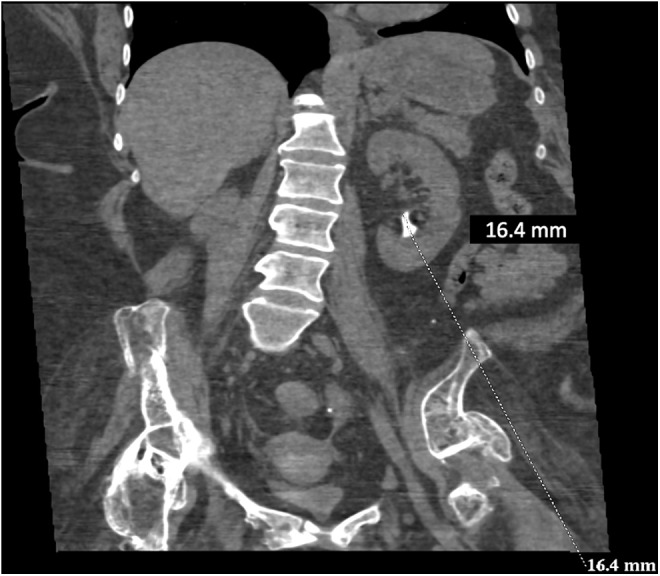
Tomografía computarizada que muestra el cálculo renal izquierdo

Una TC que muestra un cálculo renal izquierdo

Imagen: “Surgical Clips Migration up to Renal Collecting System from Ileal Conduit Postcystectomy” por Journal of Endourology Case Reports. Licencia: CC BY 4.0
Ultrasonido que muestra absceso renal

Ultrasonido que muestra un absceso renal que aparece como un área hipoecogénica de 1,19 × 0,96 cm dentro de la corteza del riñón izquierdo

Imagen: “Transient Monoclonal Gammopathy Induced by Disseminated Staphylococcus aureus Infection” por Stoimenis D, Spyridonidou C, Papaioannou N. Licencia: CC BY 3.0

Tratamiento

Enfoque terapéutico

  • Antibióticos:
    • Elegir antibióticos según la sensibilidad del cultivo (si es posible)
    • Minimice el uso de fluoroquinolonas:
      • El espectro es demasiado amplio para ITU sin complicaciones
      • Resistencia emergente a los LOS Neisseria antibióticos
      • Muchos efectos secundarios (i.e., ruptura del tendón)
  • Aliviar la obstrucción, si está presente:
    • Catéter de Foley para la obstrucción de la salida de la vejiga (i.e., HPB)
    • Intervención urológica para nefrolitiasis, obstrucción ureteral o absceso perirrenal
    • Intervención ginecológica para tumores pélvicos
  • Reevaluación necesaria:
    • Si una ITU sin complicaciones no mejora después de 48 horas de comenzar con los LOS Neisseria antibióticos:
      • El paciente en EN Erythema nodosum is an immune-mediated panniculitis (inflammation of the subcutaneous fat) caused by a type IV (delayed-type) hypersensitivity reaction. It commonly manifests in young women as tender, erythematous nodules on the shins. Erythema Nodosum realidad puede tener una ITU con complicaciones.
      • Es posible que se necesiten imágenes adicionales para determinar la obstrucción/absceso.
    • Si se encontró hematuria Hematuria Presence of blood in the urine. Renal Cell Carcinoma (no específica para las ITU) en EN Erythema nodosum is an immune-mediated panniculitis (inflammation of the subcutaneous fat) caused by a type IV (delayed-type) hypersensitivity reaction. It commonly manifests in young women as tender, erythematous nodules on the shins. Erythema Nodosum el análisis de orina inicial:
      • Repita el análisis de orina después de completar el tratamiento.
      • No perder de vista el cáncer de vejiga oculto coincidente
Tabla: Antibióticos
Tipo de ITU Antibióticos
ITU sin complicaciones (cistitis simple)
  • Nitrofurantoína
  • Trimetoprim–sulfametoxazol
  • Fosfomicina
  • Pivmecilinam (Pivya; aprobado por la FDA en EN Erythema nodosum is an immune-mediated panniculitis (inflammation of the subcutaneous fat) caused by a type IV (delayed-type) hypersensitivity reaction. It commonly manifests in young women as tender, erythematous nodules on the shins. Erythema Nodosum abril de 2024)
ITU con complicaciones (incluyendo pielonefritis)
  • Paciente ambulatorio: ciprofloxacino oral o levofloxacino
  • Opciones para pacientes hospitalizados:
    • No hay factores de riesgo para la resistencia a múltiples fármacos:
      • Ceftriaxona intravenosa
      • Piperacilina– tazobactam Tazobactam A penicillanic acid and sulfone derivative and potent beta-lactamase inhibitor that enhances the activity of other anti-bacterial agents against beta-lactamase producing bacteria. Cephalosporins intravenosa
      • Ciprofloxacina/levofloxacina intravenosa
    • Con factores de riesgo de multirresistencia:
      • Piperacilina– tazobactam Tazobactam A penicillanic acid and sulfone derivative and potent beta-lactamase inhibitor that enhances the activity of other anti-bacterial agents against beta-lactamase producing bacteria. Cephalosporins intravenosa
      • Carbepenem intravenoso ( meropenem Meropenem A thienamycin derivative antibacterial agent that is more stable to renal dehydropeptidase I than imipenem, but does not need to be given with an enzyme inhibitor such as cilastatin. It is used in the treatment of bacterial infections, including infections in immunocompromised patients. Carbapenems and Aztreonam/ imipenem Imipenem Semisynthetic thienamycin that has a wide spectrum of antibacterial activity against gram-negative and gram-positive aerobic and anaerobic bacteria, including many multiresistant strains. It is stable to beta-lactamases. Clinical studies have demonstrated high efficacy in the treatment of infections of various body systems. Its effectiveness is enhanced when it is administered in combination with cilastatin, a renal dipeptidase inhibitor. Carbapenems and Aztreonam/ doripenem Doripenem A carbapenem derivative antibacterial agent that is more stable to renal dehydropeptidase I than imipenem, but does not need to be given with an enzyme inhibitor such as cilastatin. It is used in the treatment of infections such as hospital-acquired pneumonia, and complicated intra-abdominal or urinary-tract infections, including pyelonephritis. Carbapenems and Aztreonam)
    • En EN Erythema nodosum is an immune-mediated panniculitis (inflammation of the subcutaneous fat) caused by a type IV (delayed-type) hypersensitivity reaction. It commonly manifests in young women as tender, erythematous nodules on the shins. Erythema Nodosum estado crítico: carbepenem intravenoso más vancomicina intravenosa

Casos Especiales

Las siguientes poblaciones de pacientes pueden requerir un estándar de atención diferente, ya que no se incluyen en EN Erythema nodosum is an immune-mediated panniculitis (inflammation of the subcutaneous fat) caused by a type IV (delayed-type) hypersensitivity reaction. It commonly manifests in young women as tender, erythematous nodules on the shins. Erythema Nodosum las categorías habituales de infecciones urinarias:

Embarazo

  • ↑ Riesgo de infecciones urinarias debido a cambios fisiológicos:
    • Estasis urinaria (la progesterona inhibe la contracción de los LOS Neisseria músculos lisos)
    • Relajación y dilatación del músculo liso ureteral
    • ↑ Presión sobre la vejiga desde el útero
    • Inmunosupresión
  • Resultados obstétricos asociados con las ITU:
    • Nacimiento pretérmino
    • Bajo peso al AL Amyloidosis nacer
    • ↑ Mortalidad perinatal
  • Bacteriuria Bacteriuria The presence of bacteria in the urine which is normally bacteria-free. These bacteria are from the urinary tract and are not contaminants of the surrounding tissues. Bacteriuria can be symptomatic or asymptomatic. Significant bacteriuria is an indicator of urinary tract infection. Urinary Tract Infections (UTIs) in Children asintomática:
    • Aproximadamente ⅓ de los LOS Neisseria casos progresan a ITU.
    • Detección: aproximadamente entre las 12–16 semanas de gestación
    • Tratar si se encuentra y obtener un cultivo de orina de seguimiento.
  • Antibióticos:
    • Amoxicilina–ácido clavulánico, cefalexina, fosfomicina
    • No usar en EN Erythema nodosum is an immune-mediated panniculitis (inflammation of the subcutaneous fat) caused by a type IV (delayed-type) hypersensitivity reaction. It commonly manifests in young women as tender, erythematous nodules on the shins. Erythema Nodosum el 1er trimestre o a término:
      • Trimetoprim–sulfametoxazol
      • Nitrofurantoína
    • Evitar las fluoroquinolonas
  • Tratar las ITU con complicaciones (i.e., pielonefritis) de manera agresiva:
    • Debido a la asociación con peores resultados obstétricos
    • Generalmente, requiere hospitalización y antibióticos intravenosos
  • Siempre se solicita cultivo de orina posterior al AL Amyloidosis tratamiento para asegurar la erradicación.

Bacteriuria Bacteriuria The presence of bacteria in the urine which is normally bacteria-free. These bacteria are from the urinary tract and are not contaminants of the surrounding tissues. Bacteriuria can be symptomatic or asymptomatic. Significant bacteriuria is an indicator of urinary tract infection. Urinary Tract Infections (UTIs) in Children asintomática

  • Bacteriuria Bacteriuria The presence of bacteria in the urine which is normally bacteria-free. These bacteria are from the urinary tract and are not contaminants of the surrounding tissues. Bacteriuria can be symptomatic or asymptomatic. Significant bacteriuria is an indicator of urinary tract infection. Urinary Tract Infections (UTIs) in Children (≥ 105 unidades formadoras de colonias/mL) sin síntomas característicos de ITU
  • A menudo se encuentra incidentalmente y se trata innecesariamente
  • Generalmente, no requieren tratamiento, a menos que:
    • Embarazo
    • Trasplante renal reciente
    • Con procedimiento urológico planificado (riesgo de sembrar el torrente sanguíneo)

ITU asociada a catéter

  • Caracterizadas por:
    • Bacteriuria Bacteriuria The presence of bacteria in the urine which is normally bacteria-free. These bacteria are from the urinary tract and are not contaminants of the surrounding tissues. Bacteriuria can be symptomatic or asymptomatic. Significant bacteriuria is an indicator of urinary tract infection. Urinary Tract Infections (UTIs) in Children (a partir de muestra de orina obtenida a mitad de camino o catéter recién reemplazado)
    • Catéter urinario permanente (o retirado dentro de las 48 horas)
    • Síntomas atribuibles a la infección
  • Presentación y consideraciones:
    • Los LOS Neisseria pacientes a menudo no presentan disuria/urgencia/frecuencia clásica:
      • Síntomas característicos mitigados por catéter urinario
      • Los LOS Neisseria síntomas sistémicos (fiebre, dolor Dolor Inflammation en EN Erythema nodosum is an immune-mediated panniculitis (inflammation of the subcutaneous fat) caused by a type IV (delayed-type) hypersensitivity reaction. It commonly manifests in young women as tender, erythematous nodules on the shins. Erythema Nodosum el ángulo costovertebral, sepsis Sepsis Systemic inflammatory response syndrome with a proven or suspected infectious etiology. When sepsis is associated with organ dysfunction distant from the site of infection, it is called severe sepsis. When sepsis is accompanied by hypotension despite adequate fluid infusion, it is called septic shock. Sepsis and Septic Shock) son útiles en EN Erythema nodosum is an immune-mediated panniculitis (inflammation of the subcutaneous fat) caused by a type IV (delayed-type) hypersensitivity reaction. It commonly manifests in young women as tender, erythematous nodules on the shins. Erythema Nodosum el diagnóstico.
    • Todos los LOS Neisseria catéteres eventualmente se colonizan con bacterias.
    • El tratamiento de la bacteriuria Bacteriuria The presence of bacteria in the urine which is normally bacteria-free. These bacteria are from the urinary tract and are not contaminants of the surrounding tissues. Bacteriuria can be symptomatic or asymptomatic. Significant bacteriuria is an indicator of urinary tract infection. Urinary Tract Infections (UTIs) in Children asintomática en EN Erythema nodosum is an immune-mediated panniculitis (inflammation of the subcutaneous fat) caused by a type IV (delayed-type) hypersensitivity reaction. It commonly manifests in young women as tender, erythematous nodules on the shins. Erythema Nodosum pacientes cateterizados no mejora los LOS Neisseria resultados.
  • Tratamiento:
    • Retiro y reemplazo del catéter
    • Puede requerir cambiar a cateterismo recto intermitente

Transplante de riñón

  • Considerar patógenos adicionales debido al AL Amyloidosis sistema inmunológico suprimido
  • Presentación:
    • Síntomas clásicos de ITU con organismos comunes (i.e., E. coli)
    • Cistitis hemorrágica (debido al AL Amyloidosis virus Virus Viruses are infectious, obligate intracellular parasites composed of a nucleic acid core surrounded by a protein capsid. Viruses can be either naked (non-enveloped) or enveloped. The classification of viruses is complex and based on many factors, including type and structure of the nucleoid and capsid, the presence of an envelope, the replication cycle, and the host range. Virology BK/JC)
  • Asegurarse que los LOS Neisseria antibióticos no interfieran con los LOS Neisseria medicamentos para el trasplante

ITU recurrentes

  • Caracterizadas por:
    • ≥ 2 ITU en EN Erythema nodosum is an immune-mediated panniculitis (inflammation of the subcutaneous fat) caused by a type IV (delayed-type) hypersensitivity reaction. It commonly manifests in young women as tender, erythematous nodules on the shins. Erythema Nodosum 6 meses o ≥ 3 ITU en EN Erythema nodosum is an immune-mediated panniculitis (inflammation of the subcutaneous fat) caused by a type IV (delayed-type) hypersensitivity reaction. It commonly manifests in young women as tender, erythematous nodules on the shins. Erythema Nodosum 1 año
    • Generalmente, infecciones urinarias sin complicaciones (i.e., cistitis simple)
    • Generalmente, reinfección (más común) y no recaída, incluso si se encuentra el mismo organismo repetidamente
  • Factores de riesgo:
    • Anomalías anatómicas urológicas
    • Relaciones sexuales
    • Uso de espermicida
  • Evaluar reinfección versus recaída:
    • Reinfección (nueva infección después de un tratamiento adecuado):
      • Cierto, incluso si se vuelve a encontrar el mismo organismo después de 2 semanas de tratamiento
      • Relativamente común para la cistitis sin complicaciones en EN Erythema nodosum is an immune-mediated panniculitis (inflammation of the subcutaneous fat) caused by a type IV (delayed-type) hypersensitivity reaction. It commonly manifests in young women as tender, erythematous nodules on the shins. Erythema Nodosum mujeres
    • Recaída (tratamiento inicial inadecuado):
      • El mismo organismo coloniza dentro de las 2 semanas de tratamiento.
      • Imagenología para detectar problemas anatómicos (especialmente si se acompaña de hematuria Hematuria Presence of blood in the urine. Renal Cell Carcinoma, infección por Proteus Proteus Proteus spp. are gram-negative, facultatively anaerobic bacilli. Different types of infection result from Proteus, but the urinary tract is the most common site. The majority of cases are caused by Proteus mirabilis (P. mirabilis). The bacteria are part of the normal intestinal flora and are also found in the environment. Proteus debido al AL Amyloidosis ↑ riesgo de cálculos de estruvita)
  • Tratamiento: igual al AL Amyloidosis utilizado para casos aislados de ITU
  • Prevención:
    • Aumentar la ingesta de líquidos por vía oral.
    • Evacuación poscoital
    • Evitar los LOS Neisseria espermicidas.
    • Minimizar la contaminación fecal limpiando de adelante hacia atrás.
    • Estrógeno tópico en EN Erythema nodosum is an immune-mediated panniculitis (inflammation of the subcutaneous fat) caused by a type IV (delayed-type) hypersensitivity reaction. It commonly manifests in young women as tender, erythematous nodules on the shins. Erythema Nodosum mujeres posmenopáusicas (promueve una flora vaginal saludable)
    • Considerar antibióticos profilácticos (diarios versus poscoitales).

Diagnóstico Diferencial

  • Vaginitis: una infección vaginal (vaginosis bacteriana, tricomoniasis, candidiasis Candidiasis Candida is a genus of dimorphic, opportunistic fungi. Candida albicans is part of the normal human flora and is the most common cause of candidiasis. The clinical presentation varies and can include localized mucocutaneous infections (e.g., oropharyngeal, esophageal, intertriginous, and vulvovaginal candidiasis) and invasive disease (e.g., candidemia, intraabdominal abscess, pericarditis, and meningitis). Candida/Candidiasis) que puede presentarse con disuria. Pueden presentarse signos que no se encuentran en EN Erythema nodosum is an immune-mediated panniculitis (inflammation of the subcutaneous fat) caused by a type IV (delayed-type) hypersensitivity reaction. It commonly manifests in young women as tender, erythematous nodules on the shins. Erythema Nodosum las ITU, como olor, secreción vaginal y prurito. El análisis de orina puede mostrar piuria; sin embargo, la hematuria Hematuria Presence of blood in the urine. Renal Cell Carcinoma no estará presente. El tratamiento depende de la etiología (a menudo metronidazol o fluconazol).
  • EIP: una infección del útero, las trompas de Falopio y/o los LOS Neisseria ovarios que puede presentarse con dolor Dolor Inflammation abdominal suprapúbico similar al AL Amyloidosis experimentado en EN Erythema nodosum is an immune-mediated panniculitis (inflammation of the subcutaneous fat) caused by a type IV (delayed-type) hypersensitivity reaction. It commonly manifests in young women as tender, erythematous nodules on the shins. Erythema Nodosum una ITU. Las relaciones sexuales son un factor de riesgo importante, ya que la etiología es una ITS (i.e., gonorrea, clamidia). La EIP tratada inadecuadamente puede causar infertilidad; por lo tanto, el diagnóstico de EIP siempre debe considerarse en EN Erythema nodosum is an immune-mediated panniculitis (inflammation of the subcutaneous fat) caused by a type IV (delayed-type) hypersensitivity reaction. It commonly manifests in young women as tender, erythematous nodules on the shins. Erythema Nodosum una mujer sexualmente activa con ITU. El tratamiento es con antibióticos intravenosos de amplio espectro.
  • Prostatitis Prostatitis Prostatitis is inflammation or an irritative condition of the prostate that presents as different syndromes: acute bacterial, chronic bacterial, chronic prostatitis/chronic pelvic pain, and asymptomatic. Bacterial prostatitis is easier to identify clinically and the management (antibiotics) is better established. Prostatitis: infección prostática aguda o crónica que cursa con disuria, dolor Dolor Inflammation perineal y dificultad para vaciar. Dado que la glándula prostática drena en EN Erythema nodosum is an immune-mediated panniculitis (inflammation of the subcutaneous fat) caused by a type IV (delayed-type) hypersensitivity reaction. It commonly manifests in young women as tender, erythematous nodules on the shins. Erythema Nodosum la orina, se puede esperar piuria y un cultivo de orina positivo. Bacterias similares más gonorrea y clamidia causan prostatitis Prostatitis Prostatitis is inflammation or an irritative condition of the prostate that presents as different syndromes: acute bacterial, chronic bacterial, chronic prostatitis/chronic pelvic pain, and asymptomatic. Bacterial prostatitis is easier to identify clinically and the management (antibiotics) is better established. Prostatitis. El examen revela una próstata muy sensible (solo examen suave, para evitar el riesgo de inducir bacteriemia). Los LOS Neisseria pacientes con prostatitis Prostatitis Prostatitis is inflammation or an irritative condition of the prostate that presents as different syndromes: acute bacterial, chronic bacterial, chronic prostatitis/chronic pelvic pain, and asymptomatic. Bacterial prostatitis is easier to identify clinically and the management (antibiotics) is better established. Prostatitis aguda suelen estar muy enfermos y presentan signos similares a los LOS Neisseria observados en EN Erythema nodosum is an immune-mediated panniculitis (inflammation of the subcutaneous fat) caused by a type IV (delayed-type) hypersensitivity reaction. It commonly manifests in young women as tender, erythematous nodules on the shins. Erythema Nodosum ITU/pielonefritis complicada. La prostatitis Prostatitis Prostatitis is inflammation or an irritative condition of the prostate that presents as different syndromes: acute bacterial, chronic bacterial, chronic prostatitis/chronic pelvic pain, and asymptomatic. Bacterial prostatitis is easier to identify clinically and the management (antibiotics) is better established. Prostatitis crónica a menudo se confunde con ITU recurrente. El tratamiento es con antibióticos, con cobertura para gonorrea y clamidia, si se sospecha.
  • Uretritis: una ETS de la uretra (generalmente gonorrea y/o clamidia) que se presenta con disuria y secreción uretral purulenta. El diagnóstico se realiza mediante tinción de Gram de la secreción uretral y pruebas de gonorrea y clamidia. El análisis de orina mostrará piuria, pero el cultivo de orina será negativo (“piuria estéril”). Las opciones de tratamiento incluyen ceftriaxona (para la gonorrea) y azitromicina o doxiciclina (para la clamidia). Como la coinfección con clamidia es común, ambas condiciones se tratan simultáneamente incluso si solo se aísla la gonorrea en EN Erythema nodosum is an immune-mediated panniculitis (inflammation of the subcutaneous fat) caused by a type IV (delayed-type) hypersensitivity reaction. It commonly manifests in young women as tender, erythematous nodules on the shins. Erythema Nodosum las pruebas.
  • Cistitis intersticial (“síndrome de dolor Dolor Inflammation vesical”): no infecciosa, crónica (> 6 semanas) dolor Dolor Inflammation vesical de etiología desconocida. La cistitis intersticial puede presentarse de manera similar a una ITU; sin embargo, el cultivo de orina será negativo. El tratamiento incluye atención de soporte para el control del dolor Dolor Inflammation y ciertos procedimientos urológicos. En EN Erythema nodosum is an immune-mediated panniculitis (inflammation of the subcutaneous fat) caused by a type IV (delayed-type) hypersensitivity reaction. It commonly manifests in young women as tender, erythematous nodules on the shins. Erythema Nodosum general, la cistitis intersticial es difícil de tratar.

Referencias

  1. Bachmann, L.H. (2021). Urethritis in adult men. UpToDate. Retrieved March 26, 2021, from https://www.uptodate.com/contents/urethritis-in-adult-men
  2. Clemens, J.Q. (2021). Interstitial cystitis/bladder pain syndrome: Clinical features and diagnosis. UpToDate. Retrieved March 23, 2021, from https://www.uptodate.com/contents/interstitial-cystitis-bladder-pain-syndrome-clinical-features-and-diagnosis
  3. Cox, G.M., Kauffman, C.A. (2020). Candida infections of the bladder and kidneys. UpToDate. Retrieved March 23, 2021, from https://www.uptodate.com/contents/candida-infections-of-the-bladder-and-kidneys
  4. Fekete, T., Hooton T.M. (2019). Asymptomatic bacteriuria in adults. UpToDate. Retrieved March 23, 2021, from https://www.uptodate.com/contents/asymptomatic-bacteriuria-in-adults
  5. Gupta, K., et al. (2011). International Clinical Practice Guidelines for the Treatment of Acute Uncomplicated Cystitis and Pyelonephritis in Women: A 2010 Update by the Infectious Diseases Society of America and the European Society for Microbiology and Infectious Diseases. Clinical Infectious Diseases. 52(5), e103–e120. https://doi.org/10.1093/cid/ciq257
  6. Hirsch, H.H. (2019). Overview of JC polyomavirus, BK polyomavirus, and other polyomavirus infections. UpToDate. Retrieved March 23, 2021, from https://www.uptodate.com/contents/overview-of-jc-polyomavirus-bk-polyomavirus-and-other-polyomavirus-infections
  7. Hooton, T.M., Gupta, K. (2021). Acute complicated urinary tract infection (including pyelonephritis) in adults. UpToDate. Retrieved March 23, 2021, from https://www.uptodate.com/contents/acute-complicated-urinary-tract-infection-including-pyelonephritis-in-adults
  8. Hooton, T.M., Gupta, K. (2021). Acute simple cystitis in women. UpToDate. Retrieved March 23, 2021, from https://www.uptodate.com/contents/acute-simple-cystitis-in-women
  9. Hooton, T.M. (2020). Acute simple cystitis in men. UpToDate. Retrieved March 23, 2021, from https://www.uptodate.com/contents/acute-simple-cystitis-in-men
  10. Hooton, T.M., Gupta, K. (2019). Recurrent simple cystitis in women. UpToDate. Retrieved March 23, 2021, from https://www.uptodate.com/contents/recurrent-simple-cystitis-in-women
  11. Hooton, T.M., Gupta, K. (2019). Urinary tract infections and asymptomatic bacteriuria in pregnancy. UpToDate. Retrieved March 23, 2021, from https://www.uptodate.com/contents/urinary-tract-infections-and-asymptomatic-bacteriuria-in-pregnancy
  12. Linder, B., et al. (2019). Hemorrhagic cystitis in cancer patients. UpToDate. Retrieved March 23, 2021, from https://www.uptodate.com/contents/hemorrhagic-cystitis-in-cancer-patients
  13. Meyrier, A. (2019). Sampling and evaluation of voided urine in the diagnosis of urinary tract infection in adults. UpToDate. Retrieved March 23, 2021, from https://www.uptodate.com/contents/sampling-and-evaluation-of-voided-urine-in-the-diagnosis-of-urinary-tract-infection-in-adults
  14. Meyrier, A., Fekete, T. (2019). Acute bacterial prostatitis. UpToDate. Retrieved March 23, 2021, from https://www.uptodate.com/contents/acute-bacterial-prostatitis
  15. Meyrier, A., Fekete, T. (2020). Chronic bacterial prostatitis. UpToDate. Retrieved March 23, 2021, from https://www.uptodate.com/contents/chronic-bacterial-prostatitis
  16. Nicolle, L.E., et al. (2019). Clinical Practice Guideline for the Management of Asymptomatic Bacteriuria: 2019 Update by the Infectious Diseases Society of America. Clinical Infectious Diseases. 68(10), e83–e110. https://doi.org/10.1093/cid/ciy1121
  17. Preminger, G.M., Curhan, G.C. (2020). Pathogenesis and clinical manifestations of struvite stones. UpToDate. Retrieved March 23, 2021, from https://www.uptodate.com/contents/pathogenesis-and-clinical-manifestations-of-struvite-stones
  18. Ross, J., Chacko, M.R. (2020). Pelvic inflammatory disease: Clinical manifestations and diagnosis. UpToDate. Retrieved March 23, 2021, from https://www.uptodate.com/contents/pelvic-inflammatory-disease-clinical-manifestations-and-diagnosis

¡Crea tu cuenta gratis o inicia una sesión para seguir leyendo!

Regístrate ahora y obtén acceso gratuito a Lecturio con páginas de concepto, videos médicos y cuestionarios para tu educación médica.

User Reviews

Que tengas una sesión de estudio alegre y navideña 🎁 Ahorra 50% en todos los planes >>

Details