
La hemorragia subaracnoidea es un tipo de accidente cerebrovascular que resulta de una hemorragia intracraneal en EN Erythema nodosum is an immune-mediated panniculitis (inflammation of the subcutaneous fat) caused by a type IV (delayed-type) hypersensitivity reaction. It commonly manifests in young women as tender, erythematous nodules on the shins. Erythema Nodosum el espacio subaracnoideo entre la capa aracnoides y la piamadre de las meninges Meninges The brain and the spinal cord are enveloped by 3 overlapping layers of connective tissue called the meninges. The layers are, from the most external layer to the most internal layer, the dura mater, arachnoid mater, and pia mater. Between these layers are 3 potential spaces called the epidural, subdural, and subarachnoid spaces. Meninges: Anatomy que rodean el cerebro. La mayoría de las hemorragias subaracnoideas se originan a partir de un aneurisma sacular en EN Erythema nodosum is an immune-mediated panniculitis (inflammation of the subcutaneous fat) caused by a type IV (delayed-type) hypersensitivity reaction. It commonly manifests in young women as tender, erythematous nodules on the shins. Erythema Nodosum el polígono de Willis, pero también pueden ocurrir como resultado de un traumatismo, hipertensión arterial no controlada, vasculitis Vasculitis Inflammation of any one of the blood vessels, including the arteries; veins; and rest of the vasculature system in the body. Systemic Lupus Erythematosus, uso de anticoagulantes o estimulantes. El síntoma más clásico es la cefalea de inicio repentino ( en EN Erythema nodosum is an immune-mediated panniculitis (inflammation of the subcutaneous fat) caused by a type IV (delayed-type) hypersensitivity reaction. It commonly manifests in young women as tender, erythematous nodules on the shins. Erythema Nodosum trueno) junto con rigidez nucal, vómitos, disminución del nivel de conciencia y convulsiones. Como ocurre con cualquier accidente cerebrovascular, es común que se presenten déficits neurológicos focales y que sin un diagnóstico o tratamiento oportuno producen un rápido deterioro neurológico. Se debe sospechar una hemorragia subaracnoidea en EN Erythema nodosum is an immune-mediated panniculitis (inflammation of the subcutaneous fat) caused by a type IV (delayed-type) hypersensitivity reaction. It commonly manifests in young women as tender, erythematous nodules on the shins. Erythema Nodosum cualquier persona que presente cefalea en EN Erythema nodosum is an immune-mediated panniculitis (inflammation of the subcutaneous fat) caused by a type IV (delayed-type) hypersensitivity reaction. It commonly manifests in young women as tender, erythematous nodules on the shins. Erythema Nodosum trueno y síntomas neurológicos y el diagnóstico puede confirmarse por medio de la neuroimagenología o mediante punción lumbar. El tratamiento consiste en EN Erythema nodosum is an immune-mediated panniculitis (inflammation of the subcutaneous fat) caused by a type IV (delayed-type) hypersensitivity reaction. It commonly manifests in young women as tender, erythematous nodules on the shins. Erythema Nodosum la reversión de la anticoagulación, el control de la presión arterial y la intervención neuroquirúrgica para contener el sangrado y/o aliviar la presión intracraneal (PIC) elevada. Incluso con una intervención neuroquirúrgica oportuna, la hemorragia subaracnoidea conlleva una alta tasa de mortalidad.
Last updated: Dec 15, 2025
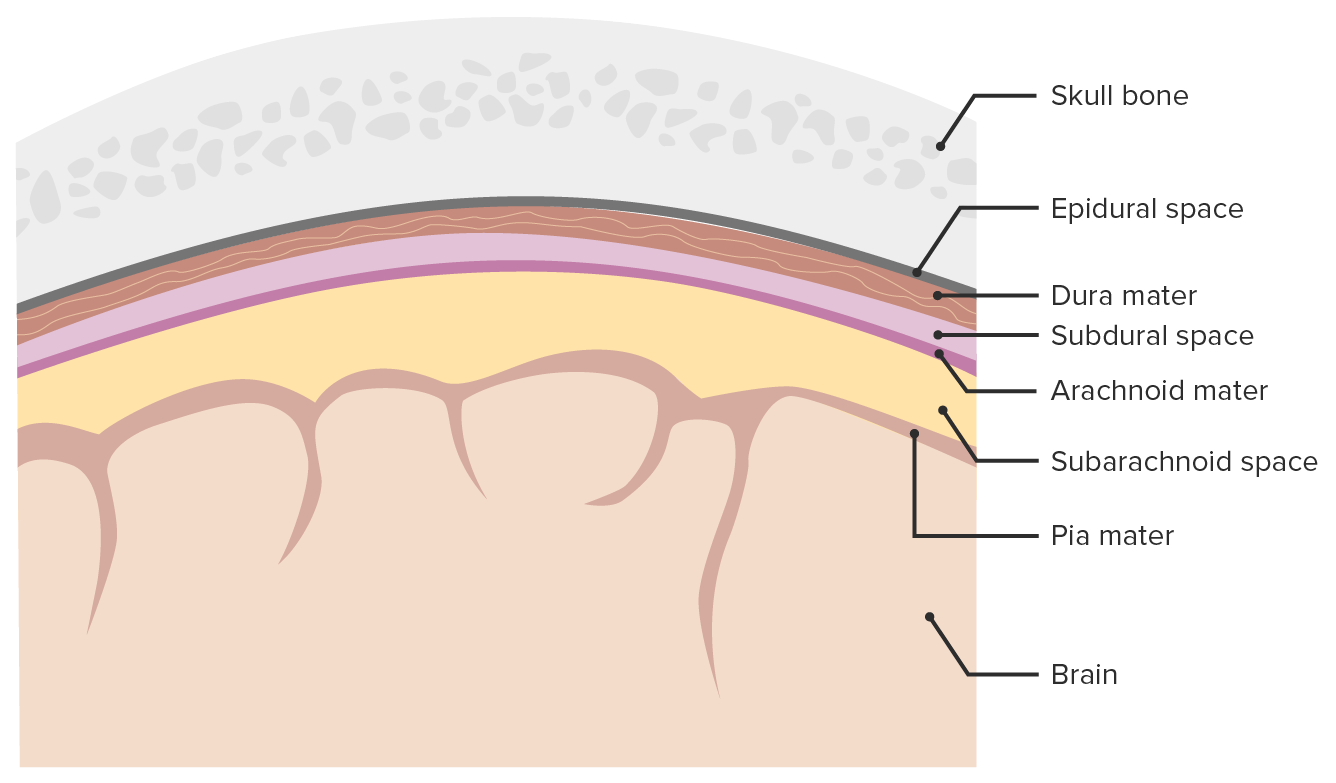
Meninges y espacios meníngeos:
La imagen muestra las 3 capas (duramadre, aracnoides, piamadre) que rodean el cerebro y la médula espinal. Las meninges sirven como protección mecánica del SNC. También sirven de soporte para los vasos sanguíneos cerebrales y espinales y permiten el paso del LCR. El espacio subaracnoideo está lleno de LCR.
Dado que el aneurisma sacular es la etiología más común de la hemorragia subaracnoidea, esta sección se centrará principalmente en EN Erythema nodosum is an immune-mediated panniculitis (inflammation of the subcutaneous fat) caused by a type IV (delayed-type) hypersensitivity reaction. It commonly manifests in young women as tender, erythematous nodules on the shins. Erythema Nodosum la patogenia de la ruptura del aneurisma sacular. Los LOS Neisseria eventos que ocurren después de la ruptura en EN Erythema nodosum is an immune-mediated panniculitis (inflammation of the subcutaneous fat) caused by a type IV (delayed-type) hypersensitivity reaction. It commonly manifests in young women as tender, erythematous nodules on the shins. Erythema Nodosum sí son comunes a otras etiologías de hemorragia subaracnoidea.
El síntoma de presentación clásico de la hemorragia subaracnoidea es una cefalea en EN Erythema nodosum is an immune-mediated panniculitis (inflammation of the subcutaneous fat) caused by a type IV (delayed-type) hypersensitivity reaction. It commonly manifests in young women as tender, erythematous nodules on the shins. Erythema Nodosum trueno. También hay otros síntomas de la presentación clínica.
Cualquier cefalea en EN Erythema nodosum is an immune-mediated panniculitis (inflammation of the subcutaneous fat) caused by a type IV (delayed-type) hypersensitivity reaction. It commonly manifests in young women as tender, erythematous nodules on the shins. Erythema Nodosum trueno que se presente con o sin síntomas/signos neurológicos o con un estado mental alterado debe evaluarse de manera urgente mediante neuroimagenología. La TC sin contraste está disponible en EN Erythema nodosum is an immune-mediated panniculitis (inflammation of the subcutaneous fat) caused by a type IV (delayed-type) hypersensitivity reaction. It commonly manifests in young women as tender, erythematous nodules on the shins. Erythema Nodosum la mayoría de los LOS Neisseria hospitales de cuidados intensivos y es la prueba inicial de elección.
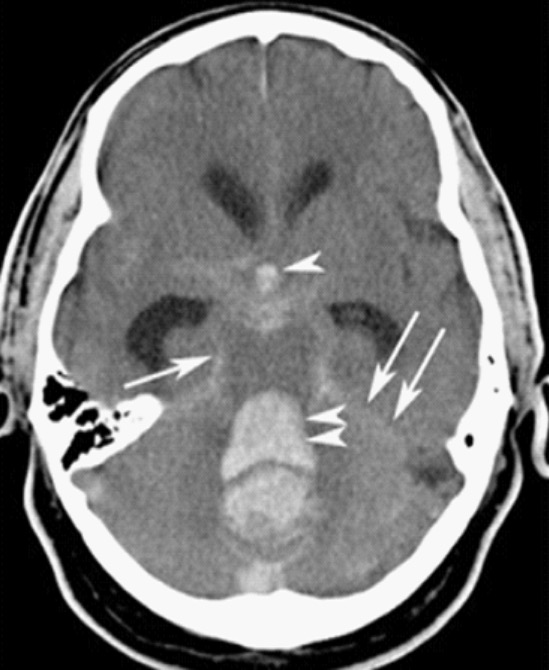
Hemorragia subaracnoidea:
TC que muestra una hemorragia intracraneal
Se debe realizar una punción lumbar de inmediato (si la sospecha clínica de una hemorragia subaracnoidea es muy alta y la TC fue negativa). Los LOS Neisseria estudios deben incluir:
Se utilizan clínicamente varias escalas en EN Erythema nodosum is an immune-mediated panniculitis (inflammation of the subcutaneous fat) caused by a type IV (delayed-type) hypersensitivity reaction. It commonly manifests in young women as tender, erythematous nodules on the shins. Erythema Nodosum el diagnóstico y clasificación de la gravedad de la hemorragia subaracnoidea. La escala de Hunt y Hess se encuentra entre las más empleadas en EN Erythema nodosum is an immune-mediated panniculitis (inflammation of the subcutaneous fat) caused by a type IV (delayed-type) hypersensitivity reaction. It commonly manifests in young women as tender, erythematous nodules on the shins. Erythema Nodosum la práctica clínica.
| Calificación | Hallazgos neurológicos | Tasa de mortalidad (5) |
|---|---|---|
| 1 | Cefalea asintomática o leve y ligera rigidez nucal | 1 |
| 2 | Cefalea intensa, rigidez nucal, sin déficit neurológico, compromiso de nervios craneales | 5 |
| 3 | Somnolencia o confusión, déficit neurológico focal leve | 19 |
| 4 | Hemiparesia estuporosa, moderada o grave. | 42 |
| 5 | Coma Coma Coma is defined as a deep state of unarousable unresponsiveness, characterized by a score of 3 points on the GCS. A comatose state can be caused by a multitude of conditions, making the precise epidemiology and prognosis of coma difficult to determine. Coma, postura de descerebración | 77 |
¡Consultar a neurocirugía y/o al AL Amyloidosis intervencionista endovascular! El objetivo es detener el sangrado, prevenir nuevas hemorragias, tratar la PIC para prevenir la isquemia secundaria. Las posibles intervenciones incluyen:
El monitoreo debe ser realizado en EN Erythema nodosum is an immune-mediated panniculitis (inflammation of the subcutaneous fat) caused by a type IV (delayed-type) hypersensitivity reaction. It commonly manifests in young women as tender, erythematous nodules on the shins. Erythema Nodosum una UCI por personal especialmente capacitado y equipado para abordar de manera continua y simultánea lo siguiente:
Es razonable ofrecer pruebas de detección (neuroimagenología) a los LOS Neisseria familiares de 1er grado de pacientes con hemorragia subaracnoidea para detectar aneurismas saculares.