Domina Conceptos Médicos

Estudia para la escuela de medicina y tus examenes con Lecturio.

Hemorragia Digestiva

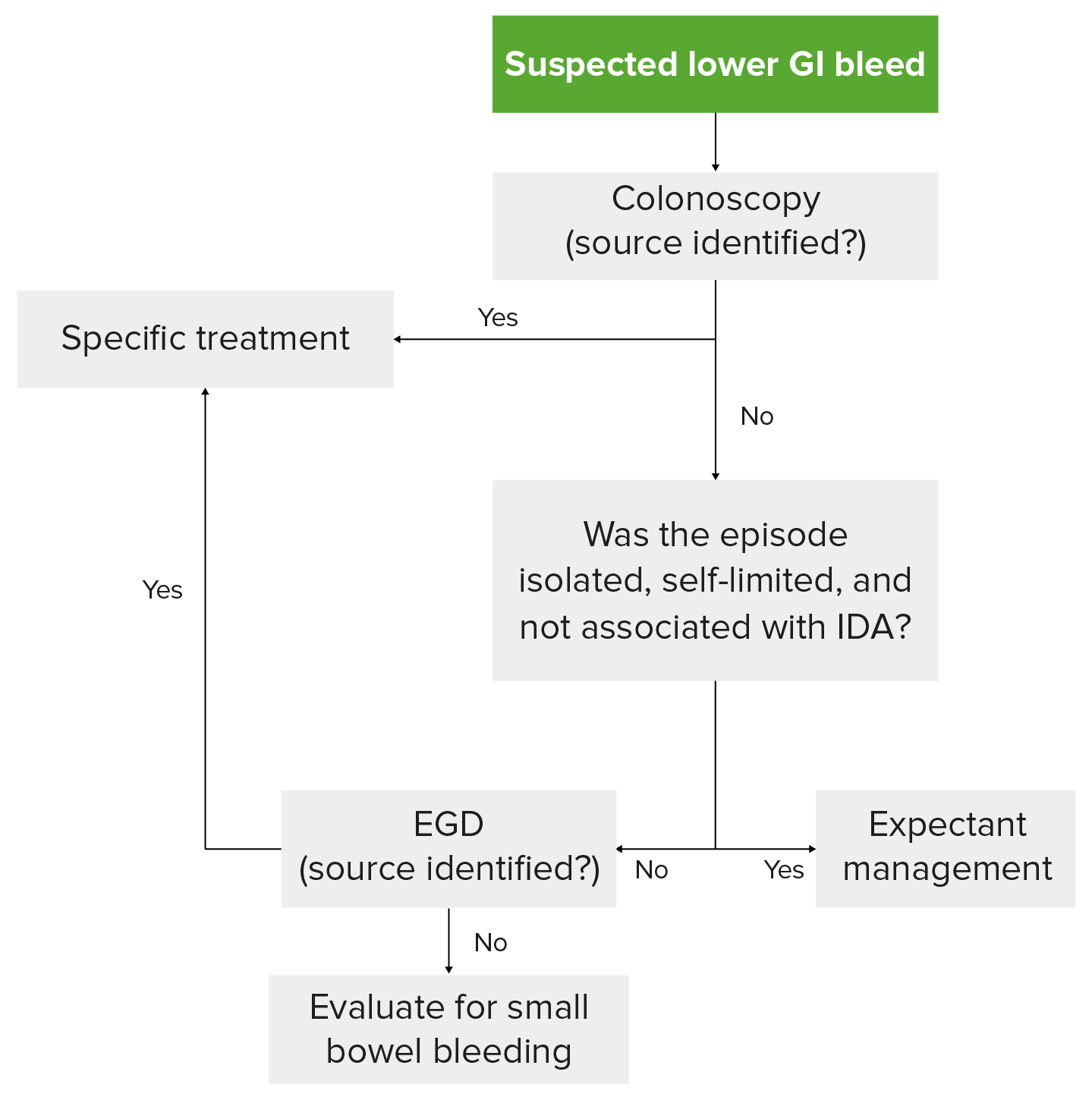
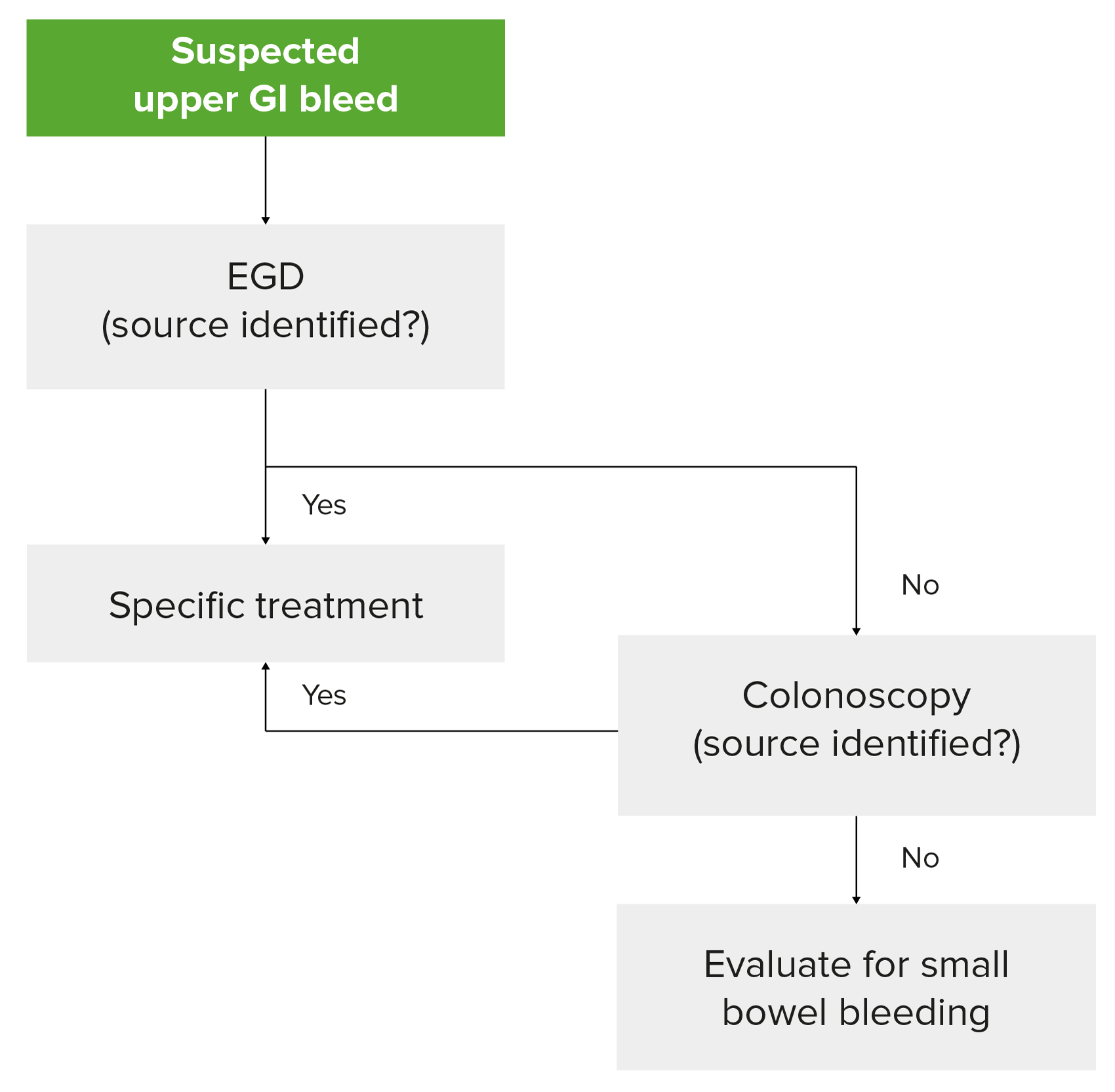
La hemorragia gastrointestinal indica una patología subyacente en el tracto gastrointestinal superior o inferior. La hematemesis (vómitos de sangre roja o "borras de café") y la melena Melena The black, tarry, foul-smelling feces that contain degraded blood. Gastrointestinal Bleeding (heces negras y alquitranadas) suelen indicar una hemorragia digestiva alta proximal al AL Amyloidosis ligamento suspensorio del duodeno, también llamado ligamento de Treitz. La úlcera péptica es la causa más frecuente de hemorragia digestiva alta. La hematoquecia (sangre roja en EN Erythema nodosum is an immune-mediated panniculitis (inflammation of the subcutaneous fat) caused by a type IV (delayed-type) hypersensitivity reaction. It commonly manifests in young women as tender, erythematous nodules on the shins. Erythema Nodosum las heces) se asocia con mayor frecuencia a las hemorragias digestivas bajas (aunque es infrecuente que se produzca con hemorragias digestivas altas masivas que suelen asociarse a hipotensión). La hemorragia digestiva baja puede deberse a enfermedad diverticular, angiodisplasia, pólipos o tumores, enfermedad inflamatoria intestinal o hemorroides internas. El diagnóstico se realiza mediante historia clínica y exploración física, seguidas de endoscopia digestiva alta y/o baja. Por lo general, el origen de la hemorragia puede identificarse y tratarse mediante endoscopia.

Last updated: Dec 15, 2025

Editorial responsibility: Stanley Oiseth, Lindsay Jones, Evelin Maza

Epidemiología y Etiología

Epidemiología

  • Hemorragia digestiva alta:
    • Incidencia de unos 100 por cada 100 000 adultos al AL Amyloidosis año
    • Dos veces más común en EN Erythema nodosum is an immune-mediated panniculitis (inflammation of the subcutaneous fat) caused by a type IV (delayed-type) hypersensitivity reaction. It commonly manifests in young women as tender, erythematous nodules on the shins. Erythema Nodosum los LOS Neisseria hombres
    • Incremento del riesgo con la edad (> 60 años)
  • Hemorragia digestiva baja:
    • Incidencia de unos 20,5 por cada 100 000 adultos al AL Amyloidosis año
    • Aumento del riesgo con la edad (incremento de 200 veces en EN Erythema nodosum is an immune-mediated panniculitis (inflammation of the subcutaneous fat) caused by a type IV (delayed-type) hypersensitivity reaction. It commonly manifests in young women as tender, erythematous nodules on the shins. Erythema Nodosum la 3ra a 9na década de vida)
    • Algo más común en EN Erythema nodosum is an immune-mediated panniculitis (inflammation of the subcutaneous fat) caused by a type IV (delayed-type) hypersensitivity reaction. It commonly manifests in young women as tender, erythematous nodules on the shins. Erythema Nodosum los LOS Neisseria hombres
  • Factores de riesgo:
    • Infección por Helicobacter Helicobacter Helicobacter pylori is a gram-negative bacterium that causes gastric infection. It is the most well known and clinically significant species of Helicobacter. Transmission is believed to occur by ingestion of contaminated food or water; therefore, a higher prevalence of infection is seen in areas with poor sanitation. Helicobacter pylori
    • Antiinflamatorios no esteroideos (AINE)
    • Consumo de alcohol
    • Cirrosis
    • Enfermedad vascular

Etiología

Hemorragia digestiva alta (proximal al AL Amyloidosis ligamento de Treitz):
  • Esófago
    • Varices esofágicas
    • Esofagitis: infección o inflamación en EN Erythema nodosum is an immune-mediated panniculitis (inflammation of the subcutaneous fat) caused by a type IV (delayed-type) hypersensitivity reaction. It commonly manifests in young women as tender, erythematous nodules on the shins. Erythema Nodosum el esófago
    • Cáncer de esófago
    • Desgarro de Mallory-Weiss: desgarro de la mucosa esofágica debido a un vómito forzado
  • Estómago
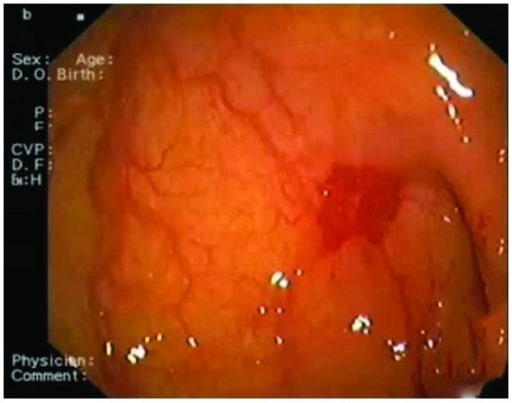
    • Úlcera gástrica
    • Gastritis Gastritis Gastritis refers to inflammation of the gastric mucosa. Gastritis may occur suddenly (acute gastritis) or slowly over time (chronic gastritis). Gastritis may be asymptomatic or with symptoms, including burning abdominal pain (which either worsens or improves with eating), dyspepsia, nausea, and vomiting. Gastritis erosiva
    • Ectasia vascular antral gástrica: pequeños vasos sanguíneos dilatados en EN Erythema nodosum is an immune-mediated panniculitis (inflammation of the subcutaneous fat) caused by a type IV (delayed-type) hypersensitivity reaction. It commonly manifests in young women as tender, erythematous nodules on the shins. Erythema Nodosum el antro pilórico (poco frecuente)
    • Gastropatía hipertensiva portal
    • Lesión de Dieulafoy: vaso grande y tortuoso que puede erosionar y sangrar
    • Angiodisplasia: acumulación anormal de vasos sanguíneos
  • Duodeno
    • Úlcera duodenal
    • Angiodisplasia
    • Fístula aortoentérica (rara)
  • Las úlceras gástricas y duodenales son las causas más comunes.

Hemorragia digestiva baja (distal al AL Amyloidosis ligamento de Treitz):

  • Enfermedad diverticular
    • Diverticulosis Diverticulosis A pathological condition characterized by the presence of a number of colonic diverticula in the colon. Its pathogenesis is multifactorial, including colon aging, motor dysfunction, increases in intraluminal pressure, and lack of dietary fibers. Diverticular Disease: protrusión en EN Erythema nodosum is an immune-mediated panniculitis (inflammation of the subcutaneous fat) caused by a type IV (delayed-type) hypersensitivity reaction. It commonly manifests in young women as tender, erythematous nodules on the shins. Erythema Nodosum forma de saco de la pared del colon Colon The large intestines constitute the last portion of the digestive system. The large intestine consists of the cecum, appendix, colon (with ascending, transverse, descending, and sigmoid segments), rectum, and anal canal. The primary function of the colon is to remove water and compact the stool prior to expulsion from the body via the rectum and anal canal. Colon, Cecum, and Appendix: Anatomy (común)
    • Diverticulitis Diverticulitis Inflammation of a diverticulum or diverticula. Diverticular Disease: poco asociada a una hemorragia digestiva
    • Divertículo de Meckel: bolsa congénita en EN Erythema nodosum is an immune-mediated panniculitis (inflammation of the subcutaneous fat) caused by a type IV (delayed-type) hypersensitivity reaction. It commonly manifests in young women as tender, erythematous nodules on the shins. Erythema Nodosum el íleon
  • Enfermedad vascular
    • Angiodisplasia
    • Isquemia (e.g., isquemia mesentérica, colitis Colitis Inflammation of the colon section of the large intestine, usually with symptoms such as diarrhea (often with blood and mucus), abdominal pain, and fever. Pseudomembranous Colitis isquémica)
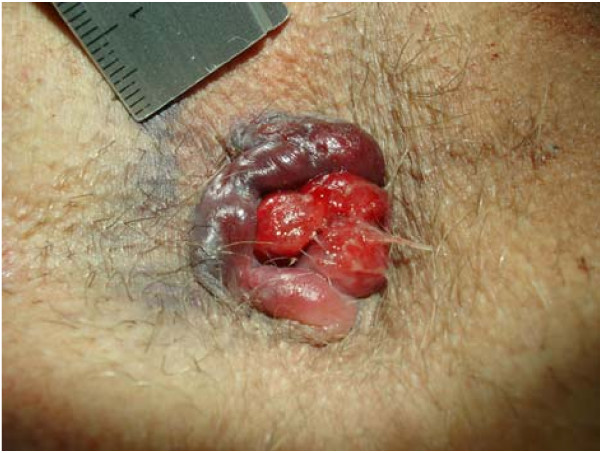
    • Hemorroides: estructuras venosas del anorecto que se inflaman, prolapsan y sangran
  • Trauma
  • Fisura anal: pequeño desgarro de la mucosa anal
  • Neoplasia
    • Pólipo de colon Colon The large intestines constitute the last portion of the digestive system. The large intestine consists of the cecum, appendix, colon (with ascending, transverse, descending, and sigmoid segments), rectum, and anal canal. The primary function of the colon is to remove water and compact the stool prior to expulsion from the body via the rectum and anal canal. Colon, Cecum, and Appendix: Anatomy
    • Cáncer colorrectal
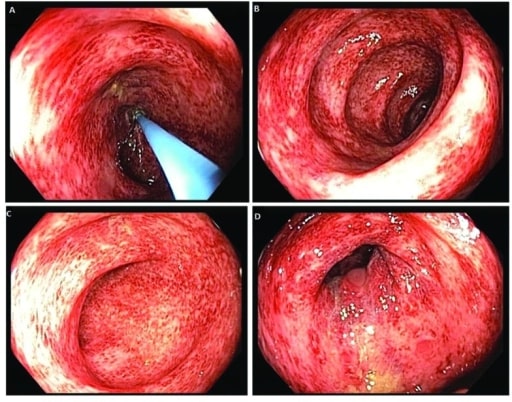
  • Enfermedad inflamatoria
    • Colitis Colitis Inflammation of the colon section of the large intestine, usually with symptoms such as diarrhea (often with blood and mucus), abdominal pain, and fever. Pseudomembranous Colitis infecciosa
    • Colitis Colitis Inflammation of the colon section of the large intestine, usually with symptoms such as diarrhea (often with blood and mucus), abdominal pain, and fever. Pseudomembranous Colitis ulcerosa y enfermedad de Crohn: enfermedades inflamatorias intestinales autoinmunes que causan inflamación y úlceras
  • Iatrogenia
    • Después de una biopsia o polipectomía
    • Colitis Colitis Inflammation of the colon section of the large intestine, usually with symptoms such as diarrhea (often with blood and mucus), abdominal pain, and fever. Pseudomembranous Colitis por radiación: inflamación del colon Colon The large intestines constitute the last portion of the digestive system. The large intestine consists of the cecum, appendix, colon (with ascending, transverse, descending, and sigmoid segments), rectum, and anal canal. The primary function of the colon is to remove water and compact the stool prior to expulsion from the body via the rectum and anal canal. Colon, Cecum, and Appendix: Anatomy inducida por la radiación
    • Fístula aortoentérica (rara, pero grave)

Presentación Clínica

Manifestaciones clínicas

  • Los LOS Neisseria pacientes con hemorragia oculta pueden ser asintomáticos.
  • Síntomas de anemia Anemia Anemia is a condition in which individuals have low Hb levels, which can arise from various causes. Anemia is accompanied by a reduced number of RBCs and may manifest with fatigue, shortness of breath, pallor, and weakness. Subtypes are classified by the size of RBCs, chronicity, and etiology. Anemia: Overview and Types:
    • Fatiga, debilidad
    • Disnea
    • Palidez
    • Mareo
    • Síncope
  • Dolor Dolor Inflammation abdominal o ardor de estómago → úlceras, gastritis Gastritis Gastritis refers to inflammation of the gastric mucosa. Gastritis may occur suddenly (acute gastritis) or slowly over time (chronic gastritis). Gastritis may be asymptomatic or with symptoms, including burning abdominal pain (which either worsens or improves with eating), dyspepsia, nausea, and vomiting. Gastritis, isquemia
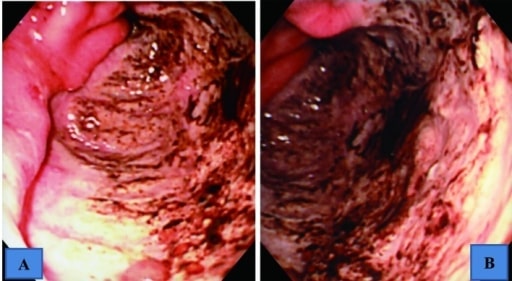
  • Emesis en EN Erythema nodosum is an immune-mediated panniculitis (inflammation of the subcutaneous fat) caused by a type IV (delayed-type) hypersensitivity reaction. It commonly manifests in young women as tender, erythematous nodules on the shins. Erythema Nodosum borra de café → hemorragia digestiva alta
  • Hematemesis Hematemesis Vomiting of blood that is either fresh bright red, or older ‘coffee-ground’ in character. It generally indicates bleeding of the upper gastrointestinal tract. Mallory-Weiss Syndrome (Mallory-Weiss Tear) → hemorragia digestiva alta
  • Melena Melena The black, tarry, foul-smelling feces that contain degraded blood. Gastrointestinal Bleeding (heces negras y alquitranadas)
  • Hematoquecia (sangre de color rojo intenso en EN Erythema nodosum is an immune-mediated panniculitis (inflammation of the subcutaneous fat) caused by a type IV (delayed-type) hypersensitivity reaction. It commonly manifests in young women as tender, erythematous nodules on the shins. Erythema Nodosum las heces)
    • Normalmente, se ve VE Ventilation: Mechanics of Breathing en EN Erythema nodosum is an immune-mediated panniculitis (inflammation of the subcutaneous fat) caused by a type IV (delayed-type) hypersensitivity reaction. It commonly manifests in young women as tender, erythematous nodules on the shins. Erythema Nodosum la hemorragia digestiva baja
    • Puede verse en EN Erythema nodosum is an immune-mediated panniculitis (inflammation of the subcutaneous fat) caused by a type IV (delayed-type) hypersensitivity reaction. It commonly manifests in young women as tender, erythematous nodules on the shins. Erythema Nodosum una hemorragia digestiva alta rápida y de gran volumen
  • Pérdida de peso → malignidad

Examen físico

  • Los LOS Neisseria pacientes con hemorragias leves u ocultas pueden no tener hallazgos significativos.
  • Evidencia de inestabilidad hemodinámica:
    • Taquicardia
    • Hipotensión
    • Alteración del estado mental
  • Hipotensión ortostática: se observa con una pérdida aguda de sangre de ≥ 2 unidades
  • Palidez piel y conjuntiva
  • Algunos pueden tener sensibilidad abdominal (e.g., isquemia).
  • Tacto rectal:
    • Heces negras o con sangre
    • En EN Erythema nodosum is an immune-mediated panniculitis (inflammation of the subcutaneous fat) caused by a type IV (delayed-type) hypersensitivity reaction. It commonly manifests in young women as tender, erythematous nodules on the shins. Erythema Nodosum las hemorragias ocultas pueden observarse heces normales de color marrón
    • Hemorroides
    • Fisura anal
    • Masa rectal
  • Evaluar los LOS Neisseria signos de enfermedad hepática crónica:

Related videos

Diagnóstico

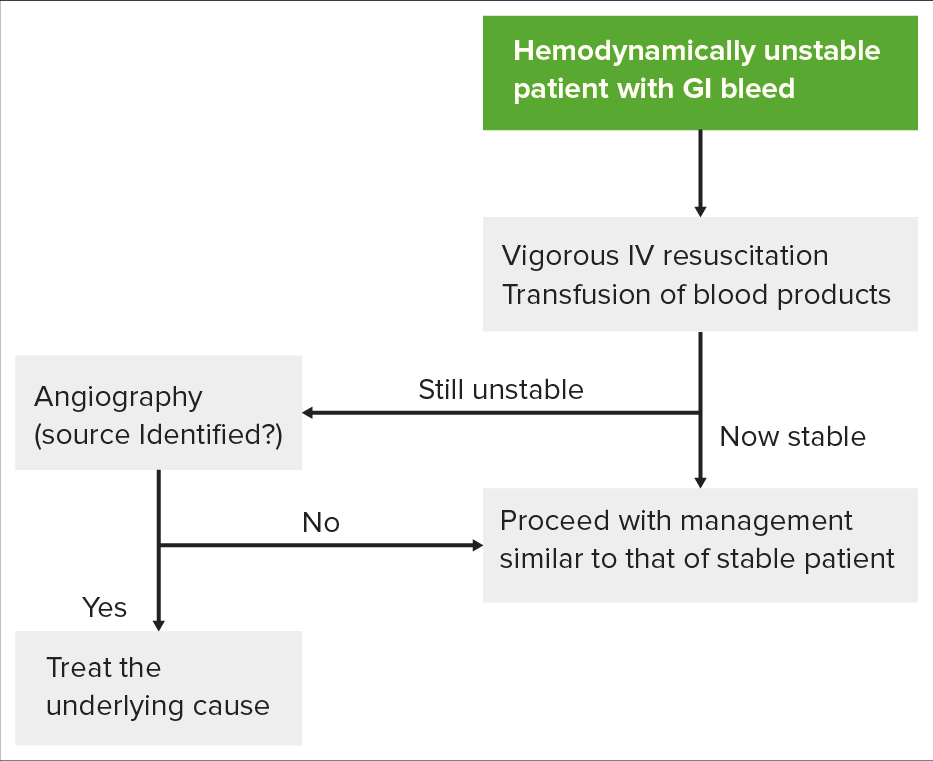
El diagnóstico y el tratamiento de la hemorragia digestiva suelen ir de la mano y variarán en EN Erythema nodosum is an immune-mediated panniculitis (inflammation of the subcutaneous fat) caused by a type IV (delayed-type) hypersensitivity reaction. It commonly manifests in young women as tender, erythematous nodules on the shins. Erythema Nodosum función de la estabilidad hemodinámica del paciente.
Evaluaciones de laboratorio

  • Hemograma → anemia Anemia Anemia is a condition in which individuals have low Hb levels, which can arise from various causes. Anemia is accompanied by a reduced number of RBCs and may manifest with fatigue, shortness of breath, pallor, and weakness. Subtypes are classified by the size of RBCs, chronicity, and etiology. Anemia: Overview and Types por pérdida de sangre
    • La hemoglobina puede encontrarse en EN Erythema nodosum is an immune-mediated panniculitis (inflammation of the subcutaneous fat) caused by a type IV (delayed-type) hypersensitivity reaction. It commonly manifests in young women as tender, erythematous nodules on the shins. Erythema Nodosum un inicio normal en EN Erythema nodosum is an immune-mediated panniculitis (inflammation of the subcutaneous fat) caused by a type IV (delayed-type) hypersensitivity reaction. It commonly manifests in young women as tender, erythematous nodules on the shins. Erythema Nodosum las hemorragias agudas.
    • En EN Erythema nodosum is an immune-mediated panniculitis (inflammation of the subcutaneous fat) caused by a type IV (delayed-type) hypersensitivity reaction. It commonly manifests in young women as tender, erythematous nodules on the shins. Erythema Nodosum la cirrosis puede observarse una posible trombocitopenia.
  • Prueba de sangre oculta en EN Erythema nodosum is an immune-mediated panniculitis (inflammation of the subcutaneous fat) caused by a type IV (delayed-type) hypersensitivity reaction. It commonly manifests in young women as tender, erythematous nodules on the shins. Erythema Nodosum heces → detecta hemorragias ocultas
  • Factores de coagulación → coagulopatía, que puede necesitar ser revertida
  • Pruebas de función hepática → enfermedad hepática subyacente
  • Panel metabólico básico → ↑ nitrógeno ureico en EN Erythema nodosum is an immune-mediated panniculitis (inflammation of the subcutaneous fat) caused by a type IV (delayed-type) hypersensitivity reaction. It commonly manifests in young women as tender, erythematous nodules on the shins. Erythema Nodosum sangre (BUN, por sus siglas en EN Erythema nodosum is an immune-mediated panniculitis (inflammation of the subcutaneous fat) caused by a type IV (delayed-type) hypersensitivity reaction. It commonly manifests in young women as tender, erythematous nodules on the shins. Erythema Nodosum inglés) puede ser señal de hemorragia digestiva alta
  • Hierro, ferritina → deficiencia de hierro

Imagenología

  • Tomografía computarizada con angiografía
    • Se requiere una tasa de sangrado de al AL Amyloidosis menos 0,3–0,5 mL/min para la detección
    • Utiliza el contraste intravenoso para localizar la hemorragia
  • Imagenología de radionúclidos
    • Se requiere una tasa de sangrado de al AL Amyloidosis menos 0,1–0,5 mL/min para la detección
    • Prueba radiográfica más sensible
    • El radioisótopo se inyecta en EN Erythema nodosum is an immune-mediated panniculitis (inflammation of the subcutaneous fat) caused by a type IV (delayed-type) hypersensitivity reaction. It commonly manifests in young women as tender, erythematous nodules on the shins. Erythema Nodosum el torrente sanguíneo para revelar los LOS Neisseria lugares de extravasación.

Procedimientos

  • Esofagogastroduodenoscopia
    • Modalidad de elección en EN Erythema nodosum is an immune-mediated panniculitis (inflammation of the subcutaneous fat) caused by a type IV (delayed-type) hypersensitivity reaction. It commonly manifests in young women as tender, erythematous nodules on the shins. Erythema Nodosum hemorragia digestiva alta
    • Visualiza el lugar de la hemorragia dentro del esófago, el estómago o el duodeno.
    • Se pueden recoger muestras para patología.
  • Colonoscopia
    • Modalidad de elección en EN Erythema nodosum is an immune-mediated panniculitis (inflammation of the subcutaneous fat) caused by a type IV (delayed-type) hypersensitivity reaction. It commonly manifests in young women as tender, erythematous nodules on the shins. Erythema Nodosum hemorragia digestiva baja
    • Visualiza el sitio de la hemorragia dentro del intestino grueso y el íleon terminal.
    • Se pueden recoger muestras para patología.
    • Es necesario preparar el colon Colon The large intestines constitute the last portion of the digestive system. The large intestine consists of the cecum, appendix, colon (with ascending, transverse, descending, and sigmoid segments), rectum, and anal canal. The primary function of the colon is to remove water and compact the stool prior to expulsion from the body via the rectum and anal canal. Colon, Cecum, and Appendix: Anatomy.
  • Endoscopia con cápsula
    • Proporciona imágenes del intestino delgado
    • El paciente ingiere una cámara inalámbrica, que toma imágenes a lo largo del tracto digestivo.
    • Se utiliza con mayor frecuencia en EN Erythema nodosum is an immune-mediated panniculitis (inflammation of the subcutaneous fat) caused by a type IV (delayed-type) hypersensitivity reaction. It commonly manifests in young women as tender, erythematous nodules on the shins. Erythema Nodosum caso de hemorragias continuas o intermitentes cuando la esofagogastroduodenoscopia y la colonoscopia no son concluyentes
  • Angiografía
    • Se requiere una tasa de sangrado de al AL Amyloidosis menos 0,51 mL/min para su detección.
    • Reservada para pacientes que no pueden someterse a una endoscopia debido a la inestabilidad hemodinámica

Tratamiento

Primeros pasos

Evaluar la hemodinámica del paciente y estabilizarlo:

  • Proteja las vías respiratorias del paciente:
    • El paciente puede necesitar intubación por hematemesis Hematemesis Vomiting of blood that is either fresh bright red, or older ‘coffee-ground’ in character. It generally indicates bleeding of the upper gastrointestinal tract. Mallory-Weiss Syndrome (Mallory-Weiss Tear) severa
    • Prevenir la aspiración
  • Obtener un acceso intravenoso adecuado: 2 vías periféricas de gran calibre y/o una vía central
  • Reanimación con líquidos intravenosos
  • Solicitar tipaje y tamizaje sanguíneo.
  • Transfusiones de sangre

Medicamentos

  • Inhibidores de la bomba de protones (pantoprazol)
  • Octreotide Octreotide A potent, long-acting synthetic somatostatin octapeptide analog that inhibits secretion of growth hormone and is used to treat hormone-secreting tumors; diabetes mellitus; hypotension, orthostatic; hyperinsulinism; hypergastrinemia; and small bowel fistula. Antidiarrheal Drugs
    • Análogo de la somatostatina, que causa vasoconstricción esplácnica
    • Se utiliza para la hemorragia esofágica
  • Antibióticos (usualmente cefalosporinas de 3ra generación): para pacientes con cirrosis y hemorragia varicosa para prevenir la peritonitis Peritonitis Inflammation of the peritoneum lining the abdominal cavity as the result of infectious, autoimmune, or chemical processes. Primary peritonitis is due to infection of the peritoneal cavity via hematogenous or lymphatic spread and without intra-abdominal source. Secondary peritonitis arises from the abdominal cavity itself through rupture or abscess of intra-abdominal organs. Penetrating Abdominal Injury bacteriana espontánea.

Intervenciones

  • Alrededor del 80% dejará de sangrar sin intervención.
  • Esofagogastroduodenoscopia y colonoscopia
    • Inyección de epinefrina alrededor del punto de sangrado
    • Hemostasia térmica (electrocoagulación)
    • Endoclips
  • Angiografía
    • Vasoconstricción vía vasopresina
    • Embolización
    • El procedimiento aumenta el riesgo de isquemia o infarto intestinal.
  • Taponamiento con balón
    • Se utiliza para las varices esofágicas
    • Se introduce un tubo en EN Erythema nodosum is an immune-mediated panniculitis (inflammation of the subcutaneous fat) caused by a type IV (delayed-type) hypersensitivity reaction. It commonly manifests in young women as tender, erythematous nodules on the shins. Erythema Nodosum el esófago y se infla el globo.
    • Proporciona hemostasia a corto plazo hasta que se pueda realizar el tratamiento definitivo.
  • Cirugía
    • Se considera cuando la hemorragia no puede contenerse mediante las intervenciones anteriores (poco frecuente)
    • La localización de la fuente es importante antes de proceder a la cirugía.

Consideraciones especiales

  • Los LOS Neisseria pacientes con cirrosis y hemorragia por varices deben recibir profilaxis antibiótica para prevenir la peritonitis Peritonitis Inflammation of the peritoneum lining the abdominal cavity as the result of infectious, autoimmune, or chemical processes. Primary peritonitis is due to infection of the peritoneal cavity via hematogenous or lymphatic spread and without intra-abdominal source. Secondary peritonitis arises from the abdominal cavity itself through rupture or abscess of intra-abdominal organs. Penetrating Abdominal Injury bacteriana espontánea.
  • Revertir cualquier anticoagulación.
  • Mantener los LOS Neisseria medicamentos antihipertensivos.

Diagnóstico Diferencial

  • Epistaxis Epistaxis Bleeding from the nose. Granulomatosis with Polyangiitis: sangrado de la mucosa nasal. La sangre puede ser tragada y luego vomitada (con apariencia de hematemesis Hematemesis Vomiting of blood that is either fresh bright red, or older ‘coffee-ground’ in character. It generally indicates bleeding of the upper gastrointestinal tract. Mallory-Weiss Syndrome (Mallory-Weiss Tear)), o pasar por el tracto gastrointestinal y presentarse en EN Erythema nodosum is an immune-mediated panniculitis (inflammation of the subcutaneous fat) caused by a type IV (delayed-type) hypersensitivity reaction. It commonly manifests in young women as tender, erythematous nodules on the shins. Erythema Nodosum las heces. Una anamnesis cuidadosa y el examen de la mucosa nasal pueden identificar la causa. La mayoría de las hemorragias nasales son benignas y autolimitadas, pero pueden requerir un atomizador nasal de oximetazolina, cauterización o taponamiento nasal.
  • Alimentos y medicamentos: algunos alimentos o medicamentos pueden provocar falsos positivos en EN Erythema nodosum is an immune-mediated panniculitis (inflammation of the subcutaneous fat) caused by a type IV (delayed-type) hypersensitivity reaction. It commonly manifests in young women as tender, erythematous nodules on the shins. Erythema Nodosum las pruebas de sangre oculta en EN Erythema nodosum is an immune-mediated panniculitis (inflammation of the subcutaneous fat) caused by a type IV (delayed-type) hypersensitivity reaction. It commonly manifests in young women as tender, erythematous nodules on the shins. Erythema Nodosum heces, como la remolacha, el brócoli, el melón, las zanahorias, la coliflor, los LOS Neisseria pepinos, el pomelo, la carne roja y las pastillas de hierro. El bismuto puede causar heces negras y con punta de lanza que son negativas a sangre oculta. Los LOS Neisseria pacientes deben evitar estos alimentos y medicamentos 48 horas antes de realizarse un análisis de sangre oculta en EN Erythema nodosum is an immune-mediated panniculitis (inflammation of the subcutaneous fat) caused by a type IV (delayed-type) hypersensitivity reaction. It commonly manifests in young women as tender, erythematous nodules on the shins. Erythema Nodosum heces.
  • Hemoptisis: expectoración de sangre de las vías respiratorias o de las estructuras pulmonares. Las causas incluyen; el cáncer de pulmón, las infecciones, el edema Edema Edema is a condition in which excess serous fluid accumulates in the body cavity or interstitial space of connective tissues. Edema is a symptom observed in several medical conditions. It can be categorized into 2 types, namely, peripheral (in the extremities) and internal (in an organ or body cavity). Edema pulmonar y las vasculitis Vasculitis Inflammation of any one of the blood vessels, including the arteries; veins; and rest of the vasculature system in the body. Systemic Lupus Erythematosus. El análisis del pH pH The quantitative measurement of the acidity or basicity of a solution. Acid-Base Balance de los LOS Neisseria fluidos puede ser útil, ya que un pH pH The quantitative measurement of the acidity or basicity of a solution. Acid-Base Balance alcalino es indicativo de una hemorragia de las vías respiratorias, ya que la hemorragia digestiva será ácida. La imagenología torácica para buscar una patología pulmonar subyacente también es útil. El tratamiento incluye la protección de las vías respiratorias y la identificación y el tratamiento del problema subyacente.

Referencias

  1. Strate, L. (2020). Approach to acute lower gastrointestinal bleeding in adults. In Grover, S. (Ed.), Uptodate. Retrieved November 5, 2020, from https://www.uptodate.com/contents/approach-to-acute-lower-gastrointestinal-bleeding-in-adults
  2. Strate, L. (2019). Etiology of lower gastrointestinal bleeding in adults. In Grover, S. (Ed.), Uptodate. Retrieved November 5, 2020, from https://www.uptodate.com/contents/etiology-of-lower-gastrointestinal-bleeding-in-adults
  3. Saltzman, J.R. (2020). Approach to acute upper gastrointestinal bleeding in adults. In Travis, A.C. (Ed.), Uptodate. Retrieved November 5, 2020, from https://www.uptodate.com/contents/approach-to-acute-upper-gastrointestinal-bleeding-in-adults
  4. Rockey, D.C. (2020). Causes of upper gastrointestinal bleeding in adults. In Travis, A.C. (Ed.), Uptodate. Retrieved November 5, 2020, from https://www.uptodate.com/contents/causes-of-upper-gastrointestinal-bleeding-in-adults
  5. Upchurch, III, B.R. (2019). Upper gastrointestinal bleeding (UGIB). In Anand, B.S. (Ed.), Medscape. Retrieved November 5, 2020, from https://emedicine.medscape.com/article/187857-overview
  6. Cagir, B., Ologun, G.O., Chico, G.F., Cirincione, E., and Manas, K.J. (2019). Lower gastrointestinal bleeding. In Anand, B.S. (Ed.), Medscape. Retrieved November 5, 2020, from https://emedicine.medscape.com/article/188478-overview
  7. Ansari, P. (2019). Overview of gastrointestinal bleeding. [online] MSD Manual Professional Edition. https://www.msdmanuals.com/professional/gastrointestinal-disorders/gastrointestinal-bleeding/overview-of-gastrointestinal-bleeding

¡Crea tu cuenta gratis o inicia una sesión para seguir leyendo!

Regístrate ahora y obtén acceso gratuito a Lecturio con páginas de concepto, videos médicos y cuestionarios para tu educación médica.

User Reviews

Que tengas una sesión de estudio alegre y navideña 🎁 Ahorra 50% en todos los planes >>

Details