Domina Conceptos Médicos

Estudia para la escuela de medicina y tus examenes con Lecturio.

Conjuntivitis

La conjuntivitis es una inflamación común de la conjuntiva bulbar y/o palpebral. Puede clasificarse en EN Erythema nodosum is an immune-mediated panniculitis (inflammation of the subcutaneous fat) caused by a type IV (delayed-type) hypersensitivity reaction. It commonly manifests in young women as tender, erythematous nodules on the shins. Erythema Nodosum conjuntivitis infecciosa (sobre todo viral) y no infecciosa, que incluye las causas alérgicas. Los LOS Neisseria pacientes suelen presentar ojos rojos, aumento del lagrimeo, ardor, sensación de cuerpo extraño y fotofobia. La picazón es un síntoma principal en EN Erythema nodosum is an immune-mediated panniculitis (inflammation of the subcutaneous fat) caused by a type IV (delayed-type) hypersensitivity reaction. It commonly manifests in young women as tender, erythematous nodules on the shins. Erythema Nodosum la conjuntivitis alérgica. El tratamiento depende de la causa subyacente e incluye terapia antibiótica y antiviral Antiviral Antivirals for Hepatitis B, glucocorticoides y antihistamínicos.

Last updated: Dec 15, 2025

Editorial responsibility: Stanley Oiseth, Lindsay Jones, Evelin Maza

Epidemiología y Etiología

Epidemiología

  • Molestia ocular no traumática más común
  • La incidencia estimada en EN Erythema nodosum is an immune-mediated panniculitis (inflammation of the subcutaneous fat) caused by a type IV (delayed-type) hypersensitivity reaction. It commonly manifests in young women as tender, erythematous nodules on the shins. Erythema Nodosum Estados Unidos es de 6 millones de personas al AL Amyloidosis año
  • Se encuentra con mayor frecuencia en EN Erythema nodosum is an immune-mediated panniculitis (inflammation of the subcutaneous fat) caused by a type IV (delayed-type) hypersensitivity reaction. It commonly manifests in young women as tender, erythematous nodules on the shins. Erythema Nodosum bebés, niños de edad escolar y ancianos

Etiología

Conjuntivitis infecciosa

  • Viral
    • Adenovirus Adenovirus Adenovirus (member of the family Adenoviridae) is a nonenveloped, double-stranded DNA virus. Adenovirus is transmitted in a variety of ways, and it can have various presentations based on the site of entry. Presentation can include febrile pharyngitis, conjunctivitis, acute respiratory disease, atypical pneumonia, and gastroenteritis. Adenovirus (causa más común, 65%-90% de los LOS Neisseria casos)
    • Virus Virus Viruses are infectious, obligate intracellular parasites composed of a nucleic acid core surrounded by a protein capsid. Viruses can be either naked (non-enveloped) or enveloped. The classification of viruses is complex and based on many factors, including type and structure of the nucleoid and capsid, the presence of an envelope, the replication cycle, and the host range. Virology del herpes simple (más frecuente en EN Erythema nodosum is an immune-mediated panniculitis (inflammation of the subcutaneous fat) caused by a type IV (delayed-type) hypersensitivity reaction. It commonly manifests in young women as tender, erythematous nodules on the shins. Erythema Nodosum niños y lactantes)
    • Virus Virus Viruses are infectious, obligate intracellular parasites composed of a nucleic acid core surrounded by a protein capsid. Viruses can be either naked (non-enveloped) or enveloped. The classification of viruses is complex and based on many factors, including type and structure of the nucleoid and capsid, the presence of an envelope, the replication cycle, and the host range. Virology de la varicela-zóster (más común en EN Erythema nodosum is an immune-mediated panniculitis (inflammation of the subcutaneous fat) caused by a type IV (delayed-type) hypersensitivity reaction. It commonly manifests in young women as tender, erythematous nodules on the shins. Erythema Nodosum los LOS Neisseria ancianos)
    • Picornavirus ( enterovirus Enterovirus A genus of the family picornaviridae whose members preferentially inhabit the intestinal tract of a variety of hosts. The genus contains many species. Newly described members of human enteroviruses are assigned continuous numbers with the species designated ‘human enterovirus’. Coxsackievirus y coxsackievirus Coxsackievirus Coxsackievirus is a member of a family of viruses called Picornaviridae and the genus Enterovirus. Coxsackieviruses are single-stranded, positive-sense RNA viruses, and are divided into coxsackie group A and B viruses. Both groups of viruses cause upper respiratory infections, rashes, aseptic meningitis, or encephalitis. Coxsackievirus causan conjuntivitis hemorrágica aguda)
    • Molusco contagioso (causa conjuntivitis folicular crónica)
    • VIH (suele afectar al AL Amyloidosis segmento posterior del ojo)
  • Bacteriana
    • Staphylococcus aureus Staphylococcus aureus Potentially pathogenic bacteria found in nasal membranes, skin, hair follicles, and perineum of warm-blooded animals. They may cause a wide range of infections and intoxications. Brain Abscess (causa más común en EN Erythema nodosum is an immune-mediated panniculitis (inflammation of the subcutaneous fat) caused by a type IV (delayed-type) hypersensitivity reaction. It commonly manifests in young women as tender, erythematous nodules on the shins. Erythema Nodosum adultos)
    • Streptococcus Streptococcus Streptococcus is one of the two medically important genera of gram-positive cocci, the other being Staphylococcus. Streptococci are identified as different species on blood agar on the basis of their hemolytic pattern and sensitivity to optochin and bacitracin. There are many pathogenic species of streptococci, including S. pyogenes, S. agalactiae, S. pneumoniae, and the viridans streptococci. Streptococcus pneumoniae
    • Haemophilus influenzae Haemophilus Influenzae A species of Haemophilus found on the mucous membranes of humans and a variety of animals. The species is further divided into biotypes I through viii. Haemophilus (la causa más común en EN Erythema nodosum is an immune-mediated panniculitis (inflammation of the subcutaneous fat) caused by a type IV (delayed-type) hypersensitivity reaction. It commonly manifests in young women as tender, erythematous nodules on the shins. Erythema Nodosum los LOS Neisseria niños)
    • Moraxella Moraxella Moraxella is a genus of gram-negative diplococci, with M. catarrhalis being the most clinically relevant species. M. catarrhalis is part of the normal flora of the upper respiratory tract, but it can cause infection in susceptible individuals. The infection is transmitted through respiratory droplets and can lead to chronic obstructive pulmonary disease (COPD) exacerbations in adults and otitis media in children. Moraxella catarrhalis
    • Neisseria gonorrhoeae Neisseria gonorrhoeae A species of gram-negative, aerobic bacteria primarily found in purulent venereal discharges. It is the causative agent of gonorrhea. Neisseria (más común en EN Erythema nodosum is an immune-mediated panniculitis (inflammation of the subcutaneous fat) caused by a type IV (delayed-type) hypersensitivity reaction. It commonly manifests in young women as tender, erythematous nodules on the shins. Erythema Nodosum los LOS Neisseria recién nacidos) o Neisseria meningitidis Neisseria meningitidis A species of gram-negative, aerobic bacteria. It is a commensal and pathogen only of humans, and can be carried asymptomatically in the nasopharynx. When found in cerebrospinal fluid it is the causative agent of cerebrospinal meningitis. It is also found in venereal discharges and blood. There are at least 13 serogroups based on antigenic differences in the capsular polysaccharides; the ones causing most meningitis infections being a, b, c, y, and w-135. Each serogroup can be further classified by serotype, serosubtype, and immunotype. Neisseria
    • Chlamydia trachomatis Chlamydia trachomatis Type species of Chlamydia causing a variety of ocular and urogenital diseases. Chlamydia
    • Flora entérica gram negativa

Conjuntivitis no infecciosa

  • Alérgica (e.g., por alérgenos en EN Erythema nodosum is an immune-mediated panniculitis (inflammation of the subcutaneous fat) caused by a type IV (delayed-type) hypersensitivity reaction. It commonly manifests in young women as tender, erythematous nodules on the shins. Erythema Nodosum el aire)
  • No alérgica (e.g., “síndrome del ojo seco”, asociado a la blefaritis, síndrome de Sjögren, artritis reactiva)

Presentación Clínica

Los LOS Neisseria pacientes pueden presentar algunos o todos los LOS Neisseria siguientes síntomas:

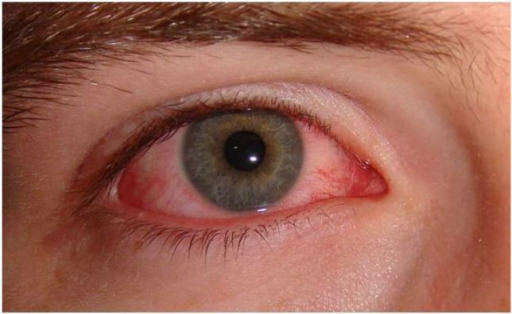
  • Hiperemia de la conjuntiva con inyección de vasos sanguíneos (aspecto clásico de “ojo rosado”)
  • Ojos llorosos o lagrimeo excesivo
  • Inflamación de los LOS Neisseria párpados y la conjuntiva (quemosis)
  • Secreción y formación de costras (varía según la etiología)
  • Picor, ardor o sensación de cuerpo extraño en EN Erythema nodosum is an immune-mediated panniculitis (inflammation of the subcutaneous fat) caused by a type IV (delayed-type) hypersensitivity reaction. It commonly manifests in young women as tender, erythematous nodules on the shins. Erythema Nodosum el ojo
  • Fotofobia
  • Pupilas normalmente reactivas con agudeza visual normal (importante para el diagnóstico diferencial)
Conjuntivitis vírica Conjuntivitis bacteriana Conjuntivitis alérgica
Secreciones Secreción clara y acuosa Secreción espesa y purulenta de color amarillo, blanco o verde con abundantes costras Flujo claro y acuoso
Afección de los LOS Neisseria ojos Comienza de forma unilateral, pero suele evolucionar a bilateral (altamente infeccioso) Unilateral, raramente puede evolucionar a bilateral Bilateral
Aspecto de la conjuntiva Inyección mayoritariamente periférica con folículos conjuntivales (pequeñas pápulas inflamadas generalmente en EN Erythema nodosum is an immune-mediated panniculitis (inflammation of the subcutaneous fat) caused by a type IV (delayed-type) hypersensitivity reaction. It commonly manifests in young women as tender, erythematous nodules on the shins. Erythema Nodosum la conjuntiva palpebral y bulbar) Inyección difusa, no folicular Inyección difusa con quemosis y folículos conjuntivales
Otros síntomas Signos extraoculares de infección viral (fiebre, linfadenopatía, faringitis, erupción) Signos de infección bacteriana, según la etiología Estornudos, picor, dermatitis Dermatitis Any inflammation of the skin. Atopic Dermatitis (Eczema) atópica
Complicaciones
  • Queratitis puntiforme
  • Sobreinfección bacteriana
  • Cicatrización conjuntival
  • Ojo seco crónico
  • Cicatrices corneales
  • Úlceras corneales
  • Úlceras corneales
  • Discapacidad visual
  • Otitis media
  • Meningitis Meningitis Meningitis is inflammation of the meninges, the protective membranes of the brain, and spinal cord. The causes of meningitis are varied, with the most common being bacterial or viral infection. The classic presentation of meningitis is a triad of fever, altered mental status, and nuchal rigidity. Meningitis
  • Celulitis
  • Neumonía ( en EN Erythema nodosum is an immune-mediated panniculitis (inflammation of the subcutaneous fat) caused by a type IV (delayed-type) hypersensitivity reaction. It commonly manifests in young women as tender, erythematous nodules on the shins. Erythema Nodosum bebés)
  • Conjuntivitis crónica
  • Ojo seco crónico

Diagnóstico

El diagnóstico es principalmente clínico.

  • Conjuntivitis vírica:
    • Antecedentes de infección viral reciente (no es indispensable)
      • Si los LOS Neisseria síntomas son recurrentes/crónicos → se requiere frotis conjuntival, cultivos o aislamiento viral
      • Se observan células mononucleares y linfocitos en EN Erythema nodosum is an immune-mediated panniculitis (inflammation of the subcutaneous fat) caused by a type IV (delayed-type) hypersensitivity reaction. It commonly manifests in young women as tender, erythematous nodules on the shins. Erythema Nodosum la tinción de Giemsa de los LOS Neisseria raspados conjuntivales.
  • Conjuntivitis bacteriana:
    • Si la enfermedad es persistente o grave, el diagnóstico es incierto, o la conjuntivitis es neonatal → se requieren raspados conjuntivales, cultivo o Reacción en EN Erythema nodosum is an immune-mediated panniculitis (inflammation of the subcutaneous fat) caused by a type IV (delayed-type) hypersensitivity reaction. It commonly manifests in young women as tender, erythematous nodules on the shins. Erythema Nodosum Cadena de la Polimerasa (RCP)
    • Hallazgos de diversas infecciones bacterianas:
      • La conjuntivitis bacteriana muestra un predominio de neutrófilos en EN Erythema nodosum is an immune-mediated panniculitis (inflammation of the subcutaneous fat) caused by a type IV (delayed-type) hypersensitivity reaction. It commonly manifests in young women as tender, erythematous nodules on the shins. Erythema Nodosum la tinción de Giemsa
      • En EN Erythema nodosum is an immune-mediated panniculitis (inflammation of the subcutaneous fat) caused by a type IV (delayed-type) hypersensitivity reaction. It commonly manifests in young women as tender, erythematous nodules on the shins. Erythema Nodosum la oftalmia neonatal gonocócica, la tinción de Gram del exudado muestra diplococos intracelulares gram negativos; en EN Erythema nodosum is an immune-mediated panniculitis (inflammation of the subcutaneous fat) caused by a type IV (delayed-type) hypersensitivity reaction. It commonly manifests in young women as tender, erythematous nodules on the shins. Erythema Nodosum el cultivo en EN Erythema nodosum is an immune-mediated panniculitis (inflammation of the subcutaneous fat) caused by a type IV (delayed-type) hypersensitivity reaction. It commonly manifests in young women as tender, erythematous nodules on the shins. Erythema Nodosum medio Thayer-Martin modificado crece N. gonorrhoea.
      • En EN Erythema nodosum is an immune-mediated panniculitis (inflammation of the subcutaneous fat) caused by a type IV (delayed-type) hypersensitivity reaction. It commonly manifests in young women as tender, erythematous nodules on the shins. Erythema Nodosum la conjuntivitis por clamidia, la tinción de Giemsa muestra neutrófilos con cuerpos de inclusión y células plasmáticas.
  • Conjuntivitis alérgica:
    • La historia clínica, los LOS Neisseria signos y los LOS Neisseria síntomas suelen ser suficientes.
    • El dolor Dolor Inflammation ocular no es característico de la conjuntivitis alérgica, y deben descartarse trastornos más graves, incluyendo el glaucoma Glaucoma Glaucoma is an optic neuropathy characterized by typical visual field defects and optic nerve atrophy seen as optic disc cupping on examination. The acute form of glaucoma is a medical emergency. Glaucoma is often, but not always, caused by increased intraocular pressure (IOP). Glaucoma de ángulo cerrado, la escleritis o la epiescleritis.
    • Si el paciente no responde a la terapia, está indicado referirlo a un oftalmólogo, que puede referirlo a un alergólogo para que realice posibles pruebas cutáneas para detectar el alérgeno o los LOS Neisseria alérgenos causantes.
  • En EN Erythema nodosum is an immune-mediated panniculitis (inflammation of the subcutaneous fat) caused by a type IV (delayed-type) hypersensitivity reaction. It commonly manifests in young women as tender, erythematous nodules on the shins. Erythema Nodosum los LOS Neisseria casos de deterioro visual, aumento significativo de la fotofobia, incapacidad para mantener el ojo abierto, reacción anormal de la pupila a la luz o dolor Dolor Inflammation de cabeza intenso con náuseas, deben descartarse otros diagnósticos (y está indicada la referencia a un especialista):
    • Glaucoma Glaucoma Glaucoma is an optic neuropathy characterized by typical visual field defects and optic nerve atrophy seen as optic disc cupping on examination. The acute form of glaucoma is a medical emergency. Glaucoma is often, but not always, caused by increased intraocular pressure (IOP). Glaucoma
    • Uveítis
    • Queratitis
    • Meningitis Meningitis Meningitis is inflammation of the meninges, the protective membranes of the brain, and spinal cord. The causes of meningitis are varied, with the most common being bacterial or viral infection. The classic presentation of meningitis is a triad of fever, altered mental status, and nuchal rigidity. Meningitis (especialmente en EN Erythema nodosum is an immune-mediated panniculitis (inflammation of the subcutaneous fat) caused by a type IV (delayed-type) hypersensitivity reaction. It commonly manifests in young women as tender, erythematous nodules on the shins. Erythema Nodosum bebés)

Tratamiento

Conjuntivitis vírica

  • La conjuntivitis vírica no complicada se trata sintomáticamente.
  • Gotas antihistamínicas/lágrimas artificiales
  • La infección por herpes simple se trata con un antiviral Antiviral Antivirals for Hepatitis B tópico (e.g., ganciclovir Ganciclovir An acyclovir analog that is a potent inhibitor of the herpesvirus family including cytomegalovirus. Ganciclovir is used to treat complications from aids-associated cytomegalovirus infections. Antivirals for Herpes Virus).

Conjuntivitis bacteriana

  • Antibióticos tópicos de amplio espectro (por ejemplo, eritromicina, trimetoprim-polimixina B)
  • Las infecciones por Neisseria Neisseria Neisseria is a genus of bacteria commonly present on mucosal surfaces. Several species exist, but only 2 are pathogenic to humans: N. gonorrhoeae and N. meningitidis. Neisseria species are non-motile, gram-negative diplococci most commonly isolated on modified Thayer-Martin (MTM) agar. Neisseria y Chlamydia Chlamydia Chlamydiae are obligate intracellular gram-negative bacteria. They lack a peptidoglycan layer and are best visualized using Giemsa stain. The family of Chlamydiaceae comprises 3 pathogens that can infect humans: Chlamydia trachomatis, Chlamydia psittaci, and Chlamydia pneumoniae. Chlamydia requieren tratamiento sistémico
    • Para la conjuntivitis gonocócica:
      • Dosis única de ceftriaxona intramuscular más doxiciclina o azitromicina oral.
      • Agentes alternativos: cefotaxima o ceftazidima
    • Para la conjuntivitis neonatal por Chlamydia Chlamydia Chlamydiae are obligate intracellular gram-negative bacteria. They lack a peptidoglycan layer and are best visualized using Giemsa stain. The family of Chlamydiaceae comprises 3 pathogens that can infect humans: Chlamydia trachomatis, Chlamydia psittaci, and Chlamydia pneumoniae. Chlamydia, eritromicina oral eritromicina oral.
  • Prevención de la oftalmia neonatal: tamizaje materno prenatal, tratamiento antibiótico sistémico y profilaxis para los LOS Neisseria recién nacidos

Conjuntivitis alérgica

  • Gotas antihistamínicas/lágrimas artificiales
  • Antihistamínicos orales y estabilizadores de mastocitos (e.g., ketotifeno)
  • Compresas frías
  • Antiinflamatorios no esteroideos (e.g., ketorolaco)
  • Corticosteroides (e.g., fluorometolona)

Diagnóstico Diferencial

Las siguientes afecciones entran en EN Erythema nodosum is an immune-mediated panniculitis (inflammation of the subcutaneous fat) caused by a type IV (delayed-type) hypersensitivity reaction. It commonly manifests in young women as tender, erythematous nodules on the shins. Erythema Nodosum el diagnóstico diferencial de la conjuntivitis:

  • Glaucoma Glaucoma Glaucoma is an optic neuropathy characterized by typical visual field defects and optic nerve atrophy seen as optic disc cupping on examination. The acute form of glaucoma is a medical emergency. Glaucoma is often, but not always, caused by increased intraocular pressure (IOP). Glaucoma: afección causada por un aumento agudo o crónico de la presión intraocular o -ya que hasta el 40% de los LOS Neisseria afectados no presentan un aumento de la PIO- puede haber una mayor susceptibilidad de los LOS Neisseria ganglios a la presión normal, problemas con la microcirculación o la matriz extracelular del nervio óptico.
    El tratamiento incluye cirugía, betabloqueadores y prostaglandinas tópicas. Si no se trata, tanto el glaucoma Glaucoma Glaucoma is an optic neuropathy characterized by typical visual field defects and optic nerve atrophy seen as optic disc cupping on examination. The acute form of glaucoma is a medical emergency. Glaucoma is often, but not always, caused by increased intraocular pressure (IOP). Glaucoma común de ángulo abierto como el menos común de ángulo cerrado pueden provocar ceguera.
  • Uveítis: emergencia oftalmológica causada por la inflamación de la úvea, que incluye el iris y el cuerpo ciliar, la coroides. La causa puede ser infecciosa (principalmente viral) o no infecciosa. Los LOS Neisseria síntomas más frecuentes incluyen ardor en EN Erythema nodosum is an immune-mediated panniculitis (inflammation of the subcutaneous fat) caused by a type IV (delayed-type) hypersensitivity reaction. It commonly manifests in young women as tender, erythematous nodules on the shins. Erythema Nodosum el ojo, enrojecimiento, visión borrosa, fotofobia, partículas flotantes y pupilas irregulares. El tratamiento incluye esteroides tópicos o sistémicos, antivirales y atropina tópica.
  • Queratitis: inflamación aguda o crónica de la córnea, principalmente infecciosa. Otras causas incluyen las alergias y los LOS Neisseria traumatismos. Los LOS Neisseria pacientes suelen presentar ojo rojo, lagrimeante y doloroso, visión deteriorada y fotofobia. El tratamiento depende de la enfermedad subyacente e incluye antivirales, antibióticos y antifúngicos tópicos.
  • Meningitis Meningitis Meningitis is inflammation of the meninges, the protective membranes of the brain, and spinal cord. The causes of meningitis are varied, with the most common being bacterial or viral infection. The classic presentation of meningitis is a triad of fever, altered mental status, and nuchal rigidity. Meningitis (especialmente en EN Erythema nodosum is an immune-mediated panniculitis (inflammation of the subcutaneous fat) caused by a type IV (delayed-type) hypersensitivity reaction. It commonly manifests in young women as tender, erythematous nodules on the shins. Erythema Nodosum los LOS Neisseria bebés): una inflamación de las leptomeninges Leptomeninges Meninges: Anatomy que puede poner en EN Erythema nodosum is an immune-mediated panniculitis (inflammation of the subcutaneous fat) caused by a type IV (delayed-type) hypersensitivity reaction. It commonly manifests in young women as tender, erythematous nodules on the shins. Erythema Nodosum peligro la vida, sobre todo debido a virus Virus Viruses are infectious, obligate intracellular parasites composed of a nucleic acid core surrounded by a protein capsid. Viruses can be either naked (non-enveloped) or enveloped. The classification of viruses is complex and based on many factors, including type and structure of the nucleoid and capsid, the presence of an envelope, the replication cycle, and the host range. Virology o bacterias. Los LOS Neisseria síntomas más comunes son cefalea, fiebre, rigidez nucal, alteración del estado mental, fotofobia y fonofobia. Los LOS Neisseria niños pequeños suelen presentar síntomas inespecíficos. El tratamiento consiste en EN Erythema nodosum is an immune-mediated panniculitis (inflammation of the subcutaneous fat) caused by a type IV (delayed-type) hypersensitivity reaction. It commonly manifests in young women as tender, erythematous nodules on the shins. Erythema Nodosum antibióticos, antivirales y corticosteroides.
  • Hemorragia subconjuntival: Esta afección suele ser asintomática. La apariencia clínica, con áreas demarcadas de sangre extravasada justo debajo de la superficie del ojo, es generalmente obvia y diagnóstica. Puede ocurrir espontáneamente o con mecanismos asociados a Valsalva (e.g., tos TOS Thoracic outlet syndrome (TOS) is a broad term used for a spectrum of syndromes related to the general region of the thoracic outlet, which involves the compression or irritation of elements of the brachial plexus, subclavian artery, or subclavian vein. Thoracic Outlet Syndrome, estornudos o vómitos). El diagnóstico se confirma por la agudeza normal y la ausencia de secreción, fotofobia o sensación de cuerpo extraño. Por lo general, se resuelve en EN Erythema nodosum is an immune-mediated panniculitis (inflammation of the subcutaneous fat) caused by a type IV (delayed-type) hypersensitivity reaction. It commonly manifests in young women as tender, erythematous nodules on the shins. Erythema Nodosum 1 o 2 semanas.
  • Chalazión: se presenta como una inflamación localizada e indolora del párpado, y un nódulo gomoso y firme. Está causada por la obstrucción de las glándulas de Zeiss o de Meibomio.
  • Síndrome del ojo seco: enfermedad multifactorial de la superficie ocular con pérdida de la película lagrimal y síntomas oculares, también conocida como queratoconjuntivitis seca. Los LOS Neisseria pacientes presentan sequedad y enrojecimiento del ojo, irritación general, sensación de arenilla/ardor, sensación de cuerpo extraño, lagrimeo excesivo paradójico, fotofobia o visión borrosa.
  • Blefaritis: inflamación del borde del párpado con irritación ocular. Los LOS Neisseria pacientes suelen presentar párpados rojos, inflamados o con picor; una sensación de ardor arenoso; inyección conjuntival; formación de costras y lagañas en EN Erythema nodosum is an immune-mediated panniculitis (inflammation of the subcutaneous fat) caused by a type IV (delayed-type) hypersensitivity reaction. It commonly manifests in young women as tender, erythematous nodules on the shins. Erythema Nodosum las pestañas por la mañana; fotofobia y visión borrosa.

Referencias

  1. American Academy of Ophthalmology Cornea/External Disease Panel. (2023). Conjunctivitis Preferred Practice Pattern®. American Academy of Ophthalmology.
  2. Jacobs, D. S., & Frost, H. M. (2025). Infectious conjunctivitis. UpToDate. Retrieved on August 3, 2025, from https://www.uptodate.com/contents/infectious-conjunctivitis 
  3. Hamrah, P., & Dana, R. (2024, March 22). Allergic conjunctivitis: Clinical manifestations and diagnosis. UpToDate. Retrieved on August 3, 2025, from https://www.uptodate.com/contents/allergic-conjunctivitis-clinical-manifestations-and-diagnosis 
  4. Hashmi, M. F., Gurnani, B., & Benson, S. (2024). Conjunctivitis. In StatPearls. StatPearls Publishing. Retrieved on August 3, 2025, from https://www.ncbi.nlm.nih.gov/books/NBK541034/

¡Crea tu cuenta gratis o inicia una sesión para seguir leyendo!

Regístrate ahora y obtén acceso gratuito a Lecturio con páginas de concepto, videos médicos y cuestionarios para tu educación médica.

User Reviews

Que tengas una sesión de estudio alegre y navideña 🎁 Ahorra 50% en todos los planes >>

Details