
La colitis Colitis Inflammation of the colon section of the large intestine, usually with symptoms such as diarrhea (often with blood and mucus), abdominal pain, and fever. Pseudomembranous Colitis pseudomembranosa es una inflamación del colon Colon The large intestines constitute the last portion of the digestive system. The large intestine consists of the cecum, appendix, colon (with ascending, transverse, descending, and sigmoid segments), rectum, and anal canal. The primary function of the colon is to remove water and compact the stool prior to expulsion from the body via the rectum and anal canal. Colon, Cecum, and Appendix: Anatomy causada por un crecimiento excesivo de la bacteria Bacteria Bacteria are prokaryotic single-celled microorganisms that are metabolically active and divide by binary fission. Some of these organisms play a significant role in the pathogenesis of diseases. Bacteriology Clostridioides difficile. Esta afección está asociada al AL Amyloidosis uso de antibióticos y a la consiguiente alteración de la microbiota colónica normal. Es una de las infecciones asociadas a la asistencia sanitaria más comunes y una causa importante de morbilidad y mortalidad, especialmente en EN Erythema nodosum is an immune-mediated panniculitis (inflammation of the subcutaneous fat) caused by a type IV (delayed-type) hypersensitivity reaction. It commonly manifests in young women as tender, erythematous nodules on the shins. Erythema Nodosum adultos mayores hospitalizados. Las manifestaciones clínicas de la infección por C. difficile incluyen colonización asintomática, enfermedad diarreica y colitis Colitis Inflammation of the colon section of the large intestine, usually with symptoms such as diarrhea (often with blood and mucus), abdominal pain, and fever. Pseudomembranous Colitis fulminante con sepsis Sepsis Systemic inflammatory response syndrome with a proven or suspected infectious etiology. When sepsis is associated with organ dysfunction distant from the site of infection, it is called severe sepsis. When sepsis is accompanied by hypotension despite adequate fluid infusion, it is called septic shock. Sepsis and Septic Shock en EN Erythema nodosum is an immune-mediated panniculitis (inflammation of the subcutaneous fat) caused by a type IV (delayed-type) hypersensitivity reaction. It commonly manifests in young women as tender, erythematous nodules on the shins. Erythema Nodosum los LOS Neisseria casos graves. El diagnóstico se establece a partir de estudios de heces. La mayoría de los LOS Neisseria pacientes pueden tratarse con antibióticos. El trasplante fecal se considera en EN Erythema nodosum is an immune-mediated panniculitis (inflammation of the subcutaneous fat) caused by a type IV (delayed-type) hypersensitivity reaction. It commonly manifests in young women as tender, erythematous nodules on the shins. Erythema Nodosum unos pocos casos, mientras que la intervención quirúrgica puede ser necesaria en EN Erythema nodosum is an immune-mediated panniculitis (inflammation of the subcutaneous fat) caused by a type IV (delayed-type) hypersensitivity reaction. It commonly manifests in young women as tender, erythematous nodules on the shins. Erythema Nodosum los LOS Neisseria casos graves.
Last updated: Dec 15, 2025
La colitis Colitis Inflammation of the colon section of the large intestine, usually with symptoms such as diarrhea (often with blood and mucus), abdominal pain, and fever. Pseudomembranous Colitis pseudomembranosa es una inflamación del colon Colon The large intestines constitute the last portion of the digestive system. The large intestine consists of the cecum, appendix, colon (with ascending, transverse, descending, and sigmoid segments), rectum, and anal canal. The primary function of the colon is to remove water and compact the stool prior to expulsion from the body via the rectum and anal canal. Colon, Cecum, and Appendix: Anatomy causada por el crecimiento excesivo de la bacteria Bacteria Bacteria are prokaryotic single-celled microorganisms that are metabolically active and divide by binary fission. Some of these organisms play a significant role in the pathogenesis of diseases. Bacteriology Clostridioides difficile.
| Características | Colitis Colitis Inflammation of the colon section of the large intestine, usually with symptoms such as diarrhea (often with blood and mucus), abdominal pain, and fever. Pseudomembranous Colitis leve a moderada | Colitis Colitis Inflammation of the colon section of the large intestine, usually with symptoms such as diarrhea (often with blood and mucus), abdominal pain, and fever. Pseudomembranous Colitis severa | Colitis Colitis Inflammation of the colon section of the large intestine, usually with symptoms such as diarrhea (often with blood and mucus), abdominal pain, and fever. Pseudomembranous Colitis fulminante |
|---|---|---|---|
| Número de deposiciones sueltas/día | < 6 | ≥ 6 | ≥ 6 |
| Fiebre | – | +/– | +/– |
| Conteo de leucocitos | < 15 000/µL | > 15 000/µL | > 15 000/µL |
| Dolor Dolor Inflammation abdominal severo | – | + | + |
| Aumento de los LOS Neisseria niveles de creatinina | – | +/– | +/– |
| Disfunción multiorgánica | – | – | + |
| Íleo completo o megacolon Megacolon Megacolon is a severe, abnormal dilatation of the colon, and is classified as acute or chronic. There are many etiologies of megacolon, including neuropathic and dysmotility conditions, severe infections, ischemia, and inflammatory bowel disease. Megacolon tóxico | – | – | + |
| Signos radiológicos de colitis Colitis Inflammation of the colon section of the large intestine, usually with symptoms such as diarrhea (often with blood and mucus), abdominal pain, and fever. Pseudomembranous Colitis, íleo o megacolon Megacolon Megacolon is a severe, abnormal dilatation of the colon, and is classified as acute or chronic. There are many etiologies of megacolon, including neuropathic and dysmotility conditions, severe infections, ischemia, and inflammatory bowel disease. Megacolon tóxico | – | +/– | + |
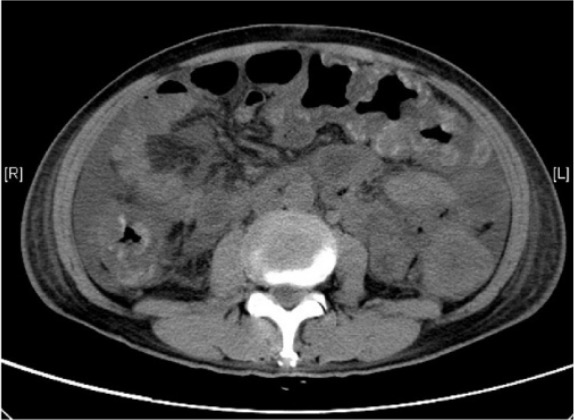
Tomografía computarizada de colitis pseudomembranosa grave: engrosamiento difuso de la pared del colon, con áreas sugestivas de hemorragia de la mucosa
Imagen: “Abdominal computer tomography” por Division of Gastroenterology and Hepatology, Department of Medicine and Geriatrics, Tuen Mun Hospital, Tsing Chung Koon Road, Tuen Mun, New Territories, Hong Kong. Licencia: CC BY 4.0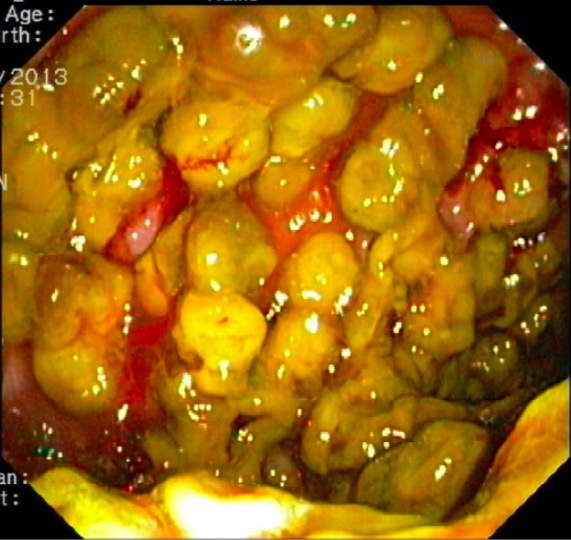
Vista endoscópica de una colitis pseudomembranosa fulminante: múltiples lesiones polipoides cubiertas de pseudomembranas amarillas
Imagen: “Endoscopic view of the sigmoid colon” por Division of Gastroenterology and Hepatology, Department of Medicine and Geriatrics, Tuen Mun Hospital, Tsing Chung Koon Road, Tuen Mun, New Territories, Hong Kong. Licencia: CC BY 4.0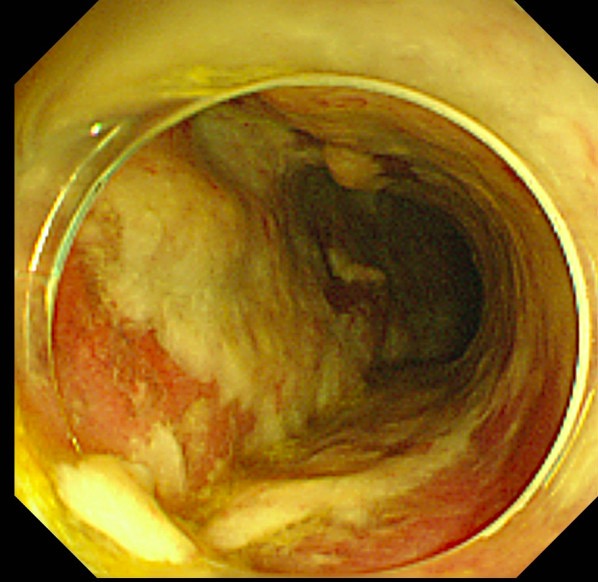
Endoscopia que muestra pseudomembranas gruesas típicas de la colitis pseudomembranosa
Imagen: “Colonoscopy on the 5th postoperative day” por Abe et al. Licencia: CC BY 2.0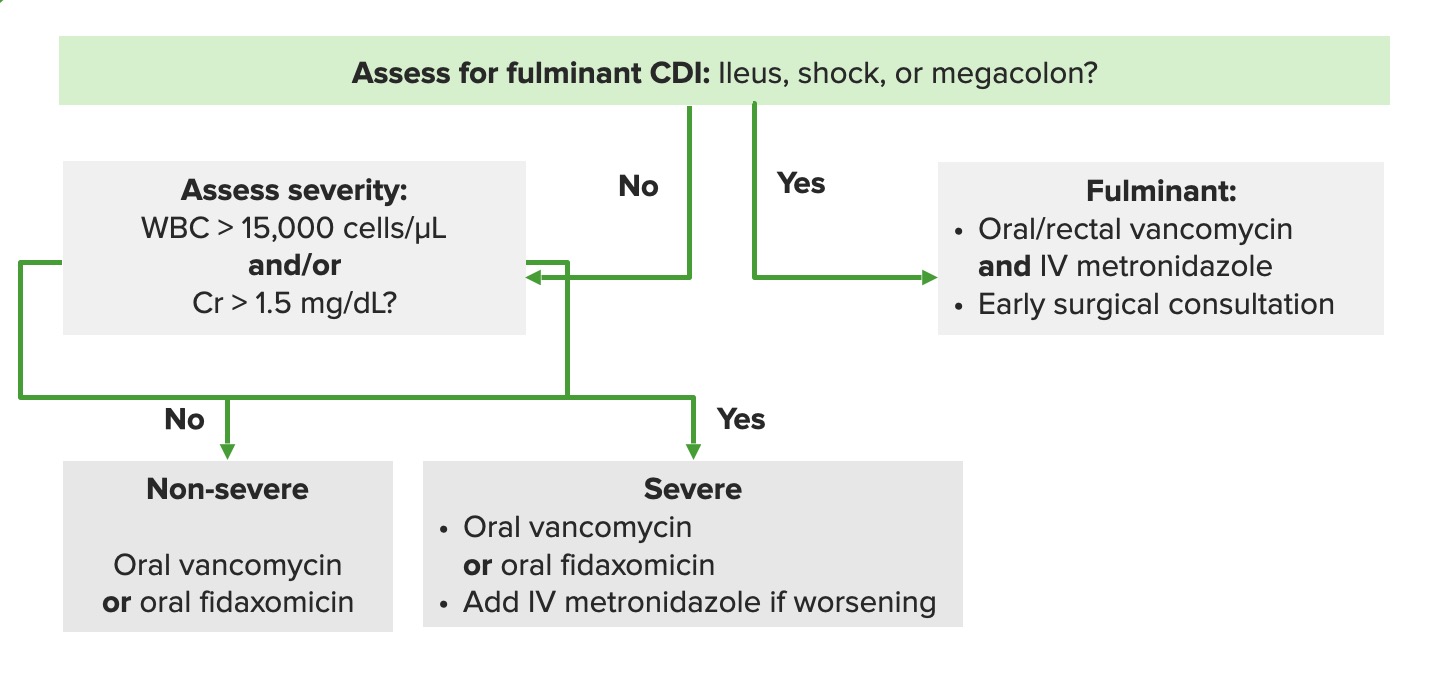
Algoritmo para el tratamiento de las infecciones por C. difficile. Cr: creatinina, IV: intravenosa
Imagen por Lecturio.Posibles indicaciones:
Intervenciones quirúrgicas: