Domina Conceptos Médicos

Estudia para la escuela de medicina y tus examenes con Lecturio.

Coagulación Intravascular Diseminada

La coagulación intravascular diseminada (CID) es una enfermedad caracterizada por la activación sistémica de la cascada de coagulación en EN Erythema nodosum is an immune-mediated panniculitis (inflammation of the subcutaneous fat) caused by a type IV (delayed-type) hypersensitivity reaction. It commonly manifests in young women as tender, erythematous nodules on the shins. Erythema Nodosum todo el organismo. Esta cascada da lugar tanto a trombos microvasculares generalizados que contribuyen a la disfunción de múltiples órganos como al AL Amyloidosis consumo de factores de coagulación y plaquetas, lo que conduce a una hemorragia. La CID siempre está desencadenada por otra afección (a menudo grave), como una sepsis Sepsis Systemic inflammatory response syndrome with a proven or suspected infectious etiology. When sepsis is associated with organ dysfunction distant from the site of infection, it is called severe sepsis. When sepsis is accompanied by hypotension despite adequate fluid infusion, it is called septic shock. Sepsis and Septic Shock grave, traumatismo, enfermedad maligna o complicaciones obstétricas. La CID aguda suele presentarse de forma dramática, con una rápida aparición de hemorragias espontáneas en EN Erythema nodosum is an immune-mediated panniculitis (inflammation of the subcutaneous fat) caused by a type IV (delayed-type) hypersensitivity reaction. It commonly manifests in young women as tender, erythematous nodules on the shins. Erythema Nodosum múltiples localizaciones del cuerpo de forma simultánea. También existe una forma crónica de CID, que suele darse en EN Erythema nodosum is an immune-mediated panniculitis (inflammation of the subcutaneous fat) caused by a type IV (delayed-type) hypersensitivity reaction. It commonly manifests in young women as tender, erythematous nodules on the shins. Erythema Nodosum pacientes con enfermedades malignas en EN Erythema nodosum is an immune-mediated panniculitis (inflammation of the subcutaneous fat) caused by a type IV (delayed-type) hypersensitivity reaction. It commonly manifests in young women as tender, erythematous nodules on the shins. Erythema Nodosum fase avanzada. El tratamiento consiste en EN Erythema nodosum is an immune-mediated panniculitis (inflammation of the subcutaneous fat) caused by a type IV (delayed-type) hypersensitivity reaction. It commonly manifests in young women as tender, erythematous nodules on the shins. Erythema Nodosum estabilizar al AL Amyloidosis paciente, reponer las plaquetas y los LOS Neisseria factores de coagulación consumidos y tratar la enfermedad desencadenante.

Last updated: Dec 15, 2025

Editorial responsibility: Stanley Oiseth, Lindsay Jones, Evelin Maza

Descripción General

Definición

La coagulación intravascular diseminada es una afección caracterizada por la activación sistémica de la cascada de coagulación en EN Erythema nodosum is an immune-mediated panniculitis (inflammation of the subcutaneous fat) caused by a type IV (delayed-type) hypersensitivity reaction. It commonly manifests in young women as tender, erythematous nodules on the shins. Erythema Nodosum todo el organismo que da lugar a:

  • Trombos microvasculares generalizados que contribuyen a la disfunción de múltiples órganos
  • Consumo de factores de coagulación y plaquetas que provocan hemorragia

Epidemiología

  • Tasas de incidencia:
    • 1% de todos los LOS Neisseria pacientes hospitalizados en EN Erythema nodosum is an immune-mediated panniculitis (inflammation of the subcutaneous fat) caused by a type IV (delayed-type) hypersensitivity reaction. It commonly manifests in young women as tender, erythematous nodules on the shins. Erythema Nodosum centros de atención terciaria
    • 30%–50% de los LOS Neisseria pacientes sépticos
    • Aproximadamente el 40% de los LOS Neisseria pacientes con traumatismos graves
    • El 20% de las pacientes embarazadas con síndrome (HELLP, por sus siglas en EN Erythema nodosum is an immune-mediated panniculitis (inflammation of the subcutaneous fat) caused by a type IV (delayed-type) hypersensitivity reaction. It commonly manifests in young women as tender, erythematous nodules on the shins. Erythema Nodosum inglés)
    • El 66% de las pacientes embarazadas con embolismo de líquido amniótico
  • Sesgo de sexo: ninguno, igual incidencia entre sexos
  • Sesgo de edad: ninguno, puede desarrollarse a cualquier edad
  • Sesgo étnico: ninguno, se da en EN Erythema nodosum is an immune-mediated panniculitis (inflammation of the subcutaneous fat) caused by a type IV (delayed-type) hypersensitivity reaction. It commonly manifests in young women as tender, erythematous nodules on the shins. Erythema Nodosum todas las razas
  • Pronóstico:
    • Depende de la gravedad de la coagulopatía y de la condición subyacente que condujo a la enfermedad
    • Generalmente pobre si no se trata

Clasificación

CID aguda:

  • Activación súbita y abrumadora de la coagulación sistémica y posterior fibrinolisis
  • Se produce en EN Erythema nodosum is an immune-mediated panniculitis (inflammation of the subcutaneous fat) caused by a type IV (delayed-type) hypersensitivity reaction. It commonly manifests in young women as tender, erythematous nodules on the shins. Erythema Nodosum el marco de un proceso agudo:
    • Traumatismo
    • Sepsis Sepsis Systemic inflammatory response syndrome with a proven or suspected infectious etiology. When sepsis is associated with organ dysfunction distant from the site of infection, it is called severe sepsis. When sepsis is accompanied by hypotension despite adequate fluid infusion, it is called septic shock. Sepsis and Septic Shock
    • Complicaciones del embarazo
  • Frecuentemente, resulta en EN Erythema nodosum is an immune-mediated panniculitis (inflammation of the subcutaneous fat) caused by a type IV (delayed-type) hypersensitivity reaction. It commonly manifests in young women as tender, erythematous nodules on the shins. Erythema Nodosum una hemorragia significativa y daño de órgano diana

CID crónica:

  • Presentación insidiosa debido a la exposición continua a procoagulantes sistémicos
  • Suele ocurrir en EN Erythema nodosum is an immune-mediated panniculitis (inflammation of the subcutaneous fat) caused by a type IV (delayed-type) hypersensitivity reaction. It commonly manifests in young women as tender, erythematous nodules on the shins. Erythema Nodosum los LOS Neisseria tumores malignos en EN Erythema nodosum is an immune-mediated panniculitis (inflammation of the subcutaneous fat) caused by a type IV (delayed-type) hypersensitivity reaction. It commonly manifests in young women as tender, erythematous nodules on the shins. Erythema Nodosum fase tardía
  • Es más probable que se produzcan complicaciones trombóticas (que hemorrágicas)

Etiología

La coagulación intravascular diseminada es siempre una complicación de otras afecciones:

Tabla: Etiologías de la coagulación intravascular diseminada
Infecciones
  • Bacteriana:
    • Sepsis Sepsis Systemic inflammatory response syndrome with a proven or suspected infectious etiology. When sepsis is associated with organ dysfunction distant from the site of infection, it is called severe sepsis. When sepsis is accompanied by hypotension despite adequate fluid infusion, it is called septic shock. Sepsis and Septic Shock (tanto de especies Gram-positivas como Gram-negativas)
    • Escherichia coli Escherichia coli The gram-negative bacterium Escherichia coli is a key component of the human gut microbiota. Most strains of E. coli are avirulent, but occasionally they escape the GI tract, infecting the urinary tract and other sites. Less common strains of E. coli are able to cause disease within the GI tract, most commonly presenting as abdominal pain and diarrhea. Escherichia coli
    • Neisseria meningitidis Neisseria meningitidis A species of gram-negative, aerobic bacteria. It is a commensal and pathogen only of humans, and can be carried asymptomatically in the nasopharynx. When found in cerebrospinal fluid it is the causative agent of cerebrospinal meningitis. It is also found in venereal discharges and blood. There are at least 13 serogroups based on antigenic differences in the capsular polysaccharides; the ones causing most meningitis infections being a, b, c, y, and w-135. Each serogroup can be further classified by serotype, serosubtype, and immunotype. Neisseria
  • Por virus Virus Viruses are infectious, obligate intracellular parasites composed of a nucleic acid core surrounded by a protein capsid. Viruses can be either naked (non-enveloped) or enveloped. The classification of viruses is complex and based on many factors, including type and structure of the nucleoid and capsid, the presence of an envelope, the replication cycle, and the host range. Virology:
    • VIH
    • Citomegalovirus
    • Varicela
    • Hepatitis
  • Parasitaria: malaria Malaria Malaria is an infectious parasitic disease affecting humans and other animals. Most commonly transmitted via the bite of a female Anopheles mosquito infected with microorganisms of the Plasmodium genus. Patients present with fever, chills, myalgia, headache, and diaphoresis. Plasmodium/Malaria
Inflamación
  • Pancreatitis Pancreatitis Inflammation of the pancreas. Pancreatitis is classified as acute unless there are computed tomographic or endoscopic retrograde cholangiopancreatographic findings of chronic pancreatitis. The two most common forms of acute pancreatitis are alcoholic pancreatitis and gallstone pancreatitis. Acute Pancreatitis
  • Insuficiencia hepática fulminante
Malignidad
  • Leucemia promielocítica aguda
  • Adenocarcinomas metastásicos, especialmente:
    • Páncreas
    • Estómago
    • Ovario
    • Próstata
Causas obstétricas
  • Embolismo de líquido amniótico
  • Desprendimiento de la placenta Placenta A highly vascularized mammalian fetal-maternal organ and major site of transport of oxygen, nutrients, and fetal waste products. It includes a fetal portion (chorionic villi) derived from trophoblasts and a maternal portion (decidua) derived from the uterine endometrium. The placenta produces an array of steroid, protein and peptide hormones (placental hormones). Placenta, Umbilical Cord, and Amniotic Cavity
  • Hemorragia posparto
  • Preeclampsia Preeclampsia A complication of pregnancy, characterized by a complex of symptoms including maternal hypertension and proteinuria with or without pathological edema. Symptoms may range between mild and severe. Pre-eclampsia usually occurs after the 20th week of gestation, but may develop before this time in the presence of trophoblastic disease. Hypertensive Pregnancy Disorders/ eclampsia Eclampsia Onset of hyperreflexia; seizures; or coma in a previously diagnosed pre-eclamptic patient (pre-eclampsia). Hypertensive Pregnancy Disorders/síndrome (HELLP, por sus siglas en EN Erythema nodosum is an immune-mediated panniculitis (inflammation of the subcutaneous fat) caused by a type IV (delayed-type) hypersensitivity reaction. It commonly manifests in young women as tender, erythematous nodules on the shins. Erythema Nodosum inglés)
  • Mortinato retenido
  • Aborto séptico
  • Hígado graso agudo del embarazo
Traumatismo
  • Quemaduras
  • Congelamiento
  • Lesiones en EN Erythema nodosum is an immune-mediated panniculitis (inflammation of the subcutaneous fat) caused by a type IV (delayed-type) hypersensitivity reaction. It commonly manifests in young women as tender, erythematous nodules on the shins. Erythema Nodosum la cabeza
  • Mordeduras de serpiente
Causas hematológicas y vasculares
  • Reacción hemolítica a la transfusión (e.g., incompatibilidad ABO)
  • Grandes hemangiomas (síndrome de Kasabach-Merritt)
  • Aneurisma/disección de la aorta Aorta The main trunk of the systemic arteries. Mediastinum and Great Vessels: Anatomy abdominal (subendotelio crónicamente expuesto)

Fisiopatología

En EN Erythema nodosum is an immune-mediated panniculitis (inflammation of the subcutaneous fat) caused by a type IV (delayed-type) hypersensitivity reaction. It commonly manifests in young women as tender, erythematous nodules on the shins. Erythema Nodosum la CID, la coagulación y la posterior fibrinólisis se activan de forma sistémica, lo que es anormal y da lugar a microtrombos en EN Erythema nodosum is an immune-mediated panniculitis (inflammation of the subcutaneous fat) caused by a type IV (delayed-type) hypersensitivity reaction. It commonly manifests in young women as tender, erythematous nodules on the shins. Erythema Nodosum toda la irrigación sanguínea. Estos microtrombos consumen grandes cantidades de plaquetas y factores de coagulación, lo que provoca una coagulopatía grave y una hemorragia clínica.

Activación normal de la coagulación

  • Las plaquetas se unen al AL Amyloidosis factor Von Willebrand (FVW) expuesto en EN Erythema nodosum is an immune-mediated panniculitis (inflammation of the subcutaneous fat) caused by a type IV (delayed-type) hypersensitivity reaction. It commonly manifests in young women as tender, erythematous nodules on the shins. Erythema Nodosum las células endoteliales lesionadas:
    • Las plaquetas adheridas se activan y expresan receptores de glicoproteína (Gp) IIb/IIIa.
    • Los LOS Neisseria receptores GpIIb/IIIa se unen al AL Amyloidosis fibrinógeno.
    • El fibrinógeno puede unir una plaqueta en EN Erythema nodosum is an immune-mediated panniculitis (inflammation of the subcutaneous fat) caused by a type IV (delayed-type) hypersensitivity reaction. It commonly manifests in young women as tender, erythematous nodules on the shins. Erythema Nodosum cada lado → agregación plaquetaria/formación del tapón plaquetario
    • Las plaquetas activadas secretan sustancias que aumentan la agregación plaquetaria y la cascada de coagulación.
  • El factor tisular (FT) se une al AL Amyloidosis factor VII Factor VII Heat- and storage-stable plasma protein that is activated by tissue thromboplastin to form factor viia in the extrinsic pathway of blood coagulation. The activated form then catalyzes the activation of factor X to factor Xa. Hemostasis circulante y activa la vía extrínseca (activación inicial de la cascada de coagulación):
    • Glicoproteína unida a membrana expresada en EN Erythema nodosum is an immune-mediated panniculitis (inflammation of the subcutaneous fat) caused by a type IV (delayed-type) hypersensitivity reaction. It commonly manifests in young women as tender, erythematous nodules on the shins. Erythema Nodosum tejidos subendoteliales y extravasculares (y por monocitos/endotelio activados en EN Erythema nodosum is an immune-mediated panniculitis (inflammation of the subcutaneous fat) caused by a type IV (delayed-type) hypersensitivity reaction. It commonly manifests in young women as tender, erythematous nodules on the shins. Erythema Nodosum caso de inflamación).
    • Restringe la activación de la cascada principalmente a los LOS Neisseria sitios locales de la lesión
  • La trombina inicial producida, activa el factor XI en EN Erythema nodosum is an immune-mediated panniculitis (inflammation of the subcutaneous fat) caused by a type IV (delayed-type) hypersensitivity reaction. It commonly manifests in young women as tender, erythematous nodules on the shins. Erythema Nodosum la vía intrínseca.
    • La vía intrínseca amplifica significativamente la respuesta local.
    • Los LOS Neisseria factores de coagulación forman complejos enzimáticos multicomponentes, que también se unen a las superficies de las membranas.
    • Mantiene la coagulación localizada
  • La trombina convierte el fibrinógeno en EN Erythema nodosum is an immune-mediated panniculitis (inflammation of the subcutaneous fat) caused by a type IV (delayed-type) hypersensitivity reaction. It commonly manifests in young women as tender, erythematous nodules on the shins. Erythema Nodosum fibrina, formando un coágulo estable.
  • La plasmina se produce para descomponer la fibrina.
  • Productos de degradación de la fibrina:
    • Tienen propiedades anticoagulantes
    • Son eliminados por el hígado

Activación de la coagulación sistémica (anormal)

  • La activación sistémica anormal de la cascada de coagulación puede producirse debido a:
    • Una respuesta inflamatoria sistémica abrumadora (e.g., sepsis Sepsis Systemic inflammatory response syndrome with a proven or suspected infectious etiology. When sepsis is associated with organ dysfunction distant from the site of infection, it is called severe sepsis. When sepsis is accompanied by hypotension despite adequate fluid infusion, it is called septic shock. Sepsis and Septic Shock grave)
    • Exposición repentina de la sangre a procoagulantes, incluyendo factor tisular.
    • Ejemplos de exposición procoagulante:
      • Sepsis Sepsis Systemic inflammatory response syndrome with a proven or suspected infectious etiology. When sepsis is associated with organ dysfunction distant from the site of infection, it is called severe sepsis. When sepsis is accompanied by hypotension despite adequate fluid infusion, it is called septic shock. Sepsis and Septic Shock: Las endotoxinas bacterianas pueden desencadenar la liberación de FT circulante.
      • Malignidad: Algunos cánceres pueden producir FT circulante.
      • Traumatismos: El daño endotelial vascular significativo da lugar a cantidades ↑ de FT.
      • Obstétrica: La placenta Placenta A highly vascularized mammalian fetal-maternal organ and major site of transport of oxygen, nutrients, and fetal waste products. It includes a fetal portion (chorionic villi) derived from trophoblasts and a maternal portion (decidua) derived from the uterine endometrium. The placenta produces an array of steroid, protein and peptide hormones (placental hormones). Placenta, Umbilical Cord, and Amniotic Cavity puede liberar una enzima proteolítica capaz de activar el factor X Factor X Storage-stable glycoprotein blood coagulation factor that can be activated to factor Xa by both the intrinsic and extrinsic pathways. A deficiency of factor X, sometimes called stuart-prower factor deficiency, may lead to a systemic coagulation disorder. Hemostasis.
  • Efectos de la coagulación sistémica:
    • Con la activación sistémica de la cascada de coagulación, se forman trombos en EN Erythema nodosum is an immune-mediated panniculitis (inflammation of the subcutaneous fat) caused by a type IV (delayed-type) hypersensitivity reaction. It commonly manifests in young women as tender, erythematous nodules on the shins. Erythema Nodosum toda la irrigación sanguínea.
    • Los LOS Neisseria trombos pueden afectar tanto a los LOS Neisseria vasos pequeños como a los LOS Neisseria grandes.
    • La coagulación extensa y sistémica consume grandes cantidades de plaquetas y factores de coagulación.
  • Fibrinolisis:
    • Se activa junto con la cascada de coagulación
    • La plasmina escinde los LOS Neisseria polímeros de fibrina y origina productos de degradación de la fibrina.
    • Niveles ↑ de productos de degradación de la fibrina interfieren en EN Erythema nodosum is an immune-mediated panniculitis (inflammation of the subcutaneous fat) caused by a type IV (delayed-type) hypersensitivity reaction. It commonly manifests in young women as tender, erythematous nodules on the shins. Erythema Nodosum la formación de nuevos coágulos de fibrina y en EN Erythema nodosum is an immune-mediated panniculitis (inflammation of the subcutaneous fat) caused by a type IV (delayed-type) hypersensitivity reaction. It commonly manifests in young women as tender, erythematous nodules on the shins. Erythema Nodosum la agregación plaquetaria → deterioro de la hemostasia
  • El daño a los LOS Neisseria órganos diana se produce por:
    • Formación generalizada de microtrombos
    • Hemorragia
    • Efectos isquémicos de la hipovolemia hemorrágica
  • La disfunción de órganos puede incluir:
    • Cambio en EN Erythema nodosum is an immune-mediated panniculitis (inflammation of the subcutaneous fat) caused by a type IV (delayed-type) hypersensitivity reaction. It commonly manifests in young women as tender, erythematous nodules on the shins. Erythema Nodosum el estado mental
    • Lesión renal aguda
    • Disfunción respiratoria
    • Disfunción hepática
    • Taponamiento cardíaco
    • Hemotórax
    • Hemorragia intracerebral
    • Gangrena y pérdida de dedos

Coagulación intravascular diseminada aguda frente a crónica

La CID aguda es una CID descompensada:

  • Rápida activación sistémica de la coagulación
  • Conduce a un rápido consumo de plaquetas y factores de coagulación
  • El consumo supera por mucho la producción.
  • ↑ Número de trombos → ↑ fibrinólisis → ↑ productos de degradación de la fibrina → impide patológicamente la formación de nuevos coágulos y la agregación plaquetaria
  • Resultado final: sangrado/hemorragia clínica grave más daño trombótico en EN Erythema nodosum is an immune-mediated panniculitis (inflammation of the subcutaneous fat) caused by a type IV (delayed-type) hypersensitivity reaction. It commonly manifests in young women as tender, erythematous nodules on the shins. Erythema Nodosum los LOS Neisseria órganos diana

La CID crónica es una CID compensada:

  • Se da típicamente en EN Erythema nodosum is an immune-mediated panniculitis (inflammation of the subcutaneous fat) caused by a type IV (delayed-type) hypersensitivity reaction. It commonly manifests in young women as tender, erythematous nodules on the shins. Erythema Nodosum pacientes con:
    • Malignidad avanzada
    • Grandes aneurismas
  • Se desarrolla cuando la sangre está expuesta de forma continua (o intermitente) a pequeñas cantidades de procoagulantes
  • Mecanismos de compensación:
    • Nueva producción de plaquetas y factores de coagulación
    • El hígado es capaz de eliminar los LOS Neisseria productos de degradación de la fibrina.
  • Los LOS Neisseria mecanismos de compensación son capaces de equilibrar el consumo continuo de productos y la producción de productos de degradación de la fibrina.
  • Las complicaciones trombóticas son más frecuentes que las hemorragias.

Presentación Clínica

Coagulación intravascular diseminada aguda

La CID aguda se presenta típicamente de forma rápida y dramática, con una hemorragia aguda y severa de múltiples sitios simultáneamente en EN Erythema nodosum is an immune-mediated panniculitis (inflammation of the subcutaneous fat) caused by a type IV (delayed-type) hypersensitivity reaction. It commonly manifests in young women as tender, erythematous nodules on the shins. Erythema Nodosum todo el cuerpo. Otras manifestaciones están relacionadas con la disfunción trombótica de los LOS Neisseria órganos diana.

Tabla: Manifestaciones clínicas de la coagulación intravascular diseminada aguda
Signos vitales
  • Shock Shock Shock is a life-threatening condition associated with impaired circulation that results in tissue hypoxia. The different types of shock are based on the underlying cause: distributive (↑ cardiac output (CO), ↓ systemic vascular resistance (SVR)), cardiogenic (↓ CO, ↑ SVR), hypovolemic (↓ CO, ↑ SVR), obstructive (↓ CO), and mixed. Types of Shock hipovolémico
  • Hipotensión
  • Taquicardia
Piel
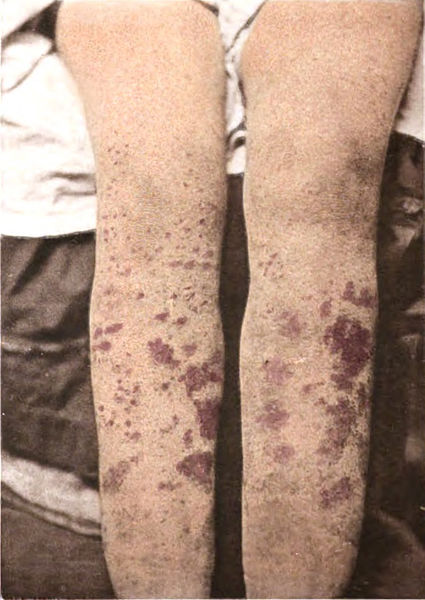
  • Petequias
  • Equimosis
  • Hemorragia de accesos intravenosos y de drenaje
  • Hemorragia del sitio quirúrgico
  • Púrpura fulminante (potencialmente mortal):
    • Trombosis tisular extensa
    • Necrosis Necrosis The death of cells in an organ or tissue due to disease, injury or failure of the blood supply. Ischemic Cell Damage cutánea
    • Púrpura retiforme
    • Asociado a la deficiencia de proteína C
  • Gangrena
Mucosa
Renal
Pulmonar
  • Hemoptisis
  • Hemotórax
  • Síndrome de dificultad respiratoria del adulto (SDRA)
Gastrointestinales
Neurológicas
  • Alteración del estado mental
  • Accidente cerebrovascular hemorrágico
  • Accidente cerebrovascular isquémico
  • Déficits neurológicos focales
  • Cefalea
  • Convulsión
Manifestación cutánea de la CID: púrpura

Manifestación cutánea de la CID:
Observe las petequias y la púrpura.

Imagen: “Purpura” por George Henry Fox. Licencia: Dominio Público

Coagulación intravascular diseminada crónica

  • Frecuentemente asintomática
  • Las secuelas trombóticas son más frecuentes que las complicaciones hemorrágicas.
  • Las manifestaciones pueden incluir:
    • Tromboembolismo venoso
    • Petequias y equimosis
    • Hemorragias de vías intravenosas, catéteres y superficies mucosas

Diagnóstico

El diagnóstico se realiza sobre la base de los LOS Neisseria antecedentes clínicos y los LOS Neisseria hallazgos de laboratorio, aunque no hay una sola prueba que diagnostique CID. Las pruebas de laboratorio también ayudan en EN Erythema nodosum is an immune-mediated panniculitis (inflammation of the subcutaneous fat) caused by a type IV (delayed-type) hypersensitivity reaction. It commonly manifests in young women as tender, erythematous nodules on the shins. Erythema Nodosum el tratamiento.

Pruebas de laboratorio

En EN Erythema nodosum is an immune-mediated panniculitis (inflammation of the subcutaneous fat) caused by a type IV (delayed-type) hypersensitivity reaction. It commonly manifests in young women as tender, erythematous nodules on the shins. Erythema Nodosum la CID, los LOS Neisseria factores de coagulación y las plaquetas se consumen rápidamente en EN Erythema nodosum is an immune-mediated panniculitis (inflammation of the subcutaneous fat) caused by a type IV (delayed-type) hypersensitivity reaction. It commonly manifests in young women as tender, erythematous nodules on the shins. Erythema Nodosum la formación de microtrombos en EN Erythema nodosum is an immune-mediated panniculitis (inflammation of the subcutaneous fat) caused by a type IV (delayed-type) hypersensitivity reaction. It commonly manifests in young women as tender, erythematous nodules on the shins. Erythema Nodosum todo el sistema. Los LOS Neisseria hallazgos de laboratorio en EN Erythema nodosum is an immune-mediated panniculitis (inflammation of the subcutaneous fat) caused by a type IV (delayed-type) hypersensitivity reaction. It commonly manifests in young women as tender, erythematous nodules on the shins. Erythema Nodosum la CID incluyen:
  • Hemograma
    • Trombocitopenia leve a moderada (se consumen las plaquetas)
    • Anemia Anemia Anemia is a condition in which individuals have low Hb levels, which can arise from various causes. Anemia is accompanied by a reduced number of RBCs and may manifest with fatigue, shortness of breath, pallor, and weakness. Subtypes are classified by the size of RBCs, chronicity, and etiology. Anemia: Overview and Types (por hemorragia y hemólisis)
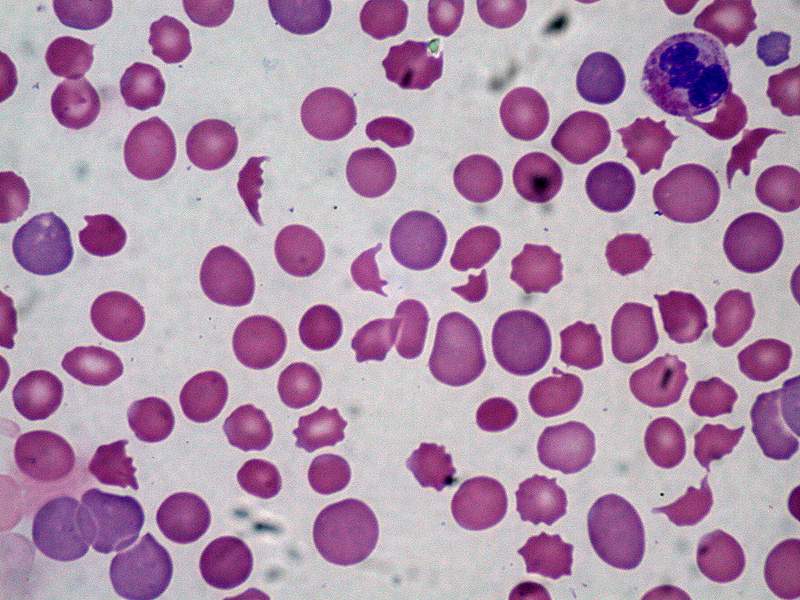
  • Frotis de sangre periférica:
    • Anemia Anemia Anemia is a condition in which individuals have low Hb levels, which can arise from various causes. Anemia is accompanied by a reduced number of RBCs and may manifest with fatigue, shortness of breath, pallor, and weakness. Subtypes are classified by the size of RBCs, chronicity, and etiology. Anemia: Overview and Types hemolítica microangiopática
    • Esquistocitos: eritrocitos fragmentados y dentados
  • Tiempo de protrombina (PT, por sus siglas en EN Erythema nodosum is an immune-mediated panniculitis (inflammation of the subcutaneous fat) caused by a type IV (delayed-type) hypersensitivity reaction. It commonly manifests in young women as tender, erythematous nodules on the shins. Erythema Nodosum inglés):
    • ↑ (prolongado) en EN Erythema nodosum is an immune-mediated panniculitis (inflammation of the subcutaneous fat) caused by a type IV (delayed-type) hypersensitivity reaction. It commonly manifests in young women as tender, erythematous nodules on the shins. Erythema Nodosum CID
    • Interpretación: Se han consumido factores de la vía extrínseca y/o de la vía común.
  • Tiempo parcial de tromboplastina activada (aPTT, por sus siglas en EN Erythema nodosum is an immune-mediated panniculitis (inflammation of the subcutaneous fat) caused by a type IV (delayed-type) hypersensitivity reaction. It commonly manifests in young women as tender, erythematous nodules on the shins. Erythema Nodosum inglés):
    • ↑ (prolongado) en EN Erythema nodosum is an immune-mediated panniculitis (inflammation of the subcutaneous fat) caused by a type IV (delayed-type) hypersensitivity reaction. It commonly manifests in young women as tender, erythematous nodules on the shins. Erythema Nodosum CID
    • Interpretación: Se han consumido factores en EN Erythema nodosum is an immune-mediated panniculitis (inflammation of the subcutaneous fat) caused by a type IV (delayed-type) hypersensitivity reaction. It commonly manifests in young women as tender, erythematous nodules on the shins. Erythema Nodosum las vías intrínseca y/o comunes.
  • Fibrinógeno:
    • Generalmente ↓ debido al AL Amyloidosis consumo
    • Puede ser normal a pesar de un consumo importante si el fibrinógeno estaba originalmente ↑, lo cual ocurre en EN Erythema nodosum is an immune-mediated panniculitis (inflammation of the subcutaneous fat) caused by a type IV (delayed-type) hypersensitivity reaction. It commonly manifests in young women as tender, erythematous nodules on the shins. Erythema Nodosum pacientes con:
      • Sepsis Sepsis Systemic inflammatory response syndrome with a proven or suspected infectious etiology. When sepsis is associated with organ dysfunction distant from the site of infection, it is called severe sepsis. When sepsis is accompanied by hypotension despite adequate fluid infusion, it is called septic shock. Sepsis and Septic Shock
      • Malignidad
      • Otras afecciones inflamatorias
  • Dímero D:
    • ↑↑ en EN Erythema nodosum is an immune-mediated panniculitis (inflammation of the subcutaneous fat) caused by a type IV (delayed-type) hypersensitivity reaction. It commonly manifests in young women as tender, erythematous nodules on the shins. Erythema Nodosum CID
    • Unos productos de degradación de la fibrina, que indican una trombosis reciente o en EN Erythema nodosum is an immune-mediated panniculitis (inflammation of the subcutaneous fat) caused by a type IV (delayed-type) hypersensitivity reaction. It commonly manifests in young women as tender, erythematous nodules on the shins. Erythema Nodosum curso
    • Interpretación: Una prueba negativa para el dímero D descarta esencialmente la CID.
  • Hallazgos en EN Erythema nodosum is an immune-mediated panniculitis (inflammation of the subcutaneous fat) caused by a type IV (delayed-type) hypersensitivity reaction. It commonly manifests in young women as tender, erythematous nodules on the shins. Erythema Nodosum la CID crónica:
    • Trombocitopenia (leve)
    • Levemente ↑ o PT y aPTT normales
    • ↑ Dímero D
Los esquistocitos como diagnóstico de CID

Frotis de sangre periférica que muestra esquistocitos, indicativos de hemólisis intravascular

Imagen: “Disseminated carcinomatosis with DIC” por Ed Uthman, MD. Licencia: Dominio Público

Imagenología

Ningún estudio específico de imagenología confirma el diagnóstico de CID. Pueden estar indicados métodos de imagenología específicos para ayudar en EN Erythema nodosum is an immune-mediated panniculitis (inflammation of the subcutaneous fat) caused by a type IV (delayed-type) hypersensitivity reaction. It commonly manifests in young women as tender, erythematous nodules on the shins. Erythema Nodosum:

  • El diagnóstico de la etiología subyacente (e.g., imagenología abdominal por sospecha de malignidad)
  • Evaluación de daños en EN Erythema nodosum is an immune-mediated panniculitis (inflammation of the subcutaneous fat) caused by a type IV (delayed-type) hypersensitivity reaction. It commonly manifests in young women as tender, erythematous nodules on the shins. Erythema Nodosum órganos diana (e.g., tomografía computarizada (TC) craneal en EN Erythema nodosum is an immune-mediated panniculitis (inflammation of the subcutaneous fat) caused by a type IV (delayed-type) hypersensitivity reaction. It commonly manifests in young women as tender, erythematous nodules on the shins. Erythema Nodosum pacientes con evidencia de accidente cerebrovascular)

Tratamiento

Los LOS Neisseria principios más importantes en EN Erythema nodosum is an immune-mediated panniculitis (inflammation of the subcutaneous fat) caused by a type IV (delayed-type) hypersensitivity reaction. It commonly manifests in young women as tender, erythematous nodules on the shins. Erythema Nodosum el tratamiento son tratar la causa subyacente y estabilizar al AL Amyloidosis paciente.

Coagulación intravascular diseminada aguda

  • Cuidados de emergencia: vía aérea, respiración, circulación:
    • Asegúrese de que las vías respiratorias son seguras y apoye la ventilación.
    • Soporte hemodinámico:
      • Reanimación volumétrica con líquidos intravenosos
      • Vasopresores
      • Transfusión de sangre
  • Sustitución de productos: factores de coagulación y plaquetas (ver Sustitución de componentes sanguíneos más abajo)
  • Tratar la causa subyacente: el tratamiento puede incluir:
    • Agentes antimicrobianos
    • Extracción del feto en EN Erythema nodosum is an immune-mediated panniculitis (inflammation of the subcutaneous fat) caused by a type IV (delayed-type) hypersensitivity reaction. It commonly manifests in young women as tender, erythematous nodules on the shins. Erythema Nodosum casos obstétricos

Sustitución de componentes sanguíneos

  • Plaquetas:
    • 1 grupo de 5–6 unidades debería ↑ el recuento de plaquetas en EN Erythema nodosum is an immune-mediated panniculitis (inflammation of the subcutaneous fat) caused by a type IV (delayed-type) hypersensitivity reaction. It commonly manifests in young women as tender, erythematous nodules on the shins. Erythema Nodosum aproximadamente 30 000/µL
    • Indicaciones:
      • Sangrado activo
      • Plaquetas < 50 000/µL con necesidad de cirugía urgente
      • Plaquetas < 10 000/µL
  • Plasma Plasma The residual portion of blood that is left after removal of blood cells by centrifugation without prior blood coagulation. Transfusion Products fresco congelado (PFC)
    • 1 unidad = 200–300 mL
    • Contiene todas las proteínas plasmáticas solubles y los LOS Neisseria factores de coagulación
    • Indicaciones:
      • Hemorragia grave y ↑ PT o aPTT
      • Hemorragia grave y ↓ fibrinógeno
  • Crioprecipitado
    • 1 unidad = 10–20 mL
    • Contiene:
      • Fibrinógeno
      • Factores VIII y XIII
      • FVW
    • Indicación: fibrinógeno < 150 mg/dL (objetivo ≥ 150 mg/dL; ≥ 200 mg/dL en EN Erythema nodosum is an immune-mediated panniculitis (inflammation of the subcutaneous fat) caused by a type IV (delayed-type) hypersensitivity reaction. It commonly manifests in young women as tender, erythematous nodules on the shins. Erythema Nodosum hemorragia obstétrica)
    • Se utiliza para ayudar a aumentar el fibrinógeno sin un volumen adicional significativo

Coagulación intravascular diseminada crónica

  • Anticoagulación con heparinas (para la profilaxis de la trombosis venosa profunda (TVP))
  • Tratar la causa subyacente (normalmente una neoplasia)

Diagnóstico Diferencial

  • Cirrosis: el hígado es el lugar principal de síntesis de la mayoría de los LOS Neisseria factores de coagulación. Además de la alteración en EN Erythema nodosum is an immune-mediated panniculitis (inflammation of the subcutaneous fat) caused by a type IV (delayed-type) hypersensitivity reaction. It commonly manifests in young women as tender, erythematous nodules on the shins. Erythema Nodosum la síntesis de los LOS Neisseria factores de coagulación, la cirrosis también puede provocar independientemente una trombocitopenia debido al AL Amyloidosis secuestro esplénico de las plaquetas y a la disminución de la producción de trombopoyetina. Las plaquetas también pueden ser disfuncionales. Al AL Amyloidosis igual que la CID, la cirrosis puede provocar tanto hemorragias como trombosis. Los LOS Neisseria antecedentes de lesiones hepáticas y las pruebas de función hepática anormales pueden ayudar a distinguir la cirrosis de la CID. Cabe destacar que la insuficiencia hepática fulminante también puede desencadenar CID.
  • Púrpura trombocitopénica trombótica: trastorno hemorrágico caracterizado por una pentada de anemia Anemia Anemia is a condition in which individuals have low Hb levels, which can arise from various causes. Anemia is accompanied by a reduced number of RBCs and may manifest with fatigue, shortness of breath, pallor, and weakness. Subtypes are classified by the size of RBCs, chronicity, and etiology. Anemia: Overview and Types hemolítica microangiopática, trombocitopenia, insuficiencia renal, síntomas neurológicos y fiebre: La púrpura trombocitopénica trombótica se produce por una deficiencia congénita o adquirida de ADAMTS13, que es una metaloproteína que escinde el FVW. Las deficiencias de ADAMTS13 dan lugar a grandes multímeros de FVW que aumentan la agregación plaquetaria, lo que conduce a trombosis microvascular y a consumo de plaquetas. A diferencia de la CID, en EN Erythema nodosum is an immune-mediated panniculitis (inflammation of the subcutaneous fat) caused by a type IV (delayed-type) hypersensitivity reaction. It commonly manifests in young women as tender, erythematous nodules on the shins. Erythema Nodosum la púrpura trombocitopénica trombótica, el PT y el aPTT suelen ser normales (o solo ligeramente elevados) y el fibrinógeno esta normal o incluso está aumentado.
  • Trombocitopenia inmunitaria: trastorno autoinmune caracterizado por autoanticuerpos anti-GpIIb/IIIa que provocan la destrucción de las plaquetas: La trombocitopenia inmunitaria suele producirse tras infecciones víricas gastrointestinales o respiratorias, aunque también puede ser inducida por medicamentos. Clínicamente, puede presentarse con hemorragias prolongadas, petequias, hematomas fáciles y/o púrpura. A diferencia de la CID, en EN Erythema nodosum is an immune-mediated panniculitis (inflammation of the subcutaneous fat) caused by a type IV (delayed-type) hypersensitivity reaction. It commonly manifests in young women as tender, erythematous nodules on the shins. Erythema Nodosum la trombocitopenia inmunitaria no hay ningún defecto de coagulación, por lo que el PT y el tiempo parcial de tromboplastina (PTT, por sus siglas en EN Erythema nodosum is an immune-mediated panniculitis (inflammation of the subcutaneous fat) caused by a type IV (delayed-type) hypersensitivity reaction. It commonly manifests in young women as tender, erythematous nodules on the shins. Erythema Nodosum inglés) son normales.

Referencias

  1. Marcel, M. (2022). Disseminated intravascular coagulation (DIC). Retrieved October 27, 2025, from https://emedicine.medscape.com/article/199627-overview
  2. Leung, L. L. (2025). Evaluation and management of disseminated intravascular coagulation (DIC) in adults. UpToDate. Retrieved October 27, 2025, from https://www.uptodate.com/contents/evaluation-and-management-of-disseminated-intravascular-coagulation-dic-in-adults
  3. Longo, D., Fauci, A., Kasper, D., Hauser, S., Jameson, J., Loscalzo, J. (2012). Harrison’s Manual of Medicine, 18th ed. McGraw-Hill Professional, pages 2188–2191.

¡Crea tu cuenta gratis o inicia una sesión para seguir leyendo!

Regístrate ahora y obtén acceso gratuito a Lecturio con páginas de concepto, videos médicos y cuestionarios para tu educación médica.

User Reviews

Que tengas una sesión de estudio alegre y navideña 🎁 Ahorra 50% en todos los planes >>

Details