Domina Conceptos Médicos

Estudia para la escuela de medicina y tus examenes con Lecturio.

Babesia/Babesiosis

La babesiosis es una infección causada por un protozoo que pertenece al género Babesia. La Babesia más común que se observa en Estados Unidos es B. microti, que se transmite por la garrapata Ixodes. Los protozoos crecen y se replican dentro de los eritrocitos del húesped. La lisis de los eritrocitos y la respuesta inmunitaria del organismo dan lugar a síntomas clínicos. Los pacientes generalmente presentan una enfermedad similar a la gripe e ictericia. En casos severos, puede ocurrir daño a los órganos. El diagnóstico se confirma por la presencia visual de parásitos dentro de los eritrocitos, que a menudo se observa en una configuración de "Cruz de Malta". Las pruebas serológicas y la reacción en EN Erythema nodosum is an immune-mediated panniculitis (inflammation of the subcutaneous fat) caused by a type IV (delayed-type) hypersensitivity reaction. It commonly manifests in young women as tender, erythematous nodules on the shins. Erythema Nodosum cadena de la polimerasa ( PCR PCR Polymerase chain reaction (PCR) is a technique that amplifies DNA fragments exponentially for analysis. The process is highly specific, allowing for the targeting of specific genomic sequences, even with minuscule sample amounts. The PCR cycles multiple times through 3 phases: denaturation of the template DNA, annealing of a specific primer to the individual DNA strands, and synthesis/elongation of new DNA molecules. Polymerase Chain Reaction (PCR), por sus siglas en EN Erythema nodosum is an immune-mediated panniculitis (inflammation of the subcutaneous fat) caused by a type IV (delayed-type) hypersensitivity reaction. It commonly manifests in young women as tender, erythematous nodules on the shins. Erythema Nodosum inglés) también se utilizan en EN Erythema nodosum is an immune-mediated panniculitis (inflammation of the subcutaneous fat) caused by a type IV (delayed-type) hypersensitivity reaction. It commonly manifests in young women as tender, erythematous nodules on the shins. Erythema Nodosum el diagnóstico. La azitromicina y la atovacuona se utilizan a menudo en EN Erythema nodosum is an immune-mediated panniculitis (inflammation of the subcutaneous fat) caused by a type IV (delayed-type) hypersensitivity reaction. It commonly manifests in young women as tender, erythematous nodules on the shins. Erythema Nodosum el tratamiento. La coinfección con Borrelia Borrelia Borrelia are gram-negative microaerophilic spirochetes. Owing to their small size, they are not easily seen on Gram stain but can be visualized using dark-field microscopy, Giemsa, or Wright stain. Spirochetes are motile and move in a characteristic spinning fashion due to axial filaments in the periplasmic space. Borrelia y Anaplasma es común.

Last updated: Dec 15, 2025

Editorial responsibility: Stanley Oiseth, Lindsay Jones, Evelin Maza

Características Generales de Babesia

Características básicas de Babesia Babesia Babesiosis is an infection caused by a protozoa belonging to the genus, Babesia. The most common Babesia seen in the United States is B. microti, which is transmitted by the Ixodes tick. The protozoa thrive and replicate within host erythrocytes. Lysis of erythrocytes and the body’s immune response result in clinical symptoms. Babesia/Babesiosis

  • Parásito protozoario
  • Intraeritrocitario
  • Morfología ovalada o en EN Erythema nodosum is an immune-mediated panniculitis (inflammation of the subcutaneous fat) caused by a type IV (delayed-type) hypersensitivity reaction. It commonly manifests in young women as tender, erythematous nodules on the shins. Erythema Nodosum forma de pera (a menudo llamados piroplasmas)
  • Identificado en EN Erythema nodosum is an immune-mediated panniculitis (inflammation of the subcutaneous fat) caused by a type IV (delayed-type) hypersensitivity reaction. It commonly manifests in young women as tender, erythematous nodules on the shins. Erythema Nodosum la tinción de Giemsa
  • > 100 especies identificadas

Especies clínicamente relevantes

  • B. microti B. microti A species of protozoa infecting humans via the intermediate tick vector ixodes scapularis. The other hosts are the mouse peromyscus leucopus and meadow vole microtus pennsylvanicus, which are fed on by the tick. Other primates can be experimentally infected with babesia microti. Babesia/Babesiosis (especie más común en EN Erythema nodosum is an immune-mediated panniculitis (inflammation of the subcutaneous fat) caused by a type IV (delayed-type) hypersensitivity reaction. It commonly manifests in young women as tender, erythematous nodules on the shins. Erythema Nodosum América del Norte)
  • B. duncani B. duncani Babesia/Babesiosis (América del Norte)
  • B. divergens B. divergens Babesia/Babesiosis (Europa)

Epidemiología y Factores de Riesgo

Epidemiología

  • El 94% de los LOS Neisseria casos de babesiosis Babesiosis Babesiosis is an infection caused by a protozoa belonging to the genus, Babesia. The most common Babesia seen in the United States is B. microti, which is transmitted by the Ixodes tick. The protozoa thrive and replicate within host erythrocytes. Lysis of erythrocytes and the body’s immune response result in clinical symptoms. Babesia/Babesiosis en EN Erythema nodosum is an immune-mediated panniculitis (inflammation of the subcutaneous fat) caused by a type IV (delayed-type) hypersensitivity reaction. It commonly manifests in young women as tender, erythematous nodules on the shins. Erythema Nodosum Estados Unidos ocurren en EN Erythema nodosum is an immune-mediated panniculitis (inflammation of the subcutaneous fat) caused by a type IV (delayed-type) hypersensitivity reaction. It commonly manifests in young women as tender, erythematous nodules on the shins. Erythema Nodosum las siguientes regiones:
    • Noreste
    • Medio oeste superior
  • Incidencia creciente debido a:
    • Aumento de la población de ciervos
    • Deforestación
    • Más humanos viviendo en EN Erythema nodosum is an immune-mediated panniculitis (inflammation of the subcutaneous fat) caused by a type IV (delayed-type) hypersensitivity reaction. It commonly manifests in young women as tender, erythematous nodules on the shins. Erythema Nodosum áreas boscosas
  • El 75% de los LOS Neisseria casos se diagnostican entre junio y agosto.
  • En EN Erythema nodosum is an immune-mediated panniculitis (inflammation of the subcutaneous fat) caused by a type IV (delayed-type) hypersensitivity reaction. It commonly manifests in young women as tender, erythematous nodules on the shins. Erythema Nodosum 2020, se notificaron aproximadamente 1.800 casos de babesiosis Babesiosis Babesiosis is an infection caused by a protozoa belonging to the genus, Babesia. The most common Babesia seen in the United States is B. microti, which is transmitted by the Ixodes tick. The protozoa thrive and replicate within host erythrocytes. Lysis of erythrocytes and the body’s immune response result in clinical symptoms. Babesia/Babesiosis en EN Erythema nodosum is an immune-mediated panniculitis (inflammation of the subcutaneous fat) caused by a type IV (delayed-type) hypersensitivity reaction. It commonly manifests in young women as tender, erythematous nodules on the shins. Erythema Nodosum los LOS Neisseria EE. UU.

Factores de riesgo

Para la babesiosis Babesiosis Babesiosis is an infection caused by a protozoa belonging to the genus, Babesia. The most common Babesia seen in the United States is B. microti, which is transmitted by the Ixodes tick. The protozoa thrive and replicate within host erythrocytes. Lysis of erythrocytes and the body’s immune response result in clinical symptoms. Babesia/Babesiosis:

  • Viajar a un área endémica (dentro de los LOS Neisseria 6 meses anteriores)
  • Transfusión de sangre

Para la enfermedad grave:

  • Edad:
    • Neonatos
    • > 50 años
  • Asplenia Asplenia Asplenia is the absence of splenic tissue or function and can stem from several factors ranging from congenital to iatrogenic. There is a distinction between anatomic asplenia, which is due to the surgical removal of the spleen, and functional asplenia, which is due to a condition that leads to splenic atrophy, infarct, congestion, or infiltrative disease. Asplenia
  • Inmunosupresión:
    • VIH/SIDA
    • Malignidad
    • Pacientes en EN Erythema nodosum is an immune-mediated panniculitis (inflammation of the subcutaneous fat) caused by a type IV (delayed-type) hypersensitivity reaction. It commonly manifests in young women as tender, erythematous nodules on the shins. Erythema Nodosum terapia inmunosupresora

Patogénesis

Reservorios

  • Ratón de patas blancas ( B. microti B. microti A species of protozoa infecting humans via the intermediate tick vector ixodes scapularis. The other hosts are the mouse peromyscus leucopus and meadow vole microtus pennsylvanicus, which are fed on by the tick. Other primates can be experimentally infected with babesia microti. Babesia/Babesiosis)
  • Bovinos ( B. divergens B. divergens Babesia/Babesiosis)

Transmisión

  • El vector principal de transmisión a los LOS Neisseria seres humanos es la garrapata Ixodes.
  • La transmisión de persona a persona rara vez puede ocurrir a través de:
    • Transfusión de sangre
    • Trasplante de órganos sólidos
    • Transplacentaria

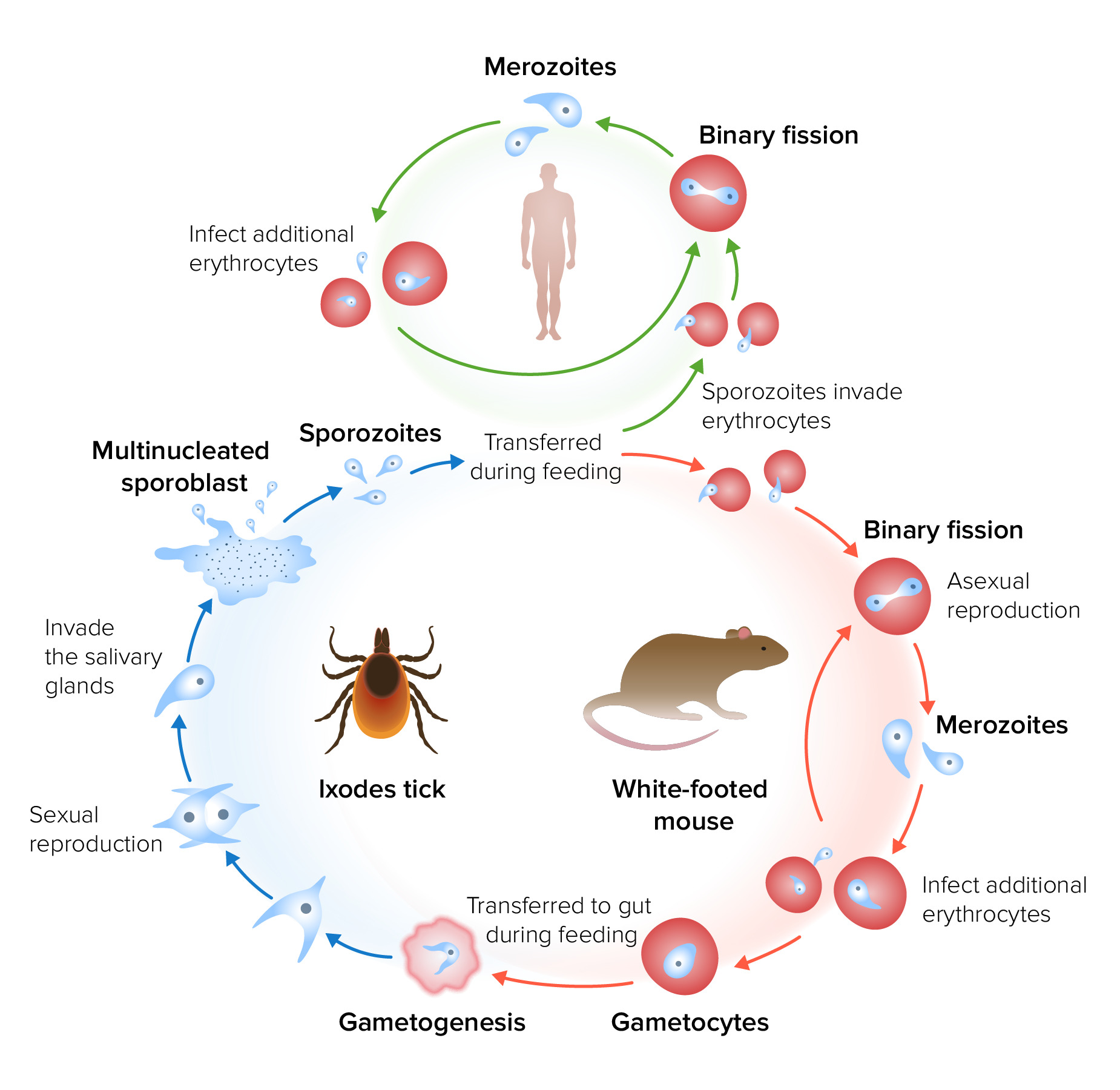
Ciclo de vida y fisiopatología

Fuera de un huésped humano:

  • Garrapata portadora de esporozoítos → se adhiere a un ratón → transfiere esporozoítos
  • Los LOS Neisseria esporozoítos ingresan a los LOS Neisseria eritrocitos.
  • Una vez dentro de los LOS Neisseria eritrocitos, los LOS Neisseria esporozoítos se diferencian en EN Erythema nodosum is an immune-mediated panniculitis (inflammation of the subcutaneous fat) caused by a type IV (delayed-type) hypersensitivity reaction. It commonly manifests in young women as tender, erythematous nodules on the shins. Erythema Nodosum trofozoítos.
  • Los LOS Neisseria trofozoítos experimentan replicación asexual (fisión binaria) → merozoítos
  • Los LOS Neisseria merozoítos producen gametocitos.
  • La garrapata se alimenta de la sangre → los LOS Neisseria gametos se transfieren a la garrapata
  • Los LOS Neisseria gametos son fertilizados en EN Erythema nodosum is an immune-mediated panniculitis (inflammation of the subcutaneous fat) caused by a type IV (delayed-type) hypersensitivity reaction. It commonly manifests in young women as tender, erythematous nodules on the shins. Erythema Nodosum el intestino de la garrapata → replicación sexual
  • Invasión hacia la glándula salival de la garrapata → desarrollo a esporozoítos

Dentro de un huésped humano:

  • Garrapata portadora de esporozoítos → se adhiere a un hospedador → transfiere los LOS Neisseria esporozoítos a la dermis Dermis A layer of vascularized connective tissue underneath the epidermis. The surface of the dermis contains innervated papillae. Embedded in or beneath the dermis are sweat glands; hair follicles; and sebaceous glands. Skin: Structure and Functions (típicamente al AL Amyloidosis 2do o 3er día de la unión)
  • Los LOS Neisseria esporozoítos ingresan a los LOS Neisseria eritrocitos → se diferencian en EN Erythema nodosum is an immune-mediated panniculitis (inflammation of the subcutaneous fat) caused by a type IV (delayed-type) hypersensitivity reaction. It commonly manifests in young women as tender, erythematous nodules on the shins. Erythema Nodosum trofozoítos (aparecen como múltiples anillos delicados)
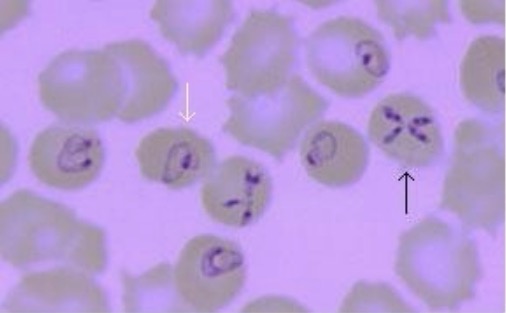
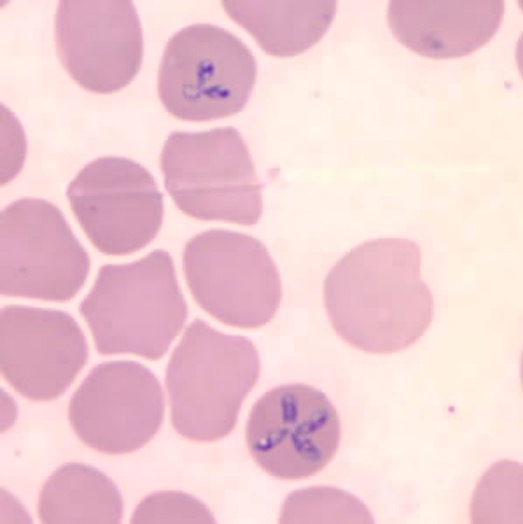
  • Los trofozoítos experimentan fisión binaria → merozoítos (aparecen como estructuras de tétrada o “Cruz de Malta”)
  • Los LOS Neisseria merozoítos escapan → rompen los LOS Neisseria eritrocitos (hemólisis) → invasión de otros eritrocitos cercanos → se repite el ciclo
  • Los LOS Neisseria eritrocitos infectados se reconocen como anormales en EN Erythema nodosum is an immune-mediated panniculitis (inflammation of the subcutaneous fat) caused by a type IV (delayed-type) hypersensitivity reaction. It commonly manifests in young women as tender, erythematous nodules on the shins. Erythema Nodosum el bazo → son marcados para la destrucción por los LOS Neisseria macrófagos
  • Hemólisis y respuesta inmunitaria del huésped → manifestaciones clínicas
El ciclo de vida y la transmisión de Babesia.

Ciclo de vida y transmisión de Babesia

Imagen por Lecturio.

Presentación Clínica

Síntomas

El período de incubación de la babesiosis Babesiosis Babesiosis is an infection caused by a protozoa belonging to the genus, Babesia. The most common Babesia seen in the United States is B. microti, which is transmitted by the Ixodes tick. The protozoa thrive and replicate within host erythrocytes. Lysis of erythrocytes and the body’s immune response result in clinical symptoms. Babesia/Babesiosis es de 1–4 semanas.

Enfermedad leve a moderada:

  • Síntomas similares a la gripe:
    • Fatiga
    • Fiebre
    • Escalofríos
    • Diaforesis
    • Malestar
    • Mialgia
    • Artralgia
    • Cefalea
  • Evidencia de hemólisis:
    • Piel amarilla
    • Orina oscura
  • Síntomas menos comunes:
    • Anorexia Anorexia The lack or loss of appetite accompanied by an aversion to food and the inability to eat. It is the defining characteristic of the disorder anorexia nervosa. Anorexia Nervosa
    • Náuseas
    • Dolor Dolor Inflammation de garganta
    • Tos TOS Thoracic outlet syndrome (TOS) is a broad term used for a spectrum of syndromes related to the general region of the thoracic outlet, which involves the compression or irritation of elements of the brachial plexus, subclavian artery, or subclavian vein. Thoracic Outlet Syndrome seca
    • Inyección conjuntival

Enfermedad severa:

  • Los LOS Neisseria individuos infectados suelen tener síntomas más intensos.
  • Además, aquellos infectados pueden experimentar:
    • Estado mental alterado
    • Dolor Dolor Inflammation abdominal
    • Vómitos
    • Diarrea
    • Dificultad para respirar
    • Rigidez nucal
    • Fotofobia
    • Hiperestesia
  • Complicaciones:
    • Síndrome de dificultad respiratoria aguda
    • Anemia Anemia Anemia is a condition in which individuals have low Hb levels, which can arise from various causes. Anemia is accompanied by a reduced number of RBCs and may manifest with fatigue, shortness of breath, pallor, and weakness. Subtypes are classified by the size of RBCs, chronicity, and etiology. Anemia: Overview and Types severa
    • Insuficiencia cardíaca
    • Ruptura esplénica
    • Hepatitis
    • Insuficiencia renal
    • Coagulación intravascular diseminada
    • Coma Coma Coma is defined as a deep state of unarousable unresponsiveness, characterized by a score of 3 points on the GCS. A comatose state can be caused by a multitude of conditions, making the precise epidemiology and prognosis of coma difficult to determine. Coma
    • Shock Shock Shock is a life-threatening condition associated with impaired circulation that results in tissue hypoxia. The different types of shock are based on the underlying cause: distributive (↑ cardiac output (CO), ↓ systemic vascular resistance (SVR)), cardiogenic (↓ CO, ↑ SVR), hypovolemic (↓ CO, ↑ SVR), obstructive (↓ CO), and mixed. Types of Shock
    • Muerte

Examen físico

  • Apariencia general:
    • Fiebre
    • Ictericia
  • Ojos, oídos, nariz y garganta:
    • Ictericia escleral
    • Eritema faríngeo
    • Retinopatía con hemorragias en EN Erythema nodosum is an immune-mediated panniculitis (inflammation of the subcutaneous fat) caused by a type IV (delayed-type) hypersensitivity reaction. It commonly manifests in young women as tender, erythematous nodules on the shins. Erythema Nodosum astilla
  • Examen abdominal:
    • Esplenomegalia
    • Hepatomegalia
  • Piel:
    • Puede haber petequias.
    • Una erupción puede representar una infección concurrente por la enfermedad de Lyme.

Diagnóstico y Tratamiento

Diagnóstico

  • Opciones de pruebas de diagnóstico:
    • Frotis de sangre
      • “Cruz de Malta” dentro de los LOS Neisseria eritrocitos
      • También pueden estar presentes formas de anillo dentro de los LOS Neisseria eritrocitos.
    • Prueba de anticuerpos fluorescentes indirectos para anticuerpos de Babesia Babesia Babesiosis is an infection caused by a protozoa belonging to the genus, Babesia. The most common Babesia seen in the United States is B. microti, which is transmitted by the Ixodes tick. The protozoa thrive and replicate within host erythrocytes. Lysis of erythrocytes and the body’s immune response result in clinical symptoms. Babesia/Babesiosis
    • PCR PCR Polymerase chain reaction (PCR) is a technique that amplifies DNA fragments exponentially for analysis. The process is highly specific, allowing for the targeting of specific genomic sequences, even with minuscule sample amounts. The PCR cycles multiple times through 3 phases: denaturation of the template DNA, annealing of a specific primer to the individual DNA strands, and synthesis/elongation of new DNA molecules. Polymerase Chain Reaction (PCR) para ADN de Babesia Babesia Babesiosis is an infection caused by a protozoa belonging to the genus, Babesia. The most common Babesia seen in the United States is B. microti, which is transmitted by the Ixodes tick. The protozoa thrive and replicate within host erythrocytes. Lysis of erythrocytes and the body’s immune response result in clinical symptoms. Babesia/Babesiosis
  • Evaluación de soporte:
    • Hemograma:
      • Anemia Anemia Anemia is a condition in which individuals have low Hb levels, which can arise from various causes. Anemia is accompanied by a reduced number of RBCs and may manifest with fatigue, shortness of breath, pallor, and weakness. Subtypes are classified by the size of RBCs, chronicity, and etiology. Anemia: Overview and Types hemolítica (↓ hemoglobina, ↑ lactato deshidrogenasa, ↓ haptoglobina)
      • Neutropenia Neutropenia Neutrophils are an important component of the immune system and play a significant role in the eradication of infections. Low numbers of circulating neutrophils, referred to as neutropenia, predispose the body to recurrent infections or sepsis, though patients can also be asymptomatic. Neutropenia
      • Trombocitopenia
    • Pruebas de función hepática:
      • ↑ Alanina aminotransferasa ( ALT ALT An enzyme that catalyzes the conversion of l-alanine and 2-oxoglutarate to pyruvate and l-glutamate. Liver Function Tests) y aspartato aminotransferasa ( AST AST Enzymes of the transferase class that catalyze the conversion of l-aspartate and 2-ketoglutarate to oxaloacetate and l-glutamate. Liver Function Tests)
      • ↑ Bilirrubina total e indirecta
    • Panel metabólico básico:
      • ↑ Nitrógeno ureico en EN Erythema nodosum is an immune-mediated panniculitis (inflammation of the subcutaneous fat) caused by a type IV (delayed-type) hypersensitivity reaction. It commonly manifests in young women as tender, erythematous nodules on the shins. Erythema Nodosum sangre (BUN, por sus siglas en EN Erythema nodosum is an immune-mediated panniculitis (inflammation of the subcutaneous fat) caused by a type IV (delayed-type) hypersensitivity reaction. It commonly manifests in young women as tender, erythematous nodules on the shins. Erythema Nodosum inglés)
      • ↑ Creatinina
  • Considere la posibilidad de evaluar las coinfecciones:
    • Borrelia burgdorferi Borrelia burgdorferi A specific species of bacteria, part of the borrelia burgdorferi group, whose common name is lyme disease spirochete. Borrelia (enfermedad de Lyme)
    • Anaplasma phagocytophilum Anaplasma phagocytophilum A species of gram-negative bacteria in the genus anaplasma, family anaplasmataceae, formerly called ehrlichia phagocytophila or ehrlichia equi. This organism is tick-borne (ixodes) and causes disease in horses and sheep. In humans, it causes human granulocytic ehrlichiosis. Ehrlichiosis and Anaplasmosis ( anaplasmosis Anaplasmosis Anaplasmosis is a tick-borne bacterial infection. The most common causative species include Anaplasma phagocytophilum, which infect and multiply within granulocytes. The clinical presentation can vary widely, but often includes fever, malaise, headache, myalgia, and arthralgias. Ehrlichiosis and Anaplasmosis)

Tratamiento

El pilar del tratamiento son los LOS Neisseria antibióticos y la educación de los LOS Neisseria individuos sobre los LOS Neisseria métodos preventivos para evitar las picaduras de garrapatas.

  • Terapia antimicrobiana:
    • Tratamiento de 1ra línea: azitromicina y atovacuona
    • Alternativa: quinina y clindamicina
    • Duración típica: 7 a 10 días para pacientes inmunocompetentes
    • Puede ser necesario un tratamiento más prolongado para pacientes inmunodeprimidos
  • La exanguinotransfusión está indicada si:
    • Hemólisis severa (hemoglobina < 10 g/dL)
    • Presencia de daño en EN Erythema nodosum is an immune-mediated panniculitis (inflammation of the subcutaneous fat) caused by a type IV (delayed-type) hypersensitivity reaction. It commonly manifests in young women as tender, erythematous nodules on the shins. Erythema Nodosum órganos diana (compromiso renal, hepático o pulmonar)
    • Parasitemia de alto grado (> 10%)

Prevención

Se deben tomar precauciones en EN Erythema nodosum is an immune-mediated panniculitis (inflammation of the subcutaneous fat) caused by a type IV (delayed-type) hypersensitivity reaction. It commonly manifests in young women as tender, erythematous nodules on the shins. Erythema Nodosum áreas endémicas, particularmente en EN Erythema nodosum is an immune-mediated panniculitis (inflammation of the subcutaneous fat) caused by a type IV (delayed-type) hypersensitivity reaction. It commonly manifests in young women as tender, erythematous nodules on the shins. Erythema Nodosum personas con riesgo de enfermedad grave y complicaciones.

  • Prevención de garrapatas:
    • Ropa protectora
    • Uso de repelentes de garrapatas
    • Búsqueda y eliminación de las garrapatas.
  • Tamizaje de la sangre y órganos donados
  • No existe terapia profiláctica ni vacunación.

Comparación de Parásitos Intraeritrocitarios

La siguiente tabla resume las características de los LOS Neisseria parásitos que infectan a los LOS Neisseria eritrocitos.

Tabla: Comparación de parásitos intraeritrocitarios
Organismo Babesia Babesia Babesiosis is an infection caused by a protozoa belonging to the genus, Babesia. The most common Babesia seen in the United States is B. microti, which is transmitted by the Ixodes tick. The protozoa thrive and replicate within host erythrocytes. Lysis of erythrocytes and the body’s immune response result in clinical symptoms. Babesia/Babesiosis Plasmodium Plasmodium A genus of protozoa that comprise the malaria parasites of mammals. Four species infect humans (although occasional infections with primate malarias may occur). These are plasmodium falciparum; plasmodium malariae; plasmodium ovale, and plasmodium vivax. Species causing infection in vertebrates other than man include: plasmodium berghei; plasmodium chabaudi; p. Vinckei, and plasmodium yoelii in rodents; p. Brasilianum, plasmodium cynomolgi; and plasmodium knowlesi in monkeys; and plasmodium gallinaceum in chickens. Antimalarial Drugs
Enfermedad Babesiosis Babesiosis Babesiosis is an infection caused by a protozoa belonging to the genus, Babesia. The most common Babesia seen in the United States is B. microti, which is transmitted by the Ixodes tick. The protozoa thrive and replicate within host erythrocytes. Lysis of erythrocytes and the body’s immune response result in clinical symptoms. Babesia/Babesiosis Paludismo
Apariencia microscópica
  • Esporozoos
  • Forma de pera
  • Esporozoos
  • Delgado, alargado
Reservorio Ratón de patas blancas
  • Monos
  • Humanos
Transmisión Garrapata Ixodes Mosquito Anopheles Anopheles A genus of mosquitoes (culicidae) that are known vectors of malaria. Plasmodium/Malaria
Regiones comunes
  • América del Norte
  • Europa
Cuadro clínico
  • Síntomas similares a la gripe
  • Síntomas abdominales
  • Hepatoesplenomegalia
  • Anemia Anemia Anemia is a condition in which individuals have low Hb levels, which can arise from various causes. Anemia is accompanied by a reduced number of RBCs and may manifest with fatigue, shortness of breath, pallor, and weakness. Subtypes are classified by the size of RBCs, chronicity, and etiology. Anemia: Overview and Types hemolítica
  • Insuficiencia renal
  • Síndrome de dificultad respiratoria aguda
  • ICC
  • CID
  • Síntomas similares a la gripe
  • Síntomas abdominales
  • Hepatoesplenomegalia
  • Anemia Anemia Anemia is a condition in which individuals have low Hb levels, which can arise from various causes. Anemia is accompanied by a reduced number of RBCs and may manifest with fatigue, shortness of breath, pallor, and weakness. Subtypes are classified by the size of RBCs, chronicity, and etiology. Anemia: Overview and Types hemolítica (más grave)
  • Insuficiencia renal
  • Síndrome de dificultad respiratoria aguda
  • CID
  • Hipoglucemia
Diagnóstico
  • Frotis de sangre (preferible)
  • PCR PCR Polymerase chain reaction (PCR) is a technique that amplifies DNA fragments exponentially for analysis. The process is highly specific, allowing for the targeting of specific genomic sequences, even with minuscule sample amounts. The PCR cycles multiple times through 3 phases: denaturation of the template DNA, annealing of a specific primer to the individual DNA strands, and synthesis/elongation of new DNA molecules. Polymerase Chain Reaction (PCR) (preferible)
  • IFA
  • Frotis de sangre
  • Prueba de antígeno
  • PCR PCR Polymerase chain reaction (PCR) is a technique that amplifies DNA fragments exponentially for analysis. The process is highly specific, allowing for the targeting of specific genomic sequences, even with minuscule sample amounts. The PCR cycles multiple times through 3 phases: denaturation of the template DNA, annealing of a specific primer to the individual DNA strands, and synthesis/elongation of new DNA molecules. Polymerase Chain Reaction (PCR) (no ampliamente disponible)
Tratamiento
  • Azitromicina y atovacuona
  • Clindamicina y quinina
Depende de la especie, la gravedad y los LOS Neisseria patrones de resistencia, pero puede incluir una combinación de:
  • Atovacuona
  • Proguanil Proguanil A biguanide compound which metabolizes in the body to form cycloguanil, an anti-malaria agent. Antimalarial Drugs
  • Quinina
  • Tetraciclinas
  • Mefloquina
  • Cloroquina
ICC: insuficiencia cardíaca
CID: coagulación intravascular diseminada
IFA: anticuerpo fluorescente indirecto (por sus siglas en inglés)

Diagnóstico Diferencial

  • Paludismo: una enfermedad infecciosa transmitida por mosquitos causada por especies de Plasmodium Plasmodium A genus of protozoa that comprise the malaria parasites of mammals. Four species infect humans (although occasional infections with primate malarias may occur). These are plasmodium falciparum; plasmodium malariae; plasmodium ovale, and plasmodium vivax. Species causing infection in vertebrates other than man include: plasmodium berghei; plasmodium chabaudi; p. Vinckei, and plasmodium yoelii in rodents; p. Brasilianum, plasmodium cynomolgi; and plasmodium knowlesi in monkeys; and plasmodium gallinaceum in chickens. Antimalarial Drugs. El paludismo a menudo se presenta con fiebre, escalofríos, diaforesis, ictericia, dolor Dolor Inflammation abdominal, anemia Anemia Anemia is a condition in which individuals have low Hb levels, which can arise from various causes. Anemia is accompanied by a reduced number of RBCs and may manifest with fatigue, shortness of breath, pallor, and weakness. Subtypes are classified by the size of RBCs, chronicity, and etiology. Anemia: Overview and Types hemolítica, hepatoesplenomegalia e insuficiencia renal. Un frotis de sangre en EN Erythema nodosum is an immune-mediated panniculitis (inflammation of the subcutaneous fat) caused by a type IV (delayed-type) hypersensitivity reaction. It commonly manifests in young women as tender, erythematous nodules on the shins. Erythema Nodosum el paludismo muestra un solo anillo pleomórfico. No se ve VE Ventilation: Mechanics of Breathing el hallazgo de la “Cruz de Malta”. También se pueden realizar pruebas rápidas de antígenos de Plasmodium Plasmodium A genus of protozoa that comprise the malaria parasites of mammals. Four species infect humans (although occasional infections with primate malarias may occur). These are plasmodium falciparum; plasmodium malariae; plasmodium ovale, and plasmodium vivax. Species causing infection in vertebrates other than man include: plasmodium berghei; plasmodium chabaudi; p. Vinckei, and plasmodium yoelii in rodents; p. Brasilianum, plasmodium cynomolgi; and plasmodium knowlesi in monkeys; and plasmodium gallinaceum in chickens. Antimalarial Drugs. El tratamiento requiere un ciclo prolongado de múltiples medicamentos antipalúdicos.
  • Enfermedad de Lyme: una infección transmitida por garrapatas causada por la espiroqueta gram-negativa, Borrelia burgdorferi Borrelia burgdorferi A specific species of bacteria, part of the borrelia burgdorferi group, whose common name is lyme disease spirochete. Borrelia. La enfermedad de Lyme también es transmitida por la garrapata Ixodes. La presentación de la enfermedad de Lyme puede variar según la etapa de la enfermedad y puede incluir la erupción característica conocida como eritema migratorio (no presente en EN Erythema nodosum is an immune-mediated panniculitis (inflammation of the subcutaneous fat) caused by a type IV (delayed-type) hypersensitivity reaction. It commonly manifests in young women as tender, erythematous nodules on the shins. Erythema Nodosum la babesiosis Babesiosis Babesiosis is an infection caused by a protozoa belonging to the genus, Babesia. The most common Babesia seen in the United States is B. microti, which is transmitted by the Ixodes tick. The protozoa thrive and replicate within host erythrocytes. Lysis of erythrocytes and the body’s immune response result in clinical symptoms. Babesia/Babesiosis). Las manifestaciones neurológicas, cardíacas, oculares y articulares también son comunes en EN Erythema nodosum is an immune-mediated panniculitis (inflammation of the subcutaneous fat) caused by a type IV (delayed-type) hypersensitivity reaction. It commonly manifests in young women as tender, erythematous nodules on the shins. Erythema Nodosum etapas posteriores. El diagnóstico de la enfermedad de Lyme se basa en EN Erythema nodosum is an immune-mediated panniculitis (inflammation of the subcutaneous fat) caused by a type IV (delayed-type) hypersensitivity reaction. It commonly manifests in young women as tender, erythematous nodules on the shins. Erythema Nodosum los LOS Neisseria hallazgos clínicos y la exposición a las garrapatas, y está respaldado por pruebas serológicas. Los LOS Neisseria antibióticos se utilizan para el tratamiento.
  • Hepatitis viral: inflamación del hígado debido a una infección por el virus Virus Viruses are infectious, obligate intracellular parasites composed of a nucleic acid core surrounded by a protein capsid. Viruses can be either naked (non-enveloped) or enveloped. The classification of viruses is complex and based on many factors, including type and structure of the nucleoid and capsid, the presence of an envelope, the replication cycle, and the host range. Virology de la hepatitis. Los LOS Neisseria pacientes se presentan con una enfermedad prodrómica similar a la gripe, seguida de ictericia, hepatoesplenomegalia y transaminasas elevadas. Las serologías de hepatitis se utilizan en EN Erythema nodosum is an immune-mediated panniculitis (inflammation of the subcutaneous fat) caused by a type IV (delayed-type) hypersensitivity reaction. It commonly manifests in young women as tender, erythematous nodules on the shins. Erythema Nodosum el diagnóstico y ayudan a diferenciar la hepatitis de la babesiosis Babesiosis Babesiosis is an infection caused by a protozoa belonging to the genus, Babesia. The most common Babesia seen in the United States is B. microti, which is transmitted by the Ixodes tick. The protozoa thrive and replicate within host erythrocytes. Lysis of erythrocytes and the body’s immune response result in clinical symptoms. Babesia/Babesiosis. El tratamiento de la hepatitis aguda es de soporte.
  • Fiebre maculosa de las Montañas Rocosas: una enfermedad causada por Rickettsia rickettsii Rickettsia rickettsii A species of gram-negative, aerobic bacteria that is the etiologic agent of rocky mountain spotted fever. Its cells are slightly smaller and more uniform in size than those of rickettsia prowazekii. Rickettsia que se presenta con fiebre, fatiga, cefalea y erupción después de la picadura de una garrapata. Sin embargo, la fiebre maculosa de las Montañas Rocosas está asociada con la garrapata Dermacentor Dermacentor A widely distributed genus of ticks, in the family ixodidae, including a number that infest humans and other mammals. Several are vectors of diseases such as tularemia; rocky mountain spotted fever; colorado tick fever; and anaplasmosis. Rickettsia. El diagnóstico se basa en EN Erythema nodosum is an immune-mediated panniculitis (inflammation of the subcutaneous fat) caused by a type IV (delayed-type) hypersensitivity reaction. It commonly manifests in young women as tender, erythematous nodules on the shins. Erythema Nodosum las características clínicas, la biopsia de la erupción y las pruebas serológicas. El tratamiento consiste en EN Erythema nodosum is an immune-mediated panniculitis (inflammation of the subcutaneous fat) caused by a type IV (delayed-type) hypersensitivity reaction. It commonly manifests in young women as tender, erythematous nodules on the shins. Erythema Nodosum antibióticos, incluida la doxiciclina.
  • Ehrlichiosis Ehrlichiosis Ehrlichiosis is a tick-borne bacterial infection. The most common causative species include Ehrlichia chaffeensis, which infect and multiply within monocytes. The clinical presentation can vary widely, but often includes fever, malaise, headache, myalgia, and arthralgias. Ehrlichiosis and Anaplasmosis y anaplasmosis Anaplasmosis Anaplasmosis is a tick-borne bacterial infection. The most common causative species include Anaplasma phagocytophilum, which infect and multiply within granulocytes. The clinical presentation can vary widely, but often includes fever, malaise, headache, myalgia, and arthralgias. Ehrlichiosis and Anaplasmosis: infecciones transmitidas por garrapatas causadas por Ehrlichia chaffeensis Ehrlichia chaffeensis A species of gram-negative bacteria that is the causative agent of human ehrlichiosis. This organism was first discovered at fort chaffee, arkansas, when blood samples from suspected human ehrlichiosis patients were studied. Ehrlichiosis and Anaplasmosis y Anaplasmosis Anaplasmosis Anaplasmosis is a tick-borne bacterial infection. The most common causative species include Anaplasma phagocytophilum, which infect and multiply within granulocytes. The clinical presentation can vary widely, but often includes fever, malaise, headache, myalgia, and arthralgias. Ehrlichiosis and Anaplasmosis phagocytophilum, respectivamente. Los LOS Neisseria síntomas de ehrlichiosis Ehrlichiosis Ehrlichiosis is a tick-borne bacterial infection. The most common causative species include Ehrlichia chaffeensis, which infect and multiply within monocytes. The clinical presentation can vary widely, but often includes fever, malaise, headache, myalgia, and arthralgias. Ehrlichiosis and Anaplasmosis y anaplasmosis Anaplasmosis Anaplasmosis is a tick-borne bacterial infection. The most common causative species include Anaplasma phagocytophilum, which infect and multiply within granulocytes. The clinical presentation can vary widely, but often includes fever, malaise, headache, myalgia, and arthralgias. Ehrlichiosis and Anaplasmosis incluyen fiebre, cefalea y malestar. La coagulación intravascular diseminada, la falla multiorgánica y el coma Coma Coma is defined as a deep state of unarousable unresponsiveness, characterized by a score of 3 points on the GCS. A comatose state can be caused by a multitude of conditions, making the precise epidemiology and prognosis of coma difficult to determine. Coma también pueden ocurrir con la enfermedad grave. El diagnóstico se realiza mediante PCR PCR Polymerase chain reaction (PCR) is a technique that amplifies DNA fragments exponentially for analysis. The process is highly specific, allowing for the targeting of specific genomic sequences, even with minuscule sample amounts. The PCR cycles multiple times through 3 phases: denaturation of the template DNA, annealing of a specific primer to the individual DNA strands, and synthesis/elongation of new DNA molecules. Polymerase Chain Reaction (PCR). El tratamiento de ambas enfermedades es con doxiciclina.

Referencias

  1. Krause, P., Vannier, E. (2024). Babesiosis: Microbiology, epidemiology, and pathogenesis. UpToDate. Retrieved on December 24, 2024, from https://www.uptodate.com/contents/babesiosis-microbiology-epidemiology-and-pathogenesis
  2. Krause, P., Vannier, E. (2024). Babesiosis: Clinical manifestations and diagnosis. UpToDate. Retrieved on December 24, 2024, from https://www.uptodate.com/contents/babesiosis-clinical-manifestations-and-diagnosis
  3. Krause, P., Vannier, E. (2024). Babesiosis: Treatment and prevention. UpToDate. Retrieved on December 24, 2024, from https://www.uptodate.com/contents/babesiosis-treatment-and-prevention
  4. Centers for Disease Control and Prevention. (2022). Surveillance for babesiosis — United States, 2020 Annual Summary. U.S. Department of Health and Human Services. Retrieved December 24, 2024, from https://www.cdc.gov.
  5. Krause, P. J., et al. (2021). Clinical practice guidelines by the Infectious Diseases Society of America (IDSA): 2020 guideline on diagnosis and management of babesiosis. Clinical Infectious Diseases, 72(2), e49–e64. https://doi.org/10.1093/cid/ciaa1216. Retrieved December 24, 2024, from https://academic.oup.com/cid/article/72/2/e49/6012666?login=false

¡Crea tu cuenta gratis o inicia una sesión para seguir leyendo!

Regístrate ahora y obtén acceso gratuito a Lecturio con páginas de concepto, videos médicos y cuestionarios para tu educación médica.

User Reviews

Que tengas una sesión de estudio alegre y navideña 🎁 Ahorra 50% en todos los planes >>

Details