Domina Conceptos Médicos

Estudia para la escuela de medicina y tus examenes con Lecturio.

Anomalías Renales Congénitas

Las anomalías renales congénitas surgen de defectos embriológicos/genéticos y causan una variedad de trastornos renales aislados o sindrómicos, como la agenesia renal, la disgenesia y la ectopia. Las anomalías renales congénitas se identifican generalmente de forma prenatal y representan aproximadamente ⅓ de todas las anomalías prenatales. Debido al AL Amyloidosis papel que desempeña el riñón del feto en EN Erythema nodosum is an immune-mediated panniculitis (inflammation of the subcutaneous fat) caused by a type IV (delayed-type) hypersensitivity reaction. It commonly manifests in young women as tender, erythematous nodules on the shins. Erythema Nodosum la producción de líquido amniótico, el oligohidramnios detectado en EN Erythema nodosum is an immune-mediated panniculitis (inflammation of the subcutaneous fat) caused by a type IV (delayed-type) hypersensitivity reaction. It commonly manifests in young women as tender, erythematous nodules on the shins. Erythema Nodosum las ecografías prenatales suele dar lugar a los LOS Neisseria estudios que identifican las anomalías renales congénitas. La afectación renal unilateral en EN Erythema nodosum is an immune-mediated panniculitis (inflammation of the subcutaneous fat) caused by a type IV (delayed-type) hypersensitivity reaction. It commonly manifests in young women as tender, erythematous nodules on the shins. Erythema Nodosum presencia de un riñón contralateral funcional puede ser solo un hallazgo incidental más adelante. En EN Erythema nodosum is an immune-mediated panniculitis (inflammation of the subcutaneous fat) caused by a type IV (delayed-type) hypersensitivity reaction. It commonly manifests in young women as tender, erythematous nodules on the shins. Erythema Nodosum muchos casos, el tratamiento es de apoyo.

Last updated: Dec 15, 2025

Editorial responsibility: Stanley Oiseth, Lindsay Jones, Evelin Maza

Embriología Renal

El riñón se desarrolla en EN Erythema nodosum is an immune-mediated panniculitis (inflammation of the subcutaneous fat) caused by a type IV (delayed-type) hypersensitivity reaction. It commonly manifests in young women as tender, erythematous nodules on the shins. Erythema Nodosum la pelvis Pelvis The pelvis consists of the bony pelvic girdle, the muscular and ligamentous pelvic floor, and the pelvic cavity, which contains viscera, vessels, and multiple nerves and muscles. The pelvic girdle, composed of 2 “hip” bones and the sacrum, is a ring-like bony structure of the axial skeleton that links the vertebral column with the lower extremities. Pelvis: Anatomy y migra cranealmente. Tres sistemas renales separados se forman en EN Erythema nodosum is an immune-mediated panniculitis (inflammation of the subcutaneous fat) caused by a type IV (delayed-type) hypersensitivity reaction. It commonly manifests in young women as tender, erythematous nodules on the shins. Erythema Nodosum secuencia, dando lugar al AL Amyloidosis riñón, en EN Erythema nodosum is an immune-mediated panniculitis (inflammation of the subcutaneous fat) caused by a type IV (delayed-type) hypersensitivity reaction. It commonly manifests in young women as tender, erythematous nodules on the shins. Erythema Nodosum asociación con el tracto urinario y el sistema urogenital:
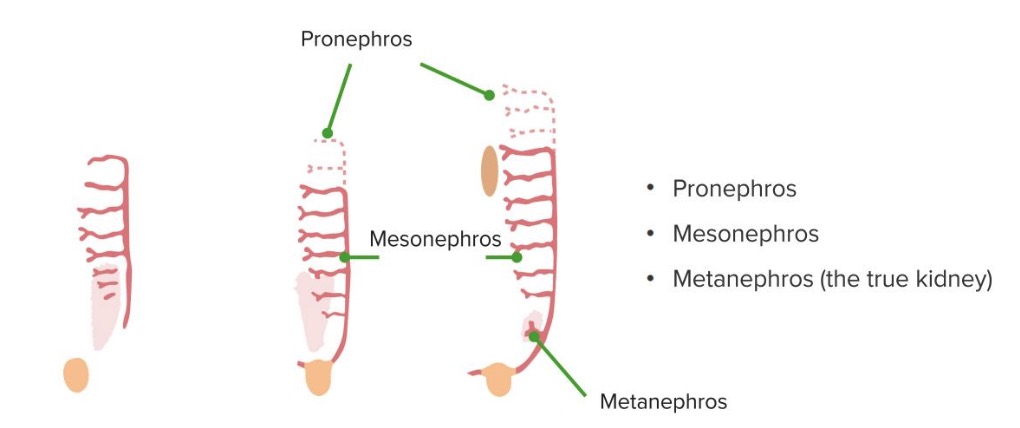
  • Pronefros:
    • Estructura renal vestigial no funcional encontrada en EN Erythema nodosum is an immune-mediated panniculitis (inflammation of the subcutaneous fat) caused by a type IV (delayed-type) hypersensitivity reaction. It commonly manifests in young women as tender, erythematous nodules on the shins. Erythema Nodosum la zona cervical
    • Aparece en EN Erythema nodosum is an immune-mediated panniculitis (inflammation of the subcutaneous fat) caused by a type IV (delayed-type) hypersensitivity reaction. It commonly manifests in young women as tender, erythematous nodules on the shins. Erythema Nodosum la 3ra semana.
    • Desaparece a la 4ta semana.
  • Mesonefros:
    • 4ta semana: Se forman unidades excretoras, compuestas por capilares, la cápsula de Bowman y el túbulo colector conectado a los LOS Neisseria conductos de Wolff.
    • Deriva del mesodermo intermedio de la zona superior torácica a la lumbar.
    • Funcional durante algún tiempo in utero
    • La mayor parte desaparece; una pequeña porción permanece como parte del sistema renal final:
      • Se fusiona con la cloaca Cloaca A dilated cavity extended caudally from the hindgut. In adult birds, reptiles, amphibians, and many fishes but few mammals, cloaca is a common chamber into which the digestive, urinary and reproductive tracts discharge their contents. In most mammals, cloaca gives rise to large intestine; urinary bladder; and genitalia. Development of the Abdominal Organs para crear la vejiga.
      • En EN Erythema nodosum is an immune-mediated panniculitis (inflammation of the subcutaneous fat) caused by a type IV (delayed-type) hypersensitivity reaction. It commonly manifests in young women as tender, erythematous nodules on the shins. Erythema Nodosum los LOS Neisseria niños, da lugar a una porción del aparato genital.
  • Metanefros:
    • 5ta semana: Se desarrolla caudalmente en EN Erythema nodosum is an immune-mediated panniculitis (inflammation of the subcutaneous fat) caused by a type IV (delayed-type) hypersensitivity reaction. It commonly manifests in young women as tender, erythematous nodules on the shins. Erythema Nodosum relación con el mesonefros.
    • El parénquima renal se diferencia del mesodermo de forma similar al AL Amyloidosis mesonefros.
    • El sistema de conductos colectores:
      • Inicialmente aparece como un tallo y una yema (blastema) derivada del conducto mesonéfrico cerca de la cloaca Cloaca A dilated cavity extended caudally from the hindgut. In adult birds, reptiles, amphibians, and many fishes but few mammals, cloaca is a common chamber into which the digestive, urinary and reproductive tracts discharge their contents. In most mammals, cloaca gives rise to large intestine; urinary bladder; and genitalia. Development of the Abdominal Organs.
      • Posteriormente forma el uréter, la pelvis Pelvis The pelvis consists of the bony pelvic girdle, the muscular and ligamentous pelvic floor, and the pelvic cavity, which contains viscera, vessels, and multiple nerves and muscles. The pelvic girdle, composed of 2 “hip” bones and the sacrum, is a ring-like bony structure of the axial skeleton that links the vertebral column with the lower extremities. Pelvis: Anatomy renal y los LOS Neisseria cálices y se fusiona con el tejido metanéfrico, creando los LOS Neisseria túbulos colectores.
      • Las puntas de los LOS Neisseria túbulos colectores interactúan con el tejido metanéfrico → nefronas.
      • 20ma semana: Se ha HA Hemolytic anemia (HA) is the term given to a large group of anemias that are caused by the premature destruction/hemolysis of circulating red blood cells (RBCs). Hemolysis can occur within (intravascular hemolysis) or outside the blood vessels (extravascular hemolysis). Hemolytic Anemia formado todo el sistema colector.
      • 32da36ta semana: Todas las unidades nefronales se han formado, pero continúan madurando después del nacimiento.
  • Ascenso renal:
    • Causado por el crecimiento de las regiones lumbar y sacra
    • El suministro de sangre proviene de las arterias que salen de la aorta Aorta The main trunk of the systemic arteries. Mediastinum and Great Vessels: Anatomy.
    • A medida que surge el riñón, surgen nuevas arterias, mientras que las antiguas desaparecen.
    • 9na semana: El riñón izquierdo está a nivel de T11-L2. El riñón derecho está a nivel de T12-L2/3.
3 etapas del desarrollo del riñón

Las 3 fases del desarrollo del riñón

Imagen por Lecturio.

Trastornos del Parénquima Renal

Introducción

Trastornos embrionarios renales que afectan al AL Amyloidosis tamaño, la forma o la estructura del parénquima renal (disgenesia renal):
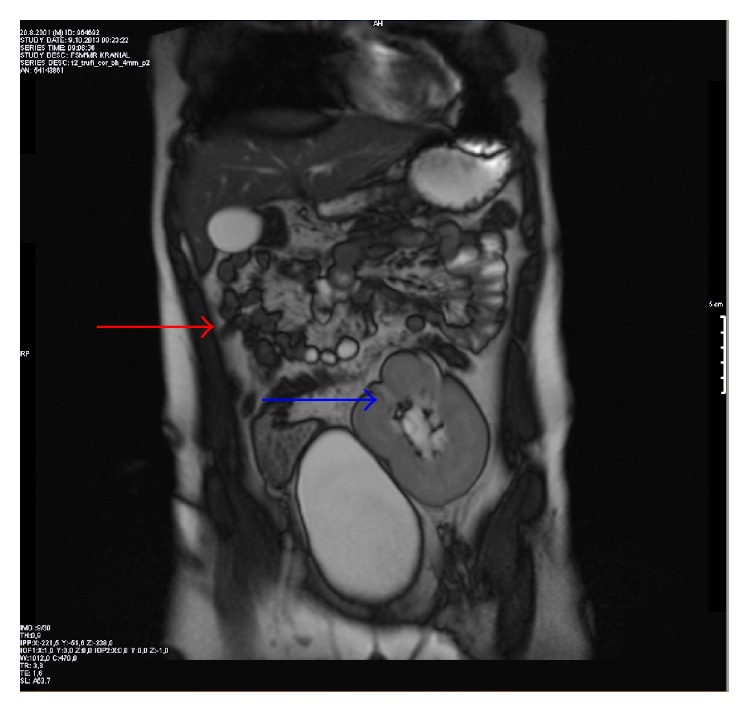
  • Agenesia renal: ausencia de tejido renal debido a una alteración durante el desarrollo renal embrionario
  • Hipoplasia renal: riñones pequeños con un número reducido de nefronas funcionales
  • Displasia renal: anomalías focales o difusas de la arquitectura de la nefrona; puede ser:
    • No quística (displasia renal simple)
    • Displasia quística: caracterizada por la formación de quistes
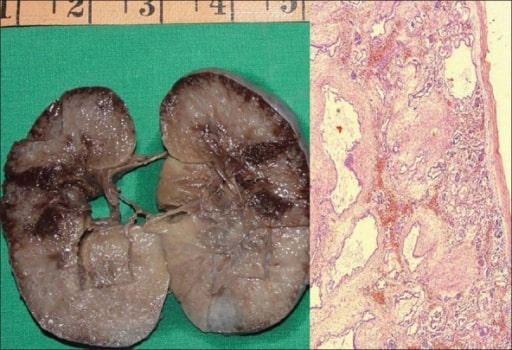
      • Riñones displásicos multiquísticos (MCDK, por sus siglas en EN Erythema nodosum is an immune-mediated panniculitis (inflammation of the subcutaneous fat) caused by a type IV (delayed-type) hypersensitivity reaction. It commonly manifests in young women as tender, erythematous nodules on the shins. Erythema Nodosum inglés): displasia quística que afecta a todo el riñón
      • Enfermedad poliquística renal autosómica recesiva ( ARPKD ARPKD Polycystic kidney disease (PKD) is an inherited genetic disorder leading to the development of numerous fluid-filled cysts in the kidneys. Autosomal recessive polycystic kidney disease is primarily characterized by cystic dilatations of the renal collecting ducts and intrahepatic bile duct dilatation with hepatic fibrosis. Autosomal Recessive Polycystic Kidney Disease (ARPKD), por sus siglas en EN Erythema nodosum is an immune-mediated panniculitis (inflammation of the subcutaneous fat) caused by a type IV (delayed-type) hypersensitivity reaction. It commonly manifests in young women as tender, erythematous nodules on the shins. Erythema Nodosum inglés)

Agenesia renal

  • Fisiopatología:
    • Interrupción del desarrollo embriológico de la yema ureteral, o blastema metanéfrico
    • La agenesia renal verdadera incluye la ausencia del uréter ipsilateral y del hemitrigono vesical.
    • La agenesia renal bilateral es incompatible con la vida.
  • Epidemiología:
    • Incidencia de la agenesia renal unilateral : ~1 de cada 500–1000 nacimientos
    • en EN Erythema nodosum is an immune-mediated panniculitis (inflammation of the subcutaneous fat) caused by a type IV (delayed-type) hypersensitivity reaction. It commonly manifests in young women as tender, erythematous nodules on the shins. Erythema Nodosum lactantes con una sola arteria umbilical
    • Niños > niñas
    • Las asociaciones más comunes son:
      • Niños: ausencia de conductos deferentes ipsilaterales
      • Niñas: anomalías del conducto mülleriano
  • Etiología:
    • Predisposición genética (e.g., mutaciones en EN Erythema nodosum is an immune-mediated panniculitis (inflammation of the subcutaneous fat) caused by a type IV (delayed-type) hypersensitivity reaction. It commonly manifests in young women as tender, erythematous nodules on the shins. Erythema Nodosum los LOS Neisseria genes Genes A category of nucleic acid sequences that function as units of heredity and which code for the basic instructions for the development, reproduction, and maintenance of organisms. DNA Types and Structure responsables del desarrollo renal, RET y GDNF)
    • Asociación sindrómica:
    • Factores de riesgo materno asociados:
      • Diabetes Diabetes Diabetes mellitus (DM) is a metabolic disease characterized by hyperglycemia and dysfunction of the regulation of glucose metabolism by insulin. Type 1 DM is diagnosed mostly in children and young adults as the result of autoimmune destruction of β cells in the pancreas and the resulting lack of insulin. Type 2 DM has a significant association with obesity and is characterized by insulin resistance. Diabetes Mellitus materna
      • Obesidad materna
      • Edad materna muy joven
      • Tabaquismo materno
      • Consumo de etanol por parte de la madre durante el embarazo
      • Exposición a teratógenos (e.g., ácido retinoico, cocaína)
  • Presentación clínica:
    • Prenatal:
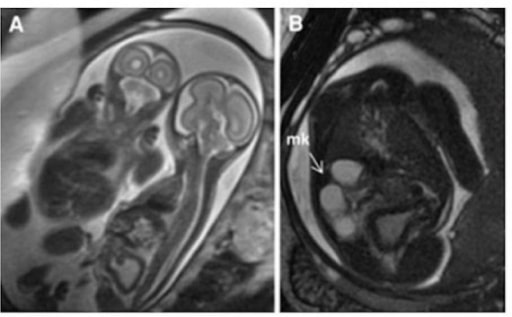
      • Los LOS Neisseria hallazgos de ultrasonido de control rutinario incluyen oligohidramnios y ausencia de vejiga y riñón.
      • Pruebas genéticas en EN Erythema nodosum is an immune-mediated panniculitis (inflammation of the subcutaneous fat) caused by a type IV (delayed-type) hypersensitivity reaction. It commonly manifests in young women as tender, erythematous nodules on the shins. Erythema Nodosum casos con un alto índice de sospecha prenatal
      • El riñón izquierdo suele estar ausente.
    • Posnatal:
      • A menudo se descubre durante la evaluación de otras anomalías.
      • Descubrimiento accidental en EN Erythema nodosum is an immune-mediated panniculitis (inflammation of the subcutaneous fat) caused by a type IV (delayed-type) hypersensitivity reaction. It commonly manifests in young women as tender, erythematous nodules on the shins. Erythema Nodosum el ultrasonido
      • Puede tener infecciones del tracto urinario (ITU) recurrentes o hipertensión
      • La hipoplasia pulmonar debida a la falta de producción de líquido amniótico puede ser un signo.
    • El síndrome de Potter:
      • Agenesia renal bilateral, hipoplasia pulmonar debido al AL Amyloidosis oligohidramnios
      • Anomalías faciales: ojos muy separados, pliegues epicánticos prominentes, nariz ancha y comprimida y orejas de implantación baja
      • Otras anomalías: pie equino varo, arqueo de piernas, hernia Hernia Protrusion of tissue, structure, or part of an organ through the bone, muscular tissue, or the membrane by which it is normally contained. Hernia may involve tissues such as the abdominal wall or the respiratory diaphragm. Hernias may be internal, external, congenital, or acquired. Abdominal Hernias diafragmática, anomalías oculares (e.g., cataratas, prolapso del cristalino), anomalías cardiovasculares (e.g., comunicación interventricular, conducto arterioso persistente, tetralogía de Fallot)
      • El síndrome de Potter también puede asociarse a displasia renal quística, uropatía obstructiva, ARPKD ARPKD Polycystic kidney disease (PKD) is an inherited genetic disorder leading to the development of numerous fluid-filled cysts in the kidneys. Autosomal recessive polycystic kidney disease is primarily characterized by cystic dilatations of the renal collecting ducts and intrahepatic bile duct dilatation with hepatic fibrosis. Autosomal Recessive Polycystic Kidney Disease (ARPKD), hipoplasia renal y displasia medular.
  • Tratamiento:
    • Los LOS Neisseria niños con un riñón solitario tienen un alto riesgo de padecer una enfermedad renal crónica (ERC):
      • Controlar la hipertrofia del riñón contralateral
      • Seguimiento a largo plazo de la hipertensión y la proteinuria Proteinuria The presence of proteins in the urine, an indicator of kidney diseases. Nephrotic Syndrome in Children
      • Pruebas de la función renal
    • Evitar los LOS Neisseria deportes de contacto es controvertido

Hipoplasia renal

  • Fisiopatología:
    • Riñones pequeños (<50% de lo esperado para la edad)
    • Menos nefronas y cálices de lo normal
    • Glomérulos y túbulos grandes (hipertrofia para compensar)
    • Con el tiempo, los LOS Neisseria pacientes desarrollan una enfermedad renal terminal (ERT).
  • Epidemiología:
    • Incidencia de 1 de cada 400 nacidos vivos
  • Etiología:
    • Anomalías vasculares:
      • La hipoperfusión renal in utero provoca hipoplasia.
    • Trastornos genéticos:
      • Más de 200 síndromes asociados
      • Mutación en EN Erythema nodosum is an immune-mediated panniculitis (inflammation of the subcutaneous fat) caused by a type IV (delayed-type) hypersensitivity reaction. It commonly manifests in young women as tender, erythematous nodules on the shins. Erythema Nodosum genes Genes A category of nucleic acid sequences that function as units of heredity and which code for the basic instructions for the development, reproduction, and maintenance of organisms. DNA Types and Structure reguladores clave en EN Erythema nodosum is an immune-mediated panniculitis (inflammation of the subcutaneous fat) caused by a type IV (delayed-type) hypersensitivity reaction. It commonly manifests in young women as tender, erythematous nodules on the shins. Erythema Nodosum el desarrollo renal
  • Presentación clínica:
    • Unilateral:
      • Diagnosticada incidentalmente durante la evaluación de hipertensión o problemas urinarios
      • Los LOS Neisseria neonatos pueden presentar un retraso en EN Erythema nodosum is an immune-mediated panniculitis (inflammation of the subcutaneous fat) caused by a type IV (delayed-type) hypersensitivity reaction. It commonly manifests in young women as tender, erythematous nodules on the shins. Erythema Nodosum el desarrollo.
    • Bilateral:
      • Antecedentes de poliuria, polidipsia y/o anomalías urinarias
      • Desarrollo de la ERC en EN Erythema nodosum is an immune-mediated panniculitis (inflammation of the subcutaneous fat) caused by a type IV (delayed-type) hypersensitivity reaction. It commonly manifests in young women as tender, erythematous nodules on the shins. Erythema Nodosum la primera década de vida
  • Diagnóstico:
    • Prenatales:
      • Encontrada a través de un ultrasonido de rutina a los LOS Neisseria 3 meses de gestación
    • Posnatal:
      • Ultrasonido renal de los LOS Neisseria casos sospechosos
      • Puede confirmarse mediante histología, pero rara vez se realiza.
  • Tratamiento:
    • Unilateral:
      • Seguimiento periódico mediante ultrasonido y análisis de orina para controlar la hipertrofia compensatoria del riñón no afectado
    • Bilateral:
      • Puede requerir hormona de crecimiento humano (rHGH) para permitir un crecimiento adecuado.
      • Inhibidores de la enzima convertidora de angiotensina (IECA) para frenar la progresión hacia la ERT
      • Trasplante renal para pacientes con enfermedad avanzada

Displasia renal

  • Epidemiología:
    • 2–4 por cada 1000 nacimientos
    • Proporción entre hombres y mujeres:
      • Bilateral 1,3:1
      • Unilateral 2:1
  • Clasificación:
    • Displasia renal simple
    • Displasia renal quística
  • Etiología:
    • Principalmente debida a la incorrecta diferenciación del tejido renal causada por:
      • Las yemas ureterales embrionarias surgen en EN Erythema nodosum is an immune-mediated panniculitis (inflammation of the subcutaneous fat) caused by a type IV (delayed-type) hypersensitivity reaction. It commonly manifests in young women as tender, erythematous nodules on the shins. Erythema Nodosum ubicaciones incorrectas, lo que conduce a una diferenciación incorrecta del tejido renal.
      • Uropatía obstructiva en EN Erythema nodosum is an immune-mediated panniculitis (inflammation of the subcutaneous fat) caused by a type IV (delayed-type) hypersensitivity reaction. It commonly manifests in young women as tender, erythematous nodules on the shins. Erythema Nodosum la gestación
  • Presentación clínica:
    • Unilateral:
      • Diagnosticada incidentalmente durante la evaluación de otro dismorfismo
    • Bilateral:
      • Se encuentra con insuficiencia renal al AL Amyloidosis nacer o desarrollará insuficiencia renal poco después
      • Las anomalías urinarias asociadas dan lugar a infecciones urinarias frecuentes, hematuria Hematuria Presence of blood in the urine. Renal Cell Carcinoma y dolor Dolor Inflammation abdominal.
  • Diagnóstico:
    • Prenatales:
      • Encontrada a través de un ultrasonido de rutina a los LOS Neisseria 3 meses de gestación
    • Posnatal:
  • Tratamiento:
    • En EN Erythema nodosum is an immune-mediated panniculitis (inflammation of the subcutaneous fat) caused by a type IV (delayed-type) hypersensitivity reaction. It commonly manifests in young women as tender, erythematous nodules on the shins. Erythema Nodosum riesgo de ERC:
      • La presión arterial debe ser controlada de cerca.
      • Análisis de orina anuales
      • Pruebas de función renal en EN Erythema nodosum is an immune-mediated panniculitis (inflammation of the subcutaneous fat) caused by a type IV (delayed-type) hypersensitivity reaction. It commonly manifests in young women as tender, erythematous nodules on the shins. Erythema Nodosum pacientes con proteinuria Proteinuria The presence of proteins in the urine, an indicator of kidney diseases. Nephrotic Syndrome in Children/hipertensión
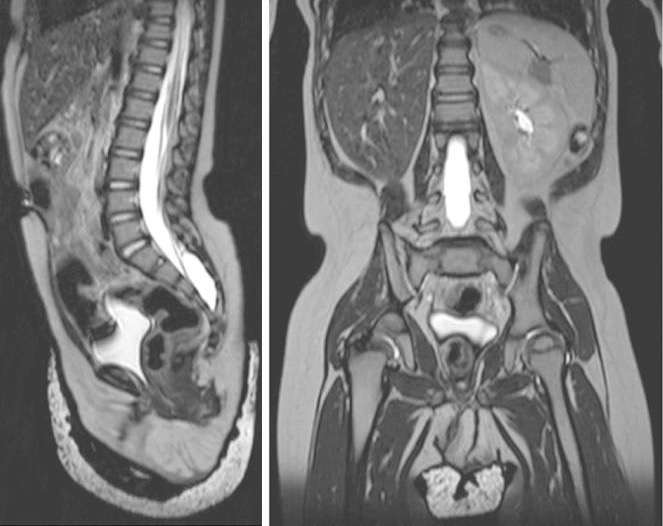
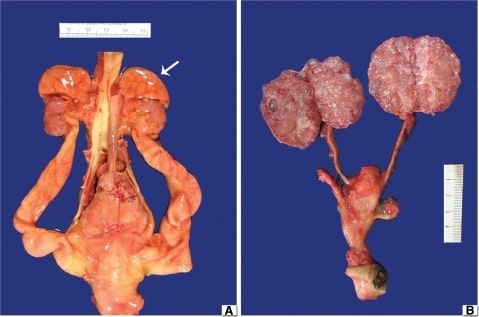
  • Enfermedad renal multiquística (MCDK)
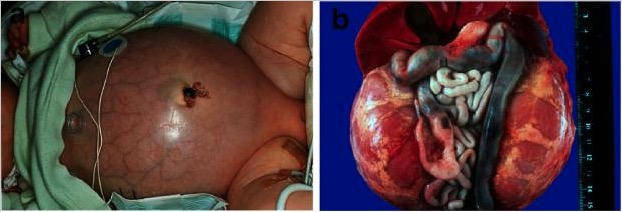
    • La causa más común de una masa abdominal en EN Erythema nodosum is an immune-mediated panniculitis (inflammation of the subcutaneous fat) caused by a type IV (delayed-type) hypersensitivity reaction. It commonly manifests in young women as tender, erythematous nodules on the shins. Erythema Nodosum los LOS Neisseria recién nacidos
    • Suele ser unilateral (la poliquistosis renal suele ser bilateral).
    • La bilateralidad es incompatible con la vida.
    • Puede diagnosticarse durante un ultrasonido prenatal.
    • Puede ser asintomática y diagnosticada incidentalmente en EN Erythema nodosum is an immune-mediated panniculitis (inflammation of the subcutaneous fat) caused by a type IV (delayed-type) hypersensitivity reaction. It commonly manifests in young women as tender, erythematous nodules on the shins. Erythema Nodosum las imágenes.
    • La regresión completa del quiste se produce a los LOS Neisseria 7 años en EN Erythema nodosum is an immune-mediated panniculitis (inflammation of the subcutaneous fat) caused by a type IV (delayed-type) hypersensitivity reaction. It commonly manifests in young women as tender, erythematous nodules on the shins. Erythema Nodosum la mitad de los LOS Neisseria casos.
    • Se recomienda un seguimiento anual con ultrasonido y control de la presión arterial.

Enfermedad renal poliquística autosómica recesiva ( ARPKD ARPKD Polycystic kidney disease (PKD) is an inherited genetic disorder leading to the development of numerous fluid-filled cysts in the kidneys. Autosomal recessive polycystic kidney disease is primarily characterized by cystic dilatations of the renal collecting ducts and intrahepatic bile duct dilatation with hepatic fibrosis. Autosomal Recessive Polycystic Kidney Disease (ARPKD))

  • Epidemiología:
    • La incidencia varía entre 1:10 000 y 1:40 000 nacidos vivos.
  • Etiología:
  • Presentación clínica:
    • Periodo neonatal o primera infancia:
      • Típicamente se presenta con distensión abdominal con masas bilaterales en EN Erythema nodosum is an immune-mediated panniculitis (inflammation of the subcutaneous fat) caused by a type IV (delayed-type) hypersensitivity reaction. It commonly manifests in young women as tender, erythematous nodules on the shins. Erythema Nodosum el flanco
      • Otras asociaciones: hipoplasia pulmonar y dificultad respiratoria, neumotórax espontáneo, síndrome de Potter, hipertensión, deterioro de la función renal, retraso en EN Erythema nodosum is an immune-mediated panniculitis (inflammation of the subcutaneous fat) caused by a type IV (delayed-type) hypersensitivity reaction. It commonly manifests in young women as tender, erythematous nodules on the shins. Erythema Nodosum el desarrollo, poliuria, polidipsia, enfermedad renal terminal.
    • Lactantes y niños:
      • Típicamente tiene una presentación mixta renal-hepática.
      • A menudo se presentan con hepatoesplenomegalia, signos de hipertensión portal (venas periumbilicales prominentes, trombocitopenia y várices gastroesofágicas), colangitis ascendente, quistes de colédoco.
      • Las manifestaciones renales pueden estar ausentes o ser similares a las del periodo neonatal.
  • Diagnóstico:
    • Ultrasonido prenatal:
      • Oligohidramnios
      • Ausencia de orina en EN Erythema nodosum is an immune-mediated panniculitis (inflammation of the subcutaneous fat) caused by a type IV (delayed-type) hypersensitivity reaction. It commonly manifests in young women as tender, erythematous nodules on the shins. Erythema Nodosum la vejiga
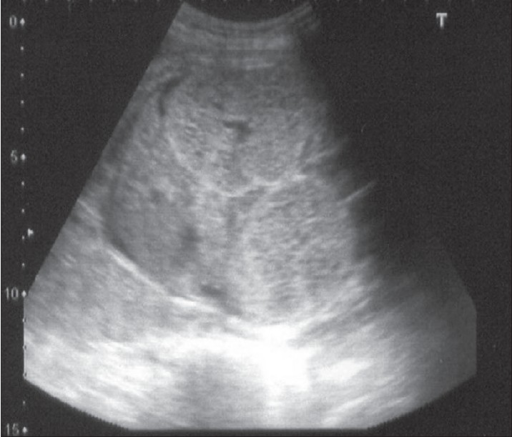
    • Ultrasonido posnatal:
      • Riñones agrandados bilateralmente, uniformemente hiperecogénicos, con escasa diferenciación corticomedular y múltiples quistes
      • Hepatoesplenomegalia con hígado hiperecoico y dilatación de los LOS Neisseria conductos biliares principales intrahepáticos y periféricos
    • Las pruebas genéticas moleculares confirman el diagnóstico.
  • Tratamiento:
    • Soporte ventilatorio agresivo
    • Tratamiento de apoyo con el equipo multidisciplinar:
      • Medicamentos antihipertensivos (IECA)
      • Diuréticos para el edema Edema Edema is a condition in which excess serous fluid accumulates in the body cavity or interstitial space of connective tissues. Edema is a symptom observed in several medical conditions. It can be categorized into 2 types, namely, peripheral (in the extremities) and internal (in an organ or body cavity). Edema
      • Manejo de la osteopenia Osteopenia Osteoporosis
      • Nefrectomía unilateral/bilateral paliativa
      • Diálisis
      • Trasplante renal y/o hepático
    • Pruebas genéticas de preimplantación con fecundación in vitro en EN Erythema nodosum is an immune-mediated panniculitis (inflammation of the subcutaneous fat) caused by a type IV (delayed-type) hypersensitivity reaction. It commonly manifests in young women as tender, erythematous nodules on the shins. Erythema Nodosum familias con antecedentes de ARPKD ARPKD Polycystic kidney disease (PKD) is an inherited genetic disorder leading to the development of numerous fluid-filled cysts in the kidneys. Autosomal recessive polycystic kidney disease is primarily characterized by cystic dilatations of the renal collecting ducts and intrahepatic bile duct dilatation with hepatic fibrosis. Autosomal Recessive Polycystic Kidney Disease (ARPKD)

Trastornos de la Posición Renal

Ectopia renal y no rotación

  • Definición:
    • Ectopia renal: ascenso anormal de los LOS Neisseria riñones durante el desarrollo embrionario
    • No rotación renal: rotación anormal de los LOS Neisseria riñones
  • Epidemiología:
    • Incidencia de la ectopia renal: 1 de cada 900 nacimientos
    • Incidencia de la no rotación renal: 1 de cada 2000 autopsias
  • Presentación clínica:
    • Generalmente asintomática
    • Puede tener una mayor incidencia de ITU, obstrucción urinaria o cálculos renales.
    • El riñón ectópico puede encontrarse en EN Erythema nodosum is an immune-mediated panniculitis (inflammation of the subcutaneous fat) caused by a type IV (delayed-type) hypersensitivity reaction. It commonly manifests in young women as tender, erythematous nodules on the shins. Erythema Nodosum la pelvis Pelvis The pelvis consists of the bony pelvic girdle, the muscular and ligamentous pelvic floor, and the pelvic cavity, which contains viscera, vessels, and multiple nerves and muscles. The pelvic girdle, composed of 2 “hip” bones and the sacrum, is a ring-like bony structure of the axial skeleton that links the vertebral column with the lower extremities. Pelvis: Anatomy, el tórax o el lado contralateral.
    • El suministro de sangre es variable Variable Variables represent information about something that can change. The design of the measurement scales, or of the methods for obtaining information, will determine the data gathered and the characteristics of that data. As a result, a variable can be qualitative or quantitative, and may be further classified into subgroups. Types of Variables.
  • Diagnóstico:
    • Ultrasonido renal prenatal o posnatal
    • El cistouretrograma miccional (VCUG, por sus siglas en EN Erythema nodosum is an immune-mediated panniculitis (inflammation of the subcutaneous fat) caused by a type IV (delayed-type) hypersensitivity reaction. It commonly manifests in young women as tender, erythematous nodules on the shins. Erythema Nodosum inglés) y la creatinina sérica seriada pueden ser necesarios si hay evidencia de lesión renal.
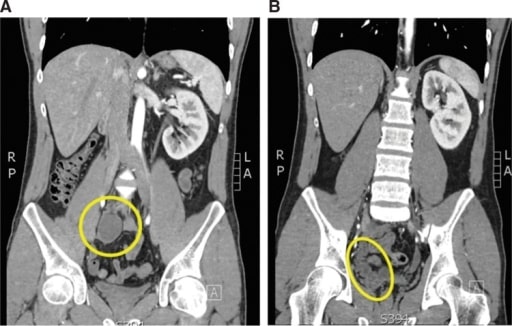
Riñón derecho atrófico y ectópico

Hombre de 24 años con epididimitis recurrente y una inserción ureteral en la vesícula seminal. A: Corte coronal de la tomografía computarizada (TC) que muestra un riñón pélvico derecho atrófico (círculo amarillo). B: En este corte coronal de la TC se puede ver el complejo del uréter y la vesícula seminal (elipse amarilla).

Imagen: “Atrophic and ectopic right kidney” por el U.S. National Library of Medicine. Licencia: CC BY 4.0.
Fusión renal

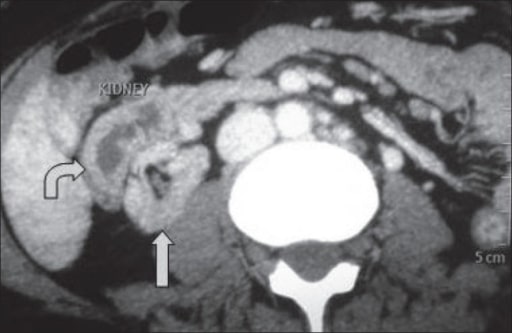
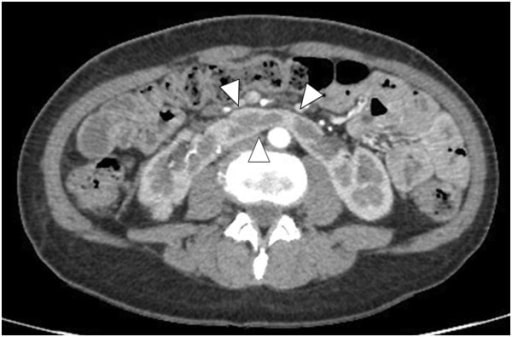
  • Definición: fusión de los LOS Neisseria polos inferiores del riñón (riñón en EN Erythema nodosum is an immune-mediated panniculitis (inflammation of the subcutaneous fat) caused by a type IV (delayed-type) hypersensitivity reaction. It commonly manifests in young women as tender, erythematous nodules on the shins. Erythema Nodosum herradura)
  • Epidemiología:
    • Incidencia de 1 en EN Erythema nodosum is an immune-mediated panniculitis (inflammation of the subcutaneous fat) caused by a type IV (delayed-type) hypersensitivity reaction. It commonly manifests in young women as tender, erythematous nodules on the shins. Erythema Nodosum 400–500 nacimientos
    • Asociado al AL Amyloidosis síndrome de Turner
    • El tumor Tumor Inflammation de Wilms, los LOS Neisseria cálculos renales, la hidronefrosis y la MCDK son más frecuentes en EN Erythema nodosum is an immune-mediated panniculitis (inflammation of the subcutaneous fat) caused by a type IV (delayed-type) hypersensitivity reaction. It commonly manifests in young women as tender, erythematous nodules on the shins. Erythema Nodosum los LOS Neisseria riñones en EN Erythema nodosum is an immune-mediated panniculitis (inflammation of the subcutaneous fat) caused by a type IV (delayed-type) hypersensitivity reaction. It commonly manifests in young women as tender, erythematous nodules on the shins. Erythema Nodosum herradura.
  • Presentación clínica y manejo:
    • La hidronefrosis es un hallazgo común (80% de los LOS Neisseria casos).
    • Muchos pacientes son asintomáticos y no requieren tratamiento.

Referencias

  1. Kliegman RB, ST Geme JW, Blum MJ, Shah SS, Tasker RC, Wilson KM, & Behrman RE. (2016). Nelson’s Textbook of Pediatrics (Edition 20). Philadelphia, PA: Elsevier.
  2. Sadler, T. W., & Langman, J. (2012). Langman’s medical embryology (12th ed.). Philadelphia: Wolters Kluwer Health/Lippincott Williams & Wilkins.
  3. Bhandari, J., Thada, P. K., & Sergent, S. R. (2023). Potter syndrome. In StatPearls. StatPearls Publishing. Retrieved August 5, 2025, from https://www.ncbi.nlm.nih.gov/books/NBK560858/

¡Crea tu cuenta gratis o inicia una sesión para seguir leyendo!

Regístrate ahora y obtén acceso gratuito a Lecturio con páginas de concepto, videos médicos y cuestionarios para tu educación médica.

User Reviews

Que tengas una sesión de estudio alegre y navideña 🎁 Ahorra 50% en todos los planes >>

Details