
Domina Conceptos Médicos

Estudia para la escuela de medicina y tus examenes con Lecturio.

Agammaglobulinemia Ligada al Cromosoma X

La agammaglobulinemia ligada al AL Amyloidosis cromosoma X, también conocida como agammaglobulinemia de Bruton o enfermedad de Bruton, es un trastorno genético recesivo poco común que se caracteriza por el desarrollo inadecuado de las células B, lo que lleva a una falta de células B maduras capaces de responder a la estimulación por respuestas inmunitarias mediadas por células o ciertas células presentadoras de antígenos. Es más probable encontrar agammaglobulinemia ligada al AL Amyloidosis cromosoma X en EN Erythema nodosum is an immune-mediated panniculitis (inflammation of the subcutaneous fat) caused by a type IV (delayed-type) hypersensitivity reaction. It commonly manifests in young women as tender, erythematous nodules on the shins. Erythema Nodosum hombres que en EN Erythema nodosum is an immune-mediated panniculitis (inflammation of the subcutaneous fat) caused by a type IV (delayed-type) hypersensitivity reaction. It commonly manifests in young women as tender, erythematous nodules on the shins. Erythema Nodosum mujeres y se debe a mutaciones en EN Erythema nodosum is an immune-mediated panniculitis (inflammation of the subcutaneous fat) caused by a type IV (delayed-type) hypersensitivity reaction. It commonly manifests in young women as tender, erythematous nodules on the shins. Erythema Nodosum el gen de la tirosina quinasa de Bruton en EN Erythema nodosum is an immune-mediated panniculitis (inflammation of the subcutaneous fat) caused by a type IV (delayed-type) hypersensitivity reaction. It commonly manifests in young women as tender, erythematous nodules on the shins. Erythema Nodosum el cromosoma X. El resultado de esta mutación es una falta total o casi completa de todos los LOS Neisseria anticuerpos. La presentación incluye infecciones bacterianas recurrentes después de los LOS Neisseria primeros meses de vida. El tratamiento consiste en EN Erythema nodosum is an immune-mediated panniculitis (inflammation of the subcutaneous fat) caused by a type IV (delayed-type) hypersensitivity reaction. It commonly manifests in young women as tender, erythematous nodules on the shins. Erythema Nodosum inmunoglobulinas intravenosas y uso profiláctico de antibióticos.

Last updated: Feb 19, 2025
Editorial responsibility: Stanley Oiseth, Lindsay Jones, Evelin Maza

Epidemiología y Fisiopatología

Epidemiología

  • 1:200 000 nacidos vivos
  • 1:100 000 varones recién nacidos
  • Ocurre con más frecuencia en EN Erythema nodosum is an immune-mediated panniculitis (inflammation of the subcutaneous fat) caused by a type IV (delayed-type) hypersensitivity reaction. It commonly manifests in young women as tender, erythematous nodules on the shins. Erythema Nodosum niños debido al AL Amyloidosis patrón de herencia recesivo ligado al AL Amyloidosis cromosoma X
  • Sin predisposición étnica

Etiología

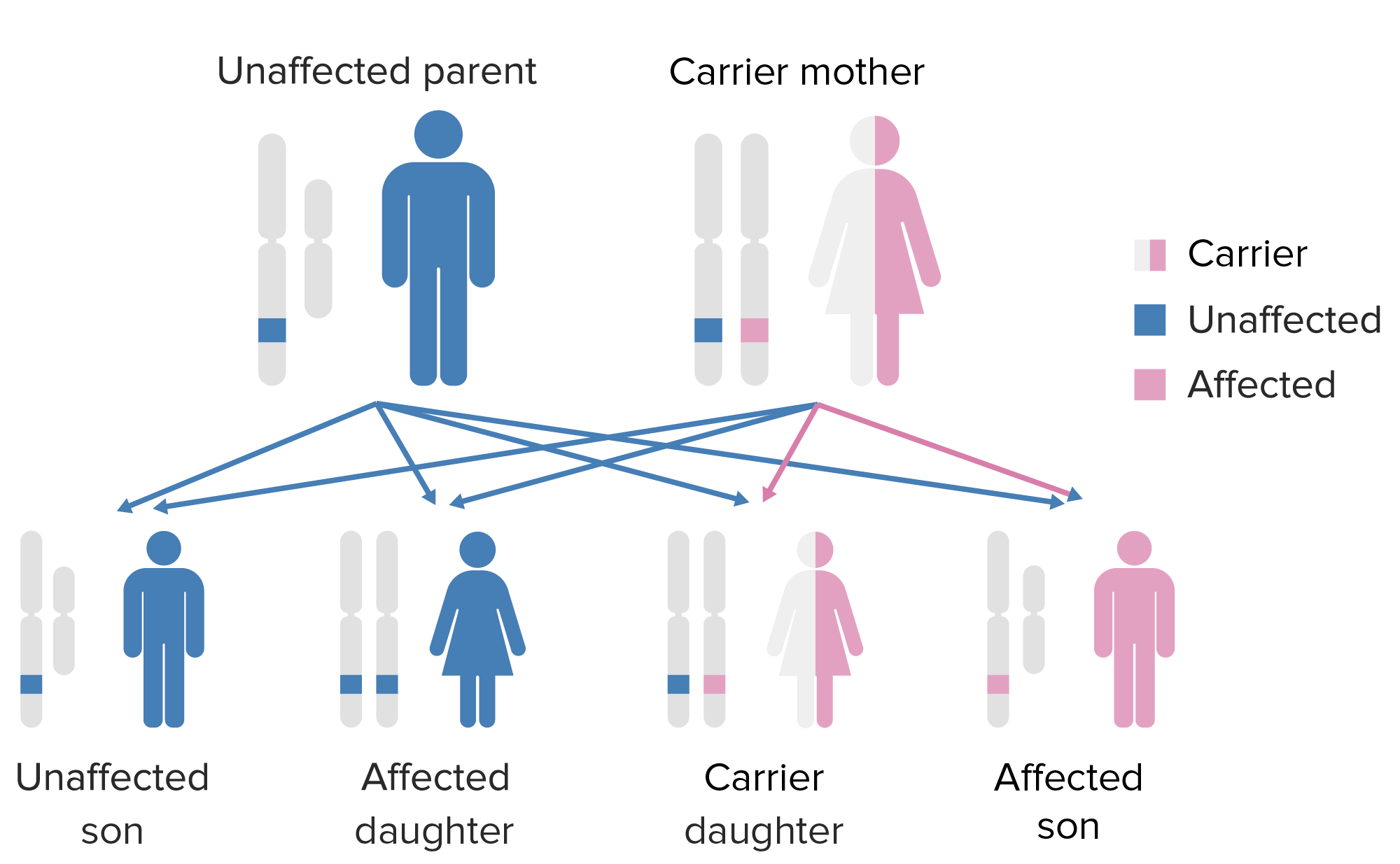
  • Es el trastorno recesivo ligado al AL Amyloidosis cromosoma X más frecuente en EN Erythema nodosum is an immune-mediated panniculitis (inflammation of the subcutaneous fat) caused by a type IV (delayed-type) hypersensitivity reaction. It commonly manifests in young women as tender, erythematous nodules on the shins. Erythema Nodosum los LOS Neisseria hombres; las mujeres suelen ser portadoras asintomáticas:
    • Los LOS Neisseria hombres tienen un cariotipo XY y solo poseen 1 cromosoma X
    • Las mujeres necesitarían 2 cromosomas X afectados para desarrollar la enfermedad.
  • Causado por una mutación en EN Erythema nodosum is an immune-mediated panniculitis (inflammation of the subcutaneous fat) caused by a type IV (delayed-type) hypersensitivity reaction. It commonly manifests in young women as tender, erythematous nodules on the shins. Erythema Nodosum el gen de la tirosina quinasa de Bruton (Btk) (esta mutación inhibe la maduración de las células B en EN Erythema nodosum is an immune-mediated panniculitis (inflammation of the subcutaneous fat) caused by a type IV (delayed-type) hypersensitivity reaction. It commonly manifests in young women as tender, erythematous nodules on the shins. Erythema Nodosum células pre-B)
  • Entre el 30%50% de los LOS Neisseria casos se deben a la herencia genética familiar.
  • 50%70% de los LOS Neisseria casos se deben a mutaciones espontáneas.
The pattern of inheritance of X-linked agammaglobulinemia

El patrón de herencia de la agammaglobulinemia ligada al cromosoma X:
Tener en cuenta que la madre debe aportar el gen X defectuoso al hijo varón para que éste pueda expresar este fenotipo.
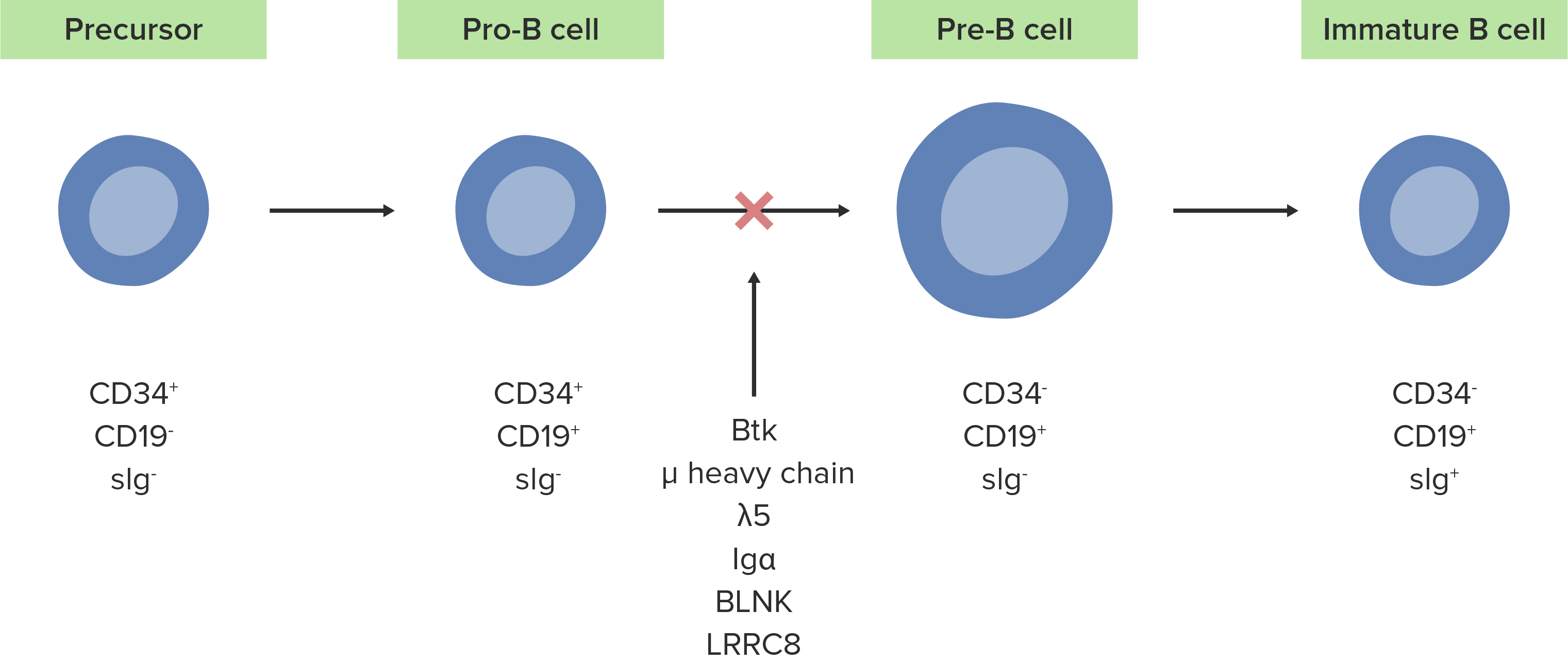
Imagen por Lecturio.

Fisiopatología

  • Las mutaciones en EN Erythema nodosum is an immune-mediated panniculitis (inflammation of the subcutaneous fat) caused by a type IV (delayed-type) hypersensitivity reaction. It commonly manifests in young women as tender, erythematous nodules on the shins. Erythema Nodosum el gen Btk impiden la maduración normal de las células B de pro-B a linfocitos pre-B.
  • No se forman células B maduras y no se pueden producir cadenas ligeras de inmunoglobulina, aunque se pueden encontrar cadenas pesadas libres en EN Erythema nodosum is an immune-mediated panniculitis (inflammation of the subcutaneous fat) caused by a type IV (delayed-type) hypersensitivity reaction. It commonly manifests in young women as tender, erythematous nodules on the shins. Erythema Nodosum el citoplasma.
  • Da como resultado una ausencia casi completa de inmunogammaglobulinas
  • La respuesta de la inmunidad humoral no es funcional (con inmunidad mediada por células T normal).
  • Los LOS Neisseria pacientes son propensos a desarrollar infecciones graves e incluso mortales durante la primera infancia, especialmente por bacterias encapsuladas.
Agammaglobulinemia ligada al cromosoma X

La ausencia o defecto de la enzima Btk inhibe el desarrollo normal de células pro-B en células pre-B.

Imagen por Lecturio.

Presentación Clínica

  • Los LOS Neisseria niños permanecen asintomáticos hasta los LOS Neisseria 69 meses de edad cuando cae la protección inmunitaria materna ( IgG IgG The major immunoglobulin isotype class in normal human serum. There are several isotype subclasses of igg, for example, igg1, igg2a, and igg2b. Hypersensitivity Pneumonitis) previamente suministrada a través de la placenta Placenta A highly vascularized mammalian fetal-maternal organ and major site of transport of oxygen, nutrients, and fetal waste products. It includes a fetal portion (chorionic villi) derived from trophoblasts and a maternal portion (decidua) derived from the uterine endometrium. The placenta produces an array of steroid, protein and peptide hormones (placental hormones). Placenta, Umbilical Cord, and Amniotic Cavity.
  • Se presenta como infecciones recurrentes como:
    • Neumonía
    • Otitis media
    • Celulitis
    • Conjuntivitis
    • Faringitis
    • Bronquitis
    • Sinusitis Sinusitis Sinusitis refers to inflammation of the mucosal lining of the paranasal sinuses. The condition usually occurs concurrently with inflammation of the nasal mucosa (rhinitis), a condition known as rhinosinusitis. Acute sinusitis is due to an upper respiratory infection caused by a viral, bacterial, or fungal agent. Sinusitis
  • Los LOS Neisseria pacientes tienen un riesgo especialmente mayor de infecciones recurrentes por:
    • Bacterias encapsuladas:
      • Streptococcus Streptococcus Streptococcus is one of the two medically important genera of gram-positive cocci, the other being Staphylococcus. Streptococci are identified as different species on blood agar on the basis of their hemolytic pattern and sensitivity to optochin and bacitracin. There are many pathogenic species of streptococci, including S. pyogenes, S. agalactiae, S. pneumoniae, and the viridans streptococci. Streptococcus pneumoniae
      • Haemophilus influenzae Haemophilus Influenzae A species of Haemophilus found on the mucous membranes of humans and a variety of animals. The species is further divided into biotypes I through viii. Haemophilus
      • Mycoplasma pneumoniae Mycoplasma pneumoniae Short filamentous organism of the genus mycoplasma, which binds firmly to the cells of the respiratory epithelium. It is one of the etiologic agents of non-viral primary atypical pneumonia in man. Mycoplasma
    • Virus Virus Viruses are infectious, obligate intracellular parasites composed of a nucleic acid core surrounded by a protein capsid. Viruses can be either naked (non-enveloped) or enveloped. The classification of viruses is complex and based on many factors, including type and structure of the nucleoid and capsid, the presence of an envelope, the replication cycle, and the host range. Virology, como:
      • Virus Virus Viruses are infectious, obligate intracellular parasites composed of a nucleic acid core surrounded by a protein capsid. Viruses can be either naked (non-enveloped) or enveloped. The classification of viruses is complex and based on many factors, including type and structure of the nucleoid and capsid, the presence of an envelope, the replication cycle, and the host range. Virology de la hepatitis
      • Enterovirus Enterovirus A genus of the family picornaviridae whose members preferentially inhabit the intestinal tract of a variety of hosts. The genus contains many species. Newly described members of human enteroviruses are assigned continuous numbers with the species designated ‘human enterovirus’. Coxsackievirus
    • Infecciones parasitarias, como Giardia Giardia A genus of flagellate intestinal eukaryotes parasitic in various vertebrates, including humans. Characteristics include the presence of four pairs of flagella arising from a complicated system of axonemes and cysts that are ellipsoidal to ovoidal in shape. Nitroimidazoles lamblia
  • El examen muestra hipoplasia linfoide o ganglios linfáticos rudimentarios, amígdalas, placas de Peyer y apéndice.

Diagnóstico y Tratamiento

Diagnóstico

  • La sospecha se basa en EN Erythema nodosum is an immune-mediated panniculitis (inflammation of the subcutaneous fat) caused by a type IV (delayed-type) hypersensitivity reaction. It commonly manifests in young women as tender, erythematous nodules on the shins. Erythema Nodosum antecedentes de infecciones recurrentes durante la infancia, principalmente en EN Erythema nodosum is an immune-mediated panniculitis (inflammation of the subcutaneous fat) caused by a type IV (delayed-type) hypersensitivity reaction. It commonly manifests in young women as tender, erythematous nodules on the shins. Erythema Nodosum el tracto respiratorio.
  • La citometría de flujo muestra:
    • Falta completa o reducción significativa de células B circulantes determinada por los LOS Neisseria marcadores de células B CD19 y CD20
    • Ausencia de células plasmáticas en EN Erythema nodosum is an immune-mediated panniculitis (inflammation of the subcutaneous fat) caused by a type IV (delayed-type) hypersensitivity reaction. It commonly manifests in young women as tender, erythematous nodules on the shins. Erythema Nodosum todo el cuerpo.
    • Niveles bajos de todas las clases de anticuerpos, incluidas IgG IgG The major immunoglobulin isotype class in normal human serum. There are several isotype subclasses of igg, for example, igg1, igg2a, and igg2b. Hypersensitivity Pneumonitis, IgA IgA Represents 15-20% of the human serum immunoglobulins, mostly as the 4-chain polymer in humans or dimer in other mammals. Secretory iga is the main immunoglobulin in secretions. Immunoglobulins: Types and Functions, IgM IgM A class of immunoglobulin bearing mu chains (immunoglobulin mu-chains). Igm can fix complement. The name comes from its high molecular weight and originally being called a macroglobulin. Immunoglobulins: Types and Functions, IgE IgE An immunoglobulin associated with mast cells. Overexpression has been associated with allergic hypersensitivity. Immunoglobulins: Types and Functions e IgD IgD An immunoglobulin which accounts for less than 1% of plasma immunoglobulin. It is found on the membrane of many circulating B lymphocytes. Immunoglobulins: Types and Functions
    • Niveles normales a altos de células T
  • Las pruebas genéticas se utilizan para confirmar el diagnóstico e identificar la mutación específica de Btk.

Tratamiento

  • No existe cura, pero el tratamiento puede aumentar la esperanza de vida y la calidad de vida del paciente.
  • Consiste principalmente en EN Erythema nodosum is an immune-mediated panniculitis (inflammation of the subcutaneous fat) caused by a type IV (delayed-type) hypersensitivity reaction. It commonly manifests in young women as tender, erythematous nodules on the shins. Erythema Nodosum terapia de reemplazo de inmunoglobulina semanal o mensual de por vida
  • Se administran antibióticos profilácticos para prevenir infecciones.
  • Las vacunas vivas están contraindicadas (mayor riesgo de poliomielitis relacionada con la vacuna)

Diagnóstico Diferencial

Las siguientes condiciones son diagnósticos diferenciales de la agammaglobulinemia ligada al AL Amyloidosis cromosoma X

  • Agammaglobulinemia autosómica recesiva o dominante: una forma rara de enfermedad de tipo inmunodeficiencia primaria caracterizada por una ausencia completa o casi completa de inmunoglobulinas, que conduce a una disfunción inmune variable Variable Variables represent information about something that can change. The design of the measurement scales, or of the methods for obtaining information, will determine the data gathered and the characteristics of that data. As a result, a variable can be qualitative or quantitative, and may be further classified into subgroups. Types of Variables e infecciones bacterianas frecuentes/recurrentes. Se requieren pruebas genéticas moleculares para determinar el defecto genético causante.
  • Inmunodeficiencia variable Variable Variables represent information about something that can change. The design of the measurement scales, or of the methods for obtaining information, will determine the data gathered and the characteristics of that data. As a result, a variable can be qualitative or quantitative, and may be further classified into subgroups. Types of Variables común: un tipo de inmunodeficiencia primaria caracterizada por niveles séricos reducidos de inmunoglobulinas IgG IgG The major immunoglobulin isotype class in normal human serum. There are several isotype subclasses of igg, for example, igg1, igg2a, and igg2b. Hypersensitivity Pneumonitis, IgA IgA Represents 15-20% of the human serum immunoglobulins, mostly as the 4-chain polymer in humans or dimer in other mammals. Secretory iga is the main immunoglobulin in secretions. Immunoglobulins: Types and Functions e IgM IgM A class of immunoglobulin bearing mu chains (immunoglobulin mu-chains). Igm can fix complement. The name comes from its high molecular weight and originally being called a macroglobulin. Immunoglobulins: Types and Functions. Las causas subyacentes de la inmunodeficiencia variable Variable Variables represent information about something that can change. The design of the measurement scales, or of the methods for obtaining information, will determine the data gathered and the characteristics of that data. As a result, a variable can be qualitative or quantitative, and may be further classified into subgroups. Types of Variables común se desconocen en EN Erythema nodosum is an immune-mediated panniculitis (inflammation of the subcutaneous fat) caused by a type IV (delayed-type) hypersensitivity reaction. It commonly manifests in young women as tender, erythematous nodules on the shins. Erythema Nodosum gran medida. Los LOS Neisseria pacientes con esta afección son propensos a infecciones en EN Erythema nodosum is an immune-mediated panniculitis (inflammation of the subcutaneous fat) caused by a type IV (delayed-type) hypersensitivity reaction. It commonly manifests in young women as tender, erythematous nodules on the shins. Erythema Nodosum el tracto gastrointestinal y las vías respiratorias superiores e inferiores y tienen un mayor riesgo de desarrollar enfermedades autoinmunes, granulomatosas y neoplásicas.
  • Síndrome de hiper IgM IgM A class of immunoglobulin bearing mu chains (immunoglobulin mu-chains). Igm can fix complement. The name comes from its high molecular weight and originally being called a macroglobulin. Immunoglobulins: Types and Functions: trastorno causado por una mutación ligada al AL Amyloidosis cromosoma X en EN Erythema nodosum is an immune-mediated panniculitis (inflammation of the subcutaneous fat) caused by a type IV (delayed-type) hypersensitivity reaction. It commonly manifests in young women as tender, erythematous nodules on the shins. Erythema Nodosum el gen del ligando CD40 CD40 Members of the tumor necrosis factor receptor superfamily with specificity for CD40 ligand. They are found on mature B-lymphocytes, some epithelial cells; and lymphoid dendritic cells. Evidence suggests that CD40-dependent activation of B-cells is important for generation of memory B-cells within the germinal centers. Mutations in the CD40 antigen gene result in hyper-igm immunodeficiency syndrome, type 3. Signaling of the receptor occurs through its association with tnf receptor-associated factors. Hyper-IgM Syndrome que da como resultado una señalización anormal entre los LOS Neisseria linfocitos B y T. La presentación es leve y, a menudo, solo se presenta en EN Erythema nodosum is an immune-mediated panniculitis (inflammation of the subcutaneous fat) caused by a type IV (delayed-type) hypersensitivity reaction. It commonly manifests in young women as tender, erythematous nodules on the shins. Erythema Nodosum etapas posteriores de la vida como infecciones oportunistas y desregulación inmunitaria de eosinófilos IgE IgE An immunoglobulin associated with mast cells. Overexpression has been associated with allergic hypersensitivity. Immunoglobulins: Types and Functions, células B, células asesinas naturales y proliferación y activación de células T CD8+.
  • Inmunodeficiencia combinada grave: la forma más grave de inmunodeficiencia primaria, la inmunodeficiencia combinada grave es un trastorno genético que implica una respuesta de anticuerpos defectuosa debido a la participación directa de los LOS Neisseria linfocitos B o la activación inadecuada de los LOS Neisseria linfocitos B debido a células T colaboradoras no funcionales. Se presenta como infecciones oportunistas graves y recurrentes y se diagnostica mediante PCR PCR Polymerase chain reaction (PCR) is a technique that amplifies DNA fragments exponentially for analysis. The process is highly specific, allowing for the targeting of specific genomic sequences, even with minuscule sample amounts. The PCR cycles multiple times through 3 phases: denaturation of the template DNA, annealing of a specific primer to the individual DNA strands, and synthesis/elongation of new DNA molecules. Polymerase Chain Reaction (PCR) cuantitativa y citometría de flujo.
  • Ataxia Ataxia Impairment of the ability to perform smoothly coordinated voluntary movements. This condition may affect the limbs, trunk, eyes, pharynx, larynx, and other structures. Ataxia may result from impaired sensory or motor function. Sensory ataxia may result from posterior column injury or peripheral nerve diseases. Motor ataxia may be associated with cerebellar diseases; cerebral cortex diseases; thalamic diseases; basal ganglia diseases; injury to the red nucleus; and other conditions. Ataxia-telangiectasia telangiectasia Telangiectasia Permanent dilation of preexisting blood vessels creating small focal red lesions, most commonly in the skin or mucous membranes. It is characterized by the prominence of skin blood vessels, such as vascular spiders. Chronic Venous Insufficiency: un trastorno autosómico recesivo poco común caracterizado por la asociación de inmunodeficiencia combinada grave, desarrollo de tumores y anomalías neurológicas. Se presenta como ataxia Ataxia Impairment of the ability to perform smoothly coordinated voluntary movements. This condition may affect the limbs, trunk, eyes, pharynx, larynx, and other structures. Ataxia may result from impaired sensory or motor function. Sensory ataxia may result from posterior column injury or peripheral nerve diseases. Motor ataxia may be associated with cerebellar diseases; cerebral cortex diseases; thalamic diseases; basal ganglia diseases; injury to the red nucleus; and other conditions. Ataxia-telangiectasia de la marcha, apraxia Apraxia A group of cognitive disorders characterized by the inability to perform previously learned skills that cannot be attributed to deficits of motor or sensory function. The two major subtypes of this condition are ideomotor and ideational apraxia, which refers to loss of the ability to mentally formulate the processes involved with performing an action. For example, dressing apraxia may result from an inability to mentally formulate the act of placing clothes on the body. Apraxias are generally associated with lesions of the dominant parietal lobe and supramarginal gyrus. Cranial Nerve Palsies, movimientos anormales, telangiectasia Telangiectasia Permanent dilation of preexisting blood vessels creating small focal red lesions, most commonly in the skin or mucous membranes. It is characterized by the prominence of skin blood vessels, such as vascular spiders. Chronic Venous Insufficiency, infecciones pulmonares recurrentes y un mayor riesgo de linfoma, leucemia y carcinoma gástrico.

Referencias

  1. Le, T., & Bhushan, V. (2020). First Aid for the USMLE Step 1 (30th anniversary edition) (P. 116). New York: McGraw-Hill Medical.
  2. Kumar, V., Abbas, A. K., Aster, J. C., & Robbins, S. L. (2013). Robbins basic pathology (P. 140, 141). Philadelphia, PA: Elsevier/Saunders.
  3. National Library of Medicine. (n.d.). X-linked agammaglobulinemia. MedlinePlus. Retrieved from https://medlineplus.gov/genetics/condition/x-linked-agammaglobulinemia/
  4. National Institutes of Health. (2025). X-linked agammaglobulinemia. NIH Genetic and Rare Diseases Information Center. Retrieved August 17, 2020, from https://rarediseases.info.nih.gov/diseases/1033/x-linked-agammaglobulinemia
  5. Abolhassani, H., Azizi, G., Sharifi, L., Yazdani, R., Mohsenzadegan, M., Delavari, S., Sohani, M., Shirmast, P., Chavoshzadeh, Z., Mahdaviani, S. A., Kalantari, A., Tavakol, M., Jabbari-Azad, F., Ahanchian, H., Momen, T., Sherkat, R., Sadeghi-Shabestari, M., Aleyasin, S., Eslamian, M. H., … Aghamohammadi, A. (2020). Global systematic review of primary immunodeficiency registries. Expert Review of Clinical Immunology, 16(7), 717-732. https://doi.org/10.1080/1744666X.2020.1801422
  6. Buckley RH. Advances in the Diagnosis and Treatment of Primary Immunodeficiency Diseases. Arch Intern Med. 1986;146(2):377–384. doi:10.1001/archinte.1986.00360140207031
  7. Conley, M. E., & Howard, V. (2024). X-linked agammaglobulinemia. In GeneReviews® [Internet]. University of Washington, Seattle. https://www.ncbi.nlm.nih.gov/books/NBK1453/
  8. Notarangelo, L. D. (2010). Primary immunodeficiencies. Journal of Allergy and Clinical Immunology, 125(2), S182-S194. https://doi.org/10.1016/j.jaci.2009.07.053

¡Crea tu cuenta gratis o inicia una sesión para seguir leyendo!

Regístrate ahora y obtén acceso gratuito a Lecturio con páginas de concepto, videos médicos y cuestionarios para tu educación médica.

User Reviews

Que tengas una sesión de estudio alegre y navideña 🎁 Ahorra 50% en todos los planes >>

Details