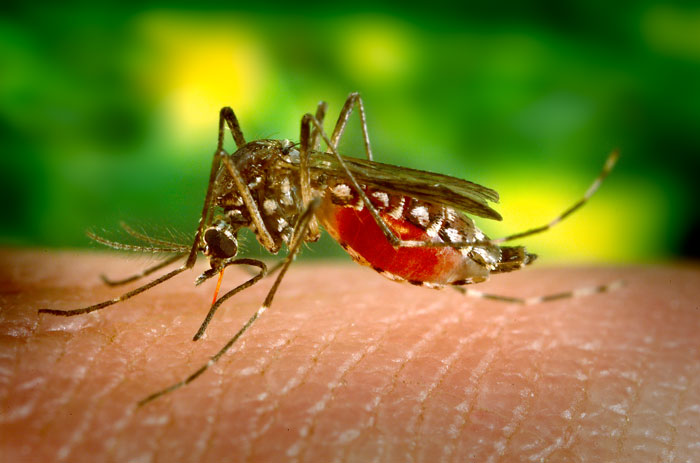



Vírus da Febre Amarela

A febre amarela é uma doença causada pelo vírus da febre amarela, um vírus de RNA RNA A polynucleotide consisting essentially of chains with a repeating backbone of phosphate and ribose units to which nitrogenous bases are attached. RNA is unique among biological macromolecules in that it can encode genetic information, serve as an abundant structural component of cells, and also possesses catalytic activity. RNA Types and Structure de cadeia simples e sentido positivo, do género Flavivirus Flavivirus A genus of flaviviridae containing several subgroups and many species. Most are arboviruses transmitted by mosquitoes or ticks. The type species is yellow fever virus. Tick-borne Encephalitis Virus. Humanos e primatas servem como reservatório, e a transmissão ocorre a partir da picada de um mosquito fêmea infetado. A maioria dos dontes apresenta febre e sintomas semelhantes aos da gripe. No caso de doença grave pode haver disfunção multiorgânica com icterícia, disfunção renal, hemorragia, choque e potencialmente a morte. O diagnóstico pode ser confirmado com serologia e PCR PCR Polymerase chain reaction (PCR) is a technique that amplifies DNA fragments exponentially for analysis. The process is highly specific, allowing for the targeting of specific genomic sequences, even with minuscule sample amounts. The PCR cycles multiple times through 3 phases: denaturation of the template DNA, annealing of a specific primer to the individual DNA strands, and synthesis/elongation of new DNA molecules. Polymerase Chain Reaction (PCR). Não há tratamento antivírico, portanto, o tratamento é de suporte. A prevenção inclui a prevenção das picadas de mosquito e a vacinação.

Last updated: Dec 15, 2025
Editorial responsibility: Stanley Oiseth, Lindsay Jones, Evelin Maza

Classificação

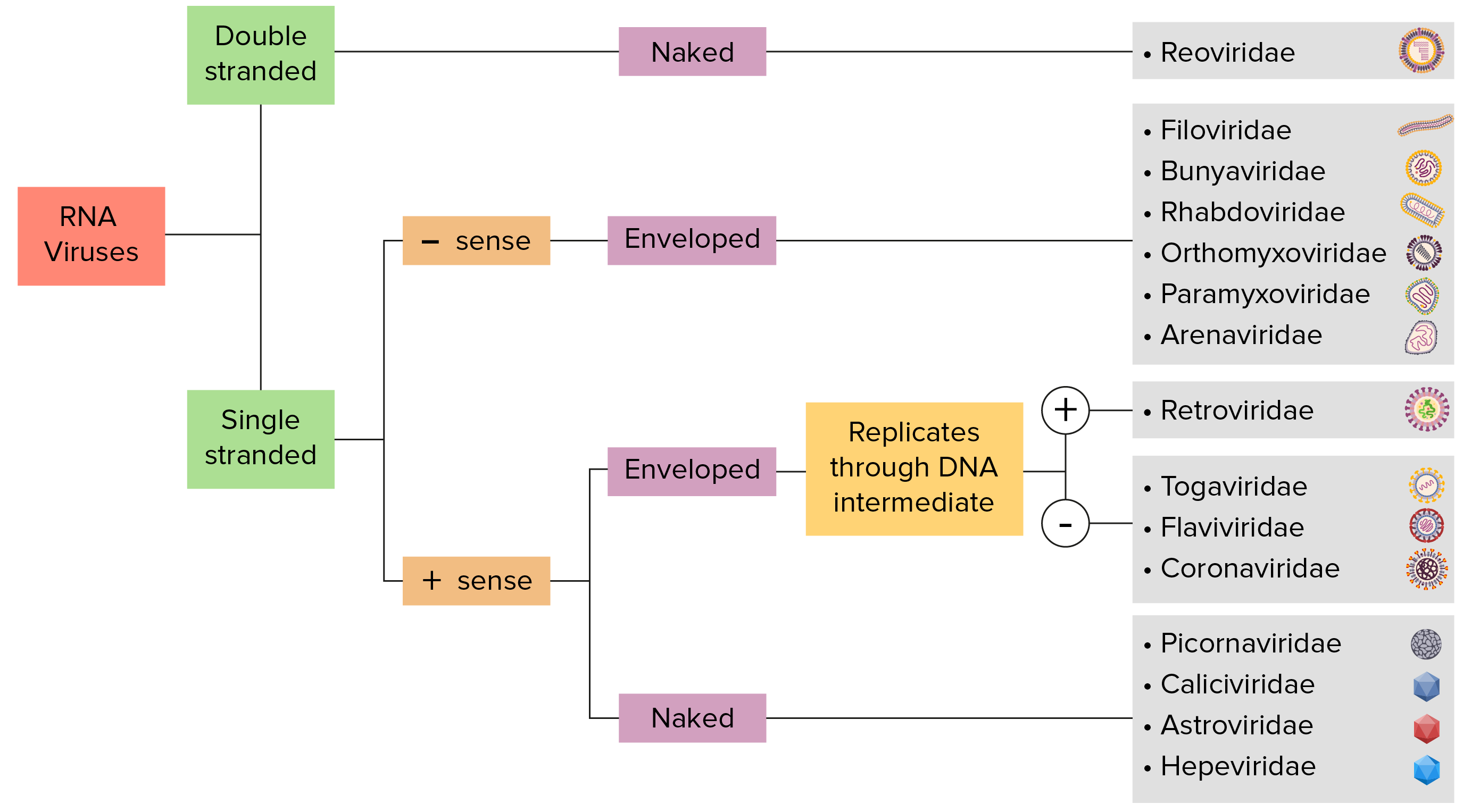
Classificação do fluxograma de vírus de RNA

Identificação do RNA vírico:
Os vírus podem ser classificados de várias formas. No entanto, a maioria destes tem um genoma constituído por ADN ou RNA. Os vírus cujo genoma é de RNA podem ser ainda caracterizados em RNA de cadeia simples ou dupla. Os vírus com invólucro são cobertos por uma fina camada de membrana celular (geralmente da célula hospedeira). Na ausência desta camada, são apelidados de vírus “nus”. Os vírus com genomas de cadeia simples são chamados de vírus de “sentido positivo” se o genoma puder ser diretamente utilizado como RNA mensageiro (mRNA, pela sigla em inglês), que é traduzido em proteínas. Os de “sentido negativo” necessitam da RNA polimerase dependente de RNA, uma enzima vírica, para transcrever o seu genoma em RNA mensageiro.
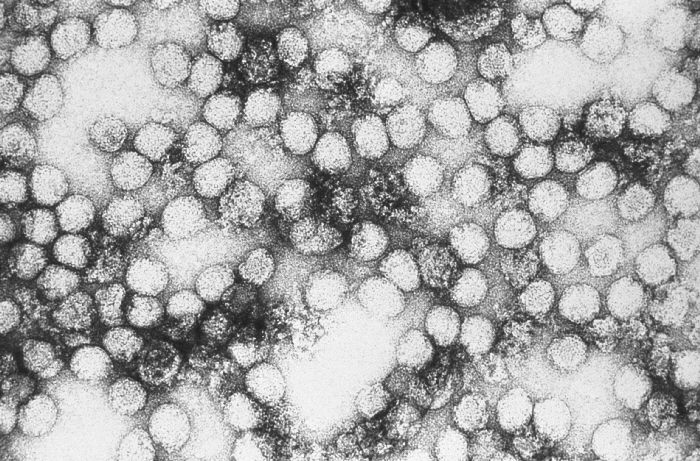
Imagem por Lecturio. Licença: CC BY-NC-SA 4.0

Características Gerais e Epidemiologia

Características gerais do vírus da febre amarela

  • Taxonomia:
    • Família: Flaviviridae Flaviviridae A family of RNA viruses, many of which cause disease in humans and domestic animals. There are three genera flavivirus; pestivirus; and hepacivirus, as well as several unassigned species. Hepatitis C Virus
    • Género: Flavivirus Flavivirus A genus of flaviviridae containing several subgroups and many species. Most are arboviruses transmitted by mosquitoes or ticks. The type species is yellow fever virus. Tick-borne Encephalitis Virus
  • Vírus de RNA RNA A polynucleotide consisting essentially of chains with a repeating backbone of phosphate and ribose units to which nitrogenous bases are attached. RNA is unique among biological macromolecules in that it can encode genetic information, serve as an abundant structural component of cells, and also possesses catalytic activity. RNA Types and Structure:
    • Cadeia simples
    • Sentido positivo
    • Linear
  • Esférico
  • Simetria icosaédrica
  • Com invólucro
  • Tamanho: 40–60 nm
Partículas do vírus da febre amarela

Imagem de microscopia eletrónica de transmissão de partículas do vírus da febre amarela.
Os virions são esféricos, de formato uniforme e com 40 a 60 nm de diâmetro.

Imagem : “2176” por Erskine Palmer. Licença: Public Domain

Espécies clinicamente relevantes

O vírus da febre amarela tem apenas 1 serotipo, o causador da doença (febre amarela).

Epidemiologia

  • Aproximadamente 200.000 infecções por ano mundialmente
  • Aproximadamente 30.000 mortes por ano
  • Distribuição:
    • América do Sul
    • África Subsariana (cerca de 90% dos casos)

Patogénese

Reservatório

  • Humanos
  • Primatas

Transmissão

Vetores:

  • Mosquitos Aedes em África
  • Mosquitos Haemagogus na América do Sul

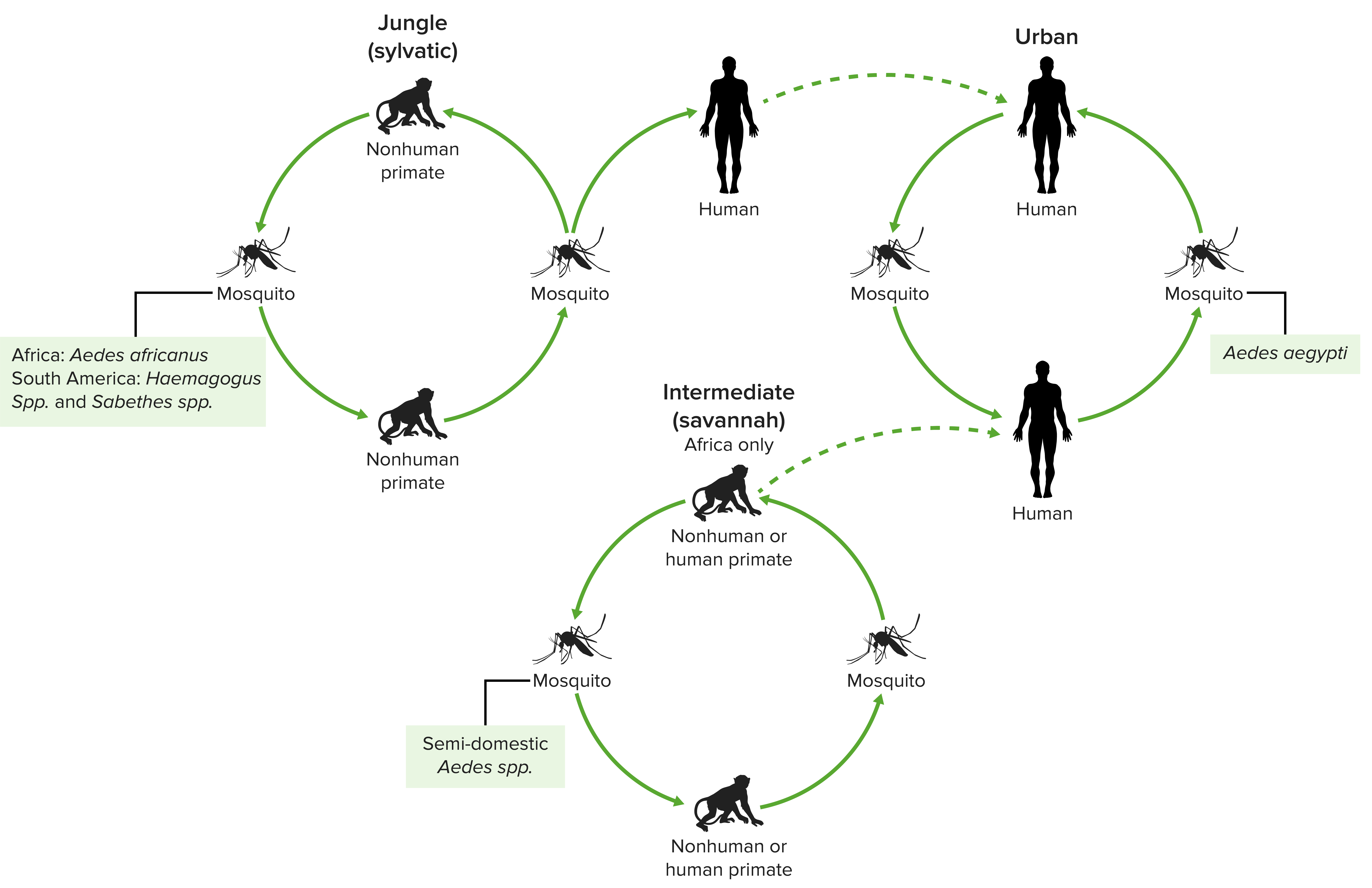
Ciclos de transmissão:

  • Selva (selvático):
    • O ciclo ocorre entre primatas não humanos e mosquitos.
    • Os humanos são infetados quando trabalham ou visitam a selva.
  • Intermédio (savana):
    • O ciclo ocorre entre primatas, humanos e mosquitos.
    • Em quem vive nas regiões de fronteira com a selva, na savana africana
  • Urbano:
    • O ciclo ocorre entre humanos e mosquitos.
    • O vírus é trazido para o ambiente urbano por um humano infetado na selva ou savana.

Ciclo de replicação viral

  • O vírus liga-se às células-alvo através de recetores → endocitose
  • pH pH The quantitative measurement of the acidity or basicity of a solution. Acid-Base Balance no endossoma → fusão da membrana endossomal com o invólucro vírico → libertação do nucleocapsídeo no citoplasma
  • Desintegração do nucleocapsídeo → replicação do genoma vírico no retículo endoplasmático rugoso
  • As partículas imaturas são processadas no aparelho de Golgi → maturação → libertação como um virion infeccioso

Fisiopatologia

  • O mosquito alimenta-se → inoculação do vírus no hospedeiro
  • A replicação ocorre no local da inoculação (células dendríticas).
  • Disseminação linfática → gânglios regionais
  • A replicação ocorre em macrófagos/monócitos.
  • Disseminação pelos vasos linfáticos → corrente sanguínea → órgãos (principalmente o fígado) e tecidos
  • A replicação vírica em tecidos e órgãos resulta em:
    • Degeneração eosinofílica
    • Apoptose
    • Alterações da gordura
  • Efeitos:
    • Lesão hepática
    • Insuficiência renal
    • Edema Edema Edema is a condition in which excess serous fluid accumulates in the body cavity or interstitial space of connective tissues. Edema is a symptom observed in several medical conditions. It can be categorized into 2 types, namely, peripheral (in the extremities) and internal (in an organ or body cavity). Edema cerebral
    • Resposta inflamatória sistémica → choque

Apresentação Clínica

O período de incubação é de 3 a 6 dias. As características clínicas variam de uma doença febril ligeira e autolimitada (a maioria dos casos) a uma doença grave ameaçadora de vida.

Período de infeção

Os sintomas iniciais, listados a seguir, são inespecíficos:

  • Febre e arrepios
  • Cefaleia
  • Fotofobia
  • Mal-estar
  • Mialgias
  • Dor lombar
  • Náuseas
  • Anorexia Anorexia The lack or loss of appetite accompanied by an aversion to food and the inability to eat. It is the defining characteristic of the disorder anorexia nervosa. Anorexia Nervosa
  • Tonturas

Período de intoxicação

Após um período de remissão de 48 horas, uma minoria dos doentes desenvolve sintomas de febre amarela grave. Neste período os doentes apresentam febre alta e disfunção multiorgânica.

  • Disfunção hepática: icterícia
  • Disfunção renal: oligúria
  • Hemorragia (pela disfunção hepática e CID – coagulação intravascular disseminada):
    • Epistáxis
    • Melenas
    • Hematémeses (vómito preto)
    • Hematúria
  • Pancreatite:
    • Náuseas e vómitos
    • Dor epigástrica
  • Miocardite
  • Disfunção do SNC (por encefalopatia metabólica, edema Edema Edema is a condition in which excess serous fluid accumulates in the body cavity or interstitial space of connective tissues. Edema is a symptom observed in several medical conditions. It can be categorized into 2 types, namely, peripheral (in the extremities) and internal (in an organ or body cavity). Edema cerebral e/ou hemorragia):
    • Delirium Delirium Delirium is a medical condition characterized by acute disturbances in attention and awareness. Symptoms may fluctuate during the course of a day and involve memory deficits and disorientation. Delirium
    • Convulsões
    • Coma Coma Coma is defined as a deep state of unarousable unresponsiveness, characterized by a score of 3 points on the GCS. A comatose state can be caused by a multitude of conditions, making the precise epidemiology and prognosis of coma difficult to determine. Coma

Exame objetivo

Os achados dependem da gravidade da doença e da fase da infeção, mas podem incluir:

  • Sinais vitais:
    • Febre
    • Bradicardia associada a febre (sinal de Faget)
    • Hipotensão
  • Oculares:
    • Hiperemia conjuntival
    • Icterícia da esclera
  • Cutâneos:
  • Abdominais:
    • Dor epigástrica
    • Hepatomegalia
  • Renais:
    • Urina escura
    • Hematúria

Diagnóstico e Tratamento

Diagnóstico

Testes Testes Gonadal Hormones específicos:

  • Serologia ( ELISA ELISA An immunoassay utilizing an antibody labeled with an enzyme marker such as horseradish peroxidase. While either the enzyme or the antibody is bound to an immunosorbent substrate, they both retain their biologic activity; the change in enzyme activity as a result of the enzyme-antibody-antigen reaction is proportional to the concentration of the antigen and can be measured spectrophotometrically or with the naked eye. Many variations of the method have been developed. St. Louis Encephalitis Virus) para pesquisar a presença de anticorpos IgM IgM A class of immunoglobulin bearing mu chains (immunoglobulin mu-chains). Igm can fix complement. The name comes from its high molecular weight and originally being called a macroglobulin. Immunoglobulins: Types and Functions
  • PCR PCR Polymerase chain reaction (PCR) is a technique that amplifies DNA fragments exponentially for analysis. The process is highly specific, allowing for the targeting of specific genomic sequences, even with minuscule sample amounts. The PCR cycles multiple times through 3 phases: denaturation of the template DNA, annealing of a specific primer to the individual DNA strands, and synthesis/elongation of new DNA molecules. Polymerase Chain Reaction (PCR) para deteção do RNA RNA A polynucleotide consisting essentially of chains with a repeating backbone of phosphate and ribose units to which nitrogenous bases are attached. RNA is unique among biological macromolecules in that it can encode genetic information, serve as an abundant structural component of cells, and also possesses catalytic activity. RNA Types and Structure vírico
  • Cultura do vírus
  • Nota: Nunca se deve realizar uma biópsia hepática pelo risco de hemorragia fatal.

Avaliação de apoio ao diagnóstico:

  • Hemograma:
    • ↓ Leucócitos com neutropenia Neutropenia Neutrophils are an important component of the immune system and play a significant role in the eradication of infections. Low numbers of circulating neutrophils, referred to as neutropenia, predispose the body to recurrent infections or sepsis, though patients can also be asymptomatic. Neutropenia
    • ↓ Plaquetas
  • Testes Testes Gonadal Hormones de função hepática:
    • AST AST Enzymes of the transferase class that catalyze the conversion of l-aspartate and 2-ketoglutarate to oxaloacetate and l-glutamate. Liver Function Tests e ALT ALT An enzyme that catalyzes the conversion of l-alanine and 2-oxoglutarate to pyruvate and l-glutamate. Liver Function Tests
    • ↑ Bilirrubina
  • Estudos da coagulação:
    • ↑ PT e PTT
    • ↓ Fibrinogénio
    • ↑ D-dímeros
  • Avaliação renal:
    • ↑ BUN e creatinina
    • ↑ Albumina e proteínas na urina

Tratamento

Não está disponível um tratamento antivírico para a febre amarela. Este é de suporte.

  • Uma vez que pode ocorrer uma deterioração clínica rápida, é aconselhável o internamento ou tratamento em UCI.
  • Hidratação com fluidos IV
  • Suporte vasopressor Vasopressor Acute Cholangitis se choque
  • Monitorização de:
    • Hipoglicemia
    • CID
    • Disfunção hepática
    • Disfunção renal

Prevenção

  • Prevenção da picada de mosquitos:
    • Repelente de insetos
    • Roupa protetora
    • Mosquiteiro
    • Drenar e evitar água parada
  • A vacinação está recomendada em:
    • Viagens para áreas endémicas
    • Residentes de regiões endémicas

Comparação de Espécies de Flavivírus

Tabela: Comparação de espécies de Flavivirus Flavivirus A genus of flaviviridae containing several subgroups and many species. Most are arboviruses transmitted by mosquitoes or ticks. The type species is yellow fever virus. Tick-borne Encephalitis Virus
Organismo Vírus da febre amarela Vírus da hepatite C Vírus do dengue Dengue An acute febrile disease transmitted by the bite of aedes mosquitoes infected with dengue virus. It is self-limiting and characterized by fever, myalgia, headache, and rash. Severe dengue is a more virulent form of dengue. Dengue Virus
Características
  • 1 serotipo
  • 40-60 nm
  • 2 serotipos
  • 55-65 nm
  • 4 serotipos
  • 40-60 nm
Transmissão Mosquito Transmissão pelo sangue Mosquito
Apresentação clínica
  • Febre
  • Sintomas semelhantes à gripe
  • Icterícia
  • Disfunção multiorgânica
  • Hemorragia
  • Choque
  • Assintomática
  • Hepatite
  • Cirrose
  • Carcinoma hepatocelular
  • Febre
  • Sintomas semelhantes à gripe
  • Rubor Rubor Inflammation / erupção cutânea
  • Dor forte
  • Disfunção multiorgânica
  • Hemorragia
  • Choque
Diagnóstico
  • Serologia
  • PCR PCR Polymerase chain reaction (PCR) is a technique that amplifies DNA fragments exponentially for analysis. The process is highly specific, allowing for the targeting of specific genomic sequences, even with minuscule sample amounts. The PCR cycles multiple times through 3 phases: denaturation of the template DNA, annealing of a specific primer to the individual DNA strands, and synthesis/elongation of new DNA molecules. Polymerase Chain Reaction (PCR) – reação em cadeia da polimerase
  • Cultura vírica
  • Serologia
  • PCR PCR Polymerase chain reaction (PCR) is a technique that amplifies DNA fragments exponentially for analysis. The process is highly specific, allowing for the targeting of specific genomic sequences, even with minuscule sample amounts. The PCR cycles multiple times through 3 phases: denaturation of the template DNA, annealing of a specific primer to the individual DNA strands, and synthesis/elongation of new DNA molecules. Polymerase Chain Reaction (PCR) – reação em cadeia da polimerase
  • Serologia
  • PCR PCR Polymerase chain reaction (PCR) is a technique that amplifies DNA fragments exponentially for analysis. The process is highly specific, allowing for the targeting of specific genomic sequences, even with minuscule sample amounts. The PCR cycles multiple times through 3 phases: denaturation of the template DNA, annealing of a specific primer to the individual DNA strands, and synthesis/elongation of new DNA molecules. Polymerase Chain Reaction (PCR) – reação em cadeia da polimerase
  • Teste de antigénio
Tratamento Suporte Antivíricos de ação direta Suporte
Prevenção
  • Medidas para evitar picadas de mosquitos
  • Vacinação
  • Evitar a partilha de agulhas
  • Descarte seguro dos cortoperfurantes e resíduos
  • Rastreio do sangue de dadores
  • Medidas para evitar picadas de mosquitos
  • Vacinação

Diagnóstico Diferencial

  • Malária: doença infeciosa causada por espécies de Plasmodium Plasmodium A genus of protozoa that comprise the malaria parasites of mammals. Four species infect humans (although occasional infections with primate malarias may occur). These are plasmodium falciparum; plasmodium malariae; plasmodium ovale, and plasmodium vivax. Species causing infection in vertebrates other than man include: plasmodium berghei; plasmodium chabaudi; p. Vinckei, and plasmodium yoelii in rodents; p. Brasilianum, plasmodium cynomolgi; and plasmodium knowlesi in monkeys; and plasmodium gallinaceum in chickens. Antimalarial Drugs, transmitida por mosquitos. A malária apresenta-se geralmente com febre, arrepios, diaforese, icterícia, dor abdominal, anemia Anemia Anemia is a condition in which individuals have low Hb levels, which can arise from various causes. Anemia is accompanied by a reduced number of RBCs and may manifest with fatigue, shortness of breath, pallor, and weakness. Subtypes are classified by the size of RBCs, chronicity, and etiology. Anemia: Overview and Types hemolítica, hepatoesplenomegalia e insuficiência renal. O esfregaço sanguíneo mostra um único anel pleomórfico. Também se podem realizar testes Testes Gonadal Hormones rápidos de antigénio do Plasmodium Plasmodium A genus of protozoa that comprise the malaria parasites of mammals. Four species infect humans (although occasional infections with primate malarias may occur). These are plasmodium falciparum; plasmodium malariae; plasmodium ovale, and plasmodium vivax. Species causing infection in vertebrates other than man include: plasmodium berghei; plasmodium chabaudi; p. Vinckei, and plasmodium yoelii in rodents; p. Brasilianum, plasmodium cynomolgi; and plasmodium knowlesi in monkeys; and plasmodium gallinaceum in chickens. Antimalarial Drugs. O tratamento requer um curso prolongado de vários medicamentos antimaláricos.
  • Febre da Lassa: febre hemorrágica causada pelo vírus Lassa. A maioria das infeções por febre da Lassa são ligeiras e semelhantes à gripe. Alguns doentes apresentam manifestações graves com edema Edema Edema is a condition in which excess serous fluid accumulates in the body cavity or interstitial space of connective tissues. Edema is a symptom observed in several medical conditions. It can be categorized into 2 types, namely, peripheral (in the extremities) and internal (in an organ or body cavity). Edema pulmonar, hepatite, hemorragia, edema Edema Edema is a condition in which excess serous fluid accumulates in the body cavity or interstitial space of connective tissues. Edema is a symptom observed in several medical conditions. It can be categorized into 2 types, namely, peripheral (in the extremities) and internal (in an organ or body cavity). Edema facial, convulsões, coma Coma Coma is defined as a deep state of unarousable unresponsiveness, characterized by a score of 3 points on the GCS. A comatose state can be caused by a multitude of conditions, making the precise epidemiology and prognosis of coma difficult to determine. Coma e choque. O diagnóstico é confirmado com serologia e PCR PCR Polymerase chain reaction (PCR) is a technique that amplifies DNA fragments exponentially for analysis. The process is highly specific, allowing for the targeting of specific genomic sequences, even with minuscule sample amounts. The PCR cycles multiple times through 3 phases: denaturation of the template DNA, annealing of a specific primer to the individual DNA strands, and synthesis/elongation of new DNA molecules. Polymerase Chain Reaction (PCR). A ribavirina tem sido utilizada com sucesso no tratamento da febre da Lassa.
  • Ébola: febre hemorrágica altamente contagiosa e potencialmente letal causada pelo Ebolavirus Ebolavirus Ebolavirus is a member of the Filoviridae family. They are single-stranded, negative-sense RNA viruses with a characteristic filamentous, pleomorphic morphology. Transmission mainly occurs through contact with secretions from an infected individual. This virus causes flu-like symptoms, diarrhea, hemorrhage, multiorgan dysfunction, and shock. Ebolavirus and Marburgvirus. Os doentes apresentam sintomas de febre, mal-estar, náuseas, vómitos e dor abdominal. Estes sintomas podem progredir para hemorragia, falência multiorgânica e choque. O diagnóstico é confirmado por PCR PCR Polymerase chain reaction (PCR) is a technique that amplifies DNA fragments exponentially for analysis. The process is highly specific, allowing for the targeting of specific genomic sequences, even with minuscule sample amounts. The PCR cycles multiple times through 3 phases: denaturation of the template DNA, annealing of a specific primer to the individual DNA strands, and synthesis/elongation of new DNA molecules. Polymerase Chain Reaction (PCR), serologia e microscopia eletrónica do tecido ou do sangue. O tratamento é de suporte.
  • Leptospirose: doença causada por Leptospira interrogans Leptospira interrogans A genus of question mark-shaped bacteria spirochetes which is found in freshwater that is contaminated by animal urine. It causes leptospirosis. Leptospira/Leptospirosis. A maioria dos doentes apresenta uma doença ligeira semelhante à gripe, e as manifestações são bifásicas. Em cerca de 10% das infeções, desenvolve-se uma leptospirose ictero-hemorrágica, manifestando-se com hemorragia, insuficiência renal e icterícia. Uma vez que a cultura bacteriana demora semanas para crescer, outros testes Testes Gonadal Hormones diagnósticos, como serologia e microscopia de campo escuro, são realizados. O tratamento é primariamente com penicilina.
  • Febre recorrente: doença causada por várias espécies da espiroqueta Borrelia Borrelia Borrelia are gram-negative microaerophilic spirochetes. Owing to their small size, they are not easily seen on Gram stain but can be visualized using dark-field microscopy, Giemsa, or Wright stain. Spirochetes are motile and move in a characteristic spinning fashion due to axial filaments in the periplasmic space. Borrelia, transmitida por vetores. Os doentes apresentam estadios recorrentes de febre, crises e períodos afebris. Pode desenvolver-se meningite, icterícia, CID e miocardite. O diagnóstico baseia-se na história clínica e na visualização das espiroquetas em esfregaços de sangue de gota espessa e fina. O tratamento é com antibióticos, como doxiciclina, penicilina ou ceftriaxona.
  • Febre Q: infeção zoonótica bacteriana causada por Coxiella burnetii Coxiella burnetii A species of gram-negative bacteria that grows preferentially in the vacuoles of the host cell. It is the etiological agent of q fever. Coxiella/Q Fever. A apresentação clínica da febre Q é variável, mas geralmente é ligeira com sintomas semelhantes aos da gripe. Outras manifestações incluem pneumonia Pneumonia Pneumonia or pulmonary inflammation is an acute or chronic inflammation of lung tissue. Causes include infection with bacteria, viruses, or fungi. In more rare cases, pneumonia can also be caused through toxic triggers through inhalation of toxic substances, immunological processes, or in the course of radiotherapy. Pneumonia, hepatite, endocardite e meningite assética. É necessário um alto grau de suspeição para fazer o diagnóstico, que é auxiliado pela serologia e PCR PCR Polymerase chain reaction (PCR) is a technique that amplifies DNA fragments exponentially for analysis. The process is highly specific, allowing for the targeting of specific genomic sequences, even with minuscule sample amounts. The PCR cycles multiple times through 3 phases: denaturation of the template DNA, annealing of a specific primer to the individual DNA strands, and synthesis/elongation of new DNA molecules. Polymerase Chain Reaction (PCR). Os antibióticos são a base do tratamento.

Referências

  1. World Health Organization. Yellow fever Fact sheet no. 100. May 2013. Archived from the original on 19 February 2014. Retrieved October 27, 2025, from https://www.who.int/news-room/fact-sheets/detail/yellow-fever
  2. Oliveira, C. H. de, Andrade, M. S., Campos, F. S., et al. (2023). Yellow Fever Virus Maintained by Sabethes Mosquitoes during the Dry Season in Cerrado, a Semiarid Region of Brazil, in 2021. Viruses, 15(3), 757. https://doi.org/10.3390/v15030757
  3. Tolle, M.A. (2009). Mosquito-borne diseases. Curr Probl Pediatr Adolesc Health Care 39:97–140. https://pubmed.ncbi.nlm.nih.gov/19327647/
  4. Chen, L.H., Kozarsky, P.E., Visser, L.G. (2019). What’s old is new again: the re-emergence of yellow fever in Brazil and vaccine shortages. Clin Infect Dis 68:1761–1762. https://www.ncbi.nlm.nih.gov/pubmed/30204852
  5. Lindenbach, B.D., et al. (2007). Flaviviridae: the viruses and their replication. In Knipe, D.M., Howley, P.M. (Eds.). Fields Virology, 5th ed. Philadelphia: Lippincott Williams & Wilkins, p. 1101. ISBN 978-0-7817-6060-7.
  6. Sanna, A., et al. (2018). Yellow fever cases in French Guiana, evidence of an active circulation in the Guiana Shield, 2017 and 2018. Euro Surveill 23(36):1800471. https://www.ncbi.nlm.nih.gov/pubmed/30205871
  7. Leong, W.Y. (2018). New diagnostic tools for yellow fever. J Travel Med 25(1). https://www.ncbi.nlm.nih.gov/pubmed/30184173
  8. Barrett, A.D., Higgs, S. (2007). Yellow fever: a disease that has yet to be conquered. Annu Rev Entomol 52:209–229. https://pubmed.ncbi.nlm.nih.gov/16913829/
  9. Javelle, E., Gautret, P., Raoult, D. (2019). Towards the risk of yellow fever transmission in Europe. Clin Microbiol Infect 25:10–12. https://www.ncbi.nlm.nih.gov/pubmed/30170135
  10. Wilder-Smith, A. (2024). Yellow fever: epidemiology, clinical manifestations, and diagnosis. In Baron, E.L. (Ed.), UpToDate. Retrieved October 27, 2025, from https://www.uptodate.com/contents/yellow-fever-epidemiology-clinical-manifestations-and-diagnosis
  11. Wilder-Smith, A. (2025). Yellow fever: treatment and prevention. In Baron, E.L. (Ed.), UpToDate. Retrieved October 27, 2025, from https://www.uptodate.com/contents/yellow-fever-treatment-and-prevention
  12. Yuill, T.M. (2025). Yellow fever. MSD Manual Professional Version. Retrieved October 27, 2025, from https://www.msdmanuals.com/professional/infectious-diseases/arboviruses-arenaviridae-and-filoviridae/yellow-fever
  13. Simon, L.V., Hashimi, M.F., Torp, K.D. (2023). Yellow fever. StatPearls. Retrieved October 27, 2025, from https://www.ncbi.nlm.nih.gov/books/NBK470425/
  14. Blyth, D.M. (2024). Yellow fever. In Brusch, J.L. (Ed.), Medscape. Retrieved October 27, 2025, from https://emedicine.medscape.com/article/232244-overview
  15. Centers for Disease Control and Prevention (n.d.). Yellow fever. Retrieved October 27, 2025, from https://www.cdc.gov/yellowfever/index.html

Crie sua conta gratuita ou faça login para continuar lendo!

Cadastre-se agora e tenha acesso grátis ao Lecturio, com páginas de conceitos, vídeos de medicina e questões para sua educação médica.

Aprende mais com a Lecturio:

Multiple devices displaying human anatomy and health education content.

Complementa o teu estudo da faculdade com o companheiro de estudo tudo-em-um da Lecturio, através de métodos de ensino baseados em evidência.

Estuda onde quiseres

Two iPhones display medical education apps, one showing anatomy, the other Bookmatcher.

A Lecturio Medical complementa o teu estudo através de métodos de ensino baseados em evidência, vídeos de palestras, perguntas e muito mais – tudo combinado num só lugar e fácil de usar.

User Reviews

Details