

Nursing Knowledge
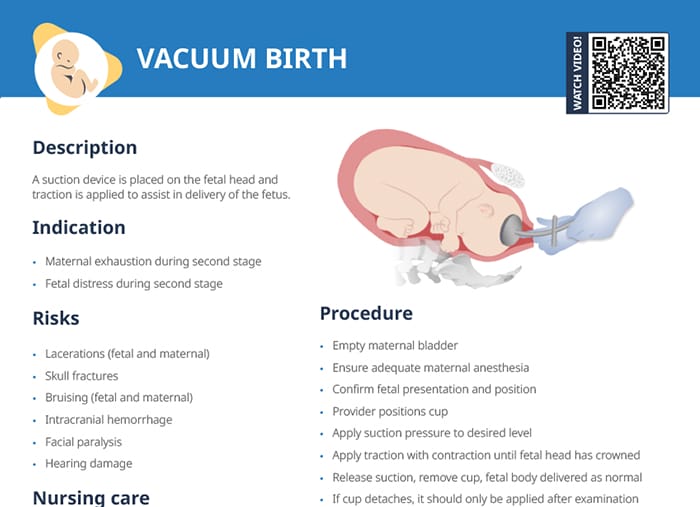
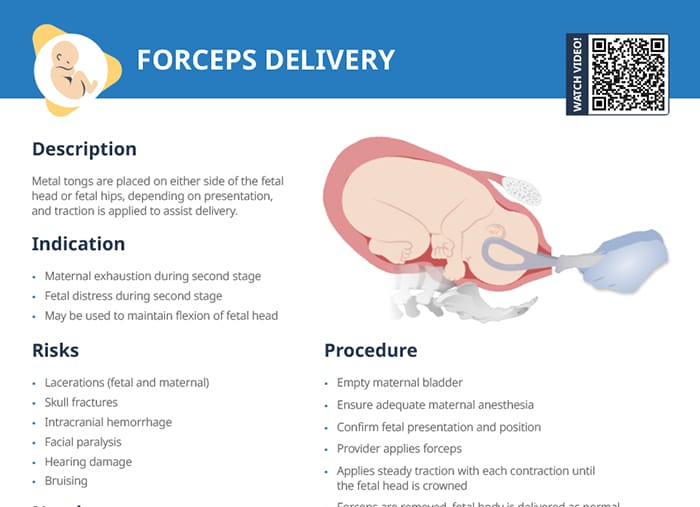
In vacuum-assisted delivery, a suction device is placed over the vertex of the fetal head and traction is applied to assist in delivery of the fetus.
Vacuum-assisted delivery is an option when the mother is exhausted in the second stage of labor. Adding the vacuum can help give more strength to the pushing power.
Fetal distress is another indication to speed up and assist the delivery process (shown by the Doppler/monitoring of fetal heart rate).
Vacuum birth is contraindicated in situations of:
If the vacuum is poorly placed, the applied suction can lead to
The procedure itself is performed by a provider. Nursing tasks include gathering equipment, monitoring the fetal heart rate, providing maternal support, and assessing the infant at delivery.
Tip: The most popular type of vacuum used is a “Kiwi.”
Clients should be informed on benefits and risks to mother and fetus prior to procedure and give clear consent (informed consent).
Clients should be aware that if vacuum assisted delivery is not successful, a cesarean section may be necessary.
Procedure steps:
RELATED TOPIC:
Free Download
Master the topic with a unique study combination of a concise summary paired with video lectures.
Your free account gives you access to:
or