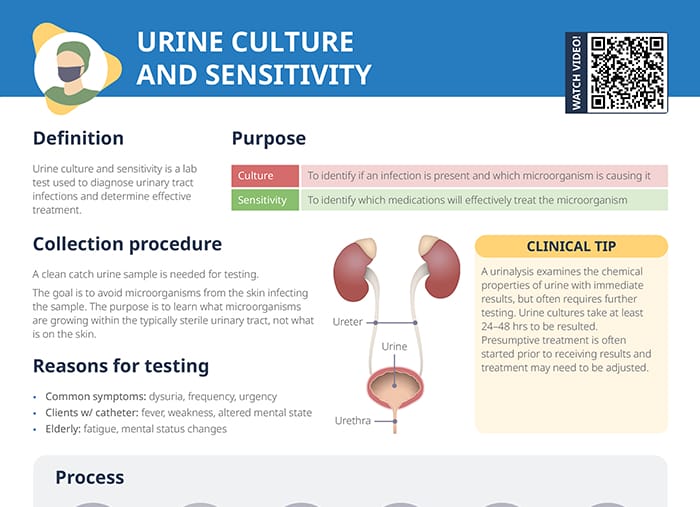


Urine culture and sensitivity is a lab test used to diagnose urinary tract infections and determine effective treatment.
Common symptoms that warrant a urine culture and sensitivity test are dysuria, frequency, and urgency. In clients with a catheter, indications include fever, weakness, and altered mental state. For elderly clients, fatigue and mental status changes can be prompts for a urine culture.
Note: In rare cases, persistent symptoms of a UTI with repeated negative urine culture tests can be an indicator for bladder cancer.
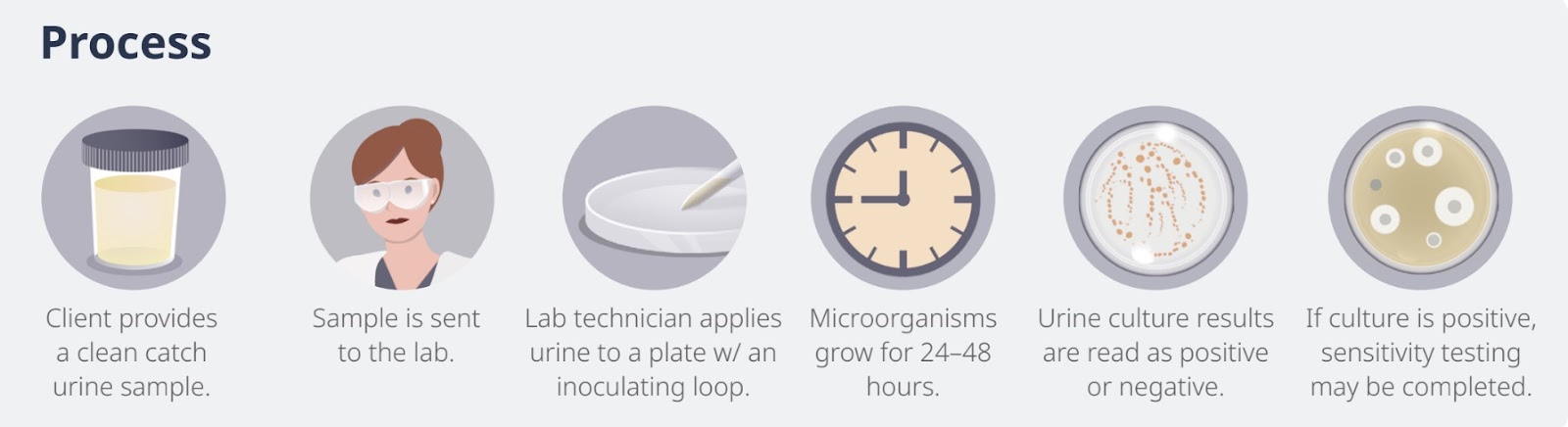
Note: A clean catch urine sample is needed for reliable test results. The goal is to avoid microorganisms from the skin infecting the sample. The purpose is to learn what microorganisms are growing within the typically sterile urinary tract, not what is on the skin.
Urine cultures take at least 24–48 hours in the lab to be resulted. To not lose valuable time, presumptive treatment is often started prior to receiving results based on the providers’ best guess and experience. Once the results come back, the treatment may need to be adjusted, so make sure to notify the provider of the results once they arrive even if the client is already receiving treatment.
A mixed flora urine culture indicates that multiple types of bacteria have been found. This can be due to contamination with bacteria from external areas and makes the test inconclusive, since it is unsure whether there is a specific pathogen causing a UTI.
If the urine culture is positive, sensitivity testing may be done as a follow-up to determine which medication will be effective in killing the identified bacteria or fungi.
Note: If the client is asymptomatic, treatment may not be necessary.
There are 3 levels of possible outcomes of sensitivity testing:
A urine culture tests for the presence of bacteria in the urine that could be causing an infection, for example, a UTI. It is necessary to identify which specific type of bacteria it is, so that the provider can choose the most effective treatment against that pathogen.
A negative urine culture means the provider will reevaluate the symptoms and treatment plan. However, clients should be advised to never stop a course of antibiotics on their own even if they are feeling better or a test result indicates they are better. Incomplete treatment can allow remaining bacteria to grow and potentially become resistant, causing more serious or recurring infections.
While the cost of a urine culture varies in different locations, the urine culture test price without insurance can roughly range from $30 to $100. With insurance, most of the cost may be covered.