

Nursing Knowledge
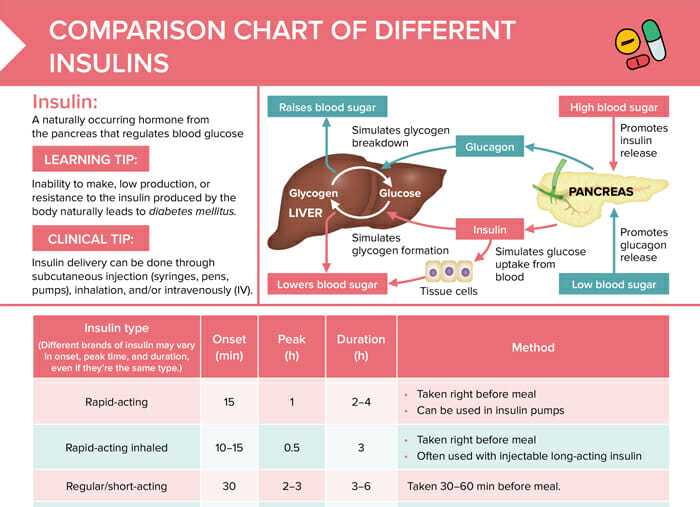
Insulin is a hormone produced by the pancreas that regulates blood sugar levels. It allows cells to take in glucose for energy and signals the liver to store excess glucose. It is crucial in maintaining stable blood glucose and is centrally involved in diabetes if the normal function is impaired.
Insulin is used for the treatment of diabetes mellitus, a condition in which the body doesn’t produce any or enough insulin, or is resistant to it, resulting in high blood sugar levels. Insulin therapy aims to mimic the body’s natural pattern of insulin release, which is a steady low level of insulin release throughout the day with spikes during meal times. This helps to keep blood glucose levels within the normal range, preventing the symptoms of high blood sugar and reducing the risk of diabetes complications.
There are several different types of insulin, classified by the onset and the duration of the insulin. Here are the main categories:
Insulin can be delivered through subcutaneous injection (syringes, pens, pumps), inhalation, and/or intravenously (IV).
Clinical tips for managing diabetes with insulin include testing glucose levels according to provider instructions and avoiding meal delays after injection or skipping meals to avoid hypoglycemic events.
The onset time for rapid-acting insulin typically ranges from 5 to 60 minutes.
Glucagon promotes glycogen breakdown and raises blood sugar levels.
Yes, premixed insulin can be used in an insulin pump.
Insulin mixing refers to drawing up two types of insulin (for instance, a short-acting and an intermediate-acting insulin) into the same syringe for injection, which can help simplify the injection process.
Always mix insulins in the appropriate order: Regular insulin should be drawn up first (clear), followed by NPH (cloudy).
RELATED TOPIC:
Free Download
Master the topic with a unique study combination of a concise summary paired with video lectures.
Your free account gives you access to:
or