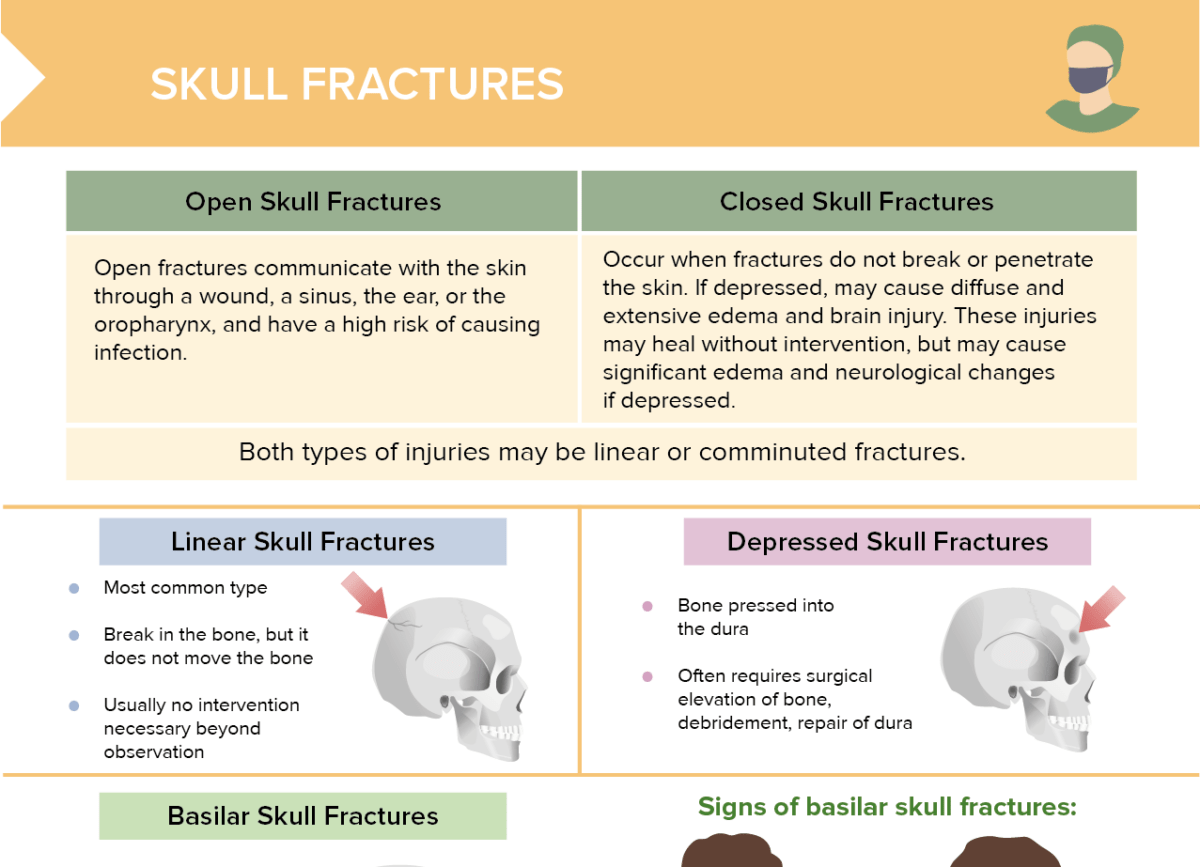
Fractures refer to breaks in bones and can vary in type, location, and severity. Classification informs treatment; for instance, compound fractures risk infection and may need surgical intervention, while simple fractures may only require casting. Keep reading for an overview of the general fracture grading and common types of fractures.
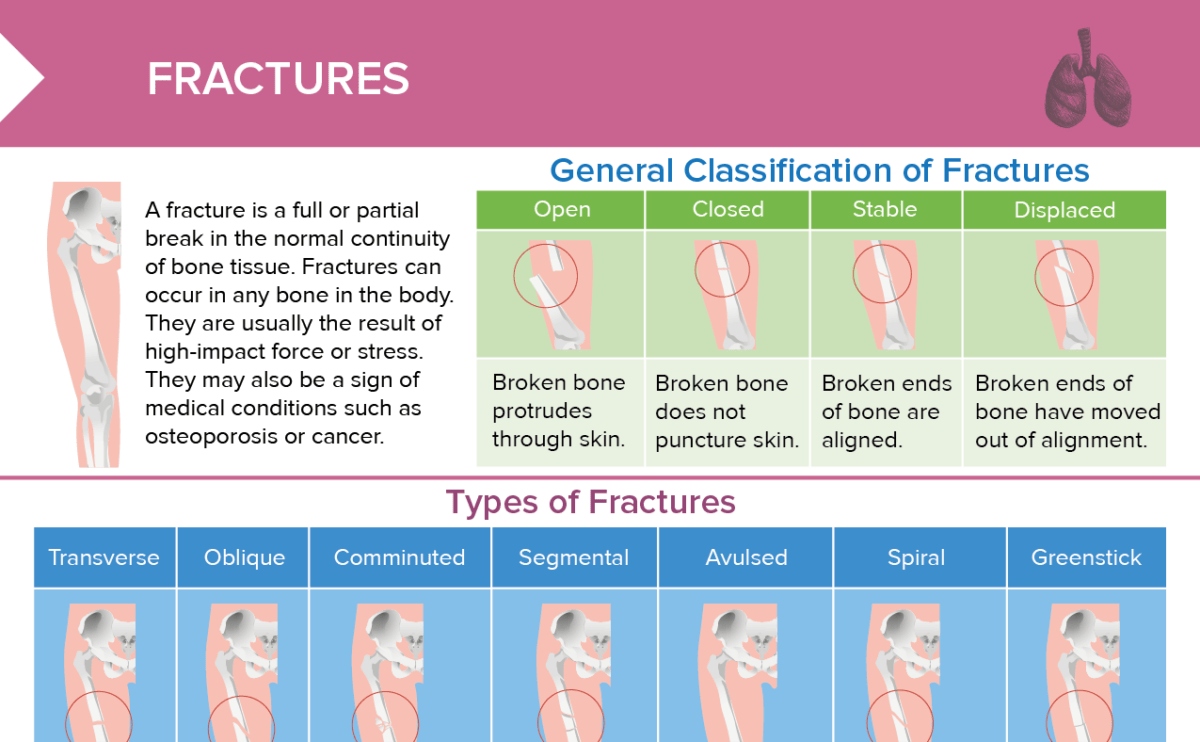
A fracture is a full or partial break in the normal continuity of bone tissue. Fractures can occur in any bone in the body. They are usually the result of high-impact force or stress. They may also be a sign of medical conditions such as osteoporosis or cancer.
General classification of fractures
Fractures can be classified as follows:
Open fracture: broken bone protruding through skin
Closed fracture: broken bone not puncturing skin
Stable fracture: broken ends of bone aligned
Displaced fracture: broken ends of bones moved out of alignment
Different types of fractures
Transverse fracture: break runs in a straight line across bone
Oblique fracture: break runs diagonally across bone
Comminuted fracture: bone broken into 3 or more pieces, fragments present at fracture site
Segmental fracture: one bone fracturing in 2 places, with “floating” segment of bone
Avulsed fracture: broken piece attached to a tendon or ligament separating from rest of the bone
Spiral fracture: break spirals around bone (commonly caused by a twisting injury)
Greenstick fracture: one side of bone broken, other side bent (only seen in children)
What are the 3 types of compression fractures?
Compression fractures generally occur in the spine and are usually the result of bone loss or injury. The three common types are:
Wedge fracture: front of vertebra collapsing with back remaining intact
Crush fracture: entire vertebra collapsing
Burst fracture: vertebra breaking in multiple directions
How to tell if a fracture is healing
Monitoring a fracture for signs of healing involves both clinical assessment and diagnostic imaging:
Pain decreasing
Increasing tolerance for movement/improved function
Stable or hardening lump around the fracture site (new bone forming)
Imaging showing decreasing size of fracture gap
Absence of localized heat or redness (would indicate infection or complications)
Fracture healing process
0–2 weeks: hematoma formation
2–3 weeks: fibrocartilaginous callus formation
3–6 weeks: bony callus formation
6 weeks–2 years: bone remodeling
Which factor inhibits fracture healing?
Factors that can inhibit fracture healing include:
Poor circulation at fracture site
Infections
Smoking
Malnutrition
Older age
Some medications like corticosteroids
Movement
Types of wrist fractures
The most common types of wrist fractures are:
Colles fracture: break in the radius bone near the wrist, with the broken fragment tilting upward
Smith fracture: similar to Colles, but the broken fragment tilts downward
Scaphoid fracture: break in the scaphoid bone
Barton fracture: fracture and dislocation of the posterior part of the distal radius
Types of finger fractures
The most common types of finger fractures are:
Phalanx fractures: fractures in the finger bones, usually from direct trauma
Mallet finger: injury to the extensor tendon causing the finger tip to droop
Types of hip fractures
The most common types of hip fractures are:
Femoral neck fracture: fracture in the neck of the femur, often in older adults
Intertrochanteric fracture: fracture between the greater and lesser trochanters of the femur
Types of foot fractures
The most common types of foot fractures are:
Metatarsal fractures: breaks in the long bones of the foot, common in sports
Calcaneal fracture: break in the heel bone, usually from a fall