

Nursing Knowledge
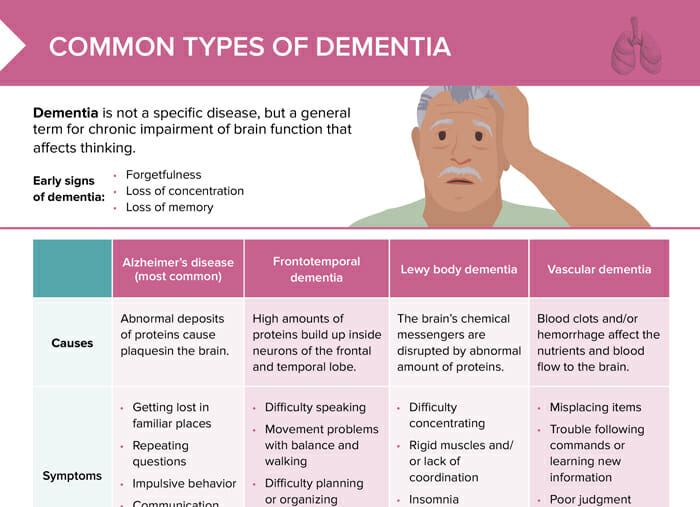
Dementia is a general term for chronic impairment of brain function that affects thinking. It is not one specific disease, and is not part of the normal aging process.
Dementia occurs in:
While dementia is an umbrella term used to describe the group of symptoms, Alzheimer disease is a specific type of dementia.
There are four main types of dementia: Alzheimer disease, frontotemporal dementia, Lewy body dementia, and vascular dementia.
The most common manifestation of dementia is Alzheimer disease, accounting for 60%–80% of dementia cases.
Alzheimer disease is caused by abnormal deposits of proteins causing plaques in the brain. Symptoms include:
Symptoms typically onset in the mid-60s (early-onset Alzheimer may be seen as early as the 30s).
Note: All Alzheimer is dementia, but not all dementia is Alzheimer.
Frontotemporal dementia is caused by high amounts of proteins building up inside neurons of the frontal and temporal lobe. Symptoms include:
Symptoms typically onset between 45 and 64 years old.
Lewy body dementia is caused by the brain’s chemical messengers being disrupted by abnormal amounts of proteins. Symptoms include:
Symptoms typically onset at age 50 or older.
Vascular dementia is caused by blood clots and/or hemorrhage affecting the nutrients and blood flow to the brain. Symptoms include:
Symptoms typically onset over the age of 65.
Childhood dementia is an umbrella term describing a group of conditions that affect cognitive abilities in children and adolescents. These conditions are rare and often genetically driven, and they can manifest as problems with memory, learning, attention, and problem-solving abilities.
Dementia is caused by damage to brain cells which interferes with the ability to communicate with each other, affecting thinking, behavior, and feelings. Different types of dementia are associated with particular kinds of brain cell damage in specific regions of the brain.
While the exact cause may not be known, certain risk factors like age, family history, and lifestyle habits are commonly associated with increased risk of dementia.
Due to dementia being associated with genetic predispositions, there is no fail-safe way to prevent dementia. However, certain lifestyle changes are thought to reduce the risk of dementia, including:
The earliest symptoms affected people may notice include:
Dementia typically progresses through several stages, though the timing and symptoms can vary significantly. The stages often referenced are:
Sundowning or “sundown syndrome” describes a state of increased confusion and agitation that typically occurs in the late afternoon or evening in people with dementia. Nurses can help manage sundowning by taking measures such as maintaining a regular sleep schedule, providing adequate lighting, and reducing evening noise and activity.
Nursing interventions for dementia patients focus on maintaining quality of life, managing symptoms, promoting safety, and supporting the individual and their family. Key nursing interventions include:
RELATED TOPIC:
Free Download
Master the topic with a unique study combination of a concise summary paired with video lectures.
Your free account gives you access to:
or