

Nursing Knowledge
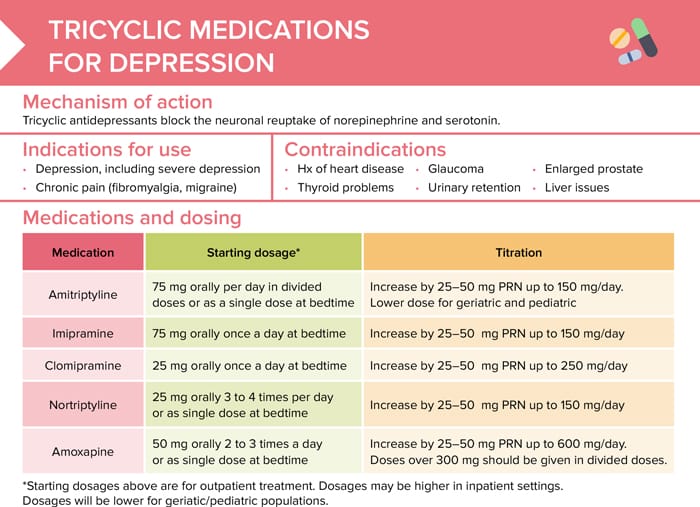
Tricyclic antidepressants (TCAs) are a class of drugs primarily used to treat depression, but with a narrower spectrum of FDA-approved indications than SSRIs.
Indications for tricyclic antidepressants are depression (including severe) and chronic pain (fibromyalgia, migraine). Indications for SSRIs further include generalized anxiety disorder, obsessive compulsive disorder (OCD), post traumatic stress disorder (PTSD), social anxiety, premenstrual dysphoric disorder (PMDD), bulimia nervosa, and others. The choice between TCAs and SSRIs also depends on the specific patient/client needs, their side-effect profile tolerance, and potential interactions with other medications.
Tricyclic antidepressants block the neuronal reuptake of norepinephrine and serotonin, while SSRIs only block the reuptake of serotonin.
Norepinephrine, also known as noradrenaline, is a neurotransmitter and a hormone regulating the body’s stress response and other various physiological processes. As a neurotransmitter, it affects mood, arousal, vigilance, and attention. As a hormone, it aids in the constriction of blood vessels, raising blood pressure. An excess or deficit of norepinephrine can lead to various medical conditions including mood disorders, hypertension, and more.
Serotonin, chemically known as 5-hydroxytryptamine (5-HT), is also a neurotransmitter that plays an important role in regulating various physiological and behavioral processes in the body, including mood regulation, digestive functions, sleep, blood clotting, and bone metabolism.
Potential side effects of tricyclic antidepressants include:
SSRIs have a similar side effect profile to TCAs, with TCAs having a higher likelihood of anticholinergic side effects and a higher risk for cardiac issues.
Table: Common tricyclic antidepressants
| Medication | Starting dosage |
| Amitriptyline | 75 mg orally per day in divideddoses or as a single dose at bedtime |
| Imipramine | 75 mg orally once a day at bedtime |
| Clomipramine | 25 mg orally once a day at bedtime |
| Nortriptyline | 25 mg orally 3 to 4 times per dayor as single dose at bedtime |
| Amoxapine | 50 mg orally 2 to 3 times a day or as single dose at bedtime |
Benzodiazepines and tricyclic antidepressants in older adults can increase the chances of falls and fractures due to sedation, dizziness, and orthostatic hypotension.
The main difference between tricyclic antidepressants and selective serotonin reuptake inhibitors is that while SSRIs primarily block the reuptake of serotonin, TCAs block the reuptake of serotonin and norepinephrine, affecting multiple neurotransmitters. TCAs can have more side effects compared to SSRIs, such as dry mouth, blurred vision, constipation, urinary retention, cardiac effects, and are more dangerous in overdose.
Despite their higher risk profile, TCAs might be chosen over SSRIs in certain situations:
RELATED TOPIC:
Free Download
Master the topic with a unique study combination of a concise summary paired with video lectures.
Your free account gives you access to:
or