Transdermal medication patches are an effective way to administer medication slowly over time. These patches are applied to the skin and release medication consistently and uniformly. This guide provides step-by-step instructions for nurses on how to properly apply a transdermal patch, as well as important considerations and clinical tips.
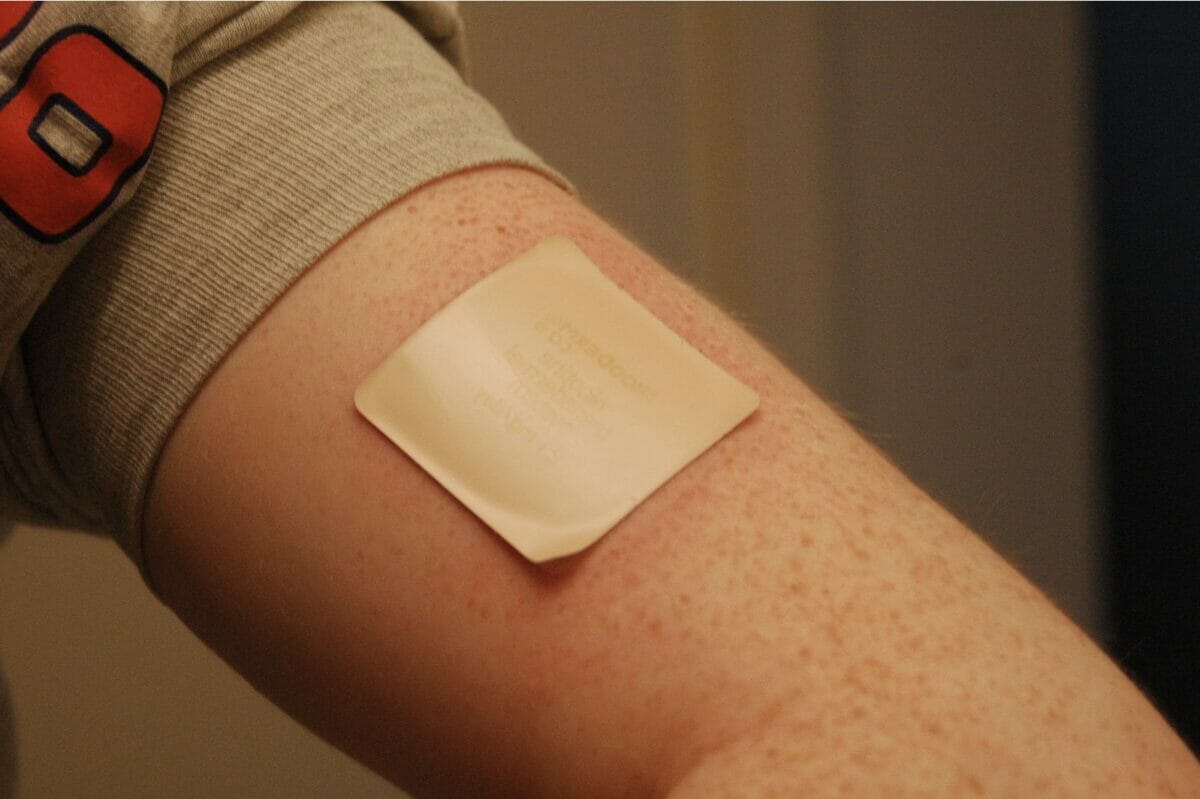
A transdermal medication patch is an adhesive patch that is applied to a client’s skin, where it continuously administers medication through the skin into the bloodstream. This method provides a controlled, steady dose of medication, often over the course of hours or days.
Nursing tip: Medication patches need to be monitored for skin damage and correct position daily.
Nursing tip: Do not apply transdermal patch to non-intact skin, unless specifically ordered by provider.
What are the advantages of transdermal medication administration?
When applied transdermally, medication diffuses through skin layers into the systemic circulation, allowing slow absorption of medication over time. This is advantageous for a number of medications and uses, including: