

NCLEX QUESTION TYPE TUTORIAL
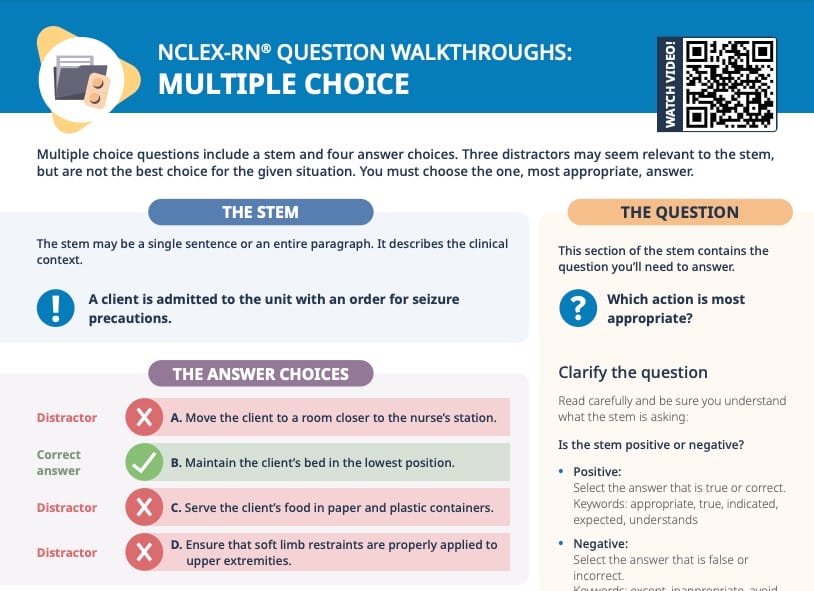
The nurse is caring for a client who is exhibiting a panic attack. Which statement by the nurse to the client is therapeutic?
The situation described in the question stem is that your nursing client is actively having a panic attack, and you have a choice of four options of what to say to them. The task is to choose the option that is “therapeutic.”
A panic attack is a sudden onset of intense fear or discomfort that reaches a peak within minutes. Panic attacks can present with a variety of symptoms, including heart palpitations, sweating, trembling, shortness of breath, a feeling of choking, chest pain, nausea, dizziness, chills or heat sensations, numbness or tingling sensations, derealization (feelings of unreality) or depersonalization (being detached from oneself), fear of losing control or “going crazy,” and fear of dying.
Therapeutic communication is defined as a type of communication from the nurse to a patient/client that focuses on and prioritizes advancing the physical and emotional well–being of the patient.
A panic attack is very distressing for a client, and therapeutic communication aims to improve the patient’s well–being. Therefore, the correct answer choice to the question is the one that is most likely to make a patient with a panic attack feel better.
While the current panic attack will end, for someone with an anxiety disorder, the issue of panic attacks is in fact not a short-term problem. So, the first half of this statement is only half true. While you certainly do hope a patient feels better before they leave you, the panic attacks could come back at any time. This answer should be eliminated.
While in daily clinical practice, though it may be difficult to find the time to stay with someone for as long as you would like, in the world of NCLEX, such constraints do not apply, and nurse’s presence and calming measures like breathing are great interventions. So, let’s keep this one.
Asking questions like this or even putting pressure on someone experiencing a panic attack is not therapeutic, so this answer should be eliminated.
Giving a client time to calm down may be an option, so let’s keep this one as well and look at B and D in more detail in the next step.
We kept answer choices B and D:
Tip: Especially in NCLEX questions with a mental health context, it is not a good idea to leave your patient “alone.”
Therefore, answer D is probably not the most ideal option, since you would leave your patient alone while they are having a panic attack and would need the nurse by their side.
Answer B has two parts: Offering to go through the situation together (“Let’s take deep breaths” instead of “Calm down.”), and staying with the patient, which signals that you’re not rushing or judging the patient.
This is the most appropriate, therapeutic thing you can say to the patient, making B the correct answer.
Eliminate options that involve non-therapeutic ways of communication, such as rushing the patient, judging, being dismissive, etc.
RELATED TOPIC:
Free Download
Benefit from a unique study combination of a concise summary paired with video lectures.
Your free account gives you access to:
or