

Nursing Knowledge
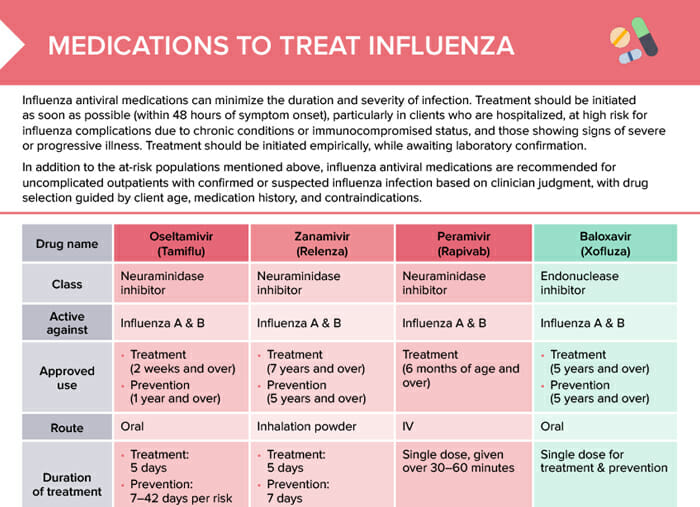
Influenza antiviral medications can minimize the duration and severity of infection. Treatment should be initiated as soon as possible (within 48 hours of symptom onset), particularly in clients who are hospitalized, at high risk for influenza complications due to chronic conditions or immunocompromised status, and those showing signs of severe or progressive illness.
Treatment should be initiated empirically, while awaiting laboratory confirmation.
In addition to the at-risk populations mentioned above, influenza antiviral medications are recommended for uncomplicated outpatients with confirmed or suspected influenza infection based on clinician judgment, with drug selection guided by client age, medication history, and contraindications.
Table: Tamiflu at a glance
| Class | Neuraminidase inhibitor |
| Route of administration | Oral |
| Duration of treatment | 5 days for treatment; 7–42 days per risk status for prevention |
Oseltamivir (Tamiflu) is a neuraminidase inhibitor. That means that it inhibits the action of neuraminidase enzymes. These enzymes are essential for the influenza virus to spread from infected cells to new, healthy cells. By blocking neuraminidase, Tamiflu prevents new viral particles from being released, thereby limiting the spread of the virus within the body and reducing the severity and duration of flu symptoms.
For the treatment of influenza in adults, the recommended dosage is 75 mg twice daily for 5 days. Best result is when started within first 2 days of illness.
In children, the dose depends on body weight.
Always consult with the prescribing physician or latest guidelines before administering oseltamivir, as recommendations may evolve based on new research, and dosing might be different for patients with certain conditions or compromised renal function.
As all neuraminidase inhibitors, adverse effects of oseltamivir can include:
Tamiflu is approved for use in children 2 weeks and over for influenza treatment, and for children 1 year and over for prevention.
Tamiflu is the preferred treatment of influenza during pregnancy.
Tamiflu is effective, and there is more accumulated safety data for oseltamivir in pregnant women compared to other antiviral medications. Studies have not shown an increased risk of birth defects or adverse maternal or fetal outcomes with its use. Health agencies, such as the Centers for Disease Control and Prevention (CDC) and the World Health Organization (WHO), have endorsed the use of oseltamivir for pregnant individuals because of the potential severe consequences of influenza during pregnancy.
Tamiflu (oseltamivir) is not effective against COVID-19 since SARS-CoV-2 does not possess the enzyme neuraminidase that oseltamivir works by inhibiting. It’s essential to rely on up-to-date guidelines and research when considering treatments for COVID-19.
Table: Relenza at a glance
| Class | Neuraminidase inhibitor |
| Route of administration | Inhalation powder |
| Duration of treatment | 5 days for treatment; 7 days for prevention |
Zanamivir is approved for use for treatment in children 7 years and over, and for prevention in clients 5 years and over. It has the same potential side effects as other neuraminidase inhibitors. Lung disease like asthma and COPD warrant precautions, and egg allergy is a contraindication.
Table: Rapivab at a glance
| Class | Neuraminidase inhibitor |
| Route of administration | IV |
| Duration of treatment | Single dose, given over 30–60 minutes |
Peramivir is approved for use in treatment of influenza in clients 6 months of age and over. It has the same potential side effects as other neuraminidase inhibitors.
Table: Xofluza at a glance
| Class | Endonuclease inhibitor |
| Route of administration | Oral |
| Duration of treatment | Single dose for treatment and prevention |
Baloxavir is approved for use in influenza treatment and prevention in clients 5 years and over. It has no more common known adverse effects compared to placebos in clinical trials, however there are more contraindications to its use:
It is recommended for uncomplicated, outpatient use only.
An important difference between the two is that while Tamiflu is the recommended influenza medication in pregnant clients, pregnancy is a contraindication for use of Xofluza.
Also, there is a difference in the mechanism of action:
Tamiflu works by inhibiting neuraminidase, while baloxavir works by inhibiting endonuclease, an enzyme important for the virus’ replication process. By inhibiting this enzyme, baloxavir disrupts the viral mRNA synthesis, thereby preventing the influenza virus from replicating within the host cells. This ultimately reduces the duration and severity of flu symptoms.
In essence, while oseltamivir (Tamiflu) and similar drugs inhibit the release of new viral particles from infected cells, baloxavir targets an earlier step in the viral life cycle by preventing the virus from making copies of itself inside the cells.
RELATED TOPIC:
Free Download
Master the topic with a unique study combination of a concise summary paired with video lectures.
Your free account gives you access to:
or