

Nursing Knowledge
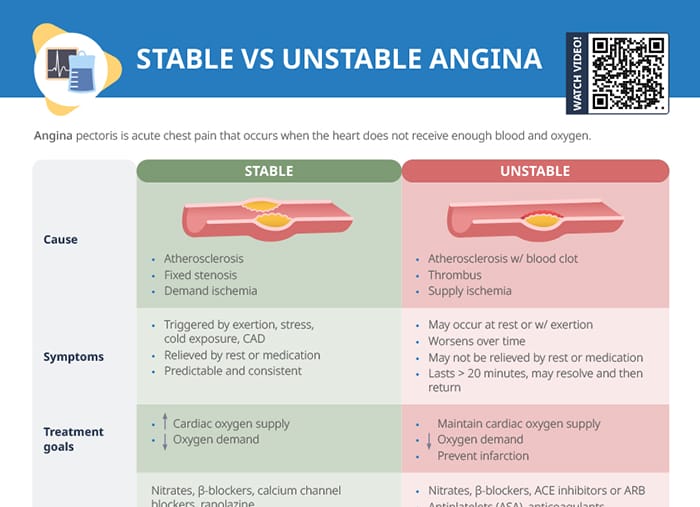
Causes of stable angina include:
Unstable angina is caused by
Stable angina is often triggered by exertion, stress, cold exposure, and CAD. Rest or medication will provide relief. This is usually predictable and consistent.
Unstable angina, on the other hand, may occur at rest or with exertion, worsens over time, and may not be relieved by rest or medication. It lasts over 20 minutes, may resolve, and then return.
The main goals when treating stable angina are to increase the cardiac oxygen supply and to lower oxygen demand. For unstable angina, the priorities are to prevent infarction, maintain cardiac oxygen supply, and lower oxygen demand.
Stable angina:
Unstable angina:
Stable angina:
Unstable angina:
Unstable angina is a medical emergency that requires immediate intervention.
Stable angina:
Unstable angina:
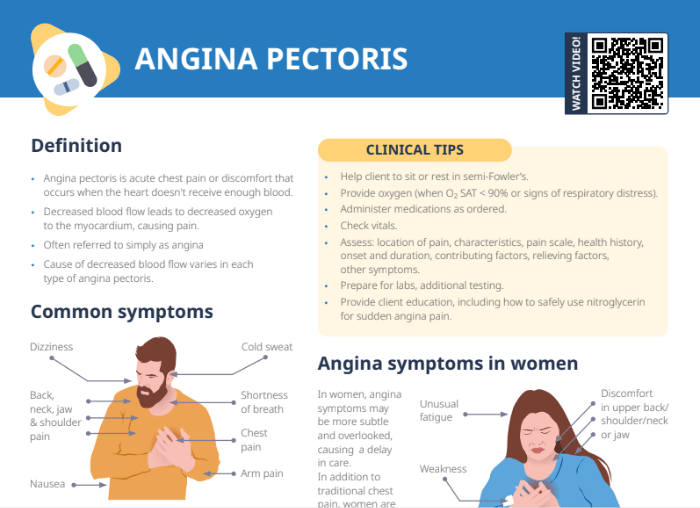
Angina symptoms may be different and more subtle in females. Educate clients on differences to avoid delay in care.
If a client is prescribed nitroglycerin, educate on the routes, usage, storage, and adverse effects. Instruct clients to call emergency responders if there is no improvement in angina 5 minutes, after 3 doses (15 min.) of nitroglycerin.
RELATED TOPIC:
Free Download
Master the topic with a unique study combination of a concise summary paired with video lectures.
Your free account gives you access to:
or