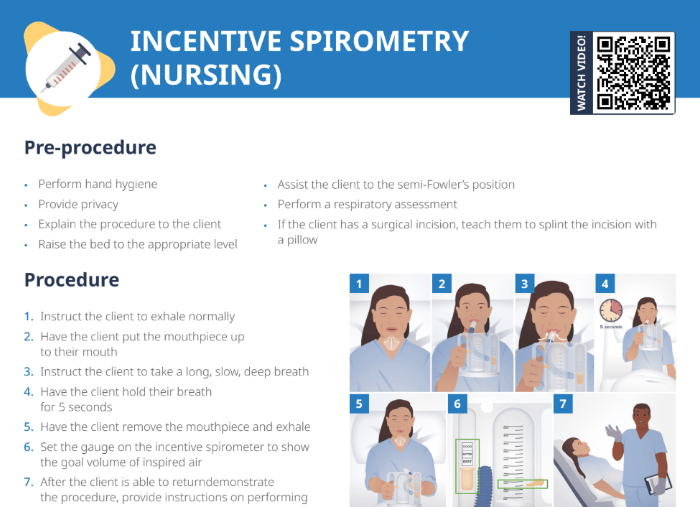
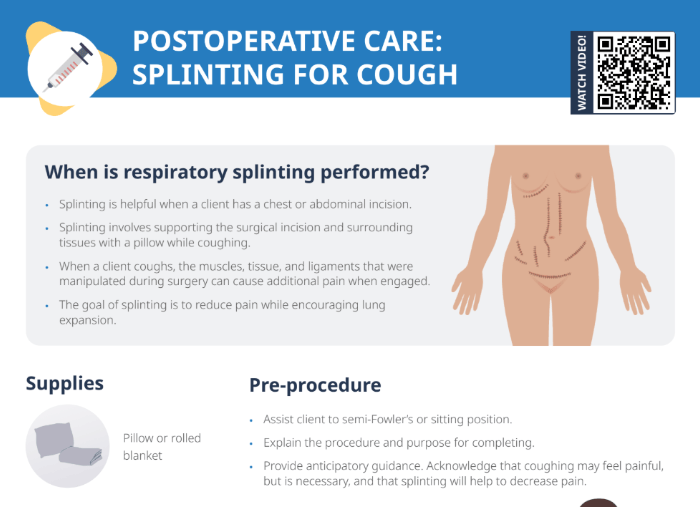
What is splinting after surgery?
Respiratory splinting involves supporting the surgical incision and surrounding tissues with a pillow while coughing or deep breathing.
Strong coughs and deep breathing are important postoperatively to ensure effective ventilation and help prevent infection. When a client coughs, the muscles, tissue, and ligaments that were manipulated during surgery can cause additional pain when engaged, so clients may avoid deep breathing or coughing, potentially leading to atelectasis or pneumonia.
The goal of splinting is to minimize pain while protecting the incision and encouraging lung expansion and coughing.
Respiratory splinting: procedure
- Give a pillow or rolled blanket to the client to “hug” against the chest wall and/or abdomen.
- Instruct the client to hug the pillow tightly and take a slow deep breath. At maximum inspiration, the client should be instructed to cough strongly multiple times.
- Encourage the client to continue splinting and coughing regularly, based on your assessment and the provider’s order.
Nursing tips around splinting
- Having the client cough multiple times is more effective at clearing respiratory secretions than a single cough.
- Pre-procedure:
- Assist client to semi-Fowler’s
- Explain procedure and purpose
- Provide anticipatory guidance. Acknowledge that coughing may feel painful, but is necessary, and that splinting will help to decrease pain.