
Nursing Knowledge
In short: SABAs are rescue asthma medications used to quickly relieve acute exacerbations, while LABAs are for continuous treatment of asthma with the main goal of preventing or lessening exacerbations.
LABAs stands for long-acting beta-agonists. LABAs are used (inhaled) as long-term asthma therapy to reduce inflammation and prevent exacerbations. They have a slower onset of action and the effects last about 12 hours. Medications in this class include:
LABAs activate beta-2 receptors in the lungs and lead to sustained smooth muscle relaxation.
SABAs activate beta-2 receptors in the lungs and lead to rapid bronchodilation.
SABAs and LABAs are bronchodilators primarily used for treating asthma, COPD, and other respiratory conditions.
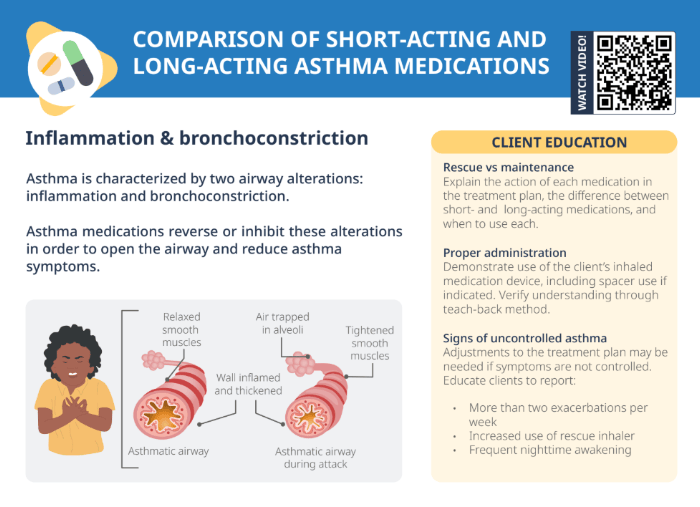
Asthma is characterized by two airway alterations: inflammation and bronchoconstriction. Asthma medications reverse or inhibit these alterations in order to open the airway and reduce asthma symptoms.
Explain the action of each medication in the treatment plan, the difference between short- and long-acting medications, and when to use each.
Demonstrate use of the client’s inhaled medication device, including spacer use if indicated. Verify understanding through the teach-back method.
Adjustments to the treatment plan may be needed if symptoms are not controlled.
Educate clients to report:
Free Download
Master the topic with a unique study combination of a concise summary paired with video lectures.
Your free account gives you access to:
or