

Nursing Knowledge
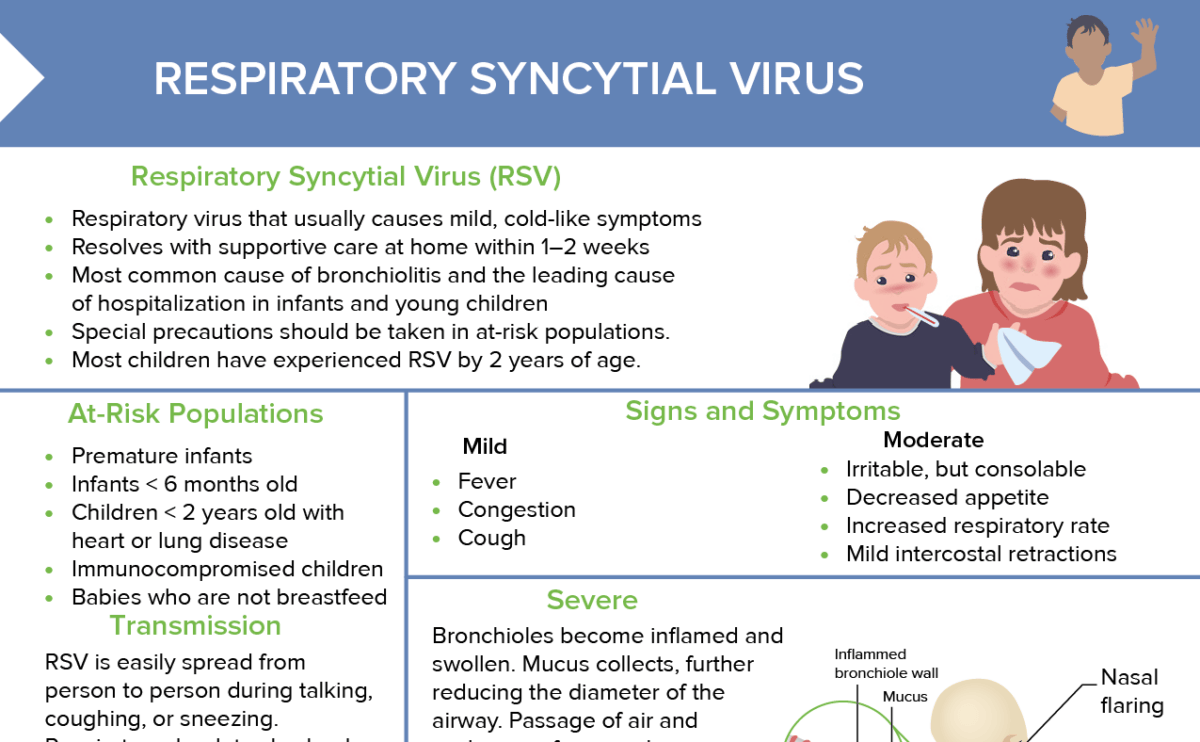
Respiratory Syncytial Virus (RSV) is a respiratory virus that usually causes mild, cold-like symptoms and resolves with supportive care at home within 1–2 weeks. It is the most common cause of bronchiolitis and the leading cause of hospitalization in infants and young children.
At-risk populations for RSV include premature infants, infants < 6 months old, children < 2 years old with heart or lung disease, immunocompromised children, and babies who are not breastfed.
RSV is easily spread from person to person during talking, coughing, or sneezing. Respiratory droplets also land on objects such as door knobs, handrails, tables, and toys. Individuals can become infected when they handle contaminated objects and then touch the nose, mouth, or eyes.
RSV is highly contagious. Individuals infected with RSV are usually contagious for 3 to 8 days. However, in some cases, particularly in young infants and individuals with weakened immune systems, the virus can be spread for up to a few weeks, even after symptoms have resolved.
It’s important to note that RSV can survive on hard surfaces such as tables and crib rails for many hours, and it can live on the hands for up to half an hour.
To prevent the spread of RSV: individuals should wash hands frequently; cover nose and mouth when sneezing or coughing; avoid touching face; keep sick children home from school or daycare; and sanitize hard surfaces.
Signs and symptoms of RSV include:
In more severe cases:
Treatment for RSV includes supportive measures such as antipyretics for comfort and hydration. In more severe cases, nasal suction and supplemental oxygen may be necessary. Families should also be educated and provided reassurance.
Complications can include bronchiolitis, pneumonia, and respiratory failure. Some children may develop recurrent wheezing or asthma in later life.
Nurses monitor vital signs, oxygen saturation, hydration, and overall condition, administer prescribed treatments, and provide education and emotional support to families. They also ensure infection control measures to prevent the spread of the virus.
Nurses can educate families about symptom recognition, when to seek medical help, home care measures, preventive strategies, and the contagious nature of RSV to help manage the infection effectively.
A baby with RSV should be taken to the hospital when exhibiting severe or worsening symptoms, which may indicate the development of serious conditions like bronchiolitis or pneumonia. Signs that warrant immediate medical attention include:
Nurses should educate caregivers about these warning signs and provide reassurance about the necessity of hospitalization in these cases to provide the best possible care for the infant.
RELATED TOPIC:
Free Download
Master the topic with a unique study combination of a concise summary paired with video lectures.
Your free account gives you access to:
or