A thorough lung assessment can provide valuable information about a client’s breathing patterns, lung sounds, and overall respiratory function. By understanding the normal and abnormal findings of a lung assessment, nurses can detect early signs of respiratory distress and intervene promptly. Find an overview of the steps of lung assessment, respiratory landmarks, breathing patterns, and assessment findings below.
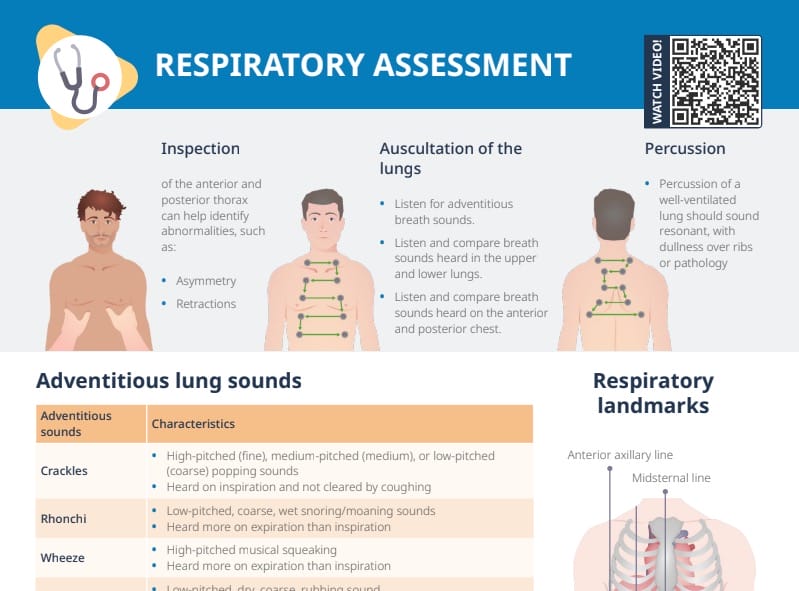
Inspect the anterior and posterior thorax to identify any abnormalities, such as:
Asymmetry
Retractions
#2 Auscultation
Listen for adventitious breath sounds.
Listen and compare breath sounds heard in the upper and lower lungs.
Listen and compare breath sounds heard on the anterior and posterior chest.
#3 Percussion
Percussion of a well-ventilated lung should sound resonant, with dullness over ribs or pathology.
Image by Lecturio.
Lung assessment landmarks
In a lung assessment, landmarks help you correctly position your stethoscope to listen to lung sounds. Key landmarks include:
Anterior axillary line
Midsternal line
Midclavicular line
Posterior axillary line
Anterior axillary line
Midaxillary line
Lung sounds assessment: adventitious findings
If you hear any adventitious lung sounds during a respiratory assessment, you should document the finding, alert the healthcare provider for evaluation and orders, and monitor the patient’s respiratory status and vital signs.
Be mindful any of the following:
Crackles
Rhonchi
Wheezing
Pleural rub
Stridor
Free bonus download
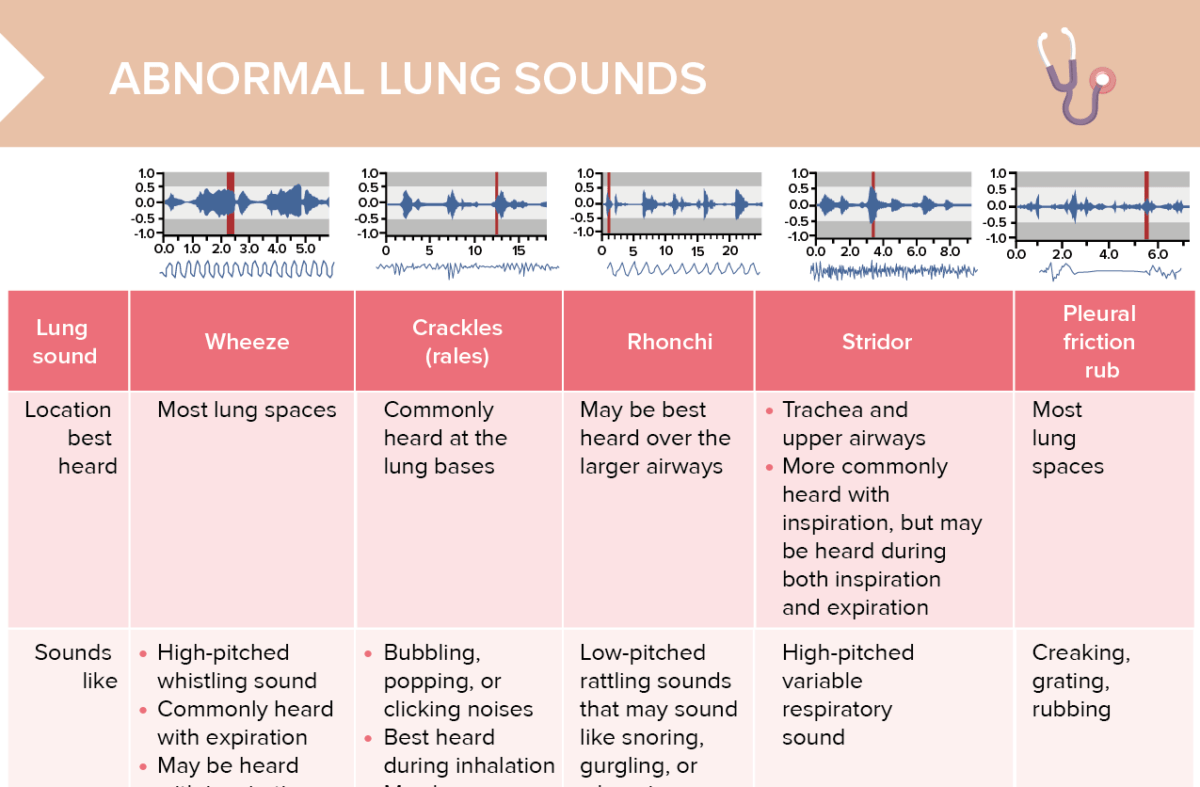
Overview of adventitious lung sounds
An overview of abnormal lung sounds, such as stridor and crackles