

Nursing Knowledge
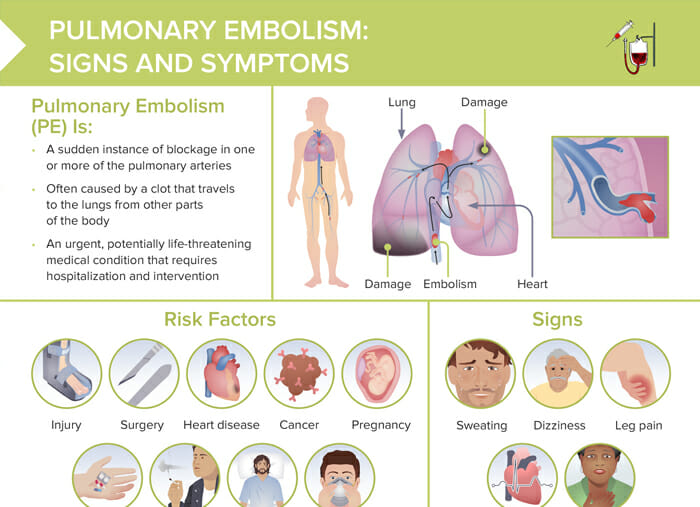
A pulmonary embolism is a sudden instance of blockage in one or more of the pulmonary arteries, often caused by a clot that travels to the lungs from other parts of the body. Pulmonary embolisms are an urgent, potentially life-threatening medical condition that requires hospitalization and intervention.
Factors that increase the risk of pulmonary embolism include:
Signs of pulmonary embolism include:
PE mimics several other health conditions and is often overlooked in clients who might have similar symptoms. Thorough assessment and monitoring of sudden changes in signs, intake and output, edema, or breathing patterns is essential.
If PE is suspected, diagnostic testing often involves imaging, such as a chest X-ray, ultrasound, MRI, pulmonary angiogram, ventilation-perfusion scan (V/Q scan), and bloodwork.
Examine the contents of a care plan for an example client (who received a pulmonary embolism diagnosis after presenting with symptoms of shortness of breath and chest pain) could look like (nursing diagnoses, objective, and interventions). At the end, the evaluation of the actions taken should follow, documenting how the client responded to the planned interventions.
Assessment:
Subjective and objective data: dyspnea with respirations at 24/min, headache, confusion, tachycardia
Potential nursing diagnosis:
Potential nursing diagnoses for a pulmonary embolism can include:
Planning:
Addressing the planning phase of the care plan for impaired gas exchange:
Note: Educate patients that anticoagulants will be taken for an extended period of time.
Interventions:
Evaluation:
Educate client/family on medication adherence and adverse effects. Emphasize regular monitoring of blood parameters for medication dose.
Factors influencing the mortality of pulmonary embolism, and how quickly a patient can deteriorate, include:
If symptoms are mild, an affected person might not immediately notice they are experiencing a pulmonary embolism – in some cases, for hours or days, or even longer. Factors that can influence this include:
A saddle pulmonary embolism refers to a large blood clot that straddles the bifurcation (or split) of the main pulmonary artery into the left and right main pulmonary arteries. This positioning resembles a saddle, which is where the term comes from.
RELATED TOPIC:
Free Download
Master the topic with a unique study combination of a concise summary paired with video lectures.
Your free account gives you access to:
or