
Nursing Knowledge
Prone position is one in which a person is lying on their abdomen with the face down and the back up.
A patient in prone position is positioned on their abdomen, face down, with the back up, while a patient in supine position is lying on their back, face up, with legs and spine aligned.
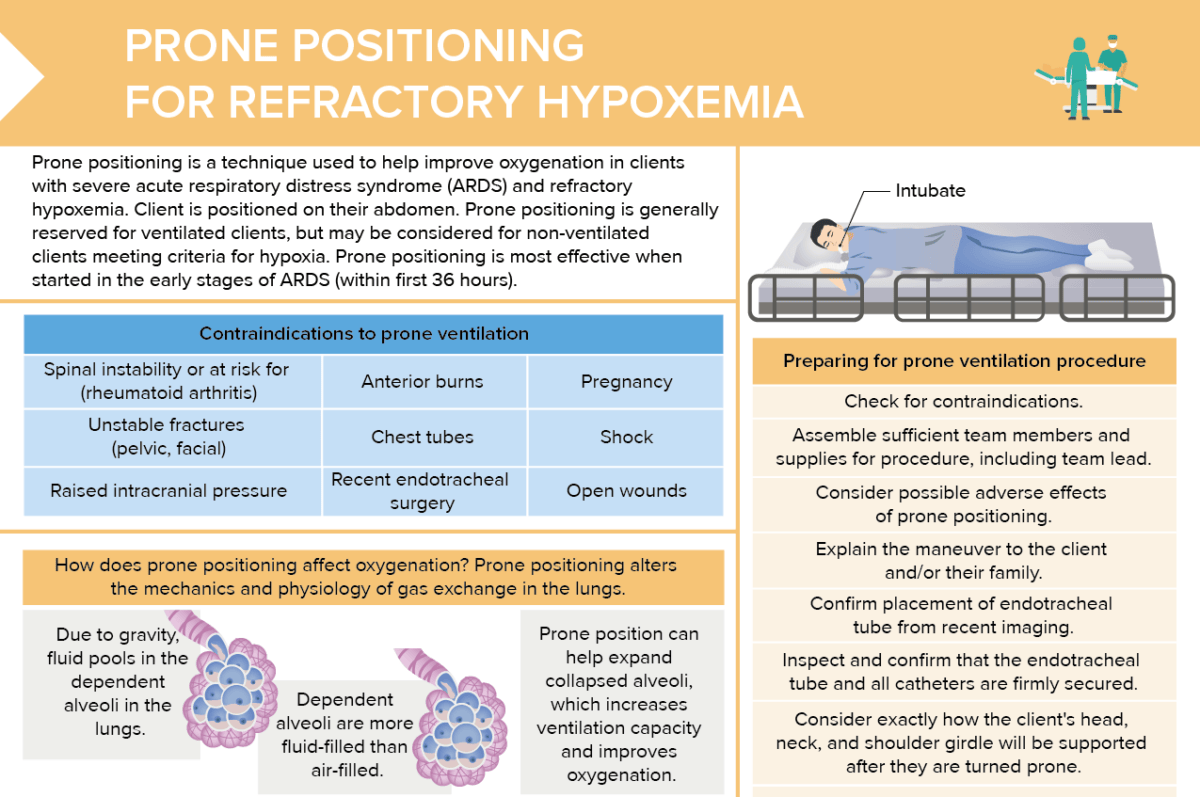
Prone positioning is used to help improve oxygenation in clients with severe acute respiratory distress syndrome (ARDS) and refractory hypoxemia.
Other situations where a patient may be positioned prone are certain surgeries (to allow better access to the surgery site), alternating positions to prevent pressure ulcers, and some physical therapy exercises.
Refractory hypoxemia is a severe form of low blood oxygen levels that does not adequately respond to conventional oxygen therapy, such as high-flow nasal cannula or mechanical ventilation with high levels of supplemental oxygen. Often encountered in conditions like acute respiratory distress syndrome (ARDS), it poses a significant risk of organ failure and mortality.
Due to gravity, fluid pools in the dependent alveoli in the lungs. Dependent alveoli are more fluid-filled than air-filled. Prone position can help expand collapsed alveoli, which increases ventilation capacity and improves oxygenation.
In the supine position, the dependent alveoli are in the back (dorsal). The heart and mediastinum add increased pressure to the lungs, which can collapse the dorsal alveoli. The added pressure in this position can increase the risk of atelectasis.
In the prone position, the dependent alveoli are in the front (ventral). The fluid can shift from back to front, giving the posterior alveoli a chance to recover.
Prone positioning is generally reserved for ventilated clients, but may be considered for non-ventilated clients meeting criteria for hypoxia. Prone positioning is most effective when started in the early stages of ARDS (within the first 36 hours).
Free Download
Master the topic with a unique study combination of a concise summary paired with video lectures.
Your free account gives you access to:
or