

Nursing Knowledge
Effective postoperative pain control facilitates early mobilization, reduces hospital length of stay and improves client satisfaction. Opioid medications remain central to pharmacologic postoperative pain management. However, given growing awareness of the morbidity and mortality associated with opioid use disorders, best practice increasingly supports a multimodal and multidisciplinary team approach.
Planning for pain management should begin in the preoperative period. Factors to consider include:
A PCA pump allows clients to self-manage pain by pressing a button for medication or administering a constant low dose with optional supplemental bolus doses initiated by the client. Nursing tasks:
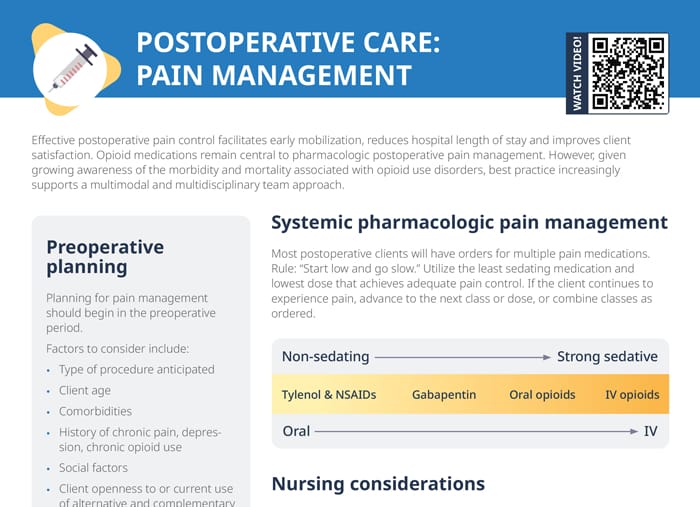
Most postoperative clients will have orders for multiple pain medications.
Rule: “Start low and go slow.”
Utilize the least sedating medication and lowest dose that achieves adequate pain control. If the client continues to experience pain, advance to the next class or dose, or combine classes as ordered.
Medications in order of least to most sedating:
When considering natural methods, it’s important to discuss them with the healthcare team to ensure they are safe and appropriate for the patient’s specific situation, especially in the postoperative context. These methods are often most effective when used as part of a comprehensive pain management plan that may also include medications.
Layered interventions, tailored to each client’s characteristics, comorbidities, and risk factors, improve pain management. Nurses can encourage the multidisciplinary team to plan for multiple modalities:
Post-surgical gas pain is common and uncomfortable for patients. Encourage your nursing clients to move and walk around as soon as their condition allows. Comfortable positioning and hydration, as well as warm compresses, deep breathing exercises, and dietary adjustments can help as well.
RELATED TOPIC:
Free Download
Master the topic with a unique study combination of a concise summary paired with video lectures.
Your free account gives you access to:
or