

Nursing Knowledge
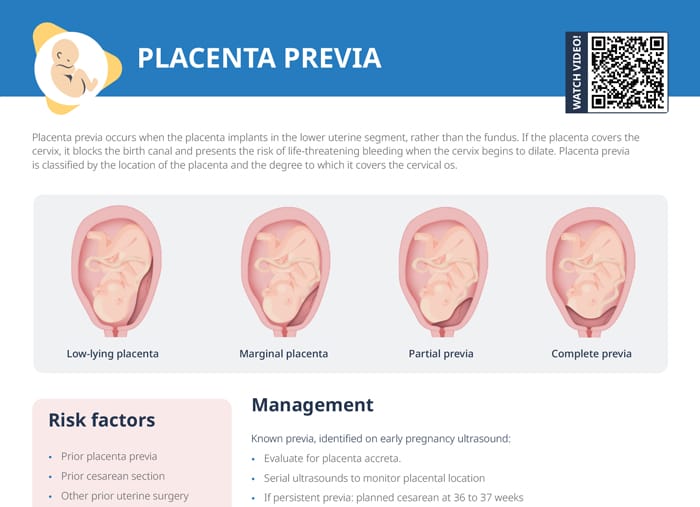
Placenta previa occurs when the placenta implants in the lower uterine segment, rather than the fundus, and therefore covers the cervical os. If the placenta covers the cervix, it blocks the birth canal and presents the risk of life-threatening bleeding when the cervix begins to dilate.
Placenta previa is classified by the location of the placenta and the degree to which it covers the cervical os.
A low-lying placenta is located in the lower part of the uterus, but does not reach the cervix and does not cover it at all. Monitoring and expectant management may be considered here, since this type may resolve as the pregnancy progresses.
In marginal placenta previa, the placenta is at the edge of the cervix, not covering it fully, but close enough to cause potential complications in vaginal delivery.
The placenta partially covers the cervix with varying extents of coverage.
In complete placenta previa, the placenta completely covers the cervical opening. It comes with a high bleeding risk and usually requires cesarean delivery.
Risk factors for developing placenta previa include:
If previa is already diagnosed (identified on an early pregnancy ultrasound):
If a client presents with vaginal bleeding in the second or third trimester:
Avoid vaginal exams on any pregnant client with vaginal bleeding until placental location is confirmed. Exam may disrupt placenta and worsen bleeding.
Outside of bright red, painless vaginal bleeding in the second or third trimester, placenta previa can present with:
Vasa previa and placenta previa are both obstetric complications, but they are different conditions. Both have a potentially dangerous loss of blood as their main risk. The key difference is that placenta previa involves the placement of the placenta itself, while vasa previa involves the placement of fetal blood vessels.
Placenta previa involves the placenta covering or being near the cervix. Vasa previa occurs when fetal blood vessels from the umbilical cord or placenta cross the entrance to the birth canal beneath the fetus.
Clients should be advised to:
RELATED TOPIC:
Free Download
Master the topic with a unique study combination of a concise summary paired with video lectures.
Your free account gives you access to:
or