
Nursing Knowledge
RELATED STUDY SHEET
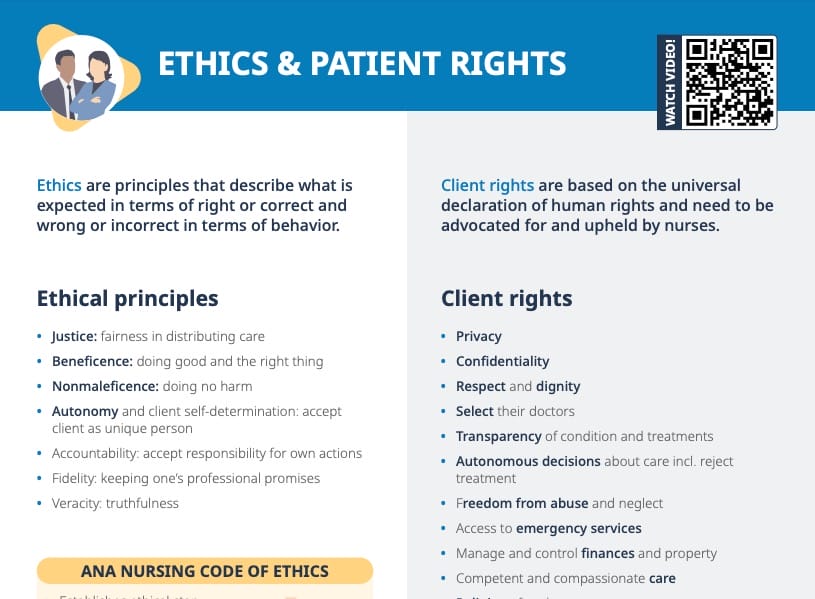
According to the American Hospital Association, all patients have the following rights:
Nurses’ role and responsibilities around patient rights include:
Formalized in 1948, the universal declaration of human rights recognizes the inherent dignity and the equal and unalienable rights of all humans. On this basis of the concept, the notion of patient rights was developed.
The patient self-determination act upholds a person’s right to make decisions about current and future treatments. This includes the free choice to not accept treatment or care.
Patients’ right to choose their doctors emphasizes the principle of autonomy in healthcare. It means that patients have the freedom and authority to select a medical professional they trust and are comfortable with for their care, without coercion or external pressures.
Patients have the right to comprehensive pain management, which includes timely assessment of pain, receiving clear information about potential treatments, and participating in pain-related decisions. They should be provided with effective pain relief measures, be it through medications, alternative therapies, or other interventions. Patients also have the right to voice if their pain is not adequately managed and to seek a second opinion if they feel their pain management needs aren’t being met. Proper pain management respects the dignity and autonomy of the patient, ensuring their comfort and quality of life.
Based on the patients’ right to accurate billing, healthcare providers and insurers are obligated to rectify any errors. Patients have the right to an explanation of their bills (transparency) and can dispute their bill if they find any inaccuracies. Last but not least, patients’ billing and medical records are private (right to privacy).
The health insurance portability and accountability act (HIPAA) is a U.S. federal law that supports and upholds clients’ rights to confidentiality and the privacy of their medical information.
There are three ways how consent can be given:
Table: Potential expectations/requests patients have of nurses and patients rights that justify them
| Patient expectation/request | Based on which patient right |
| Getting an explanation of a procedure before it is performed | Informed consent |
| Acceptance of cultural practices | Respect and dignity |
| Talking in a separate room about their condition | Privacy and confidentiality |
| Asking for a translator | Informed consent, transparency |
| Explanation of a charge | Transparency and accurate billing |
| Not wanting to take a specific medication | Right to refusal, right to be involved in decisions about care |
| Wanting to see medical records | Transparency |
Nurses may encounter a range of unrealistic patient expectations, often due to misconceptions, lack of medical knowledge, or heightened emotions.
Here are some examples and how you as a nurse can address them:
Patient responsibilities refer to the behaviors and actions expected of patients to ensure effective care for them. These responsibilities often mirror patient rights. Here are a few examples:
Free Download
Master the topic with a unique study combination of a concise summary paired with video lectures.
Your free account gives you access to:
or