Otitis media (inflammation/infection of the middle ear) is a common condition that is prevalent in both children and adults and can lead to complications, if left untreated. As a nurse, understanding the symptoms, causes, and treatment options for otitis media is essential in providing appropriate care to clients. Keep reading for an overview of otitis media, including its symptoms, causes, risk factors, and complications.
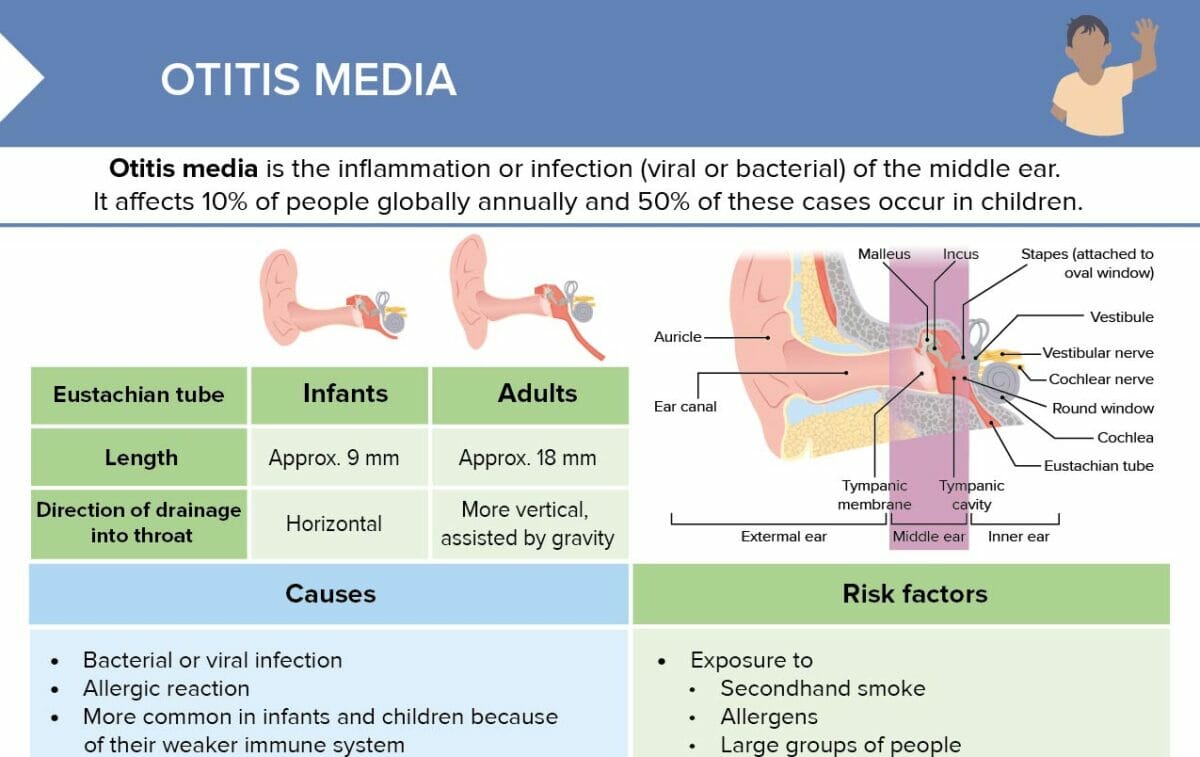
Otitis media is the inflammation or infection (viral or bacterial) of the middle ear. It affects 10% of people globally each year; 50% of cases occur in children.
Otitis media can be caused by bacterial or viral infection, or allergic reactions. Risk factors are:
Exposure to:
Secondhand smoke
Allergens
Large groups of people
Pacifier use
Craniofacial abnormalities
What are the symptoms of otitis media in children and adults?
Symptoms in adults:
Irritability
Fatigue
Loss of balance
Fever
Otalgia (ear pain)
Difficulty hearing
Symptoms in children:
Irritability
Tugging at the ear
Loss of balance
Fever
Otalgia (ear pain)
Difficulty hearing
Nursing diagnosis for otitis media
The possible nursing diagnoses for otitis media can differ for adults and children.
Nursing diagnoses for otitis media may include:
Acute pain related to inflammation and increased pressure from fluid accumulation in the middle ear
Impaired verbal communication due to the pain or hearing impairment
Disturbed sleep pattern related to pain and discomfort
Anxiety related to the illness, especially if there are repeated episodes
In children, some additional nursing diagnoses could include:
Acute pain may manifest differently in children who may not be able to articulate their discomfort: They may show signs of irritability, changes in eating habits, or pull at the affected ear.
Ineffective coping as the child may exhibit behavioral changes due to the discomfort or pain associated with otitis media.
Risk for delayed development: If otitis media is chronic or recurrent, it could potentially impact language acquisition and cognitive development due to impaired hearing.
Potential complications of otitis media
Potential complications include:
Perforation of the tympanic membrane
Speech or hearing delays or challenges
Mastoiditis: infection of the mastoid space behind the ear
Rarely: brain infections
What is the Eustachian tube and how does it differ in infants and adults?
The Eustachian tube is a tube that connects the middle ear to the back of the throat.
Adults
Infants
Length
Approx. 18 mm
Approx. 9 mm
Direction of drainage into throat
More vertical, assisted by gravity
Horizontal
Table: Eustachian tube in adults vs infants
How to treat otitis media
OTC analgesics (NSAIDs or acetaminophen)
Antibiotics if caused by a bacterial infection
Decongestants
Antihistamines
Tympanostomy tubes for recurrent cases
Rest
Nursing interventions for otitis media in children