

Nursing Knowledge
Oral medications are drugs taken by mouth. Tablets, capsules, liquids, or suspensions are the most common forms.
After swallowing, they pass through the stomach and into the small intestine, where they are absorbed into the bloodstream and distributed throughout the body.
These medications can have systemic effects and treat various conditions, from simple ailments like headaches to complex issues like hypertension or diabetes.
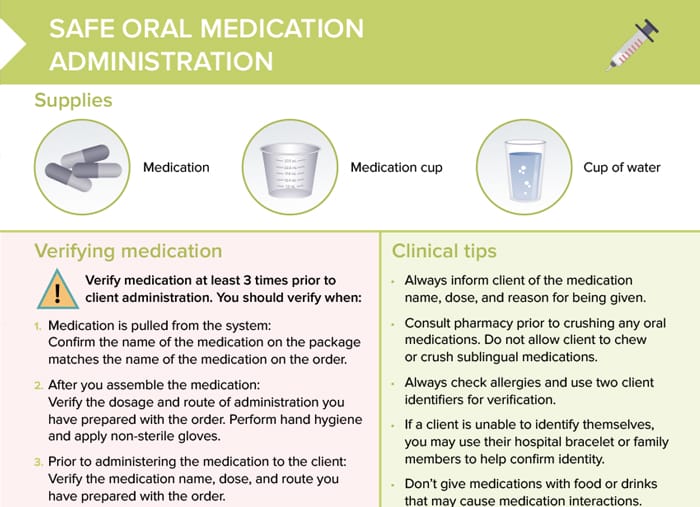
Note: Verify medication at least 3 times prior to client administration.
You should verify when:
Consider a client’s swallowing abilities when administering oral medications. Assist clients who are unable to administer medications independently.
When administering oral medications to pediatric patients, confirm if the child can swallow pills or if the medication needs altering (e.g., crushing, liquid form), ensuring it doesn’t affect efficacy.
Age-related changes (changes in reflexes, muscle weakening, dental issues) as well as underlying health conditions like dementia can contribute to dysphagia in older adult patients. To prevent choking or aspiration and make sure the medications are properly absorbed, make sure to judge their swallowing ability and, if necessary and possible, modify the medication’s form, or employ strategies like chin tucking or multiple, smaller swallows to help.
RELATED TOPIC:
Free Download
Master the topic with a unique study combination of a concise summary paired with video lectures.
Your free account gives you access to:
or