
Nursing Knowledge
Oral contraceptives are medications taken to prevent pregnancy that are taken orally, typically in the form of pills.
Oral contraceptives work primarily by inhibiting ovulation and altering the lining of the uterus and cervical mucus to hinder sperm movement.
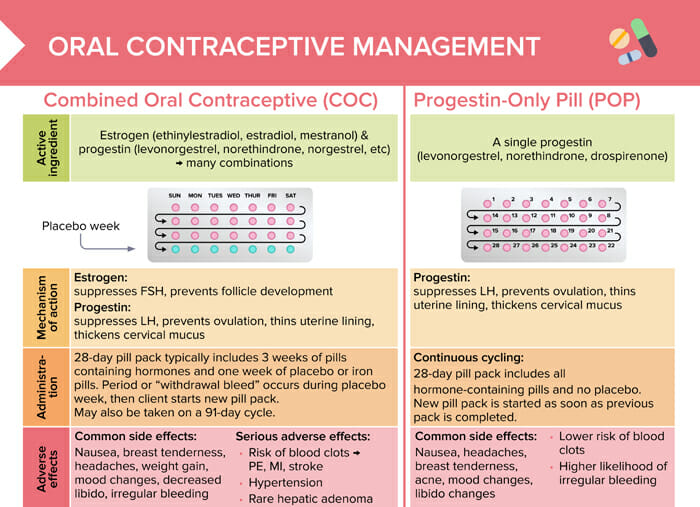
Combined oral contraceptives contain estrogen (ethinylestradiol, estradiol, mestranol) and progestin (levonorgestrel, norethindrone, norgestrel, etc). There are many different combinations available.
A 28-day pill pack typically includes 3 weeks of pills containing hormones and one week of placebo or iron pills. Period or “withdrawal bleed” occurs during placebo week, after which the client starts a new pill pack. Combined oral contraceptives may also be taken on a 91-day cycle.
Progestin-only pills contain only a single progestin (levonorgestrel, norethindrone, drospirenone).
They are administered in “continuous cycling,” meaning that a 28-day pill pack includes all hormone-containing pills and no placebo. The new pill pack is started as soon as the previous pack is completed.
Triphasic oral contraceptives are a type of combined oral contraceptive pill designed to more closely mimic the natural hormonal fluctuations of a woman’s menstrual cycle. Unlike monophasic pills, which deliver the same amount of estrogen and progestin every active day, triphasic pills vary the hormone dose in three phases over the active pill-taking days.
Common adverse effects of oral contraception include:
Contraindications:
Precautions:
The primary concern regarding smoking and oral contraceptives centers on the increased risk of cardiovascular complications. Both factors can increase the risk of blood clots, hypertension, and damage to blood vessels.
Some antibiotics are believed to interfere with the efficacy of birth control pills (e.g., rifampin). To eliminate any risk, it is recommended clients use backup contraception methods for the duration of antibiotic treatment and a few days afterward.
Some studies suggest that long-term use of oral contraceptives (for 5 years or more) may increase the risk of cervical cancer in women who have an HPV infection. Those with a known HPV infection should discuss their contraceptive choices with their healthcare provider. Regular cervical screenings remain essential regardless of birth control method.
No, most combined oral contraceptives suppress ovulation.
Progestin-only pills mainly work by thickening cervical mucus, but they can also suppress ovulation in some users.
Oral birth control hormones are typically cleared from the system within a few days.
The time it takes for a woman’s menstrual cycle and fertility to return to normal can vary, ranging from a few weeks to a few months. Some women may experience immediate return of fertility, while others might take significantly longer.
Free Download
Master the topic with a unique study combination of a concise summary paired with video lectures.
Your free account gives you access to:
or