Given the aging global population, the field of geriatric nursing is increasingly relevant in various settings, including hospitals, long-term care facilities, and home healthcare. Caring for elderly nursing clients demands a comprehensive approach to patient care, including physical, emotional, and social well-being. Key skills include understanding the difference between age-related changes versus age-related diseases, being vigilant for atypical presentations of common illnesses like UTIs, and coordinating care among a multidisciplinary team while keeping an eye on multiple comorbidities.
Geriatric nursing focuses on the care of elderly patients, addressing their complex healthcare needs such as chronic conditions, cognitive impairments, mobility issues, and polypharmacy.
As a nursing specialty, the field opens up job options in long-term care facilities, outpatient clinics, and home healthcare.
What is aging?
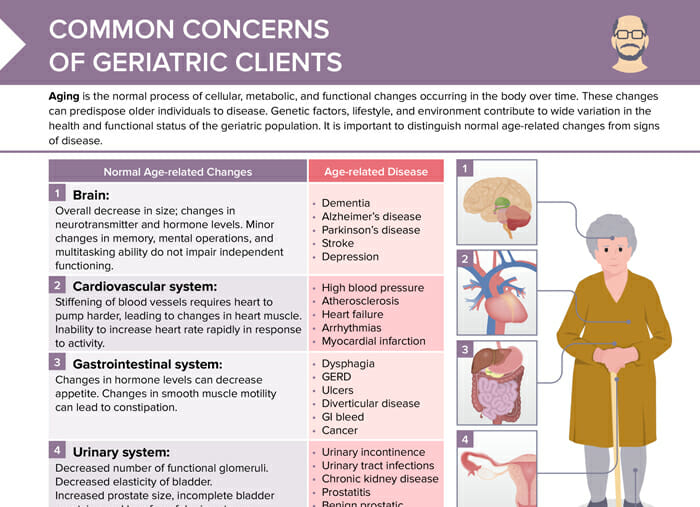
Aging is the normal process of cellular, metabolic, and functional changes occurring in the body over time. These changes can predispose older individuals to disease. Genetic factors, lifestyle, and environment contribute to wide variation in the health and functional status of the geriatric population.
It is important to distinguish normal age-related changes from signs of disease.
Educate your clients about health promotion strategies that help mitigate age-related changes and diseases:
Daily physical activity
Well-balanced diet
Adequate hydration
Sleep hygiene
Maintain healthy weight
Avoid smoking
Avoid alcohol/substance use
Stay mentally active with reading, games, ongoing learning
Seek social interaction to reduce stress, depression and memory loss
Attend routine health check ups and screenings
What is the best method to interact with elderly patients?
In general, take extra care when communicating with geriatric clients to:
Listen without judging and give them time to talk
Normalize age-related changes
Provide anticipatory guidance
Investigate signs of disease
Be aware of the effects of isolation, loss, and grief
What is the most common reason for hospitalization of elderly patients?
The most common reason for hospitalization of elderly clients is heart failure, followed by chronic conditions like respiratory issues or infections.
Multiple comorbidities are common and make the treatment of elderly nursing clients more complex.
List of normal age-related changes
Normal age-related changes are natural physiological changes that occur as people age. They do not need medical intervention, but may be alleviated or reduced in impact with lifestyle measures and precautions.
Brain
Overall decrease in size
Changes in neurotransmitter and hormone levels
Minor changes in memory, mental operations, and multitasking ability do not impair independent functioning.
Cardiovascular system
Stiffening of blood vessels requires the heart to pump harder, leading to changes in heart muscle.
Inability to increase heart rate rapidly in response to activity
Gastrointestinal system
Changes in hormone levels can decrease appetite.
Changes in smooth muscle motility can lead to constipation.
Urinary system
Decreased number of functional glomeruli
Decreased elasticity of bladder
Increased prostate size, incomplete bladder emptying and less forceful urine stream
Musculoskeletal system
Bones shrink in size and density.
Muscles lose strength, endurance, and flexibility
Reduced coordination, stability, and balance
List of common age-related diseases
Age-related diseases are medical conditions that become more common with age, but do not naturally and inevitably occur with aging. They need medical intervention.
Brain
Dementia
Alzheimer disease
Parkinson disease
Stroke
Depression
Cardiovascular system
High blood pressure
Atherosclerosis
Heart failure
Arrhythmias
Myocardial infarction
Gastrointestinal system
Dysphagia
GERD
Ulcers
Diverticular disease
GI bleed
Cancer
Urinary system
Urinary incontinence
Urinary tract infections
Chronic kidney disease
Prostatitis
Benign prostatic hyperplasia
Prostate cancer
Musculoskeletal system
Arthritis
Osteoporosis
Fall-related injuries
Bone fractures
What do elderly patients often fear about going to the hospital?
Elderly patients often fear losing their independence. Being bedridden or needing long-term care are worrying possibilities for many aging clients. Related to this, general worries about deteriorating health and mobility play into fears of getting treatment at hospitals. Concerns about hospital-acquired infections, fear of dying while not at home, or worries related to being isolated and alone while getting treated in a hospital and feeling disoriented by the unfamiliar setting, are also common fears.
Why do elderly patients get confused with UTIs?
Theories as to why elderly patients are prone to developing delirium or acute confusion with UTIs include:
Inflammatory response to infection may affect brain function
Fever or low oxygen may affect mental status
Infection may affect blood circulation to the brain
Focus topic: normal aging of the renal system
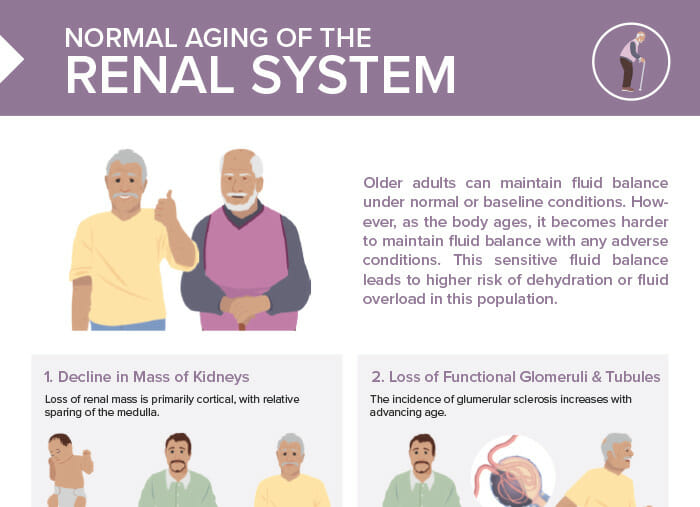
Older adults can maintain fluid balance under normal or baseline conditions. However, as the body ages, it becomes harder to maintain fluid balance with any adverse conditions. This sensitive fluid balance leads to higher risk of dehydration or fluid overload in this population.
Kidney mass decline
Loss of renal mass is primarily cortical, with relative sparing of the medulla.
At birth: 50 g
Up to age 40: 400 g
Age 90: 300 g
Loss of functional glomeruli and tubules
The incidence of glomerular sclerosis increases with advancing age.
Under age 40: Sclerotic glomeruli comprise less than 5% of the total glomeruli.
By age 80: Sclerotic glomeruli increase with age and comprise as much as 30% of the total glomeruli.
Reduction in renal blood flow (RBF)
RBF is well maintained at about 600 mL/min.
At age 40: RBF starts to decline by about 10% per decade.
By age 80: The decrease in RBF is most profound in the renal cortex.
Bonus download: aging of the renal system
Aging of the renal system
3 expected changes the kidneys go through during the natural aging process.