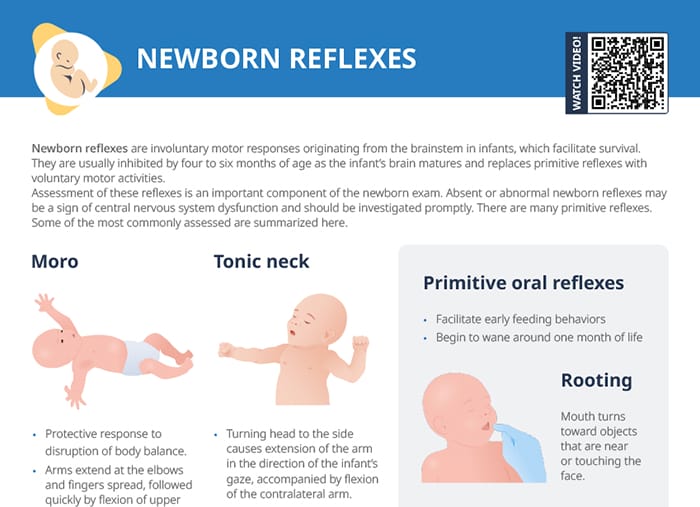


Assessment of primitive reflexes is an important component of the newborn exam. Absent or abnormal newborn reflexes may be a sign of central nervous system dysfunction and should be investigated promptly.
Types of reflexes:
Clinical tip: Persistence of primitive reflexes beyond the expected time period or reemergence of a formerly extinguished reflex can point to neurological disease.
Clinical tip: The presence of five or more abnormal reflexes is correlated with the development of cerebral palsy or other intellectual delays.
The rooting reflex helps the baby find the nipple for feeding.
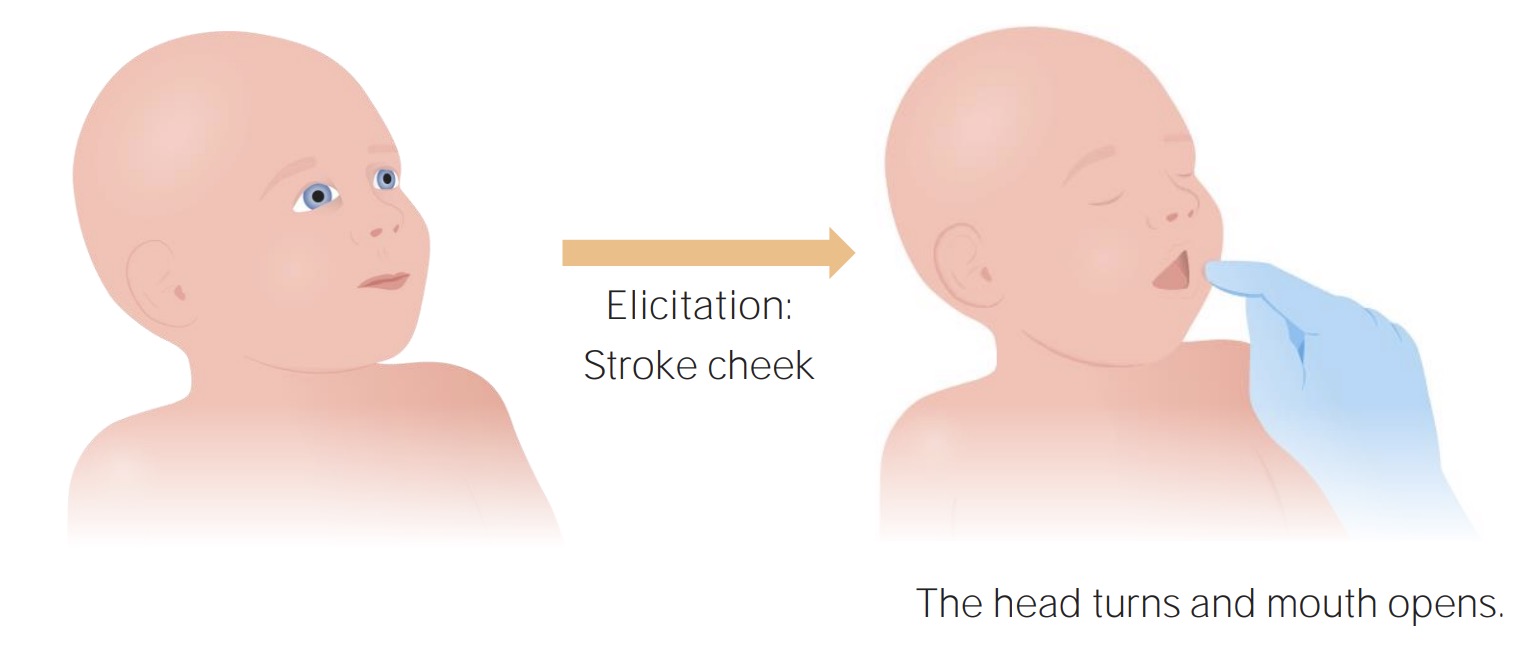
Touch or stroke the baby’s cheek. Reflex may be elicited by objects near the baby’s face as well. The mouth opens and the head turns toward the object near or touching the face.
Anything touching the roof of the baby’s mouth triggers the sucking reflex.
The palmar grasp reflex is an evolutionary trait potentially linked to clinging to the caregiver.
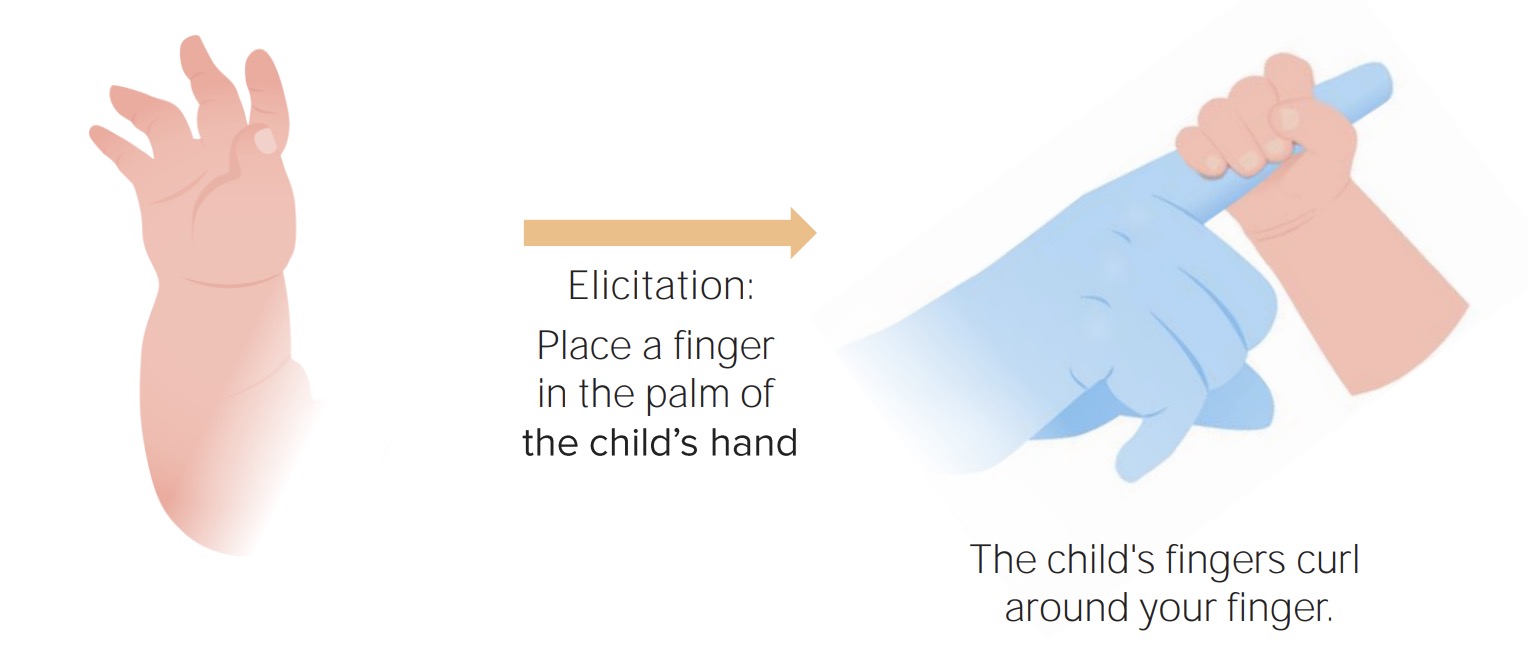
Stroke the palm of the baby’s hand.
The baby grasps the finger with their hand.
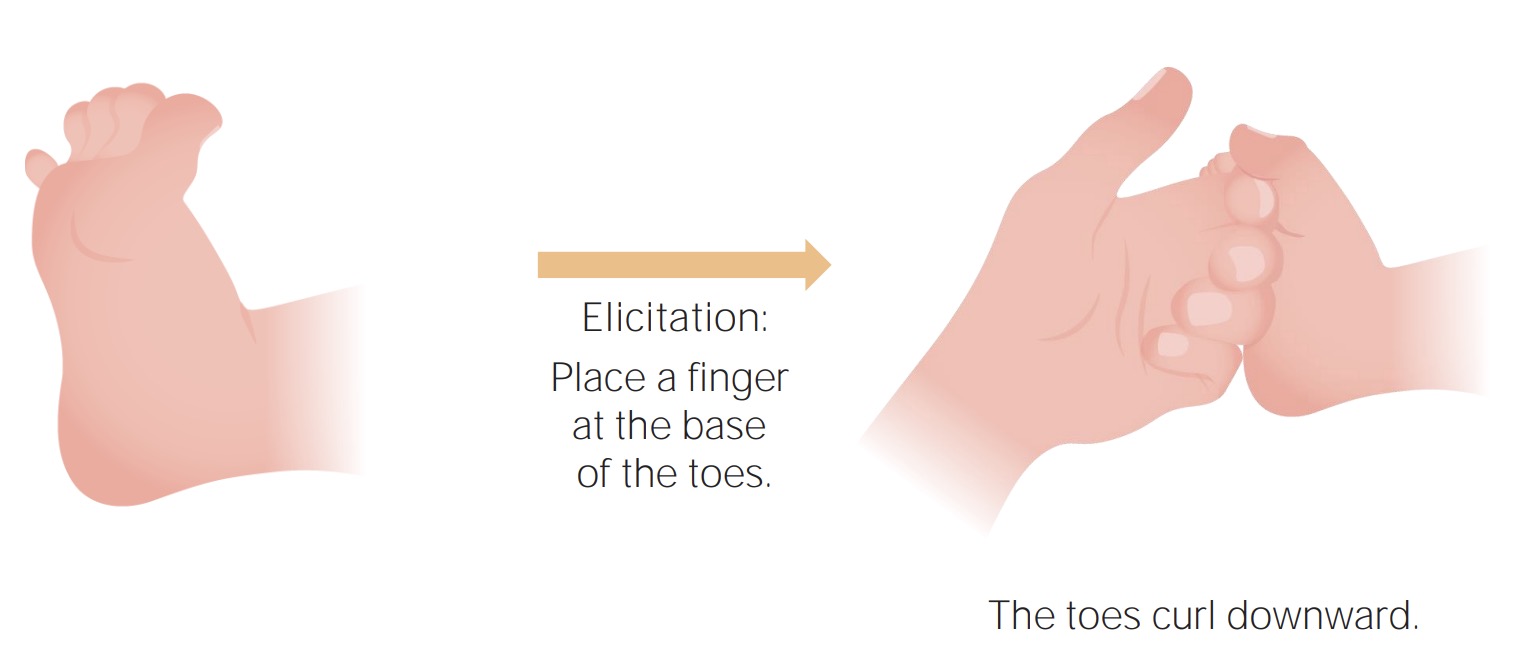
Stroke the sole of the baby’s foot.
The baby’s toes curl downward.
The Moro reflex is a protective response to a disruption of body balance. It disappears by about six months of age.

A sudden loss of head support or loud noises can elicit the Moro response. The reflex can be tested by tilting the baby’s trunk and head quickly about 30 degrees.
The baby extends the arms at the elbows, spreading the fingers. This movement is quickly followed by a flexion of the upper extremities and crying.
The Babinski reflex in babies disappears by twelve months of age. Longer persistence can indicate neurological problems.
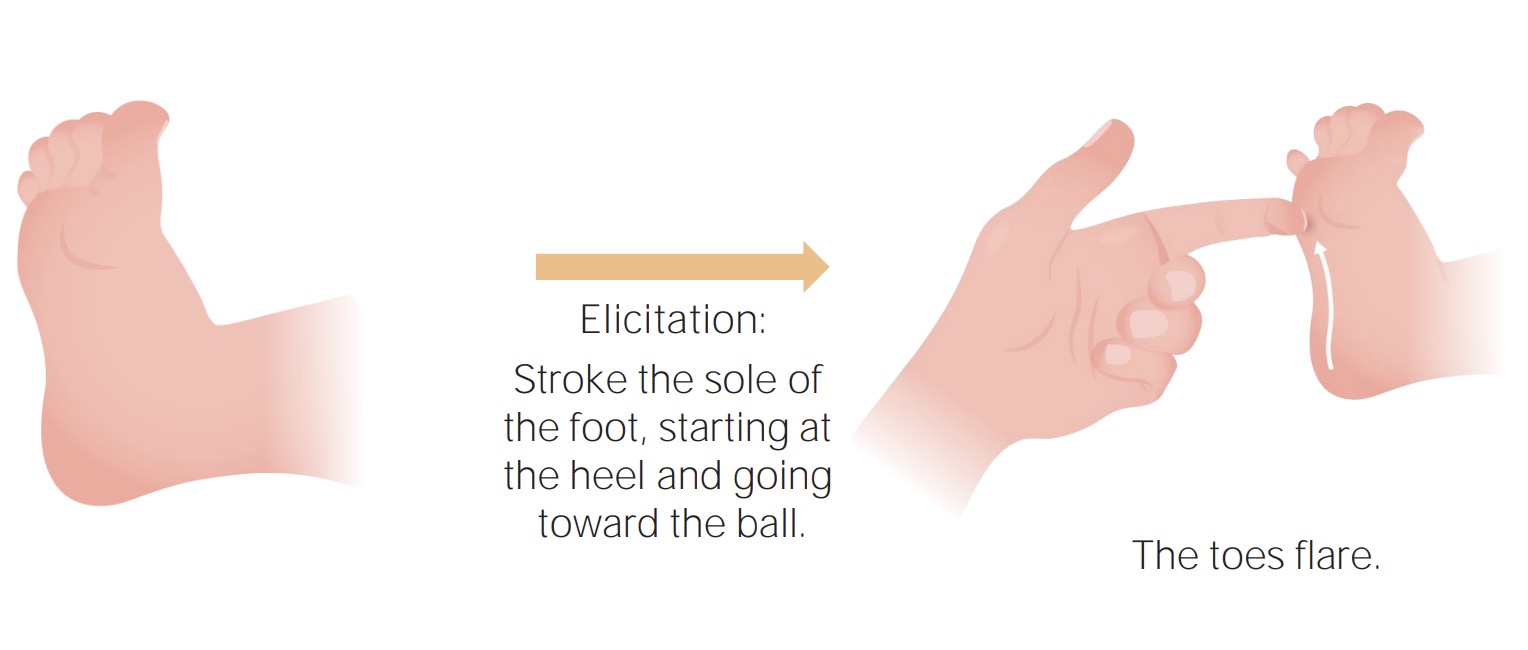
Stroking the sole of the foot of the baby should elicit the Babinski reflex.
The baby’s toes flare out, with the big toe bending upwards.
The tonic neck reflex (“fencer’s pose”) disappears around three months of age.
Turn the baby’s head to one side.
The baby extends the arm on the side the head is turned to. The other arm is flexed at the elbow.
If reflexes persist after the expected age, further assessments for neurological issues need to be done.
Reflex integration exercises are therapeutic activities designed to facilitate the transition from reflex to voluntary movement.
Types of reflex integration exercises:
For example, a common Moro reflex integration exercise involves the child lying on their back with the head back, arms lifted up and the legs spread, then repeatedly crossing the arms and legs while breathing out slowly. Also, when the child is awake, provide natural movement, such as increasing ‘tummy time’.