

Nursing Knowledge
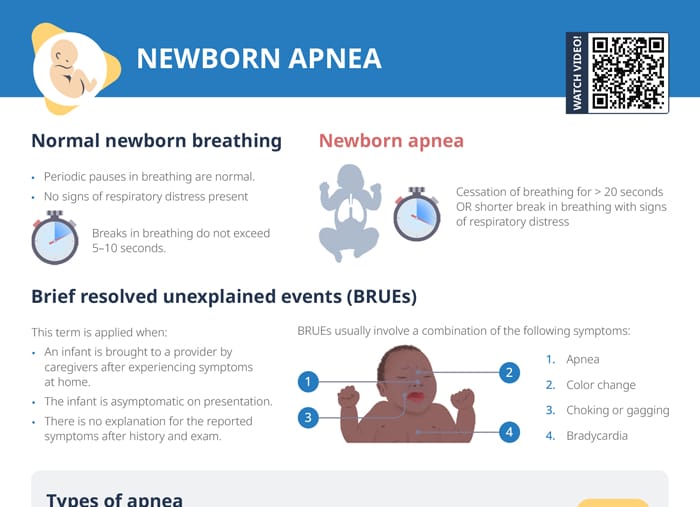
For newborns, periodic pauses in breathing are normal as long as no signs of respiratory distress are present. The pauses must not exceed 5–10 seconds.
Newborn apnea is defined as a cessation of breathing for > 20 seconds, OR a shorter break in breathing with signs of respiratory distress.
The medical abbreviation “BRUE” stands for “Brief Resolved Unexplained Event.” BRUEs are episodes where an infant suddenly has breathing problems that have no apparent reason, are brief, and resolve on their own.
The term is applied when an infant is brought to a provider by caregivers after experiencing symptoms at home, the infant is asymptomatic on presentation, and there is no explanation for the reported symptoms after history and exam.
Symptoms of BRUEs:
Central apnea is due to neurological causes:
Prematurity is the most common cause.
Obstructive apnea is due to physical blockages of the airways, due to airway infections or congenital anomalies.
Mixed apnea is defined as a combination of central and obstructive apnea and is the most common type of apnea in premature infants.
The primary method of treatment for newborn apnea is to fix the underlying cause of the apnea. Further measures include supplemental oxygen, breathing assistance, medications (e.g., caffeine), or surgical interventions.
RELATED TOPIC:
Free Download
Master the topic with a unique study combination of a concise summary paired with video lectures.
Your free account gives you access to:
or