

Nursing Knowledge
Myasthenia gravis is a chronic autoimmune condition that affects a person’s muscles and nerves, causing sudden onset of fatigue and muscle weakness that worsens after activity and improves with rest.
Myasthenia gravis affects 7–23 people per million each year, with women being more commonly affected than men.
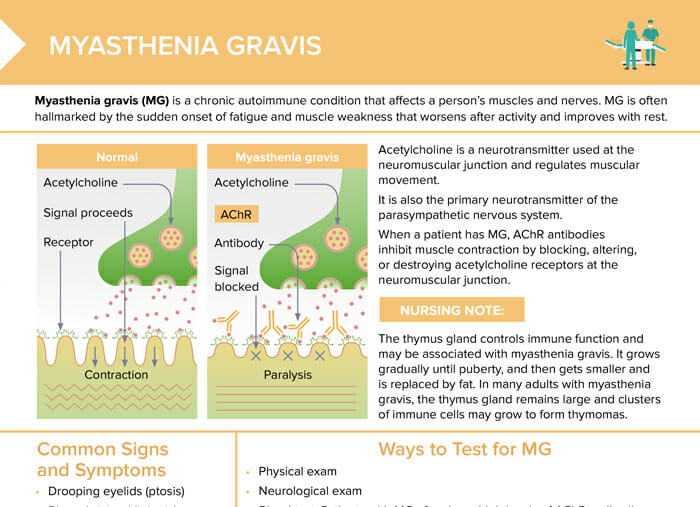
MG occurs when the immune system mistakenly attacks the body’s tissues. Specifically, antibodies block or destroy the neuromuscular junction (where nerves connect with muscles), disrupting the communication between nerves and muscles.
Common signs and symptoms of MG include:
Symptoms often worsen with activity and improve with rest.
Diagnosis involves a physical exam, medical history, and several tests, including diagnostic imaging such as MRI or CT scans, the edrophonium test (tensilon test), electrodiagnostics such as single fiber electromyography (EMG), pulmonary function tests, physical exams, neurological exams, and blood tests.
While there’s no cure, treatments can manage symptoms. Management options for MG include:
MG can impact daily activities and necessitate lifestyle changes, including adjusting work or leisure activities, adopting energy-conserving strategies, adhering to medication schedules, and managing stress to avoid exacerbation of symptoms.
Nurses can support clients by educating them about the disease, monitoring symptoms, administering treatments, managing side effects, and providing emotional support. They also facilitate communication between the client and the healthcare team.
A myasthenic crisis is a life-threatening condition where muscles become so weak that it causes respiratory failure. This requires immediate hospitalization and assistance with breathing, usually via a ventilator.
The thymus gland plays a role in the immune system, particularly during childhood. In most adults, it’s relatively inactive. However, in many people with myasthenia gravis (MG), the thymus gland remains large and is thought to be involved in the production of the abnormal antibodies that block or destroy the neuromuscular junction, leading to the symptoms of MG.
Some people with MG have a tumor of the thymus gland known as a thymoma. Thymomas are usually benign but can become malignant and, regardless of malignancy, make MG symptoms more likely to occur.
Thymectomy, or surgical removal of the thymus gland, can reduce symptoms in clients with myasthenia gravis.
Acetylcholine is a neurotransmitter, a chemical messenger that transmits signals across nerve synapses (junctions) to communicate between nerve cells (neurons). It is essential for many functions in the body, including muscle contraction and heart rate regulation.
When a person has MG, the body’s immune system produces AChR antibodies that block, alter, or destroy acetylcholine receptors at the neuromuscular junction.This prevents acetylcholine from effectively transmitting the nerve signal to the muscle, resulting in muscle weakness and fatigue.
RELATED TOPIC:
Free Download
Master the topic with a unique study combination of a concise summary paired with video lectures.
Your free account gives you access to:
or