

Nursing Knowledge
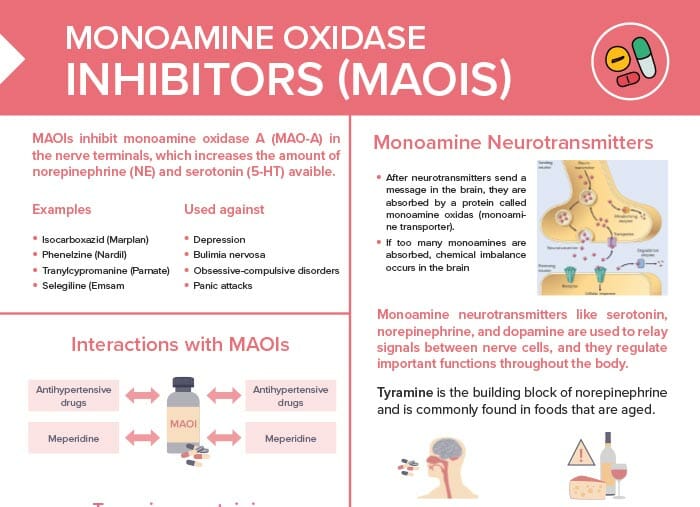
Monoamine oxidase inhibitors (MAOIs) are a class of antidepressant drugs that work by inhibiting the enzyme monoamine oxidase, which breaks down monoamine neurotransmitters like serotonin, norepinephrine, and dopamine. Indications are depression, bulimia nervosa, obsessive-compulsive disorders, and panic attacks.
Monoamine neurotransmitters like serotonin, norepinephrine, and dopamine are used to relay signals between nerve cells, and they regulate important functions throughout the body. After neurotransmitters send a message in the brain, they are absorbed by a protein called monoamine oxidase (MAO), which breaks them down. MAOIs inhibit MAO, which increases the amount of neurotransmitters available in the nerve terminals.
Common side effects include dry mouth, nausea, diarrhea or constipation, low blood pressure, insomnia, and weight gain. The most significant risks are:
Serotonin syndrome is a rare but potentially life-threatening condition caused by an excess of serotonin in the body. Symptoms include agitation, confusion, rapid heart rate, high blood pressure, dilated pupils, muscle rigidity, and fever. It can occur when MAOIs are combined with other serotonin-increasing medications or herbal supplements.
A hypertensive crisis is a severe increase in blood pressure that can lead to a stroke. Blood pressure readings higher than 180/120 mm Hg are considered dangerously high and require immediate medical attention. In the case of MAOI usage, a hypertensive crisis can be triggered by consuming tyramine-rich foods, which can cause a sudden, extreme spike in blood pressure.
Foods that are high in tyramine:
The ‘washout’ period is the time required for a medication to be sufficiently eliminated from the body before starting another.
MAOIs can have dangerous interactions with other medications, particularly SSRIs, SNRIs, and certain pain medications, so waiting a sufficiently long time before administering the new medication is vital.
The washout period for most MAOIs is approximately 2 weeks, but this can vary.
Treat as a medical emergency. Discontinue MAOI and any other serotonergic agents and work with the healthcare team to treat symptoms like hyperthermia and provide supportive care.
If a client reports the inadvertent consumption of tyramine-rich food, the affected person should be monitored closely for signs of a hypertensive crisis, which include severe headache, chest pain, shortness of breath, and significantly elevated blood pressure. If a hypertensive crisis is suspected, it should be treated as a medical emergency.
Hypertensive crisis is a risk with the use of MAOIs. Regular monitoring of blood pressure can help detect any abnormal increases early, allowing for prompt intervention.
Nurses play a key role in educating clients about the need to avoid tyramine-rich foods and beverages while taking MAOIs to prevent a hypertensive crisis. Make sure to provide a comprehensive list of foods to avoid and encourage clients to always check food labels and ask about ingredients when eating out.
RELATED TOPIC:
Free Download
Master the topic with a unique study combination of a concise summary paired with video lectures.
Your free account gives you access to:
or