

Nursing Knowledge
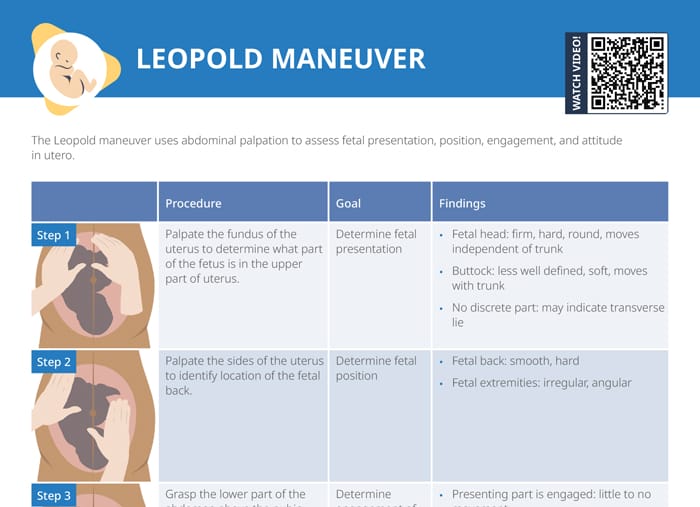
The Leopold maneuvers are a common, non-invasive assessment for pregnant clients. It involves palpating the abdomen using specific hand movements in four steps to gather valuable information about the fetal position, which is essential for safe and effective labor and delivery management.
The purpose of the Leopold maneuvers is to assess the position, presentation, attitude, and engagement of the fetus inside the uterus:
This information is important for planning the delivery and can guide decisions during labor. Usually, the Leopold maneuvers are done to determine if the fetus is in an optimal position for labor. They are also used to identify the location of the fetal back, which is where fetal heart tones are best auscultated.
Palpate the fundus of the uterus to determine what part of the fetus is in the upper part of the uterus. Findings:
Palpate the sides of the uterus to identify the location of the fetal back. Findings:
Grasp the lower part of the abdomen above the pubic symphysis to engage the fetal presenting part. Gently move from side to side. Findings:
Facing the foot of the client, use both hands to assess the position of the fetal head. Findings:
Factors that may affect findings include:
Free Download
Master the topic with a unique study combination of a concise summary paired with video lectures.
Your free account gives you access to:
or