

Nursing Knowledge
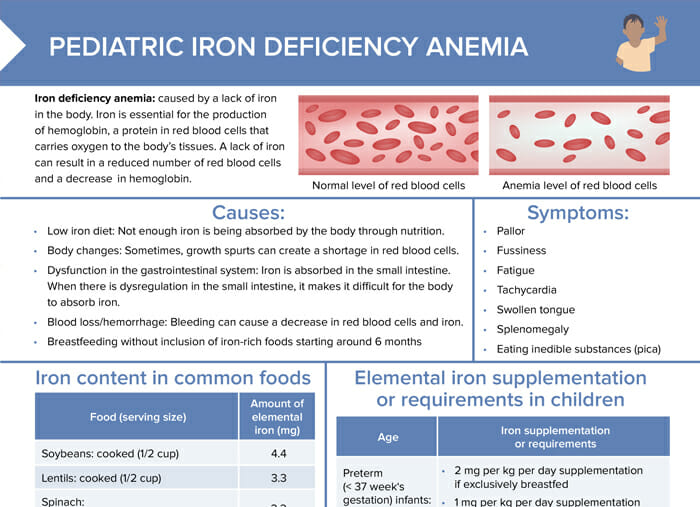
Iron deficiency anemia is caused by a lack of iron in the body. Iron is essential for the production of hemoglobin, a protein in red blood cells that carries oxygen to the body’s tissues. A lack of iron can result in a reduced number of red blood cells and a decrease in hemoglobin.
Iron deficiency can be caused by:
Symptoms of iron deficiency in children include:
Treating iron deficiency in children typically involves dietary modifications and iron supplementation. Commonly prescribed supplements are oral ferrous sulfate or other iron salts, usually administered on an empty stomach. Dietary modifications with an increased intake of iron-rich foods is another measure. They should be paired with citrus/vitamin-C-rich foods to enhance iron absorption. Calcium-rich foods should be avoided, since they can decrease iron absorption.
Affected children should be checked for potential underlying causes of the iron deficiency, such as frequent blood loss, malabsorption, or chronic disease.
Preterm infants (1–12 months):
2 mg per kg per day should be supplemented if infant is exclusively breastfed. If infant is fed with iron-fortified formula, supplementing 1 mg per kg per day is sufficient.
Term infants (4–6 months to 12 months):
If infant is exclusively breastfed, iron supplementation recommendation is 1 mg per kg per day. If Infant is fed with iron-fortified formula, no supplementation is needed.
Toddlers (1–3 years):
Toddlers require 7 mg of elemental iron per day. If anemic, modify diet and/or supplement.
Children (4–8 years):
Children of this age require 10 mg of iron per day. If anemic, modify diet and/or supplement.
Important lab values to look for are hemoglobin (< 11 g/dL), hematocrit (< 31%–40%, depending on age), MCV (< 73–80 fL, depending on age), and RDW (< 12%).
Table: Iron-rich foods for kids
| Food (serving size) | Amount of elemental iron (mg) |
| Cooked soybeans (½ cup) | 4.4 |
| Cooked lentils (½ cup) | 3.3 |
| Cooked/boiled and drained spinach (½ cup) | 3.2 |
| Cooked beef (3 oz) | 2.5 |
| Cooked lima/navy/kidney/pinto beans (½ cup) | 1.8–2.2 |
| Baby food brown rice cereal (dry) (1 tbsp) | 1.8 |
| Baby food green beans (6 oz) | 1.8 |
| Baby food oatmeal cereal (dry) (1 tbsp) | 1.6 |
| Turkey and chicken: dark meat (3 oz) | 1.1–2.0 |
| Baby food lamb or chicken (2,5 oz) | 1.0–1.2 |
| Baby food peas (3,4 oz) | 0.9 |
Iron deficiency can manifest with visible symptoms affecting the eyes. Note that these are not diagnostic on their own.
In clients with iron deficiency anemia, the conjunctiva can appear paler than usual. The whites of the eyes may have a bluish tint. In severe cases, a lack of iron can lead to small bleeds in the retina.
Upon restored normal iron levels, the conjunctiva should regain its natural pink-red color; the sclera should be white, and retinal hemorrhages heal over time.
RELATED TOPIC:
Free Download
Master the topic with a unique study combination of a concise summary paired with video lectures.
Your free account gives you access to:
or