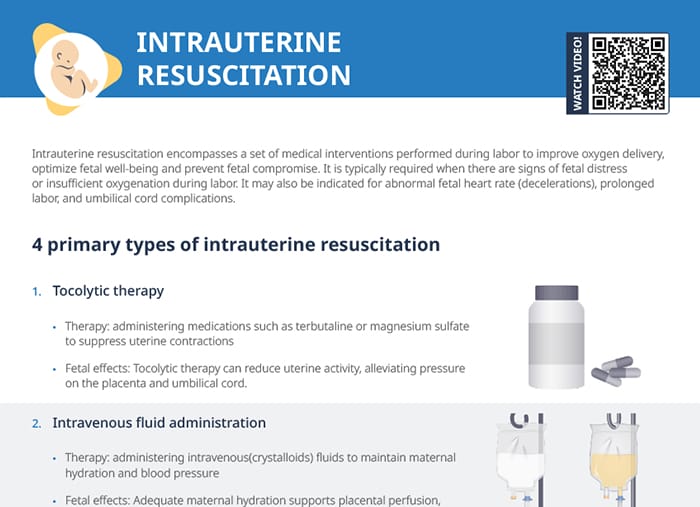


Intrauterine resuscitation measures are medical interventions performed during labor to improve oxygen delivery, optimize fetal well-being, and prevent fetal compromise.
The main goals of every method are increasing fetal oxygenation and improving fetal heart rate.
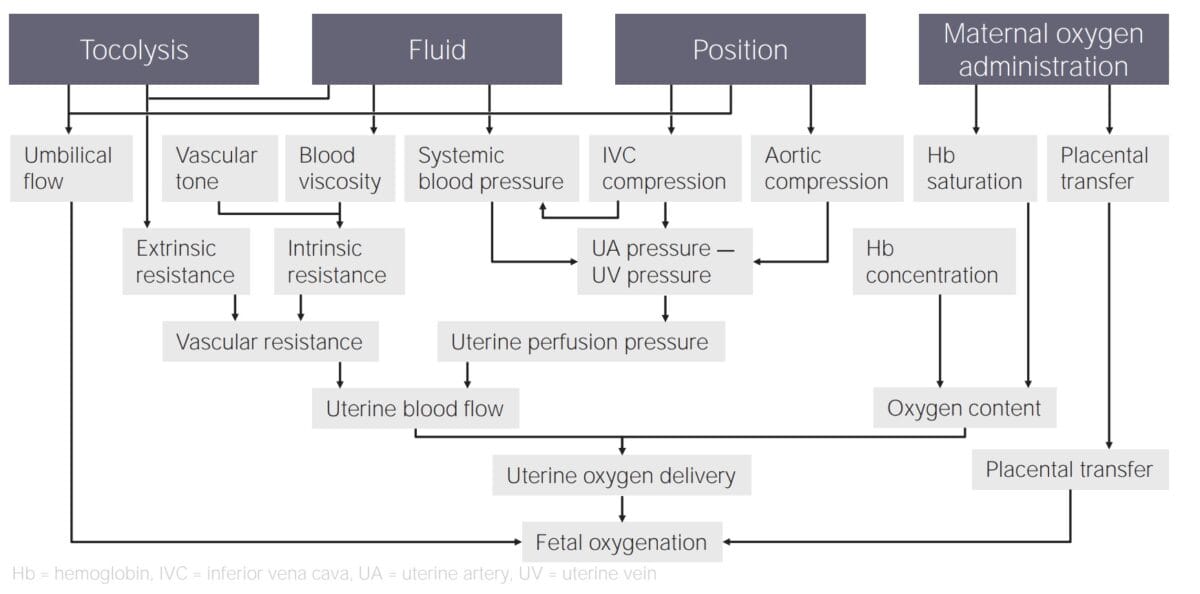
Tocolysis involves stopping the contraction, which leads to increased blood flow and oxygenation.
Administering IV fluids can increase oxygenation by increasing blood viscosity and bringing up blood pressure, increasing the flow through the placenta.
Certain labor positions might lower blood pressure, such as lying flat on the back compressing the vena cava. Repositioning the client into a more favorable position for fetal oxygenation can increase the blood flow.
The best labor position for optimizing oxygenation of the fetus can vary depending on individual circumstances. Often recommended positions that improve maternal circulation include:
To get the highest possible amount of oxygen from the client to the fetus, a high concentration of oxygen needs to be given, making a nasal cannula insufficient. A non-rebreather mask with 10 liters per minute gives sufficient oxygen.