

Nursing Knowledge
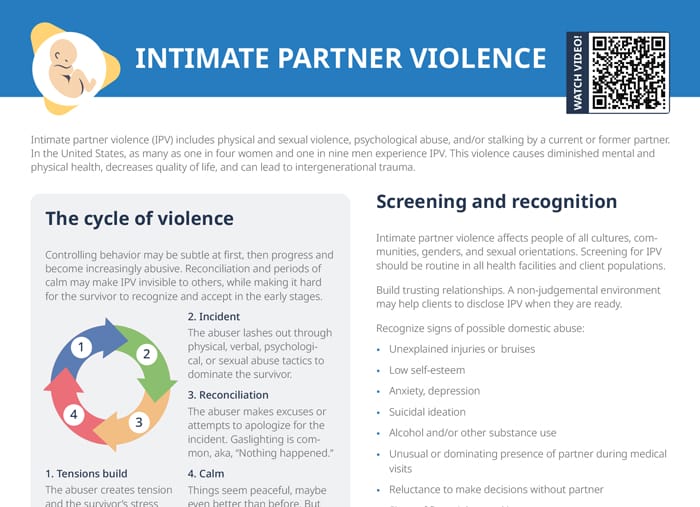
Intimate partner violence (IPV) includes physical and sexual violence, psychological abuse, and/or stalking by a current or former partner.
In the United States, as many as one in four women and one in nine men experience IPV. This violence causes diminished mental and physical health, decreases quality of life, and can lead to intergenerational trauma.
Intimate partner violence affects people of all cultures, communities, genders, and sexual orientations. Signs of domestic abuse should be looked for in all health facilities and client populations:
Emotional abuse comes in many forms including belittling, constant criticism, insults, threats, control and isolation, gaslighting, or destruction of possessions. Signs in clients are mainly low self-esteem, anxiety, depression, a withdrawal from usual activities, or reluctance to discuss home life.
Narcissistic abuse specifically is characterized by a lack of empathy and disregard for the survivor’s feelings and well-being. It comes with manipulation and a sense of entitlement for special treatment at the expense of the survivor. In the survivor, this can present as them feeling worthless, confused due to gaslighting, symptoms of trauma, or difficulty making independent decisions.
Sexual abuse in intimate partner relationships can include coercion/pressuring or sexual insults or criticism in the form of degrading comments. Physical signs can, for example, include bruises or injuries around the breasts, genitals, or anus, or STIs. Avoidance of gynecological exams, anxiety/depression, changes in sexual behavior and reluctance to discuss the intimate relationship can be further signs to look out for.
Controlling behavior may be subtle at first, then progress and become increasingly abusive.
Reconciliation and periods of calm may make IPV invisible to others, while making it hard for the survivor to recognize and accept in the early stages.
IPV can occur in all types of intimate relationships, including marriage. However, in some cultures or communities, there might be expectations or norms that inadvertently condone or overlook abusive behaviors within a marriage, making it harder for survivors to seek help or even recognize abuse. Married victims of IPV might face social stigma or lack of support when seeking help. Further barriers to leaving an abusive marriage can be posed by concerns about divorce, custody of children, financial security, and legal status.
Build a trusting relationship with clients. A non-judgmental environment may help clients to disclose IPV.
Leaving the relationship is often the most dangerous time for those experiencing IPV.
Safety planning may include:
RELATED TOPIC:
Free Download
Master the topic with a unique study combination of a concise summary paired with video lectures.
Your free account gives you access to:
or