

Nursing Knowledge
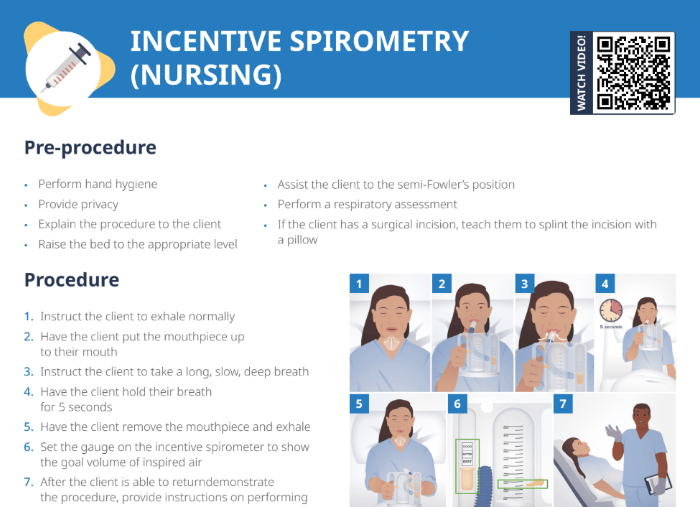
Incentive spirometry is a breathing therapy technique aiming to improve lung function and prevent respiratory complications. It involves having the patient inhale deeply through a spirometer (a handheld device with a series of chambers and a visual indicator) while holding it at a predetermined level, encouraging them to take slow and deep breaths.
The goals of incentive spirometry include expanding lung capacity, improving oxygen exchange, and maintaining healthy lung function.
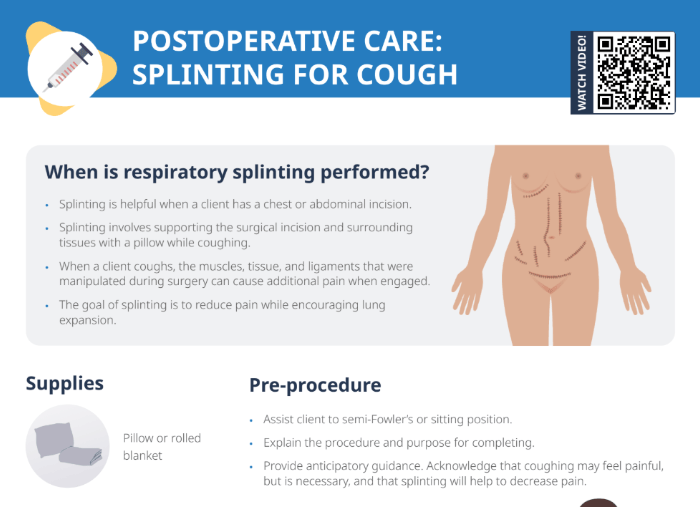
Incentive spirometry is often applied in postoperative care, especially after surgeries involving the chest or abdomen, as well as in managing various respiratory conditions.
Be sure to document:
Notify the healthcare provider if:
A peak flow meter measures how fast a patient can blow air out of their lungs, helping in monitoring conditions, such as asthma.
An incentive spirometer does not measure exhalation, but helps the patient to take slow, deep breaths with the aim of improving lung function.
Clients should follow providers’ instructions on frequency of spirometer use. For example, a client may be instructed to take several breaths with the spirometer every hour.
The duration of incentive spirometer use after surgery varies depending on the patient’s condition and healthcare provider’s instructions. Often, it is used in the immediate postoperative period for a few days to a week.
RELATED TOPIC:
Free Download
Master the topic with a unique study combination of a concise summary paired with video lectures.
Your free account gives you access to:
or