

Nursing Knowledge
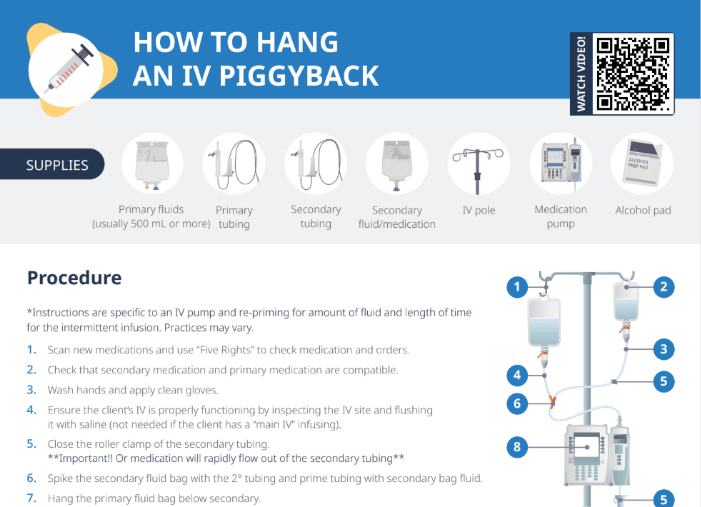
An IV piggyback, also known as an IVPB or secondary infusion, is a method of administering medication through an intravenous (IV) line. It involves attaching a smaller bag of medication to the primary IV line and allowing it to infuse intermittently. The primary bag contains maintenance fluids or flush, while the secondary bag contains the medication that needs to be administered.
This method is commonly used when multiple medications need to be administered through the same IV line. The use of an IV piggyback can help reduce the risk of infection and minimize the number of needle sticks required for clients who require multiple medications.
A regular IV line typically administers fluids like saline solution, electrolytes or nutrients directly into a patient’s bloodstream. An IV piggyback is used to deliver medications into the primary IV line, “piggybacking” off the existing setup. It therefore allows medications to be administered without interruption of the primary IV fluids.
The supplies needed include:
Please note that these instructions are specific to an IV pump and re-priming for amount of fluid and length of time for intermittent infusion, so practices may vary depending on facility or institution policies.
Drip rate can be calculated using the following formula: total volume (in mL) x drop factor (gtts/mL) / time (in minutes). The drop factor would be available on the IV tubing package.
Back priming involves using one secondary tubing for multiple secondary infusions of different types. Depending on facility or institution policies, this practice might not be allowed, because it can increase the risk of contamination and infection if not done properly. Additionally, some medications may interact with each other or cause adverse reactions if administered through the same tubing. Always follow facility-specific policies and guidelines to ensure safe and effective medication administration.
The “Five Rights” of medication are a set of guidelines that healthcare professionals follow to ensure safe and accurate medication administration. The five rights are:
Some new textbooks now list seven “Rights”:
6. Right documentation: Ensuring medications are documented correctly when administering and double-checking existing documentation.
7. Right indication: Ensuring the medication is the adequate choice for the situation.
Following these guidelines helps to minimize errors and ensure safe and effective medication administration.
Complications can include medication errors, infiltration, extravasation, phlebitis, air embolism, or infection. To address these issues, double-check medications and doses, monitor the IV site closely for signs of complications, and ensure that all equipment is used correctly and sterilely. In case of any adverse events, immediately stop the infusion, disconnect the IV line, and alert the health care provider.
Firstly, try to gently flush the line with a compatible IV solution. If the blockage still remains, you may need to discontinue the IV piggyback and set up a new one. Never try to force fluid into a blocked IV line.
RELATED TOPIC:
Free Download
Master the topic with a unique study combination of a concise summary paired with video lectures.
Your free account gives you access to:
or