

Nursing Knowledge
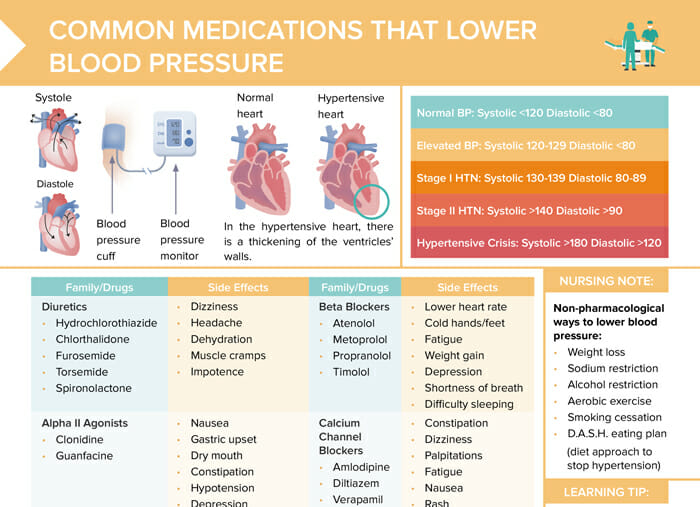
Normal blood pressure is defined as systolic less than 120 and diastolic less than 80.
Elevated blood pressure is defined as systolic between 120–129 and diastolic less than 80.
Stage I hypertension is defined as systolic between 130–139 and diastolic between 80–89. Stage II hypertension is defined as systolic greater than or equal to 140 or diastolic greater than or equal to 90.
A hypertensive crisis is defined as systolic pressure greater than 180 and diastolic greater than 120.
Ways to lower blood pressure without medication include weight loss, sodium restriction, alcohol restriction, aerobic exercise, smoking cessation, and following the D.A.S.H eating plan.
The most common types of medications that lower blood pressure include:
| Drug family | Examples |
| Diuretics | Hydrochlorothiazide Chlorthalidone Furosemide Torsemide Spironolactone |
| Beta blockers | Atenolol Metoprolol Propranolol Timolol |
| Alpha II Agonists | Clonidine Guanfacine |
| Calcium channel blockers | Amlodipine Diltiazem Verapamil |
| Angiotensin II receptors | Losartan Valsartan |
| Alpha-beta blockers | Carvedilol Labetalol |
| Vasodilators | Hydralazine Minoxidil |
| ACE inhibitors | Ramipril Enalapril Lisinopril Captopril |
Adverse effects of diuretics include:
Adverse effects of beta blockers include:
Adverse effects of angiotensin II receptors include:
Adverse effects of alpha-beta blockers include:
Adverse effects of alpha II agonists include:
Adverse effects of vasodilators include:
Adverse effects of calcium channel blockers include:
Adverse effects of ACE inhibitors include:
Erectile dysfunction may be an adverse effect of:
Weight gain may be an adverse effect of:
Coughing may be an adverse effect of ACE inhibitors.
Free Download
Master the topic with a unique study combination of a concise summary paired with video lectures.
Your free account gives you access to:
or