

Nursing Knowledge
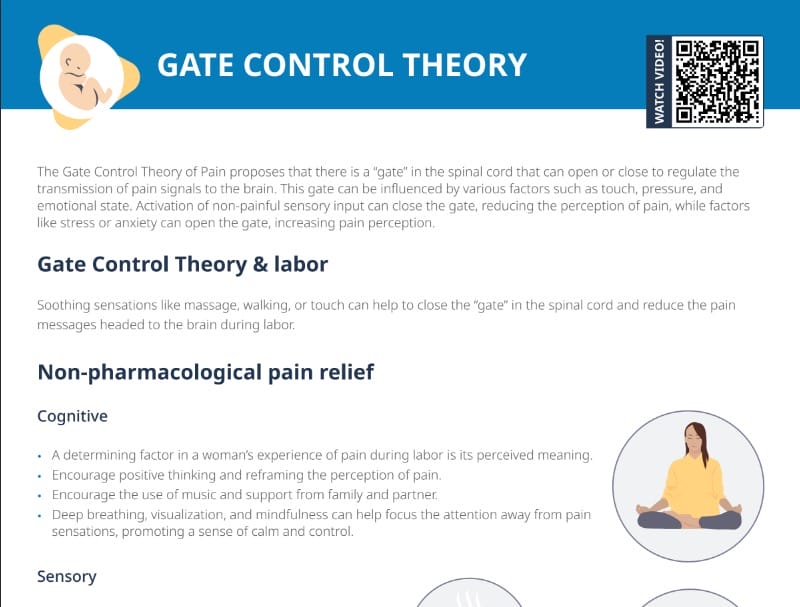
The Gate Control Theory of Pain proposes that there is a “gate” in the spinal cord that can open or close to regulate the transmission of pain signals to the brain. This gate can be influenced by various factors such as touch, pressure, and emotional state. Activation of non-painful sensory input can close the gate, reducing the perception of pain, while factors like stress or anxiety can open the gate, increasing pain perception.
Nonpharmacological pain relief methods are generally considered safe and effective, without the risks associated with pharmacological interventions.
Cognitive, sensory, and cutaneous methods can help to close the “gate” in the spinal cord and reduce the pain messages headed to the brain during labor.
A determining factor in a woman’s experience of pain during labor is its perceived meaning.
Perceiving pain as meaningless or unnecessary can heighten anxiety and intensify pain sensations. Clients who perceive their pain as productive and purposeful tend to have a more positive emotional response to pain, leading to them being able to better manage and tolerate it. You can support your client by helping them see labor pain as a meaningful part of the process.
Gentle massage or counter-pressure applied to areas experiencing discomfort can stimulate sensory nerves, activating the “gate” in the spinal cord to close and inhibit pain transmission.
Scents, such as lavender or chamomile, can have calming effects, reducing stress and anxiety and diminishing the perception of pain.
Immersing in warm water can alleviate muscle tension and promote relaxation.
TENS (Transcutaneous Electrical Nerve Stimulation) uses low-voltage electrical currents applied to the skin via electrodes to interfere with pain signal transmission and promote the release of endorphins.
Stimulating specific points on the body through pressure or fine needles can trigger the release of endorphins and reduce perception of pain.
RELATED TOPIC:
Free Download
Master the topic with a unique study combination of a concise summary paired with video lectures.
Your free account gives you access to:
or